Buying a City Apartment: Co-ops, Condos, and Board Approval
How co-op and condominium ownership differ, what a board package asks of you, and how to read reserves, inspections, minutes, and domicile risk before you buy.

When you buy a city apartment, you buy two things: the rooms you will live in, and a stake in a building whose roof, façade, reserves, and governance you will share with people you have not yet met. The rooms are easy to judge on a Saturday afternoon. The building takes longer, and it decides what the apartment will really cost and how easily you can sell, rent, or bequeath it.
This guide separates the cooperative from the condominium, then takes the papers in order. By the end you should be able to choose between them, decide how to pay and how to title the apartment, and judge whether owning it could change the state that taxes you. If the purchase follows the sale of a family house, Should a Widow Keep or Sell the House? covers the decision that comes first.
Shares and a lease, or a deed and the common elements
In a co-op you receive no deed. You buy shares in a corporation that owns or leases the building, and the shares carry a proprietary lease on your apartment. As the New York Attorney General puts it, co-op owners are both shareholders in and tenants of the same corporation, governed by a board the shareholders elect. Your maintenance can include part of the interest on the corporation’s mortgage on the building; IRS Publication 530 lets a tenant-stockholder of a qualifying corporation deduct a proportionate share of its real estate taxes and mortgage interest.
In a condominium you receive a deed to your unit with an undivided share of the common elements, which is how Florida’s statute defines a “condominium parcel.” You pay assessments to an association and arrange your own financing.
The practical difference is control. A co-op board ordinarily must consent before shares pass to you. A condominium association usually has a right to approve buyers only where its governing documents create one.
The board package and what it asks you to disclose
A co-op application is a financial autobiography. Boards set their own requirements, but a package commonly includes tax returns, account statements, a signed statement of assets and liabilities, references, and an interview. The board is not a regulator: the Attorney General describes its basic legal duties as exercising prudent business judgment and following the co-op’s own bylaws, proprietary lease, and house rules.
For a widow, the package raises new questions. Part of your wealth may sit in an estate still under administration, in a trust of which you are beneficiary rather than owner, or in inherited retirement accounts. Show plainly what you own outright, what you will receive and when, and what you reach only through a trustee; a short letter from estate counsel forestalls questions. Ask the managing agent who reads the package and how long it is kept.

Transfer fees, estoppel letters, and the costs of closing
Price the transaction, not only the apartment. Some co-ops charge a transfer fee under their own documents, often called a flip tax; learn who pays it before you negotiate. State law may limit condominium charges: Florida permits a transfer fee only where the association must approve the transfer and its declaration, articles, or bylaws provide for the fee. In 2026, the statutory maximum is $150 per applicant; spouses, or a parent or parents with dependent children, count as one applicant. The state adjusts the maximum every five years.
Florida also makes a condominium buyer jointly and severally liable with the previous owner for assessments that came due before title passed, so the association’s estoppel certificate, its formal statement of what is owed, deserves your attorney’s close reading. For federal tax, Publication 530 says transfer taxes on a personal home are not deductible; a buyer who pays them adds them to basis.
Reserves, special assessments, and Florida’s post-Surfside rules
After the 2021 building collapse in Surfside, Florida enacted four condominium laws between 2022 and 2025. Two of their requirements matter most to you.
The milestone inspection applies to residential condominium and cooperative buildings of three or more habitable stories. It is due by December 31 of the year the building reaches 30 years from its certificate of occupancy, and every 10 years after; the local building authority may require the first at 25 years where conditions such as proximity to salt water justify it. A visual first phase leads to a second, which may involve destructive testing, only if the architect or engineer finds substantial structural deterioration. Owners must receive the inspector’s summary within 45 days of the association’s receipt, and phase-two repairs must begin within 365 days of the report, or sooner if local government requires.
The structural integrity reserve study applies to condominium associations with such buildings, at least every 10 years. It covers the roof, structure, fireproofing and fire protection, plumbing, electrical systems, waterproofing and exterior painting, windows and exterior doors, and other structural items above an inflation-adjusted $25,000 threshold. The state’s condominium division says owner-controlled associations existing by July 1, 2022 generally had to complete one by December 31, 2025, and that budgets adopted on or after January 1, 2025 may not waive the required reserves. The statute lets an association whose milestone inspection is due by December 31, 2026 complete the study alongside that inspection instead, but never later than that date.
On a resale, Florida entitles you, at the seller’s expense, to documents that include the declaration, bylaws and rules, the annual financial statement and budget, the milestone summary, and the latest reserve study or a statement that none exists. Unless you had the core governing and financial documents more than seven days before signing, excluding weekends and legal holidays, the contract must let you cancel within seven such days after you sign and receive them. That cancellation right ends at closing.
A building that deferred reserves may now be paying for that history through special assessments or loans; ask what has been levied, approved, or discussed. Other states differ, and a building may have no mandated study. Ask for one anyway; its absence is information. HOA and Condo Obligations After a Spouse Dies covers what continues once you own.
Reading the offering plan, the bylaws, and the minutes
In New York, a sponsor sells co-op and condominium units under an offering plan reviewed by the Attorney General’s Real Estate Finance Bureau for compliance with the Martin Act. The Attorney General recommends reading the entire plan, consulting a lawyer before signing, and putting any promise missing from the plan into a written rider. A resale by an individual owner needs no offering plan, so the original may be years out of date.
The apartment is what you see at the viewing; the minutes are what you buy.
The Attorney General notes that a year of board minutes is likely to describe whatever defects exist, that the accountant’s footnotes may show repair costs, and that the building department can list violations. It calls façade defects the costliest problems in existing buildings; pointing, roofs, and elevators are also expensive. For a co-op, read the bylaws and proprietary lease, which govern sublets and amendments, and the annual report of transactions in which a director had an interest, which the Attorney General encourages buyers to examine.
Cash, a mortgage, or a measured mix
Cash shortens the timetable, removes a lender’s review of the building, and can strengthen a co-op application, but it turns liquid capital into an asset that may take months to sell. Some co-ops limit financing, so ask before assuming you will borrow.
Tax is secondary at this level of wealth, but model it. For 2025 returns, IRS Publication 936 generally limits the deduction for interest on qualifying acquisition debt taken out after December 15, 2017, to debt of $750,000, or $375,000 if married filing separately, combined across a main and second home. Publication 530 explains that the 2025 state and local tax deduction is generally capped at $40,000, or $20,000 if married filing separately, subject to an income-based reduction and a $10,000 floor, or $5,000 if married filing separately. For 2026, Publication 505 sets the corresponding cap at $40,400, the phase-down threshold at $505,000 of modified adjusted gross income, and the floor at $10,000; each figure is halved for married taxpayers filing separately. Confirm the current mortgage-interest limit, the final 2026 instructions, and how both rules apply to you with your preparer before relying on a deduction.
Holding the apartment in a trust
A condominium unit can usually be deeded to a revocable trust much as a house can, subject to the declaration, any lender, title insurance, and property-tax exemptions. Co-op shares move only with the board’s consent. Some boards accept a trust, sometimes requiring your personal guarantee and continued occupancy; others decline, so ask before you sign. Federal tax law is not the obstacle: Publication 530 says a tenant-stockholder can be a trust or an estate. When a House Is Held in a Trust sets out the verification steps.
When the city apartment is a second home
Your domicile is your permanent, primary home, and you have only one. New York can still tax you as a resident: under the state tax department’s guidance, you are a resident if you maintain a permanent place of abode in the state for substantially all of the year and spend 184 days or more there. Any part of a day counts, even away from the apartment, and New York City applies the same test to an abode and days in the city. An abode you maintain and can use year-round qualifies whether or not you own it, and residents are taxed on all income.
Domicile, in turn, is hard to leave behind. If New York is your domicile now and you move elsewhere but keep the apartment, New York holds that your domicile does not change until you show by clear and convincing evidence that you have abandoned it and established a new one; a certificate of domicile or voter registration elsewhere is not enough. Keep a day count, and read Moving to Another State After Widowhood before you close.
Questions to ask before you sign
- Will I hold a deed, or shares and a proprietary lease, and what approvals stand between contract and closing?
- What does the board package require, and who sees it?
- Is there a transfer fee, who pays it, and what does the estoppel certificate show?
- When were the last structural inspection and reserve study, and does the budget fund the study’s plan?
- What special assessments have been levied, approved, or discussed?
- What do two years of minutes and the latest financial statements say about the façade, roof, and systems?
- Does the co-op carry an underlying mortgage, and does a sponsor still hold unsold shares?
- Will the board accept ownership through my trust, and on what terms?
- How will this apartment affect my residency and day count in each state where I spend time?
This article provides general U.S. educational information and is not legal, tax, real-estate, or investment advice. Confirm current rules with the relevant agency and with an attorney and tax adviser who know your facts.
Primary sources
- Florida Department of Business and Professional Regulation: Milestone Inspections and Structural Integrity Reserve Studies
- Florida Legislature: Section 718.112: Bylaws
- Florida Legislature: Section 718.116: Assessments
- Florida Legislature: Section 718.503: Developer and Nondeveloper Disclosures
- Florida Legislature: Section 553.899: Mandatory Structural Inspections
- New York Attorney General: Before You Buy a Co-op or Condo
- New York Attorney General: Understanding and Dealing With a Co-op Board of Directors
- New York State Department of Taxation and Finance: Filing Requirements, Residency, and Telecommuting FAQ
- Internal Revenue Service: Publication 530 (2025), Tax Information for Homeowners
- Internal Revenue Service: Publication 936 (2025), Home Mortgage Interest Deduction
- Internal Revenue Service: Publication 505 (2026), Tax Withholding and Estimated Tax
This article provides general education, not individualized legal, tax, investment, insurance, or benefits advice. Rules and deadlines change; verify the current requirement with the agency and a qualified professional.
More from Home
The desk →
Home
Home Backup Power: Generator Safety and Readiness
Plan safe backup power by defining essential loads, using qualified installation, preventing carbon monoxide exposure, storing fuel safely, and testing outage procedures.
Home
Home EV Charging: Installation and Safety
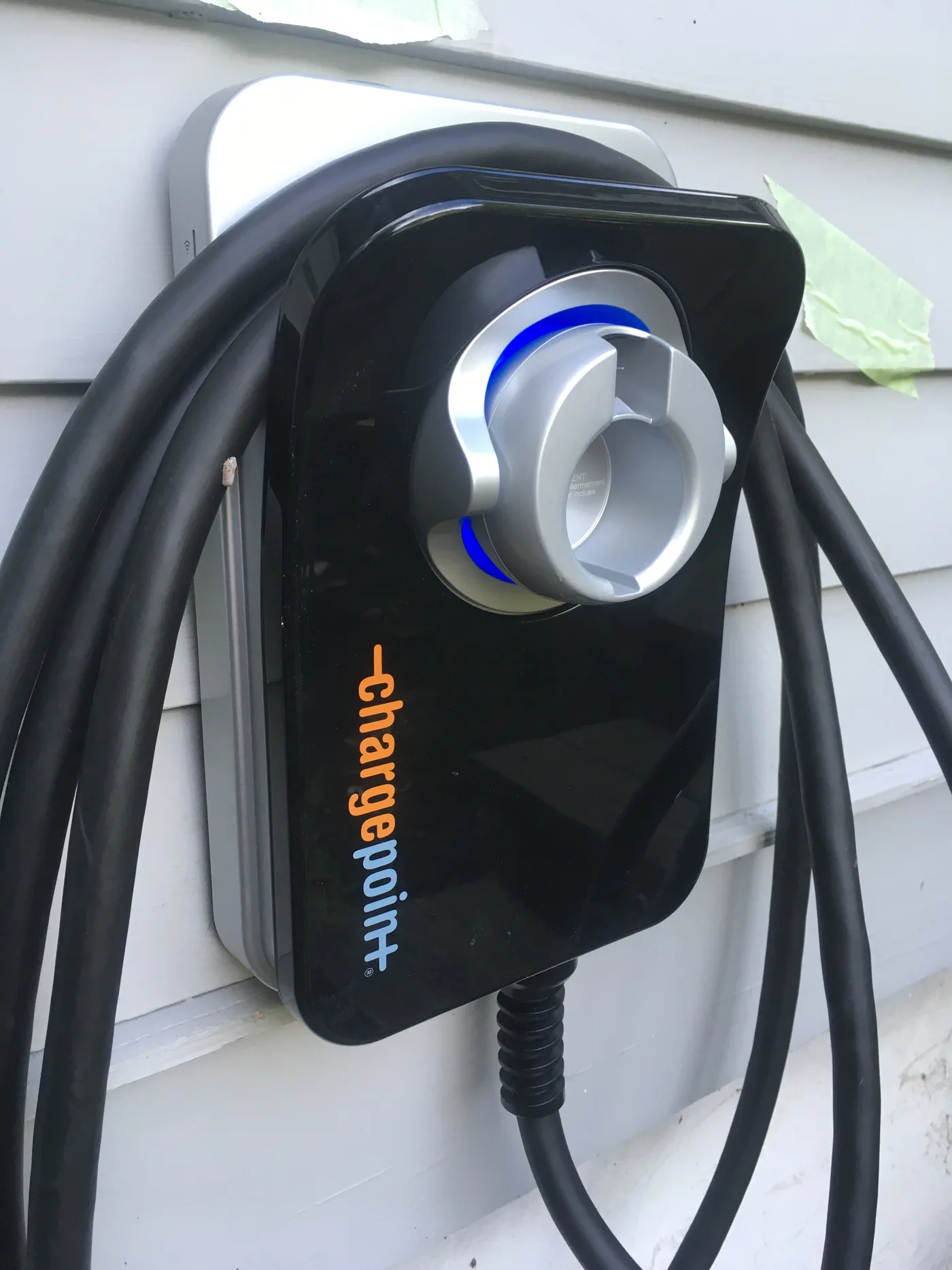
Plan a home electric-vehicle charger with a load calculation, permits, utility review, qualified installation, safe cable management, and complete records.

Home
Mature Tree Risk: An Arborist Review for the Property
Manage mature trees with a mapped inventory, credentialed risk assessment, storm and construction controls, documented work, and a practical inspection cycle.