Home
The House: A Housing Decision Wearing a Financial Costume
Whether to keep the family home is usually presented as a money question. It is a housing question that money constrains.

Some decisions after a death are reversible. This one deserves more care than most. Whether to keep the family home is usually presented as a money question. It is a housing question that money constrains.
This is frequently the largest decision of the first year and the one most often pushed by others. It is also among the most reversible in principle and the least reversible in practice, because transaction costs and market timing both bite.
Decide where you want to live, then test whether it is affordable. Reversing the order lets the spreadsheet choose your life.
Separate the label from the decision
Hold on to a small number of accurate points. The full cost of a home includes maintenance, insurance, taxes, and utilities, not only the mortgage. Selling and rebuying carries substantial transaction costs that are rarely included in a comparison. Tax treatment on a sale may be favourable for a limited period after a death, which affects timing.
Grief research consistently advises against major relocation decisions in the first year where they can be deferred. Mortgage authority for a surviving spouse is a separate question from ownership, and needs establishing either way.
A working sequence for this decision
This is the order that avoids closing doors you may still need.
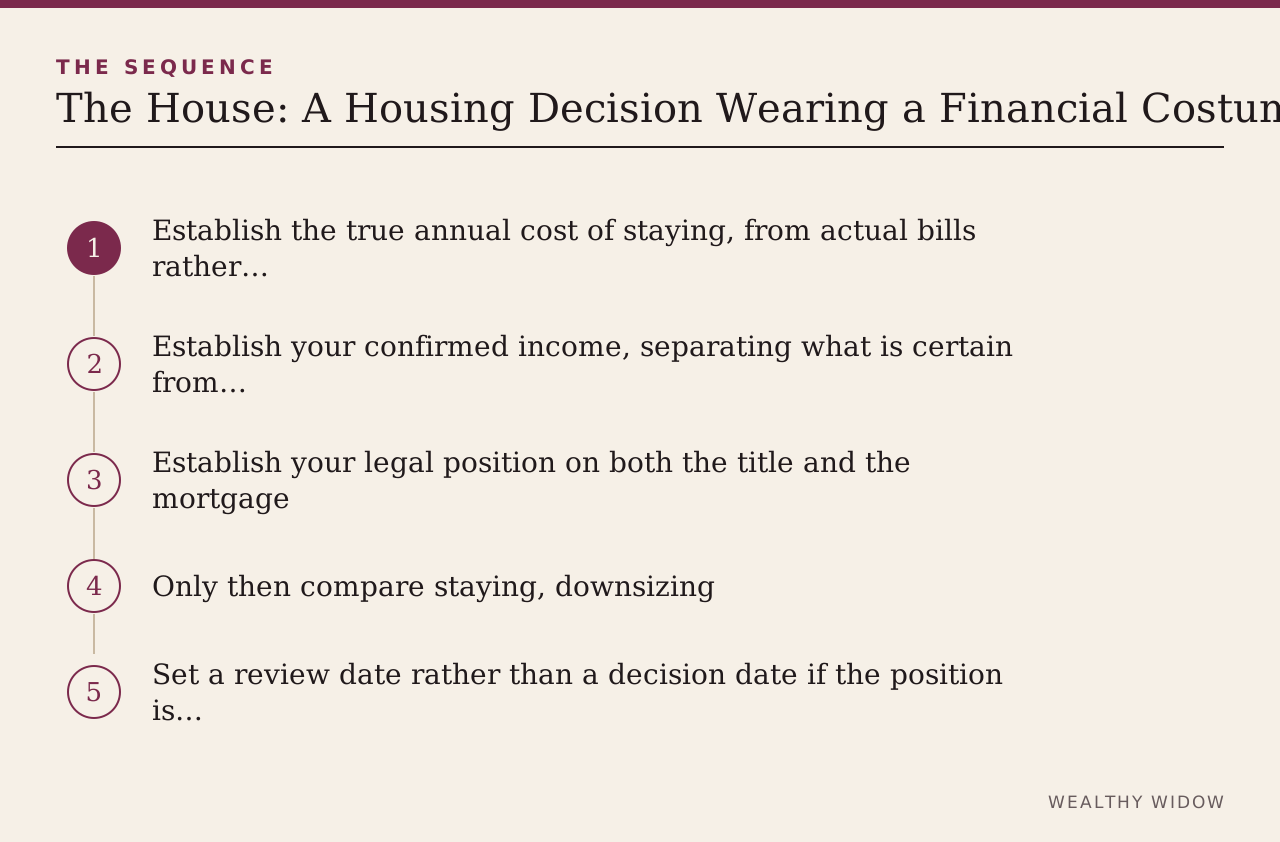
- Establish the true annual cost of staying, from actual bills rather than estimates.
- Establish your confirmed income, separating what is certain from what is pending.
- Establish your legal position on both the title and the mortgage.
- Only then compare staying, downsizing, and relocating, including transaction costs on each.
- Set a review date rather than a decision date if the position is not yet clear.
The predictable errors
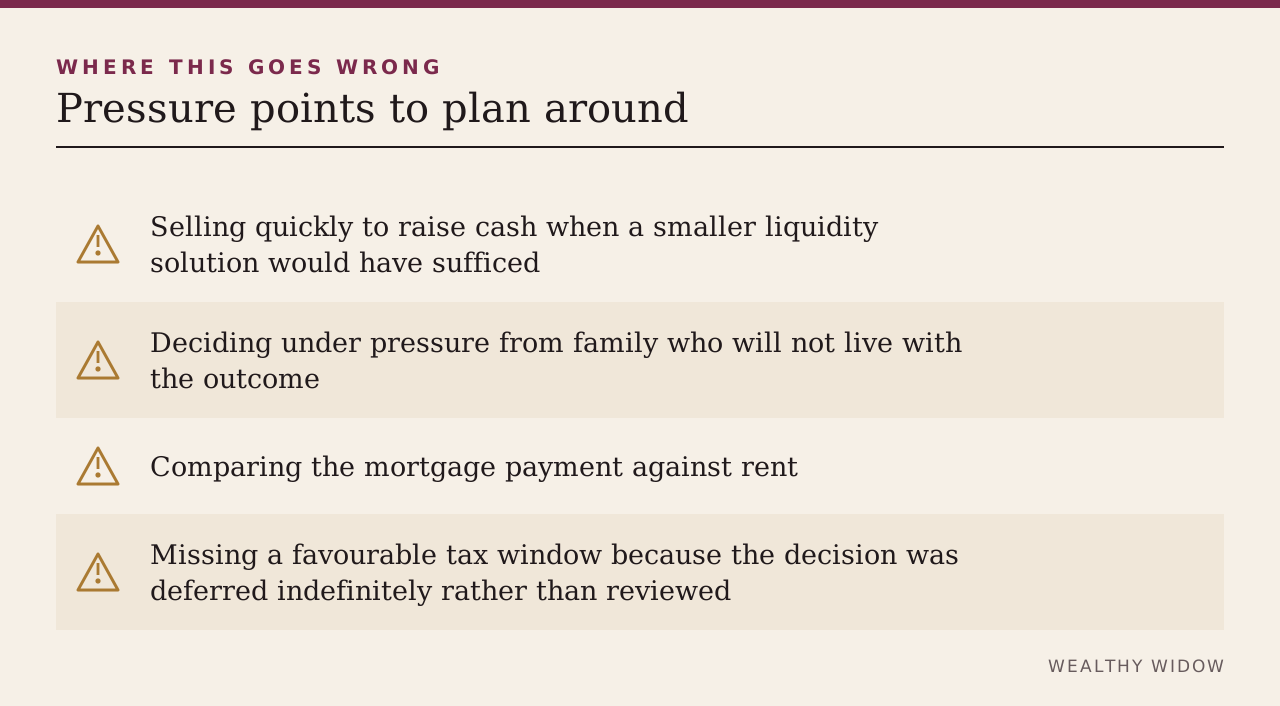
The errors here are well worn, which makes them avoidable. Selling quickly to raise cash when a smaller liquidity solution would have sufficed.
Deciding under pressure from family who will not live with the outcome. Comparing the mortgage payment against rent, while ignoring maintenance, insurance, and taxes. Missing a favourable tax window because the decision was deferred indefinitely rather than reviewed.
What to have in front of you
Collect these once and keep them together, because you will be asked for them repeatedly over the coming months.
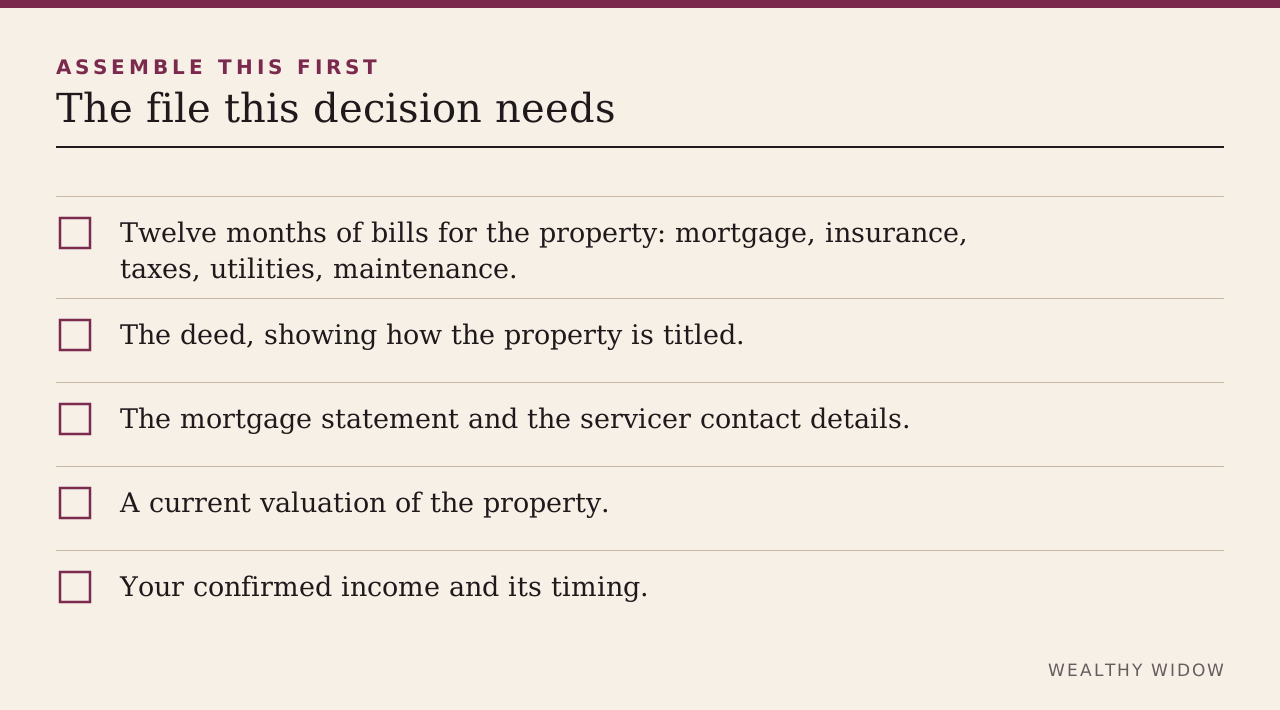
- Twelve months of bills for the property: mortgage, insurance, taxes, utilities, maintenance.
- The deed, showing how the property is titled.
- The mortgage statement and the servicer contact details.
- A current valuation of the property.
- Your confirmed income and its timing.
Do not proceed on a verbal answer
Ask for each of these in a form you can save, date, and produce again months later if it is questioned.
- The true annual cost of remaining in the property.
- Your legal position on the title and on the mortgage.
- Any tax window that affects the timing of a sale.
- The transaction costs of selling and rebuying.
Put these questions directly
A competent professional will welcome these questions. Hesitation is itself information.
- What is my position on the mortgage, and what authority do I have?
- What tax treatment applies if I sell now, and does it change later?
- What are the total transaction costs of moving?
- What would you not do in my position this year?
Where to verify this
Every load-bearing point above traces to one of the following. Where a figure or deadline matters to you, read it there.
- Consumer Financial Protection Bureau — Homeowners face problems with mortgage companies after death of a loved one
- U.S. Department of Housing and Urban Development — Find a housing counselor
- Internal Revenue Service — Publication 523, selling your home
- Consumer Financial Protection Bureau — Mortgage lending rules to assist surviving family members
What a professional still has to decide
The limits of a guide matter as much as its content, because acting past them is where the cost sits. It cannot tell you where to live. It can make sure the housing question is answered before the financial one rather than by it.
What good looks like here
Establish the real cost, the real income, and the legal position. Then answer where you want to live and test it against those numbers, rather than letting a spreadsheet answer a question about your life.
For the step that usually comes next, read The Mortgage: Successor Rights That Servicers Often Overlook.
Primary sources
- Consumer Financial Protection Bureau — Homeowners face problems with mortgage companies after death of a loved one
- U.S. Department of Housing and Urban Development — Find a housing counselor
- Internal Revenue Service — Publication 523, selling your home
- Consumer Financial Protection Bureau — Mortgage lending rules to assist surviving family members
This article provides general education, not individualized legal, tax, investment, insurance, or benefits advice. Rules and deadlines change; verify the current requirement with the agency and a qualified professional.