Home
Associations and Shared Ownership: Rules That Bind the Estate
A condominium or community association imposes obligations that continue after a death and can create charges against the property.

Institutions will describe this as routine. For you it is not routine, and the stakes are not symmetrical. A condominium or community association imposes obligations that continue after a death and can create charges against the property.
Shared-ownership arrangements come with continuing financial obligations and their own rules on transfer, occupancy, and letting. Those obligations are easy to overlook during administration and can accumulate quickly.
Association dues continue whether or not anyone is living there and whether or not the estate has been settled.
The question underneath the paperwork
A short set of facts governs this, and they are worth holding on to when the surrounding pressure is not. Association dues and assessments continue during estate administration. Unpaid dues can create a charge against the property and, in some cases, enforcement action. Associations may impose rules on transfer, letting, and occupancy that affect what you can do.
A special assessment can arise unexpectedly and may be substantial. Association insurance covers common areas but generally not the interior of a unit.
Sequence the work deliberately
This order is designed to keep your choices open for as long as possible.
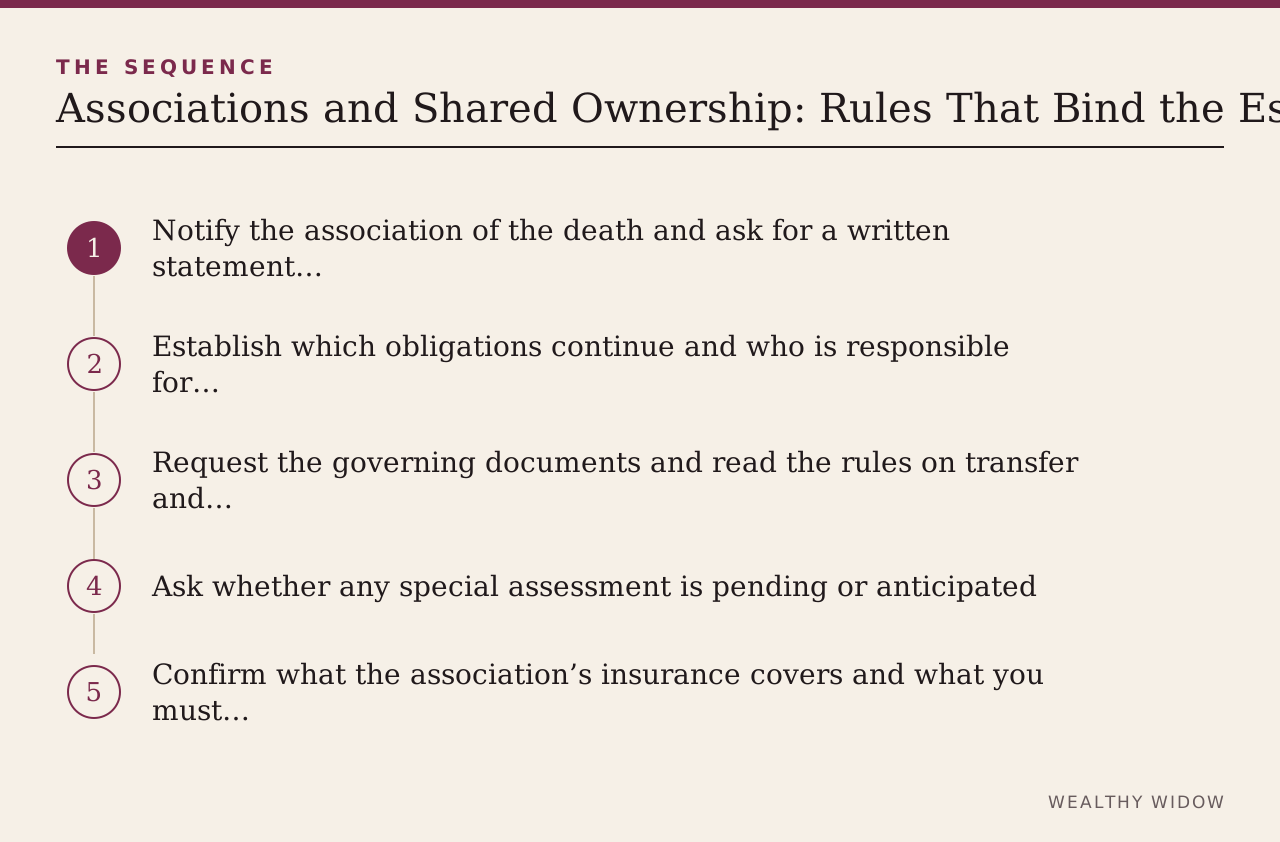
- Notify the association of the death and ask for a written statement of the account.
- Establish which obligations continue and who is responsible for meeting them.
- Request the governing documents and read the rules on transfer and letting.
- Ask whether any special assessment is pending or anticipated.
- Confirm what the association’s insurance covers and what you must insure yourself.
What to refuse, and why
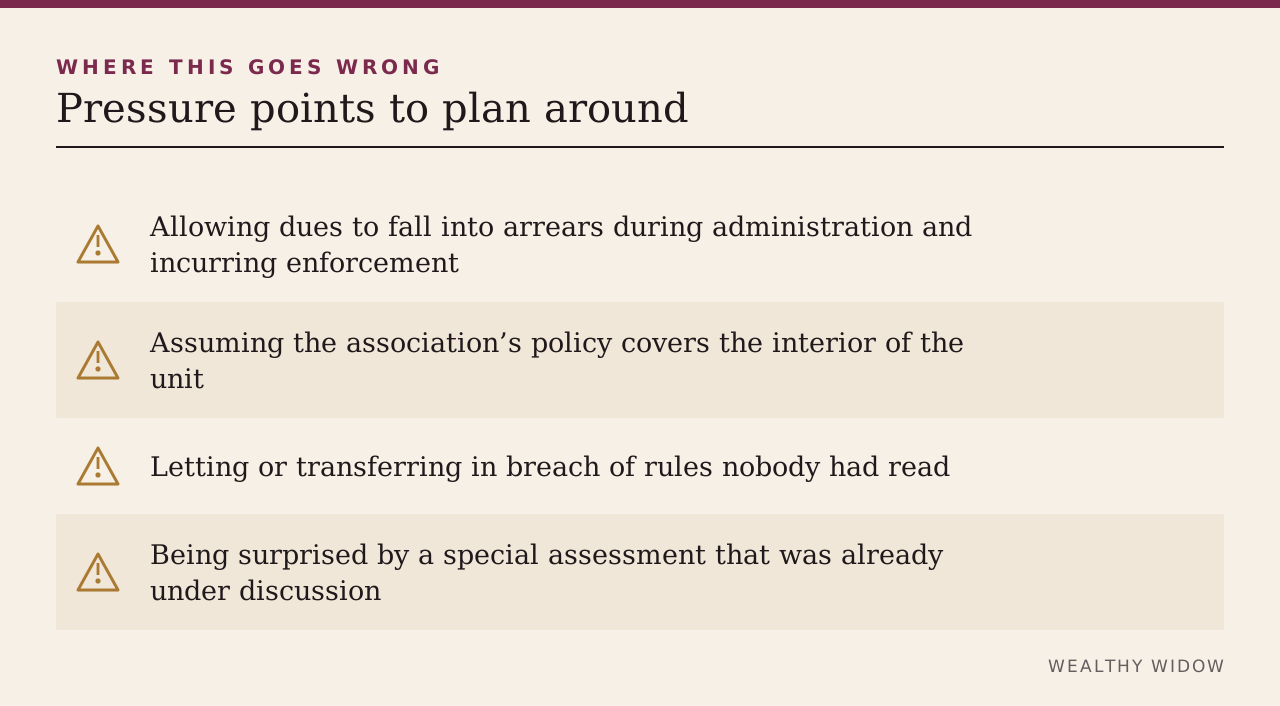
The problems below recur often enough to be planned for. Allowing dues to fall into arrears during administration and incurring enforcement.
Assuming the association’s policy covers the interior of the unit. Letting or transferring in breach of rules nobody had read. Being surprised by a special assessment that was already under discussion.
What every organisation will ask for
Each item below will be requested more than once. Collect them in one place and log where each copy goes.
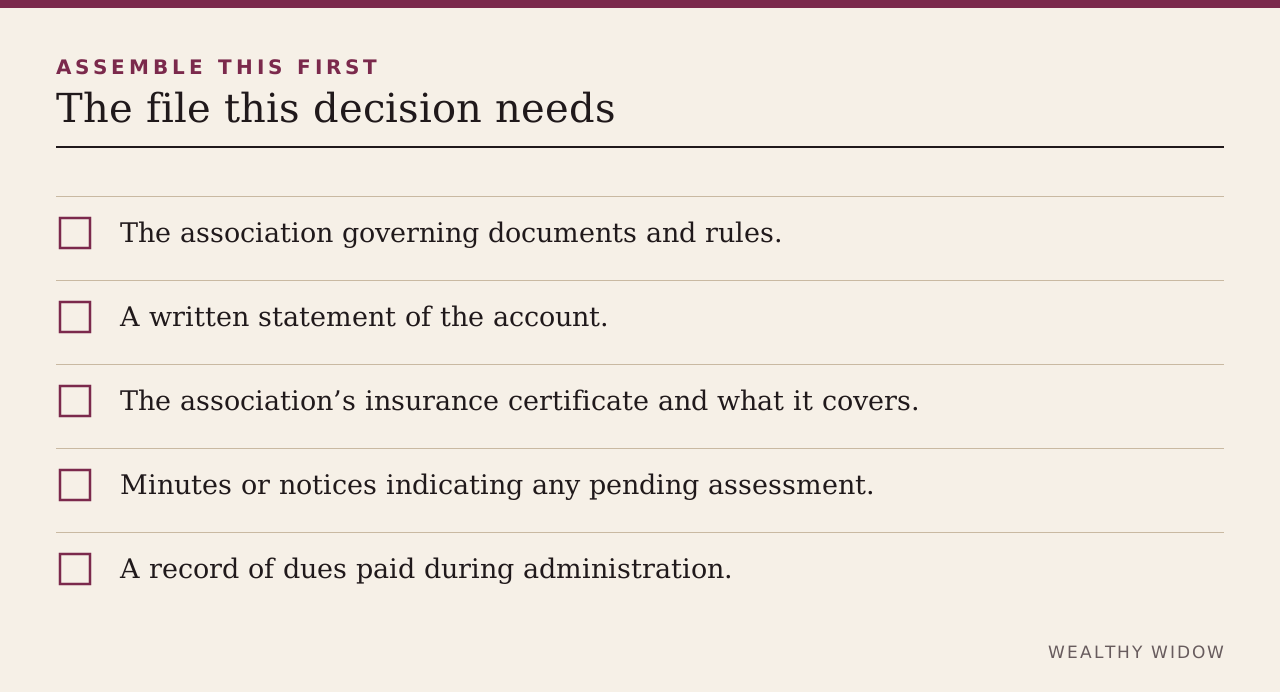
- The association governing documents and rules.
- A written statement of the account.
- The association’s insurance certificate and what it covers.
- Minutes or notices indicating any pending assessment.
- A record of dues paid during administration.
Ask for this in writing
Each item below should exist somewhere other than your memory, because memory is not evidence in a dispute.
- The current account position, in writing.
- What rules apply to transfer, letting, and occupancy.
- Whether any special assessment is pending.
- What the association insures and what you must.
The questions to bring to the meeting
Take these to the attorney, tax professional, or planner handling this work.
- What is the current account position on this unit?
- What rules apply to transfer or letting after a death?
- Is any special assessment pending or under discussion?
- What does the association’s insurance cover, and what must I insure?
Read the rule yourself
The sources below govern. This guide only summarises them.
- Consumer Financial Protection Bureau — Homeowners face problems with mortgage companies after death of a loved one
- U.S. Department of Housing and Urban Development — Find a housing counselor
- Legal Services Corporation — I need legal help
- National Association of Insurance Commissioners — Consumer resources
The limits of this guide
This is where general guidance ends and your own paperwork takes over. It cannot read your association’s documents, which govern and which differ substantially between communities.
What to hold on to
Notify the association, get the account in writing, and read the rules on transfer and letting. Dues that quietly accumulate during administration become a charge on the property and a problem at exactly the wrong moment.
Read The Risks Your Policy Does Not Cover next; the two decisions interact.
Primary sources
- Consumer Financial Protection Bureau — Homeowners face problems with mortgage companies after death of a loved one
- U.S. Department of Housing and Urban Development — Find a housing counselor
- Legal Services Corporation — I need legal help
- National Association of Insurance Commissioners — Consumer resources
This article provides general education, not individualized legal, tax, investment, insurance, or benefits advice. Rules and deadlines change; verify the current requirement with the agency and a qualified professional.