Home
Moving State: The Consequences That Follow You
Relocating changes your tax position, your estate documents, your benefits administration, and sometimes your insurance, all at once.

You may be told this is simply a form to sign. It is a decision with consequences. Relocating changes your tax position, your estate documents, your benefits administration, and sometimes your insurance, all at once.
Moving closer to family is one of the most common decisions in the years after a death. It is usually right and it has a longer list of consequences than most people anticipate.
Residence is a legal status with consequences, not simply an address, and several of those consequences take effect immediately.
The decision behind the form
A handful of accurate points does most of the work here, and the rest is noise generated by other people’s urgency. State income tax treatment of retirement and benefit income varies substantially. Estate and inheritance tax regimes differ by state, and a move can change your exposure. Wills, powers of attorney, and healthcare directives may need reviewing under the new state’s law.
Health plan networks are frequently regional, so a move can require a plan change. Property insurance and its risks differ by region, including disaster exposure.
Step by step, in this order
The order below keeps your options open for as long as possible.
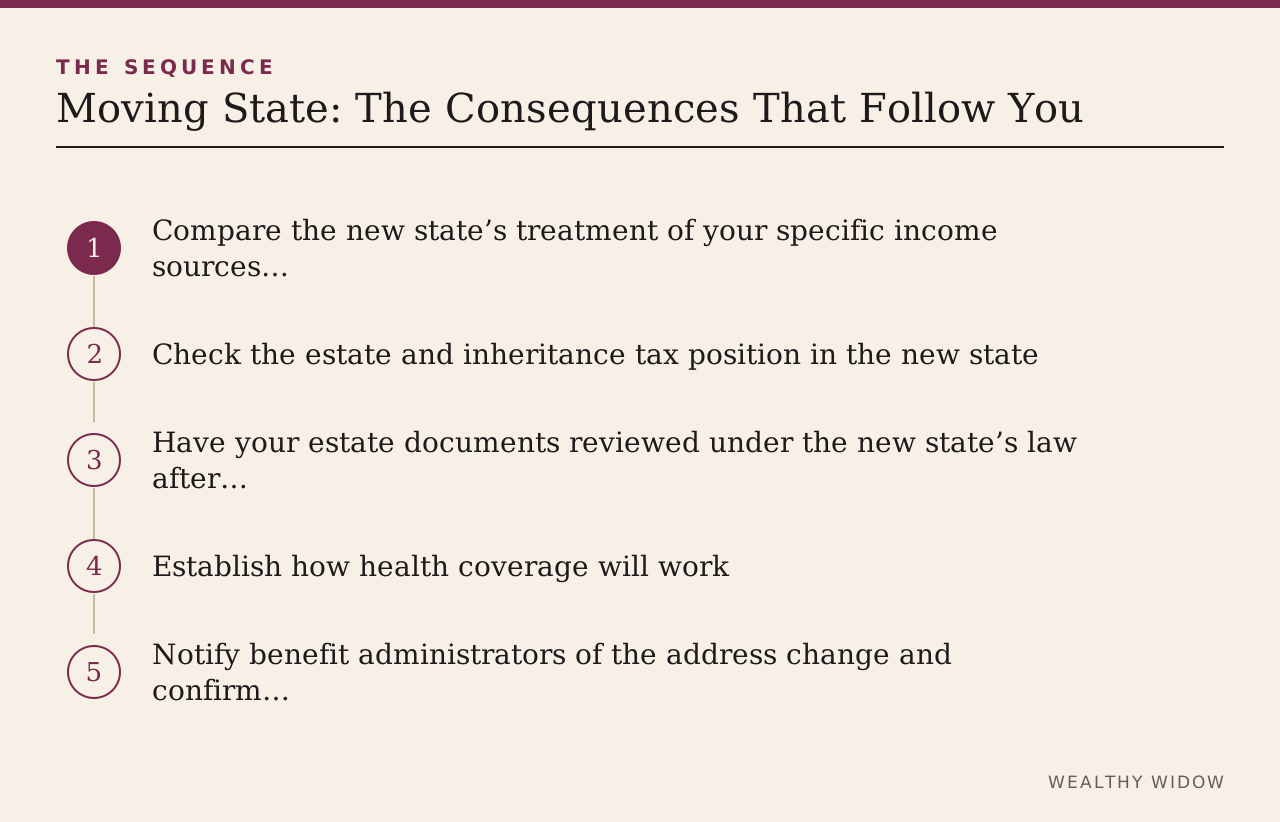
- Compare the new state’s treatment of your specific income sources against the current one.
- Check the estate and inheritance tax position in the new state.
- Have your estate documents reviewed under the new state’s law after moving.
- Establish how health coverage will work, and whether your doctors and prescriptions are covered.
- Notify benefit administrators of the address change and confirm nothing is affected.
The costly misreadings
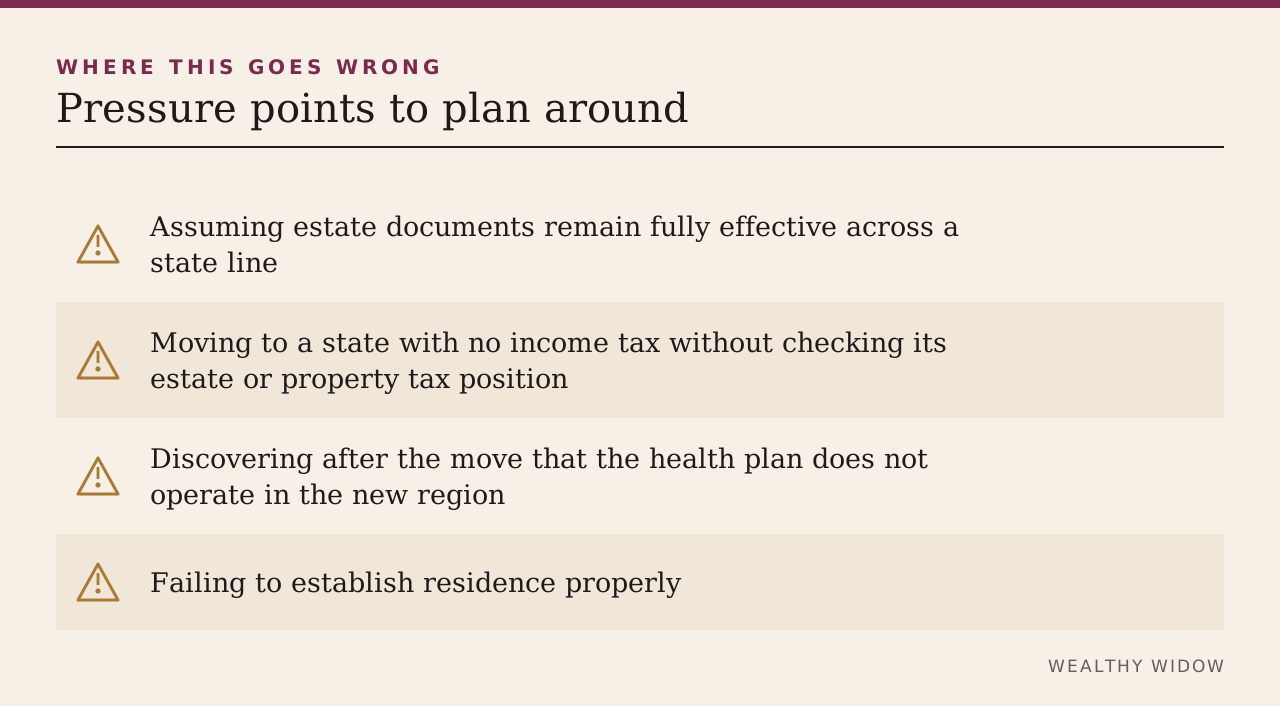
Treat each of the following as a reason to slow down. Assuming estate documents remain fully effective across a state line.
Moving to a state with no income tax without checking its estate or property tax position. Discovering after the move that the health plan does not operate in the new region. Failing to establish residence properly, and remaining exposed to the old state’s tax authority.
The file this decision needs
Keep these together in one place, and note where every copy goes and on what date it was sent.
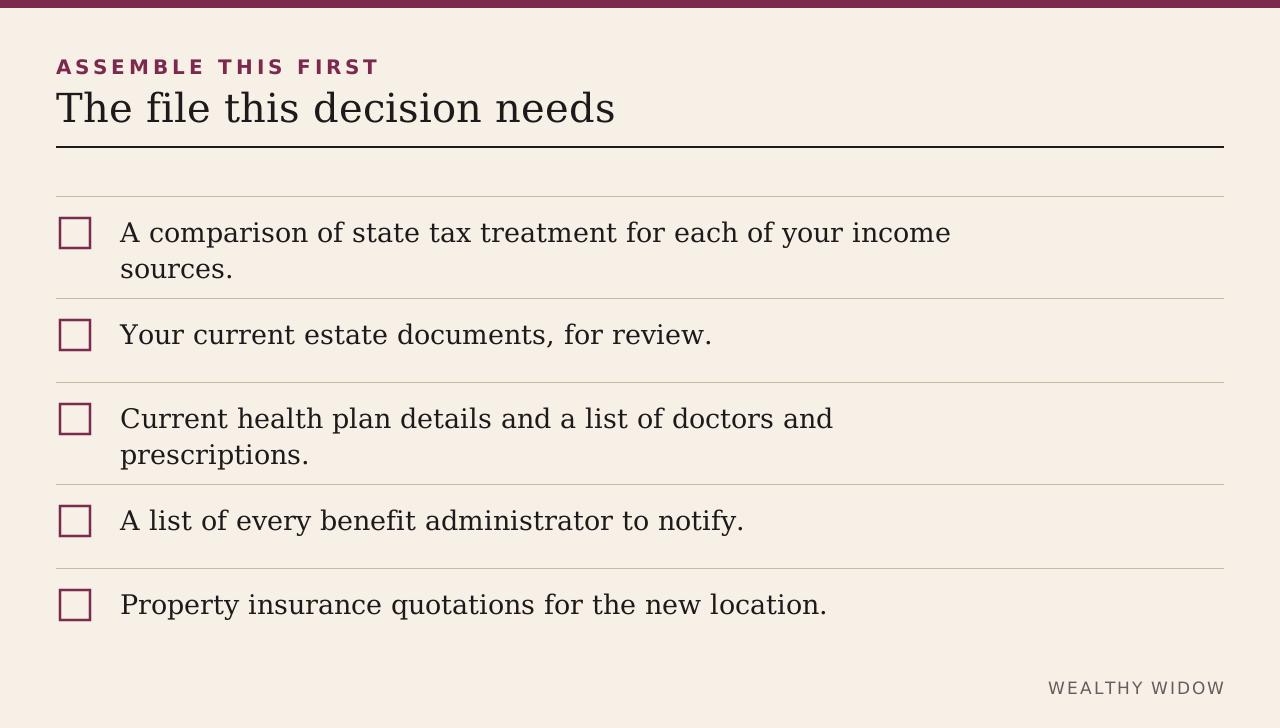
- A comparison of state tax treatment for each of your income sources.
- Your current estate documents, for review.
- Current health plan details and a list of doctors and prescriptions.
- A list of every benefit administrator to notify.
- Property insurance quotations for the new location.
What to have documented
Put each of these in the file with a date against it.
- How the new state taxes your specific income.
- The new state’s estate or inheritance tax position.
- That your estate documents are valid and effective there.
- That health coverage and your prescriptions transfer.
What to ask before you sign
Ask these before an engagement letter is signed or a product is recommended.
- How does this state tax my particular income sources?
- Do my existing estate documents work here, or do they need replacing?
- What happens to my health coverage when I move?
- What do I need to do to establish residence properly?
Read the agency, not this summary
Treat these as the authority and this guide as an index to them.
- Legal Services Corporation — I need legal help
- HealthCare.gov — Reporting income, household, and other changes
- Medicare.gov — Health and drug plans
- Internal Revenue Service — Information for executors
What only your documents can answer
This is where a guide stops being useful and your own paperwork takes over. It cannot compare two specific states, which requires advice from someone practising in the destination.
The last word on this
Run the tax comparison, get the documents reviewed after the move, and confirm health coverage before it. The move is usually right; the administrative tail is longer than expected and entirely manageable when anticipated.
Read Letting Space: Income With Obligations Attached next; the two decisions interact.
Primary sources
- Legal Services Corporation — I need legal help
- HealthCare.gov — Reporting income, household, and other changes
- Medicare.gov — Health and drug plans
- Internal Revenue Service — Information for executors
This article provides general education, not individualized legal, tax, investment, insurance, or benefits advice. Rules and deadlines change; verify the current requirement with the agency and a qualified professional.