Home EV Charging: Installation and Safety
Plan a home electric-vehicle charger with a load calculation, permits, utility review, qualified installation, safe cable management, and complete records.
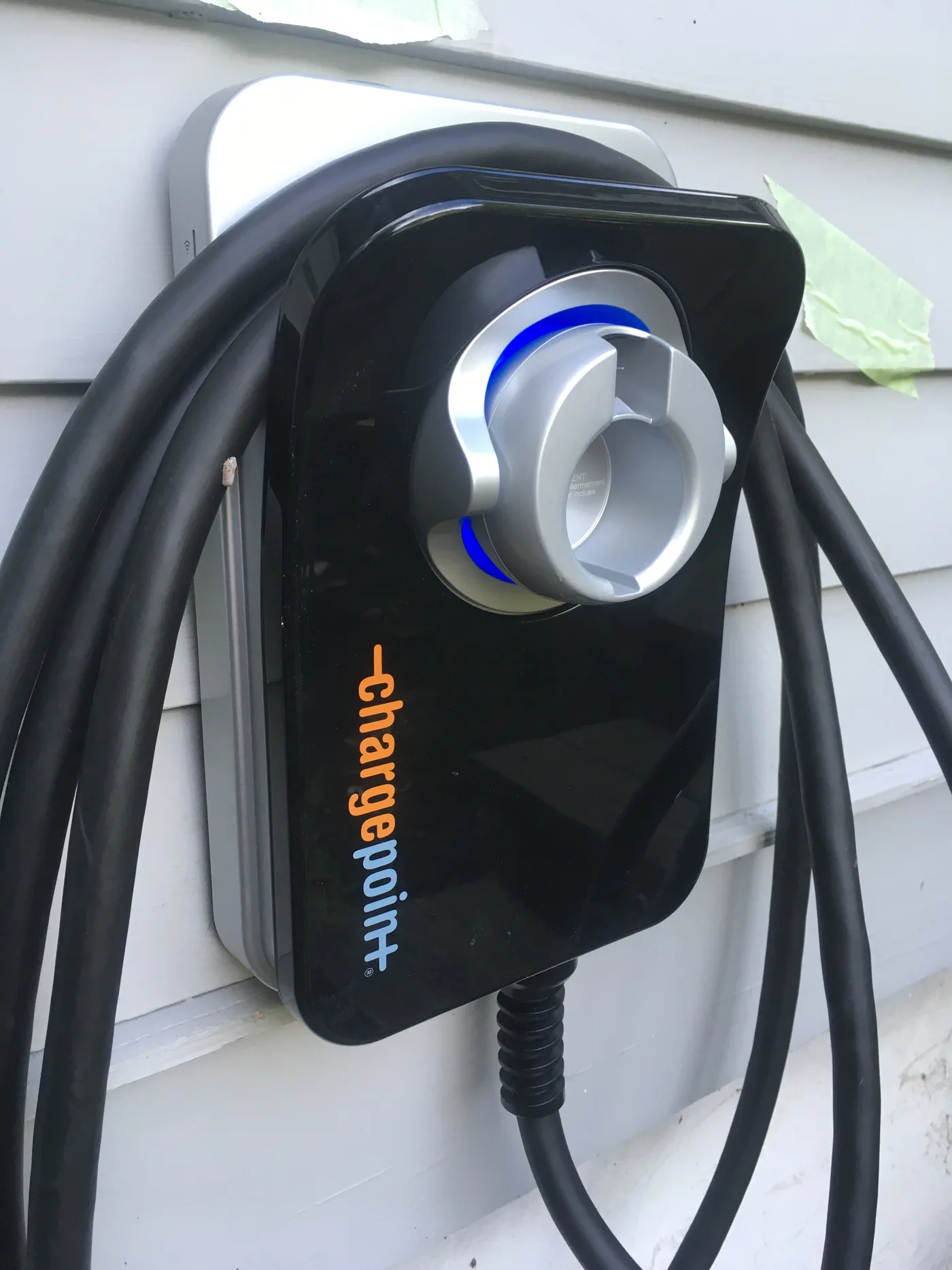
A home electric-vehicle charger is not just another appliance to screw onto a garage wall. It can operate for hours at a high continuous load, outdoors or near vehicles, while people step over its cable and a utility meter records a new pattern of demand. The safest installation begins with the house’s electrical capacity and the vehicle manufacturer’s requirements, not with the charger’s advertised maximum speed.
The U.S. Department of Energy’s Alternative Fuels Data Center recommends having a qualified electrician evaluate the electrical system before installing home charging equipment. Local permits, inspections, utility rules, and the National Electrical Code may apply. The exact requirements depend on the jurisdiction, property, equipment, and installation date.
Buy charging equipment only after the load calculation, location review, utility questions, and permit path are understood.
Define how the charger will be used
Write down the vehicle model, charging-port type, onboard charging limit, daily mileage, parking position, overnight schedule, and any future vehicle plans. A charger cannot make a vehicle accept power faster than its onboard equipment allows.
Level 1 charging uses a standard 120-volt connection and may be enough for a vehicle driven modest distances with long overnight dwell time. Level 2 charging commonly uses 240 volts and can replenish a battery faster, but it requires suitable equipment, circuit capacity, and installation. Do not choose a higher circuit solely because the charger supports it.
Consider every likely user. Can you lift and connect the cable comfortably? Will a caregiver, guest, driver, or household employee use it? Is the connector reachable without stretching across a walkway or scraping a vehicle? If mobility, grip, balance, or vision is a concern, test the cable weight and mounting height before final placement.
Require an electrical load calculation
Ask a licensed electrician to document the service rating, panel condition, available spaces, existing major loads, proposed charging load, conductor route, grounding and bonding, disconnect requirements, and whether load-management equipment is appropriate. An open breaker position does not prove that the service has capacity.
The proposal should identify the charger model and listed rating, circuit voltage and amperage, breaker, conductor size and type, receptacle or hardwired connection, protective equipment, mounting method, and indoor or outdoor rating. Because EV charging is treated as a continuous load, circuit sizing is not a casual rule-of-thumb exercise.
If the home has solar panels, a battery, generator, automatic transfer equipment, demand controls, or an older electrical service, make sure the electrician evaluates how those systems interact. A backup generator usually is not sized to charge a vehicle at full power during an outage. The transfer arrangement must prevent unsafe backfeed and unintended overload.
Do not use an ordinary extension cord, travel adapter, or improvised splitter unless the vehicle and charging-equipment manufacturers explicitly authorize that configuration. Heat damage can develop at a loose, worn, undersized, or weather-exposed connection.
Check permits, utility rules, and property authority
Ask the permitting office whether an electrical permit and inspection are required. Keep the permit number and final approval. A licensed electrician should be willing to identify who pulls the permit and who schedules inspection in the written scope.
Contact the electric utility before construction when the added load may require service work, transformer review, a time-of-use rate, a separate meter, managed charging, or enrollment in an incentive program. Ask for the current terms in writing. Do not rely on an old rebate page or a salesperson’s estimate of savings.
If the property belongs to a condominium, homeowners association, trust, partnership, or landlord, confirm written installation authority before drilling, trenching, changing common electrical equipment, or reserving a parking space. Establish who owns the charger, pays for electricity, maintains the unit, carries insurance, and restores the area when the vehicle or resident changes.
Choose a safe location
The connector should reach the parked vehicle without creating a trip loop, pinch point, or temptation to drive over the cable. Provide a holster and cable storage. Protect equipment from vehicle impact with location, wheel stops, or barriers designed by the appropriate professional.
For outdoor or exposed installations, confirm that every component is rated for the environment and installed according to its listing and manufacturer instructions. Consider rain, snow, irrigation, flooding, direct sun, salt air, temperature, insects, and lawn equipment. Do not mount a charger where water drains onto the enclosure or connector.
Keep required working clearances around electrical equipment. Do not place household storage, fuel containers, trash, or combustible clutter against the charger or panel. A garage arrangement should also preserve safe exit paths and access for emergency responders.
Network-connected chargers create another layer of ownership. Record the account email, recovery method, administrator, Wi-Fi dependency, privacy settings, data sharing, software-update process, and procedure for transferring or deleting the account. Use a unique password and multifactor authentication when available. Do not let an installer retain the only administrator account.
Commission before final payment
The electrician should label the circuit, torque connections as required, test the installation, demonstrate charging, and explain normal indicator lights and shutdown steps. Confirm that the cable, connector, and enclosure remain secure and do not become unusually hot during an observed charging session.
Collect:
- the signed contract and paid invoice;
- the load calculation and final circuit specification;
- permit and passed-inspection record;
- charger model and serial number;
- product listing and installation manual;
- warranty and support details;
- utility correspondence and rate enrollment;
- photographs of the finished route, labels, and panel schedule;
- app ownership and account-transfer instructions.
Use the verification discipline in Hiring Contractors Safely for licenses, insurance, scope changes, and final documents.
Operate and inspect it deliberately
Before each connection, look for a cracked enclosure, bent contact, damaged insulation, loose mount, water intrusion, discoloration, or debris in the connector. Stop using equipment that is damaged, smells burned, sparks, trips repeatedly, or becomes unusually hot. Disconnect only as the manufacturer directs and call the installer, manufacturer, or emergency services as conditions require.
Keep the connector off the floor and the cable stored without tight kinks. Do not alter the plug, bypass a protection device, or open the enclosure. Arrange periodic inspection under the manufacturer instructions and after collision, flooding, lightning, construction, or an electrical fault.
Check the vehicle and charger manufacturers’ recall pages using the exact model and serial number. Save service and software records. If the property is insured, ask the carrier or broker whether the electrical upgrade or equipment must be disclosed and whether documentation affects coverage.
Post a concise emergency card near the electrical panel with the EV circuit number, charger disconnect method, installer, utility, vehicle manufacturer, and emergency number. Household members should know not to touch charging equipment standing in water and not to fight an electrical or battery fire themselves.
Review actual performance
After the first full billing cycle, compare energy use and cost with the expected schedule. Check whether charging occurs during the intended utility-rate window and whether household demand creates avoidable peaks. A slower scheduled charge may meet the driving need with less strain and expense than charging at maximum power whenever the vehicle arrives.
Revisit the installation when the vehicle, charger, panel, solar system, battery, generator, household occupancy, or parking arrangement changes. Preserve the charger file with Keeping Records an Adviser Can Work From so an electrician, insurer, buyer, or fiduciary can understand what was approved and installed.
A good home charging system feels unremarkable in daily use because its capacity, cable route, permissions, controls, and records were resolved before the first night of charging.
This article provides general home-management information. It is not electrical, engineering, insurance, tax, or legal advice. Use qualified professionals and follow current codes, permits, utility requirements, product instructions, and local rules.
Primary sources
- DOE Alternative Fuels Data Center: Charging Electric Vehicles at Home
- DOE Alternative Fuels Data Center: Electric Vehicle Consumers
- National Fire Protection Association: Electric Vehicle Safety
This article provides general education, not individualized legal, tax, investment, insurance, or benefits advice. Rules and deadlines change; verify the current requirement with the agency and a qualified professional.
More from Home
The desk →
Home
Home Backup Power: Generator Safety and Readiness
Plan safe backup power by defining essential loads, using qualified installation, preventing carbon monoxide exposure, storing fuel safely, and testing outage procedures.

Home
Mature Tree Risk: An Arborist Review for the Property
Manage mature trees with a mapped inventory, credentialed risk assessment, storm and construction controls, documented work, and a practical inspection cycle.

Home
Private Well Water: A Testing and Treatment Plan
Manage a private well with certified laboratory testing, local contaminant guidance, inspection, treatment verification, flood response, records, and safe drinking-water decisions.