Home
Repairs and Contractors: A Predictable Target
Home repair fraud concentrates on recently widowed and older homeowners, and the approach is consistent enough to recognise.
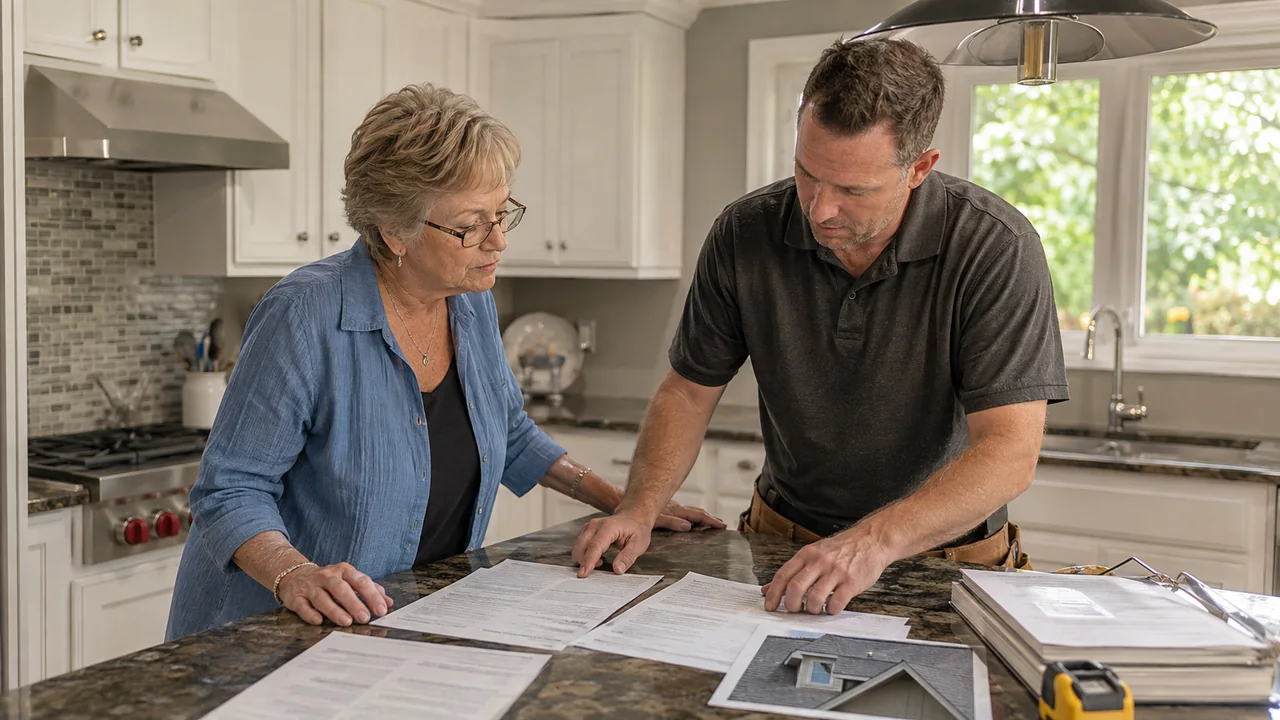
This guide covers a decision that is easy to make quickly and expensive to make wrongly. Home repair fraud concentrates on recently widowed and older homeowners, and the approach is consistent enough to recognise.
Where a spouse previously handled maintenance, a widow may face both unfamiliar decisions and targeted approaches. The pattern is well documented, and recognising it is most of the defence.
Nobody who knocks on your door has your roof’s best interests at heart, and no genuine repair requires a decision today.
Name the decision before you make it
Begin with what can be said with confidence, and treat everything beyond it as still to be established. Unsolicited door-to-door approaches offering repairs are a recognised fraud pattern. Large upfront payments before work begins are a common feature of repair fraud. Licensing and insurance requirements for contractors are set at state or local level and are verifiable.
Written contracts with a specified scope and price are standard practice for legitimate work. Pressure to decide immediately is a technique rather than a reflection of urgency.
How to work through it
A workable order follows. Each step assumes the last one is done.
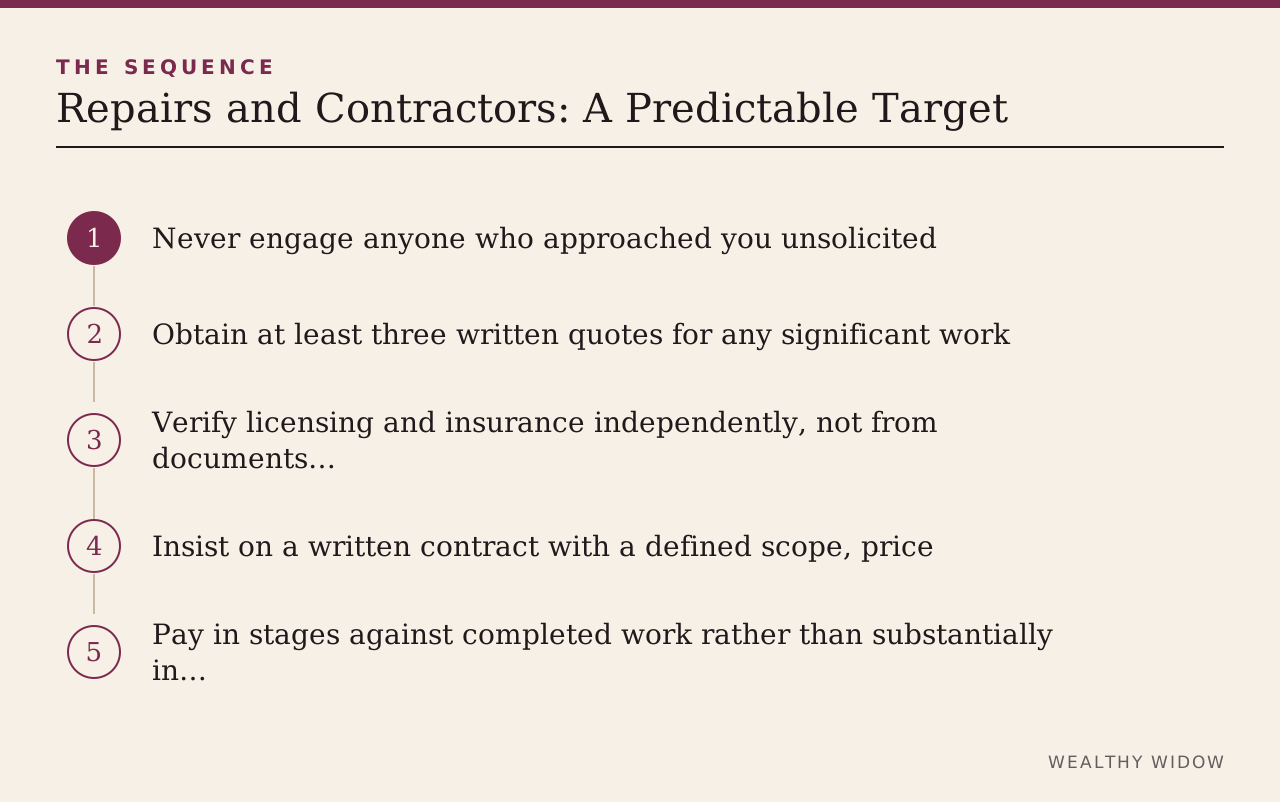
- Do not hire or pay an unsolicited contractor on the spot; verify the business and compare written estimates first.
- Obtain at least three written quotes for any significant work.
- Verify licensing and insurance independently, not from documents the contractor supplies.
- Insist on a written contract with a defined scope, price, and timetable.
- Pay in stages against completed work rather than substantially in advance.
Known hazards
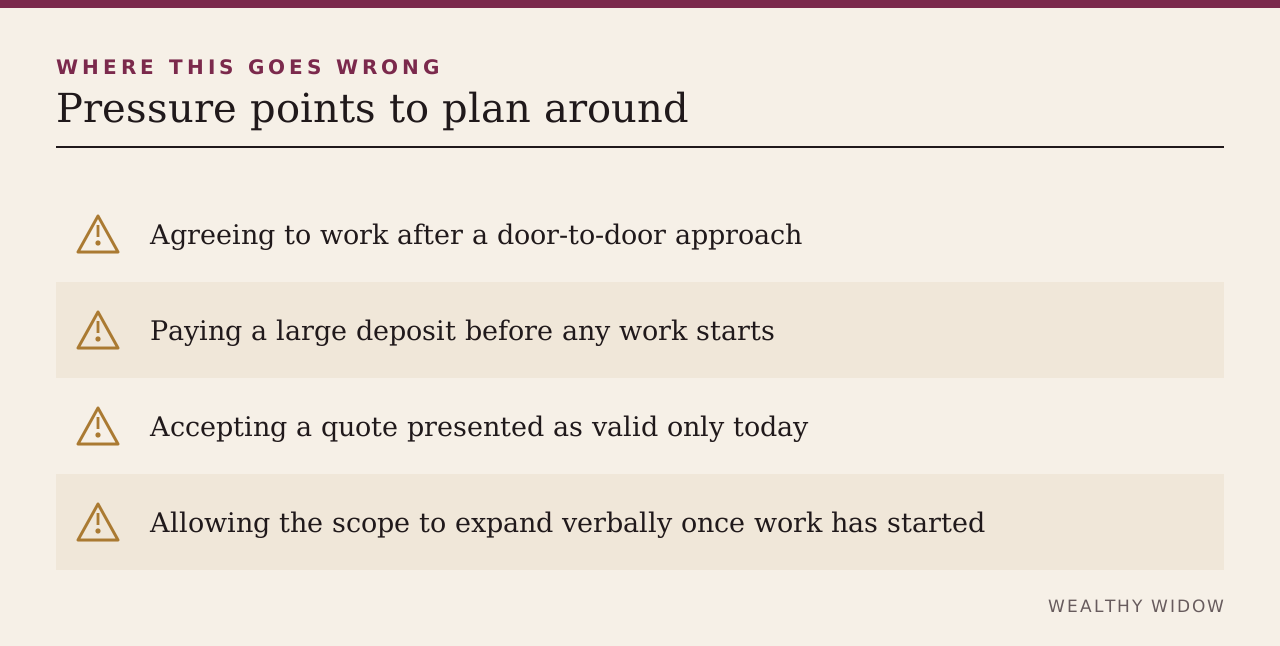
These are the places where readers most often lose ground. Agreeing to work after a door-to-door approach, which is where most repair fraud begins.
Paying a large deposit before any work starts. Accepting a quote presented as valid only today. Allowing the scope to expand verbally once work has started.
Documents this decision needs
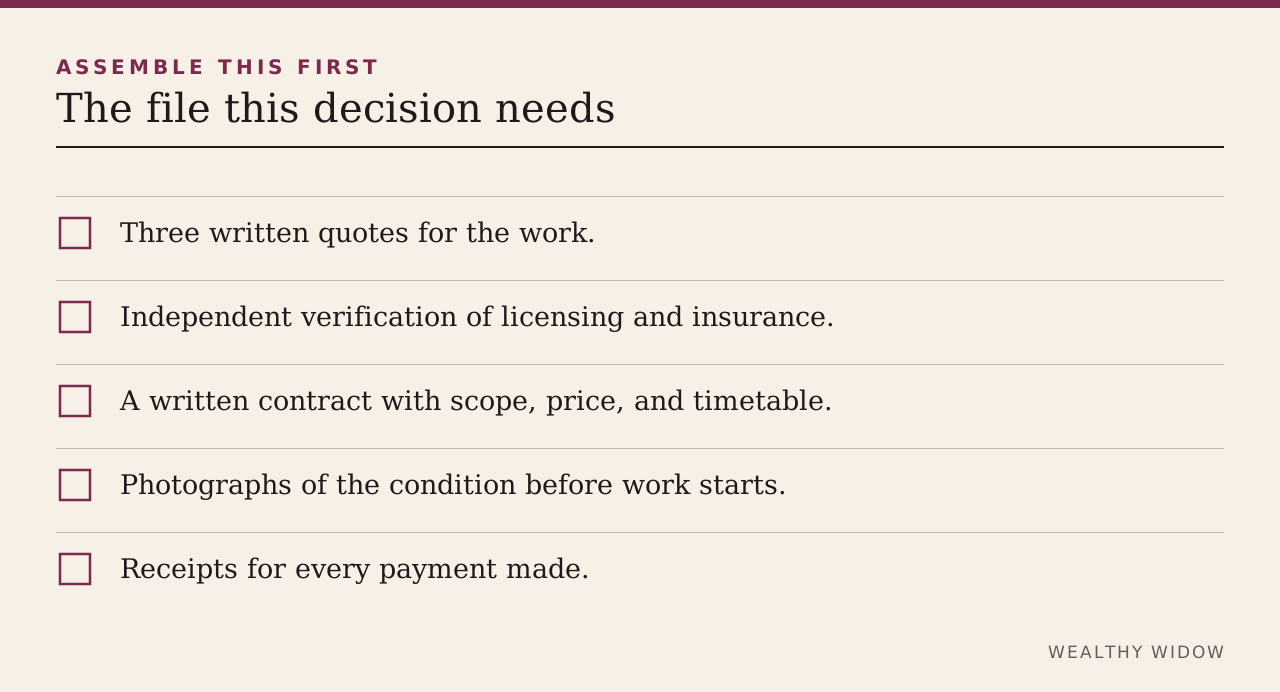
Organisations will ask for these repeatedly, so assemble them once and keep them together.
- Three written quotes for the work.
- Independent verification of licensing and insurance.
- A written contract with scope, price, and timetable.
- Photographs of the condition before work starts.
- Receipts for every payment made.
Put these in writing, then proceed
A conversation is a starting point. These belong on paper.
- That the contractor is licensed and insured, verified independently.
- The full scope and price, in writing.
- The payment schedule, tied to completed stages.
- What warranty applies to the work.
Before anyone is engaged, ask these
Ask them plainly; the response tells you as much as the answer.
- What is your licence number, and which authority issued it?
- Can you provide the full scope and price in writing?
- What is the payment schedule, and what is due before work begins?
- What warranty applies, and how is it evidenced?
Sources worth reading yourself
Where this guide and a source disagree, the source is right.
- Federal Trade Commission — How to avoid a home improvement scam
- Federal Trade Commission — Home repair scams
- U.S. Department of Housing and Urban Development — Find a housing counselor
The boundary of this guide
Be clear about the boundary; the wrong assumption here is expensive. It cannot assess a specific contractor, and local licensing bodies are the appropriate place to verify one.
Where this leaves you
Multiple written estimates, independent licence and insurance checks, a contract with a defined scope, and payments tied to completed work materially reduce exposure to home-repair fraud. They also create the record needed if workmanship, price, or financing later becomes disputed.
Our related guide Property Tax Relief You May Now Qualify For covers the adjacent problem.
Primary sources
- Federal Trade Commission — How to avoid a home improvement scam
- Federal Trade Commission — Home repair scams
- U.S. Department of Housing and Urban Development — Find a housing counselor
This article provides general education, not individualized legal, tax, investment, insurance, or benefits advice. Rules and deadlines change; verify the current requirement with the agency and a qualified professional.