Money
The Records That Make Professional Advice Cheaper
Advisers charge for assembly as readily as for judgement, and arriving organised converts one into the other.

Institutions will describe this as routine. For you it is not routine, and the stakes are not symmetrical. Advisers charge for assembly as readily as for judgement, and arriving organised converts one into the other.
A significant share of professional fees in this period is spent assembling information rather than analysing it. That share is entirely within your control.
Nobody should be paid professional rates to collate your statements when you could have done it yourself.
Separate the label from the decision
Begin with what can be said with confidence, and treat everything beyond it as still to be established. Professional time spent gathering documents is charged at the same rate as advice. Advisers work faster and better from a complete picture than from a partial one. The same organised file serves the lawyer, the accountant, and eventually the executor.
Incomplete information leads to advice hedged against the gaps. Assembly is work you can do yourself, at no cost beyond time, and it is frequently the largest single component of a first bill.
A working sequence for this decision
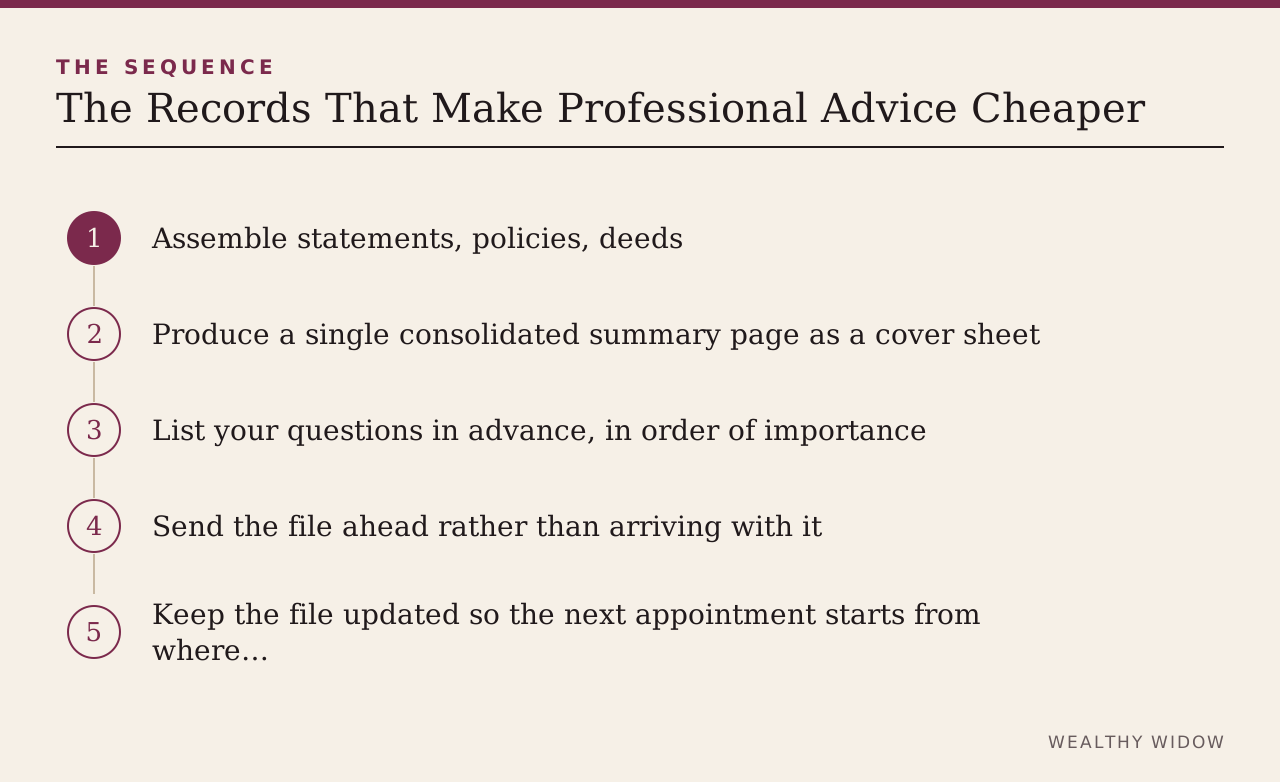
A workable order follows. Each step assumes the last one is done.
- Assemble statements, policies, deeds, and returns before the first appointment.
- Produce a single consolidated summary page as a cover sheet.
- List your questions in advance, in order of importance.
- Send the file ahead rather than arriving with it.
- Keep the file updated so the next appointment starts from where this one ended.
The predictable errors
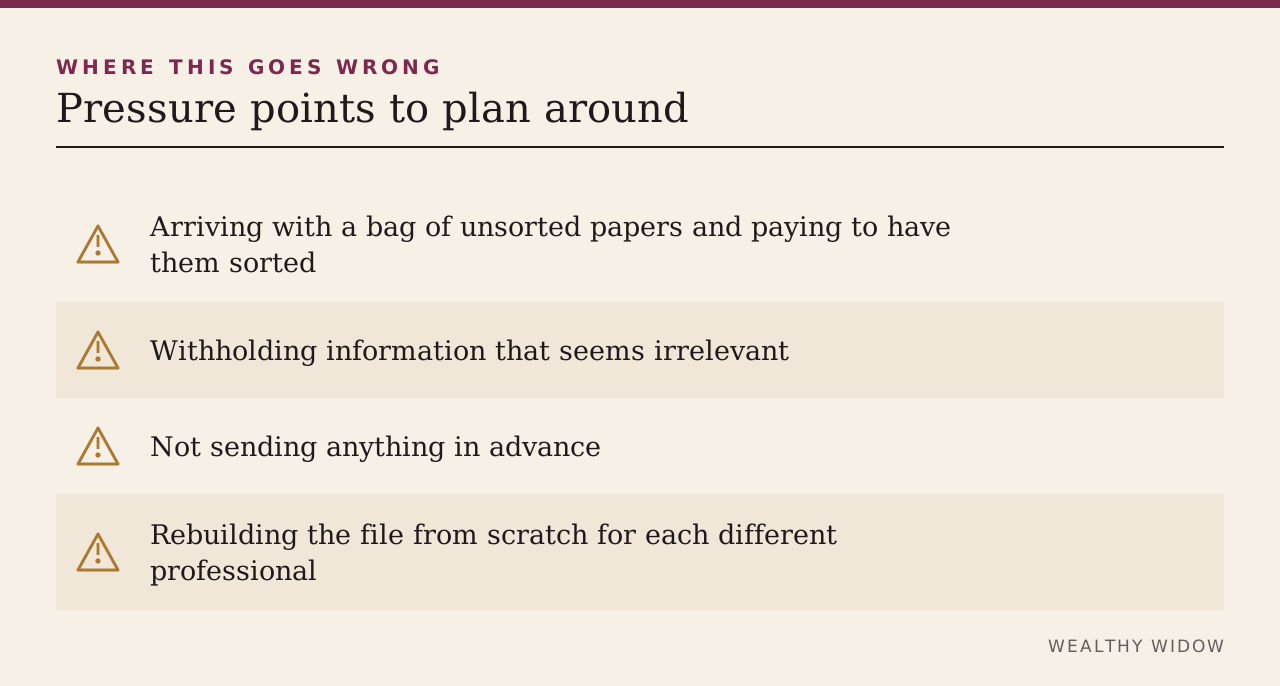
These are the places where readers most often lose ground. Arriving with a bag of unsorted papers and paying to have them sorted.
Withholding information that seems irrelevant, which produces hedged advice. Not sending anything in advance, so the first meeting is spent on assembly. Rebuilding the file from scratch for each different professional.
Documents this decision needs
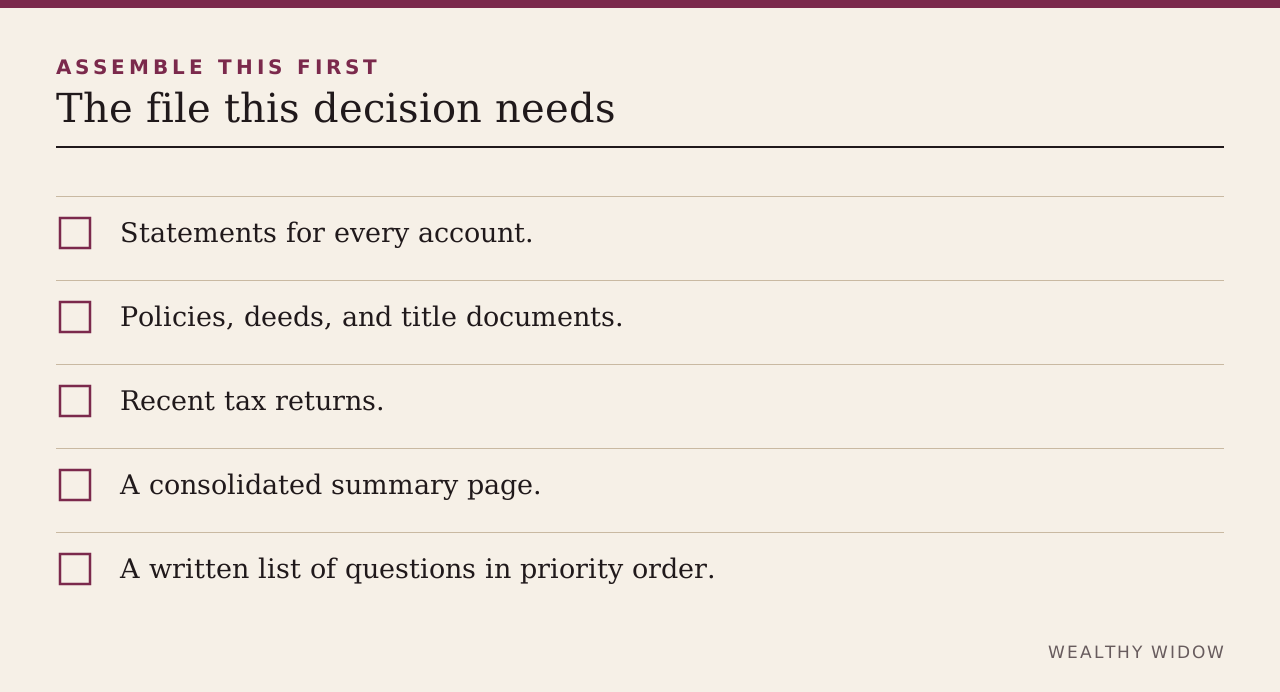
Organisations will ask for these repeatedly, so assemble them once and keep them together.
- Statements for every account.
- Policies, deeds, and title documents.
- Recent tax returns.
- A consolidated summary page.
- A written list of questions in priority order.
Get it on paper
Ask for each of the following in writing, by letter, secure message, or email you can save.
- That the file is complete before the appointment.
- That it has been sent in advance.
- That your questions are written down.
- That the same file can serve other professionals.
Questions for the person advising you
Put these directly, note the answers, and record who gave them and when.
- What would you like from me before we meet?
- What is missing from what I have sent?
- How much of your time is assembly rather than advice?
- What should I bring to the next appointment?
Where to verify this
Every load-bearing point above traces to one of the following. Where a figure or deadline matters to you, read it there.
- U.S. Securities and Exchange Commission — Investor.gov
- Internal Revenue Service — Information for executors
- Internal Revenue Service — About Publication 559, survivors, executors, and administrators
- U.S. Securities and Exchange Commission — Understanding fees
What a professional still has to decide
The limits of a guide matter as much as its content, because acting past them is where the cost sits. It cannot do the assembly, which is the point: this is the part of professional cost that you can remove yourself.
What good looks like here
Send a complete file in advance, with a summary page on top and your questions listed in priority order. It costs you an afternoon of sorting and it reliably converts a first meeting spent on assembly into a first meeting spent on advice, which is the thing you are actually paying for.
For the step that usually comes next, read The First Meeting With a New Adviser.
Primary sources
- U.S. Securities and Exchange Commission — Investor.gov
- Internal Revenue Service — Information for executors
- Internal Revenue Service — About Publication 559, survivors, executors, and administrators
- U.S. Securities and Exchange Commission — Understanding fees
This article provides general education, not individualized legal, tax, investment, insurance, or benefits advice. Rules and deadlines change; verify the current requirement with the agency and a qualified professional.