Money
The File Your Executor Will Need, Built While You Can
You have just experienced how hard it is to reconstruct someone else’s financial life. The most useful thing you can do now is make yours legible.

You may be told this is simply a form to sign. It is a decision with consequences. You have just experienced how hard it is to reconstruct someone else’s financial life. The most useful thing you can do now is make yours legible.
This is the one piece of estate planning a widow is uniquely well placed to do well, because the experience is recent and specific rather than theoretical.
You now know exactly what a badly documented financial life costs, because you have just spent months paying that cost.
Getting the question right first
The position is narrower than it looks once it is stated plainly. The largest administrative cost after a death is discovery, not paperwork. A single index of accounts, policies, and advisers removes most of that cost. The index does not need to hold passwords or balances to be useful; names and institutions are enough.
Beneficiary designations, deeds, and trust documents should be listed alongside where they are held. The document is only useful if someone knows it exists and can reach it.
Where to start, and what follows
This is the working order most readers find keeps them in control.
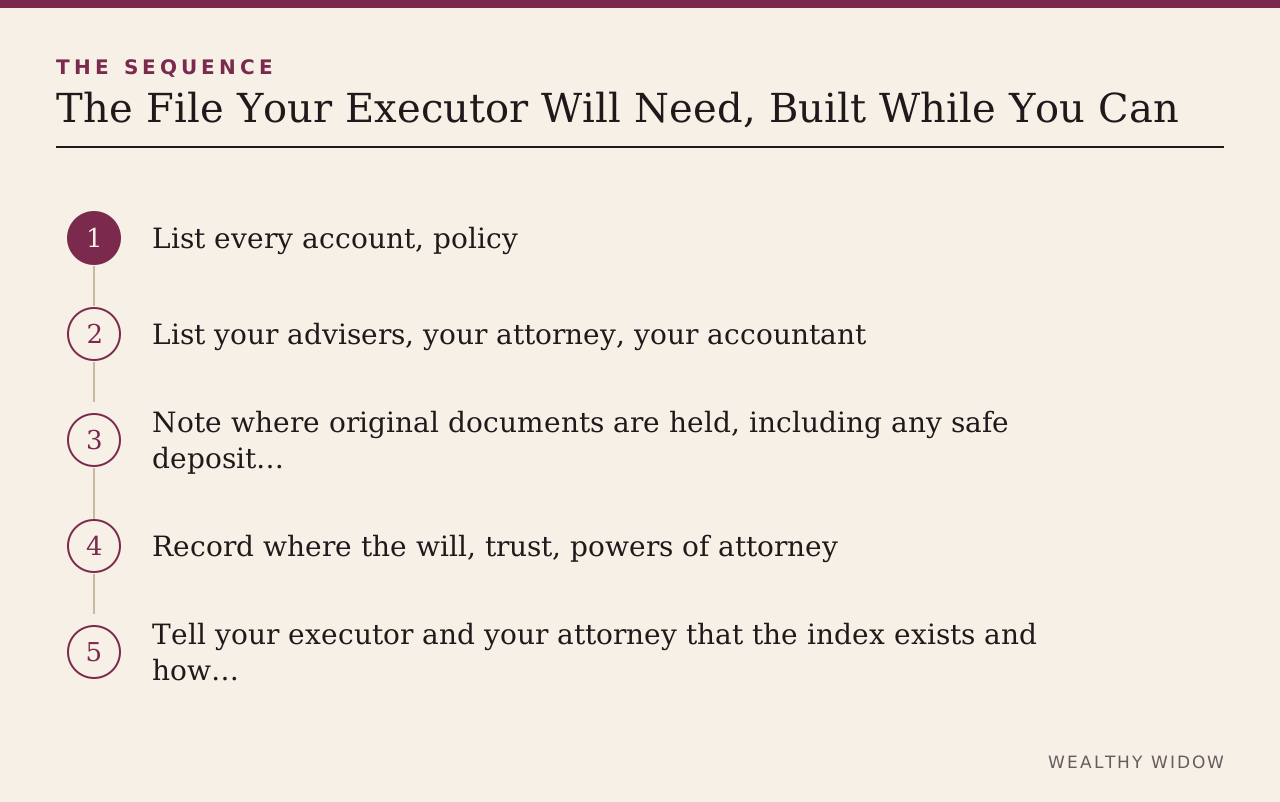
- List every account, policy, and asset with the institution and an approximate identifier.
- List your advisers, your attorney, your accountant, and how to reach each.
- Note where original documents are held, including any safe deposit box.
- Record where the will, trust, powers of attorney, and healthcare directive are kept.
- Tell your executor and your attorney that the index exists and how to access it.
Where this commonly goes wrong
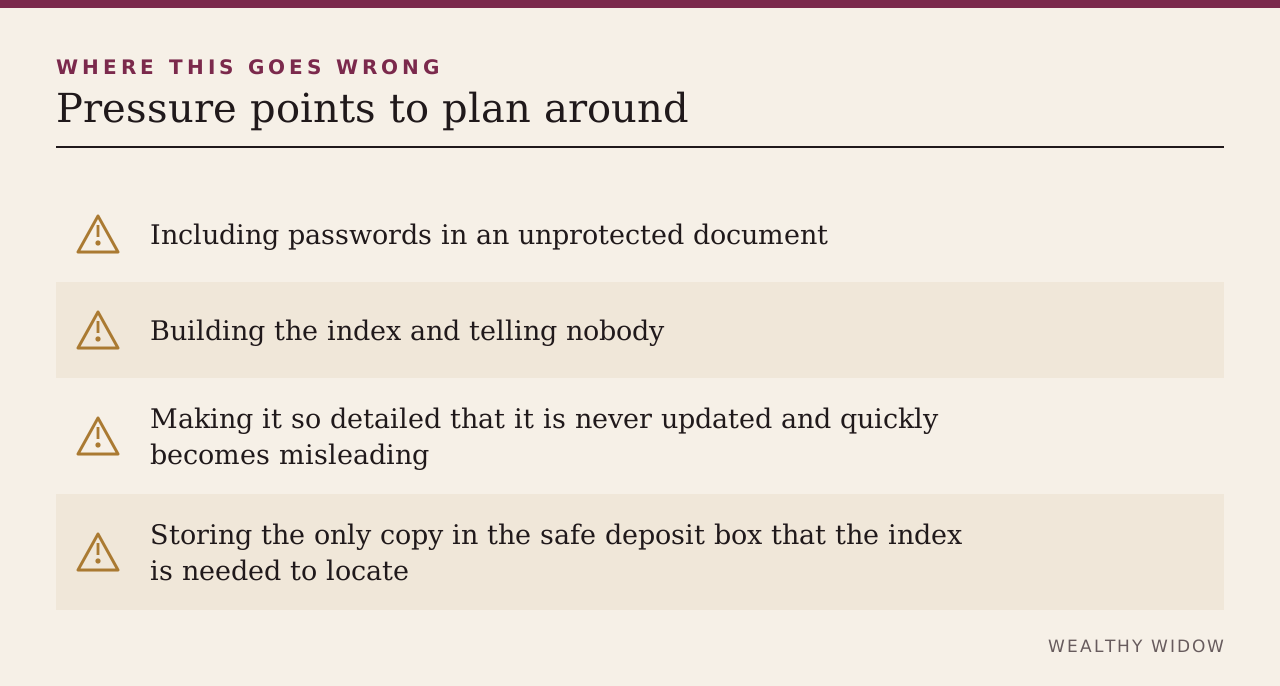
Knowing the failure modes in advance is most of the protection. Including passwords in an unprotected document, which converts a helpful index into a liability.
Building the index and telling nobody, which reproduces exactly the problem it was meant to solve. Making it so detailed that it is never updated and quickly becomes misleading. Storing the only copy in the safe deposit box that the index is needed to locate.
The paperwork to collect first
Gather these first and the rest of the process moves considerably faster, because most delays are missing paperwork.
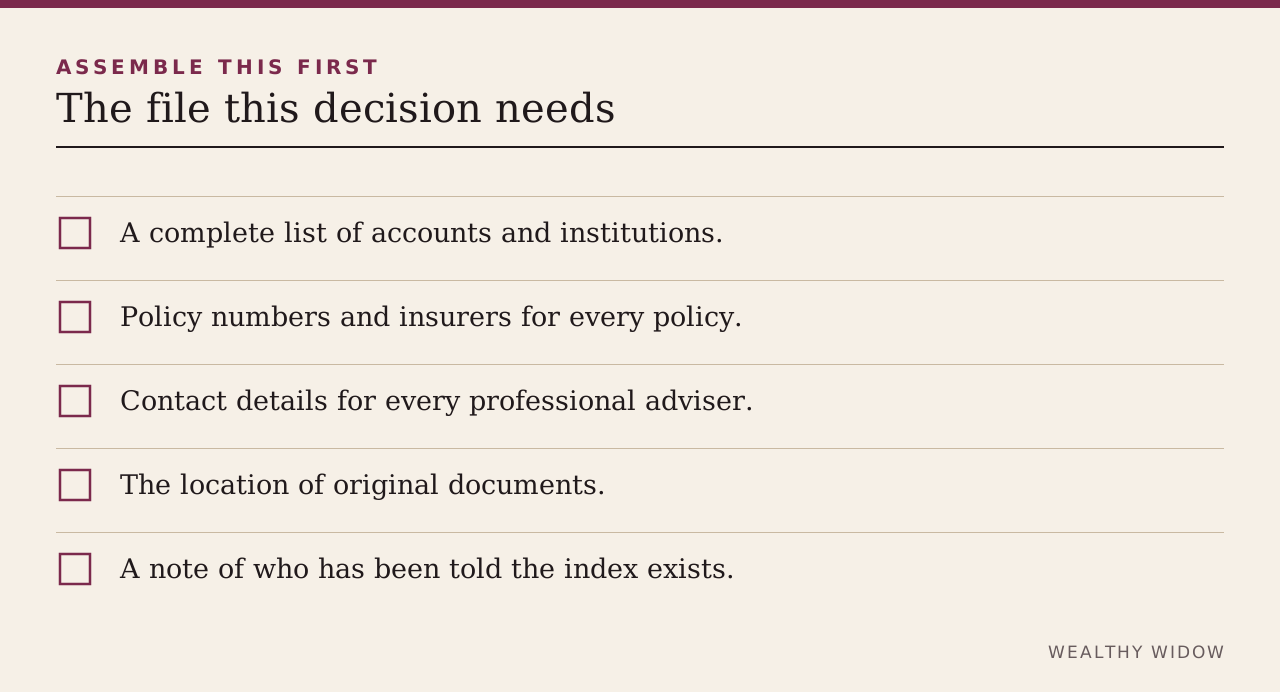
- A complete list of accounts and institutions.
- Policy numbers and insurers for every policy.
- Contact details for every professional adviser.
- The location of original documents.
- A note of who has been told the index exists.
The written trail to keep
Written confirmation is ordinary practice, not suspicion.
- That the index covers every institution you deal with.
- That it does not contain passwords or credentials in plain form.
- That your executor knows it exists and can reach it.
- The date it was last reviewed.
Questions to take to a professional
If an answer to any of these is vague, that is your answer about the adviser.
- What would you need from me if you had to administer my estate tomorrow?
- Where should this document be stored so it is both secure and reachable?
- What is missing from this index that you would expect to see?
- How often should it be reviewed?
Check this against the source
These are the primary sources behind this guide. They are the ones that change, and the ones worth checking before you act.
- Consumer Financial Protection Bureau — Taking control of your finances, help for surviving spouses
- Internal Revenue Service — Information for executors
- National Institute on Aging — Advance care planning and advance directives
- National Association of Unclaimed Property Administrators — Search beyond your state
The questions this cannot reach
No account written for a general readership can reach the following, and it should not pretend to. It cannot replace a will or a trust. It is the map that makes those documents usable, not a substitute for them.
Taking it from here
An afternoon spent building the index you wish had existed is the most valuable estate planning available to you, and the only piece of it you can do entirely without a professional.
If this raised a further question, Paper Certificates and Savings Bonds: The Assets Hiding in Drawers takes it further.
Primary sources
- Consumer Financial Protection Bureau — Taking control of your finances, help for surviving spouses
- Internal Revenue Service — Information for executors
- National Institute on Aging — Advance care planning and advance directives
- National Association of Unclaimed Property Administrators — Search beyond your state
This article provides general education, not individualized legal, tax, investment, insurance, or benefits advice. Rules and deadlines change; verify the current requirement with the agency and a qualified professional.