Money
How Your Adviser Is Paid Determines What You Will Be Advised
Commission, fee-only, and fee-based describe fundamentally different business models, and the label an adviser uses is not always the model they operate.

Institutions will describe this as routine. For you it is not routine, and the stakes are not symmetrical. Commission, fee-only, and fee-based describe fundamentally different business models, and the label an adviser uses is not always the model they operate.
Compensation structure is the single most predictive fact about the advice you will receive, and it is a question every legitimate adviser expects and answers directly.
Ask how someone is paid before you ask what they recommend, because the first answer explains the second.
The shape of this decision
Hold on to a small number of accurate points. Commission-based compensation pays the adviser when a product is sold, which creates an incentive toward transaction rather than inaction. Fee-only compensation is paid by you, typically as a percentage of assets, a flat fee, or an hourly rate. Fee-based is a hybrid term and can include both fees from you and commissions from product providers.
Ongoing percentage fees compound over decades and can consume a substantial share of a portfolio’s growth. Registration status and disciplinary history are publicly searchable before you engage anyone.
Order of play
This is the order that avoids closing doors you may still need.
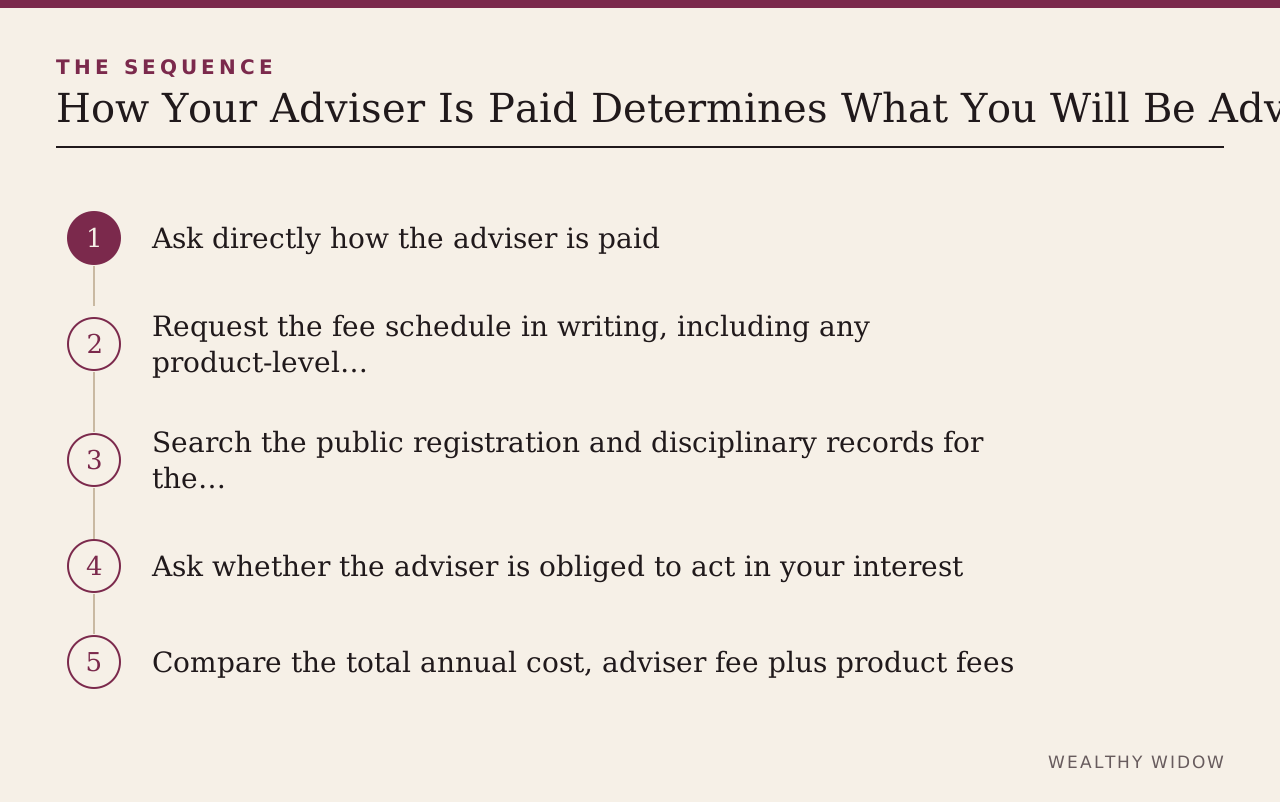
- Ask directly how the adviser is paid, and whether anyone other than you pays them in connection with your account.
- Request the fee schedule in writing, including any product-level charges beneath the advisory fee.
- Search the public registration and disciplinary records for the individual and the firm.
- Ask whether the adviser is obliged to act in your interest, and request that obligation in writing.
- Compare the total annual cost, adviser fee plus product fees, rather than the headline rate alone.
The errors worth naming in advance
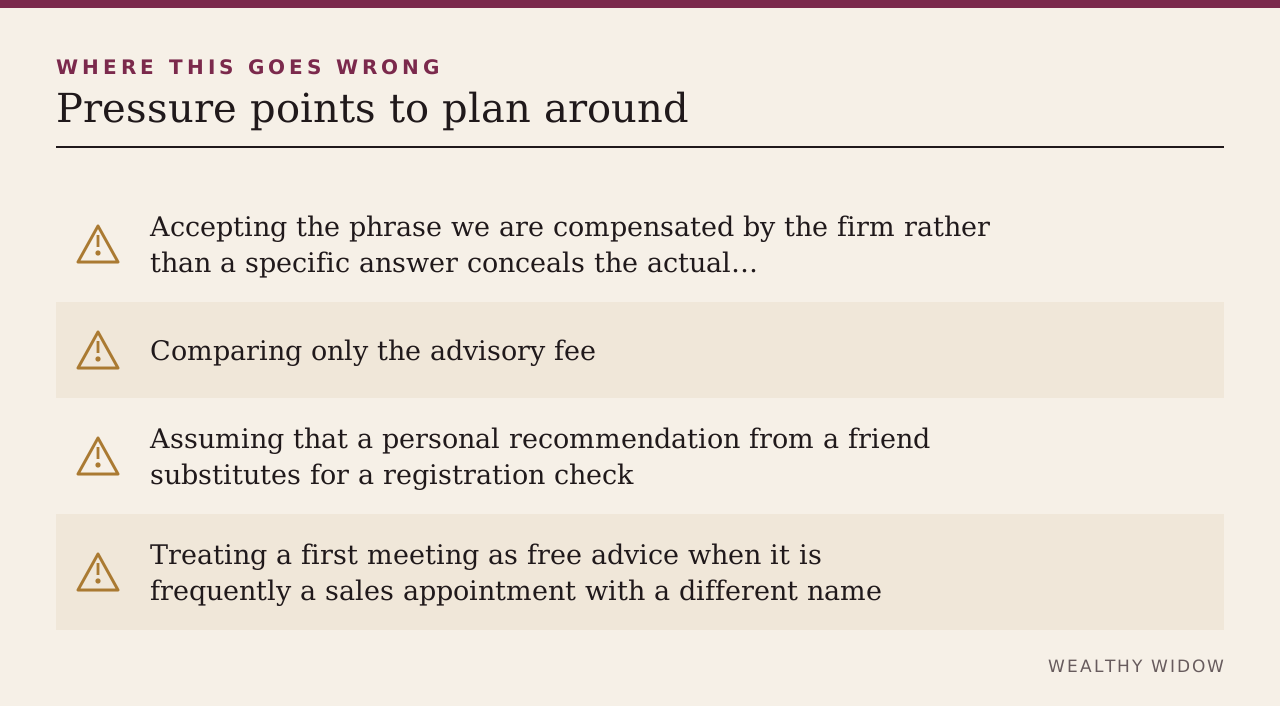
The errors here are well worn, which makes them avoidable. Accepting the phrase we are compensated by the firm rather than a specific answer conceals the actual model.
Comparing only the advisory fee, while ignoring fund and product charges beneath it, understates the real cost substantially. Assuming that a personal recommendation from a friend substitutes for a registration check. Treating a first meeting as free advice when it is frequently a sales appointment with a different name.
What to have in front of you
Collect these once and keep them together, because you will be asked for them repeatedly over the coming months.
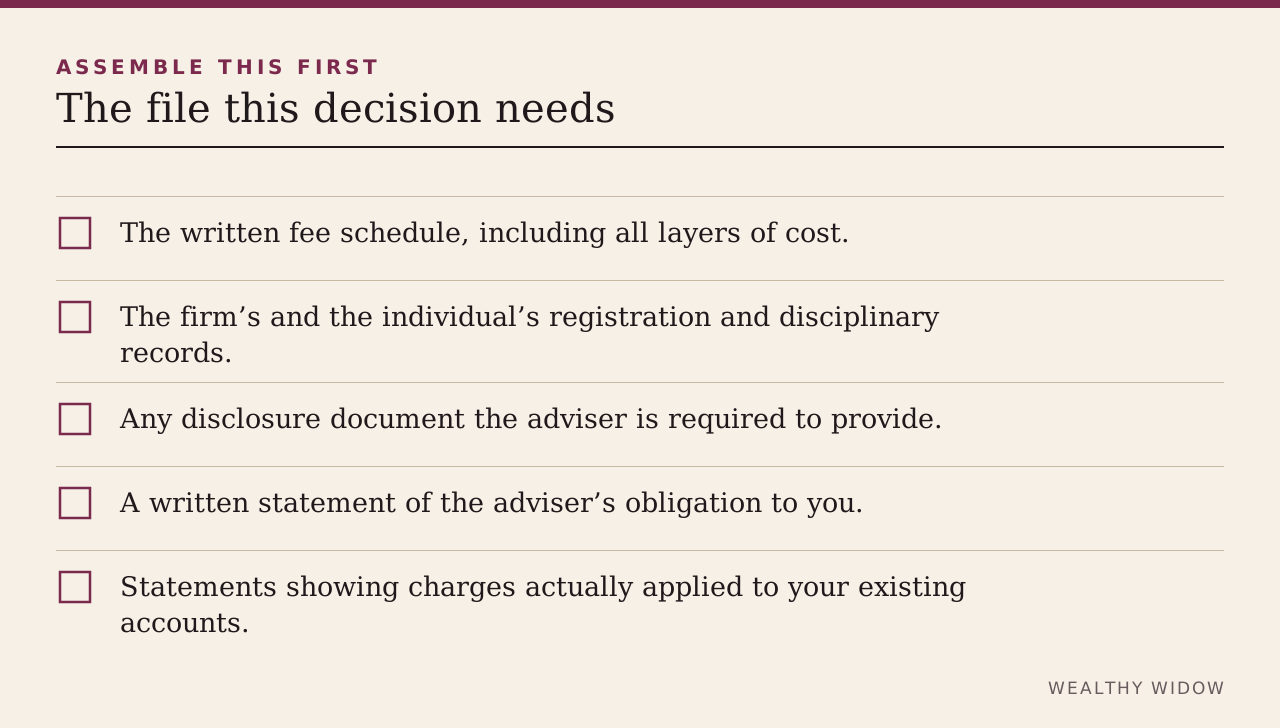
- The written fee schedule, including all layers of cost.
- The firm’s and the individual’s registration and disciplinary records.
- Any disclosure document the adviser is required to provide.
- A written statement of the adviser’s obligation to you.
- Statements showing charges actually applied to your existing accounts.
Ask for this in writing
Each item below should exist somewhere other than your memory, because memory is not evidence in a dispute.
- The total annual cost, expressed in both percentage and currency terms.
- Every party that pays the adviser in connection with your account.
- Whether the adviser is obliged to act in your interest, in writing.
- Any charge that applies if you leave.
The questions to bring to the meeting
Take these to the attorney, tax professional, or planner handling this work.
- What is my total annual cost, in dollars, across every layer?
- Does anyone other than me pay you in connection with my account?
- Are you obliged to act in my best interest, and will you confirm that in writing?
- What would it cost me to leave, and over what period?
Where to verify this
Every load-bearing point above traces to one of the following. Where a figure or deadline matters to you, read it there.
- U.S. Securities and Exchange Commission — Understanding fees
- U.S. Securities and Exchange Commission — Check out your investment professional
- U.S. Securities and Exchange Commission — How fees and expenses affect your investment portfolio
- U.S. Securities and Exchange Commission — Ask and check
What a professional still has to decide
The limits of a guide matter as much as its content, because acting past them is where the cost sits. It cannot tell you whether a particular adviser is good. It can make sure that before you decide, you know exactly who pays them and how much you pay in total.
What good looks like here
Two questions do most of the work: who pays you, and what is my total annual cost in dollars. An adviser who answers both plainly and in writing has passed a test many do not.
A companion guide, The Annuity Conversation: Slowing Down a Fast Sale, covers the decision that sits alongside this one.
Primary sources
- U.S. Securities and Exchange Commission — Understanding fees
- U.S. Securities and Exchange Commission — Check out your investment professional
- U.S. Securities and Exchange Commission — How fees and expenses affect your investment portfolio
- U.S. Securities and Exchange Commission — Ask and check
This article provides general education, not individualized legal, tax, investment, insurance, or benefits advice. Rules and deadlines change; verify the current requirement with the agency and a qualified professional.