Cooking for One After Widowhood: Nutrition and Food Safety
Build manageable meals after loss using current protein guidance, safe leftover limits, shared-table options and clear signs that weight loss needs medical care.
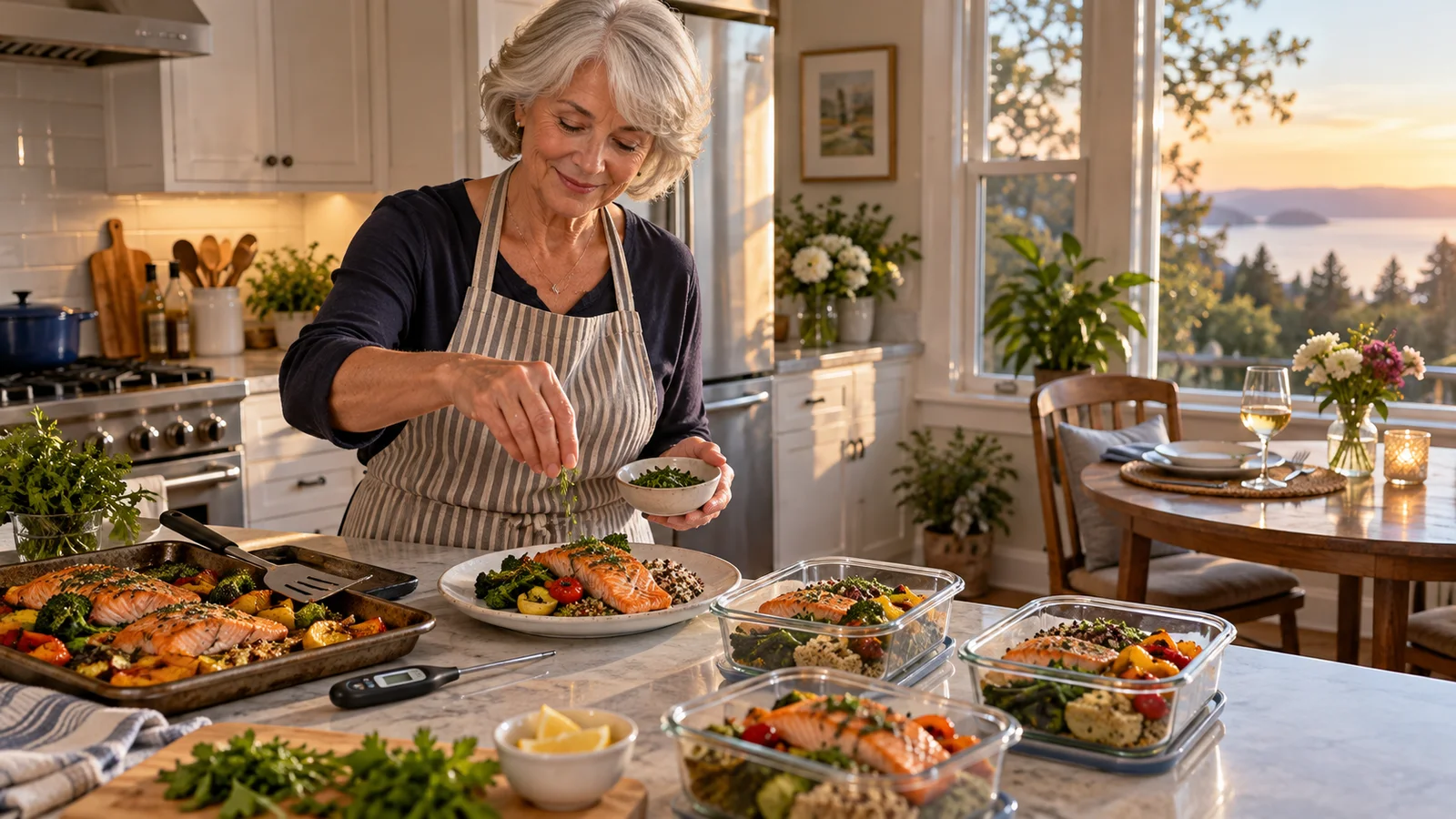
The kitchen is often where an absence is most exact: one cup on the drainboard, a roast sized for two, a recipe card that still says “serves four.” If your spouse did the cooking, you may be learning the stove as well as the silence. If you did the cooking, the reason for it may have quietly left the room.
The immediate aim is not culinary ambition. It is a repeatable system: regular mealtimes, a short list of protein-rich foods, single portions frozen promptly, at least one shared meal on the calendar and a written threshold for calling the doctor if weight falls without trying.
Grief can take the appetite with it
The National Institute on Aging lists little interest in food among the common experiences of grief, alongside trouble sleeping and difficulty concentrating. It notes that some people lose interest in cooking and eating after a death, and that many couples divide household tasks, so the person left may be taking on the cooking for the first time. A widow who never cooked and one who cooked for forty years can arrive at the same untouched plate by different routes.
NIA’s advice is modest and sound: make mealtime plans, have lunch with friends when the house feels too quiet, and consider the radio during meals. It adds that unhappiness can reduce appetite, and that if low feelings last a few weeks or months, you should talk with your doctor. Taste can change too, through age, dental problems, or medication side effects; fresh herbs, spices, or lemon juice can bring food back into focus.
For the first months, treat meals less as occasions than as appointments. Eat at set times whether or not you feel hungry, in portions small enough to finish.
What the 2025–2030 Dietary Guidelines ask of you now
The current federal guidance is the Dietary Guidelines for Americans, 2025–2030, issued by the Departments of Health and Human Services and Agriculture and dated January 2026. For older adults its point is compact: some need fewer calories but still require equal or greater amounts of protein, vitamin B12, vitamin D, and calcium. It directs you to nutrient-dense foods, from dairy, meats, seafood, and eggs to legumes and whole plant foods, and says that when intake or absorption falls short, fortified foods or supplements may be needed under medical supervision. That clause is a reason to ask your physician about B12 and vitamin D, not to buy a shelf of bottles.
The guidelines ask for protein at every meal and set a general goal of 1.2 to 1.6 grams per kilogram of body weight per day, adjusted to your calorie needs. Suppose you weigh 130 pounds, about 59 kilograms: that is roughly 71 to 94 grams a day. Sodium should stay below 2,300 milligrams a day, water and unsweetened drinks are the recommended choices, and the guidelines advise less alcohol overall and none if you take medicines that interact with it.
These are recommendations, not rules. The document says anyone with a chronic disease should ask a clinician whether its advice needs adapting, so bring the protein and sodium figures to your next appointment rather than adopting them unexamined.

A kitchen arranged for one
Many recipes are written for four; use that rather than fight it. Cook a full recipe, freeze single portions within two hours of cooking, and one evening’s work becomes several easy dinners; a freezer of your own food is a far better fallback than a drawer of menus.
Keep a short pantry of protein that needs almost no preparation: eggs, plain yogurt, good cheese, tinned fish, cooked beans, nuts. The Dietary Guidelines also accept frozen or canned vegetables and fruit with little or no added sugar. A standing order with a grocer removes one more decision. The aim is to make the nourishing choice the easiest one in the house at seven in the evening.
Lessons, shared tables, and meal services
NIA suggests an adult education cooking course, and notes that some grocery stores have cooking coaches and some meal delivery services send pre-portioned ingredients with instructions. A private lesson in your own kitchen, with your own pans, is often more useful than a class built around equipment you will never own; ask for a repertoire of six or eight dishes sized for one or two. A weekly class with the same small group is also company.
Eating with others does not require hosting. NIA suggests potlucks, cooking with a friend, and meals at a senior center, community center, or religious facility. The federal Senior Nutrition Program, administered by the Administration for Community Living under the Older Americans Act, serves such meals in community settings, including restaurants, and delivers meals to people at home. Services are available to people 60 and over and their spouses of any age, and local programs are funded partly by voluntary participant contributions. In ACL’s 2024 national participant survey, 44% of congregate-meal respondents said they live alone. If you attend, a generous contribution is a graceful way to take part; if you would rather serve, programs depend on volunteers.
Private arrangements serve the same purpose: a cook who comes once a week, a housekeeper who prepares a few dinners, a standing table at a restaurant where you are known. Anyone who cooks for you should know the storage limits below, because a week of dinners made on Monday can outlast the refrigerator.
Setting the table for yourself
The small ceremony of a meal is worth keeping. Use a real plate, a cloth napkin, and the glass you like. Sit down. Leave the phone in another room. Light a candle if that was the custom of the house. A set place gives eating a beginning and an end, which makes it easier to notice what, and how much, you ate.
A place set for one is still a place set, and setting it is a quiet decision about how you intend to live.
Vary where you eat: breakfast by a window, lunch on the terrace, dinner at the dining table with music playing. Each breaks the link between one chair and the empty seat opposite. The wider adjustments of a one-person household are covered in our guide to living alone for the first time.
Keeping leftovers safe
Cooking for one produces leftovers, and they deserve more care now. The FDA’s food safety guide for older adults, which includes a joint USDA–FDA cold storage chart, says people 65 and older are at higher risk of hospitalization and death from foodborne illness. Its core practices:
- Refrigerate or freeze cooked food within 2 hours, or within 1 hour if the temperature is above 90°F.
- Divide large amounts into shallow containers so they cool quickly.
- Keep the refrigerator at 40°F or below and the freezer at 0°F or below, confirmed with an appliance thermometer.
- Use refrigerated leftover cooked meat or poultry within 3 to 4 days.
- Reheat leftovers to 165°F on a food thermometer, and bring sauces, soups, and gravy to a boil.
- Thaw in the refrigerator, in cold water, or in the microwave, never on the counter, and cook anything thawed in water or the microwave at once.
Freezing keeps food safe indefinitely; the chart’s freezer times, such as 2 to 6 months for cooked meat or poultry, are for quality only. Label each container with its contents and the date it was cooked. A batch of cooked meat or poultry made on Sunday should be eaten or frozen by Wednesday or Thursday.
When weight loss is a reason to see a doctor
Not every change on the scale is a warning, and not every one is grief. MedlinePlus, the National Library of Medicine’s health reference, advises contacting your provider if you have lost more than 10 pounds (4.5 kilograms) or 5% of your normal body weight over 6 to 12 months or less without knowing why, or if weight loss comes with other symptoms. It lists depression, stress or anxiety, and medicines among the causes of lost appetite, alongside illnesses that need diagnosis. Grief may explain the number; it should not be the only explanation anyone considers.
Weigh yourself weekly, on the same scale at the same time of day, and write the figure down, so the appointment begins with evidence rather than impressions. Expect questions about whether you are eating less, have dental problems or mouth sores, or feel sad; you may be referred to a dietitian. If chewing is the difficulty, NIA suggests a dental visit and a check of denture fit. Our health checkup plan for the year after a loss helps you prepare, and when grief is not easing describes the signs that call for professional support.
Questions to settle about your own table
- Which meals will you cook yourself, and which would you rather hand to someone else?
- Is there protein at each meal, and has your physician looked at your B12, vitamin D, and calcium?
- Do you eat with other people at least once a week, by plan rather than chance?
- Would a private lesson or a small class make the kitchen feel less like a chore?
- If you are 60 or older, have you seen what your local senior nutrition program offers, as a guest or a volunteer?
- Is your refrigerator at 40°F or below, and does every container carry a date?
- Does anyone who cooks for you know the 3-to-4-day guideline and the 165°F reheating standard?
- Do you know the amount of weight loss at which you will call your doctor?
This article provides general U.S. educational information and is not medical, nutritional, or dietetic advice. Confirm current guidance with the issuing agency and with a physician or registered dietitian who knows your health history.
Primary sources
- U.S. Department of Health and Human Services and U.S. Department of Agriculture: Dietary Guidelines for Americans, 2025–2030
- National Institute on Aging: Overcoming Roadblocks to Healthy Eating
- National Institute on Aging: Coping With Grief and Loss
- U.S. Food and Drug Administration: Food Safety for Older Adults, with the USDA–FDA Cold Storage Chart (July 2020)
- Administration for Community Living: Nutrition Services (Senior Nutrition Program)
- National Library of Medicine, MedlinePlus: Weight loss, unintentional
This article provides general education, not individualized legal, tax, investment, insurance, or benefits advice. Rules and deadlines change; verify the current requirement with the agency and a qualified professional.
More from Living Well
The desk →
Living Well
Air Travel with Mobility Needs: A Door-to-Door Plan
Plan accessible air travel from curb to hotel, document a wheelchair or scooter, request the right assistance, and know whom to call when service fails.

Living Well
Choosing a Medical Alert System: A Home Test
Choose and test a medical alert system by matching coverage, monitoring, fall detection, response rules, power, privacy, contracts, and daily habits.

Living Well
Emergency Planning When You Live Alone: Support, Power, and Evacuation
Build an emergency plan for one-person households with a support network, medication and power contingencies, evacuation transport, records, and practiced check-ins.