First 90 Days
Authority: The Question That Comes Before Every Other Question
Surviving spouse, beneficiary, executor, and trustee are four different capacities with four different powers, and they are not interchangeable.

The difficulty here is rarely the paperwork. It is knowing what is actually being asked. Surviving spouse, beneficiary, executor, and trustee are four different capacities with four different powers, and they are not interchangeable.
Most early mistakes after a death are authority mistakes rather than judgement mistakes. Someone acts in a capacity they do not hold, and the correction is expensive.
Almost every early mistake after a death is someone acting in a capacity they did not actually hold.
What is actually on the table
Before any advice, the ground facts. Being a surviving spouse does not, by itself, give authority over every account the household used. A beneficiary designation controls a particular asset and gives no power over the estate generally. An executor or personal representative derives authority from a court appointment, not from being named in a will.
A trustee acts under a trust deed, which is a separate instrument with separate powers. Institutions will each ask for proof of a specific capacity, and they are entitled to.
The path through this
Work through this deliberately. Each step assumes the one before it is done.
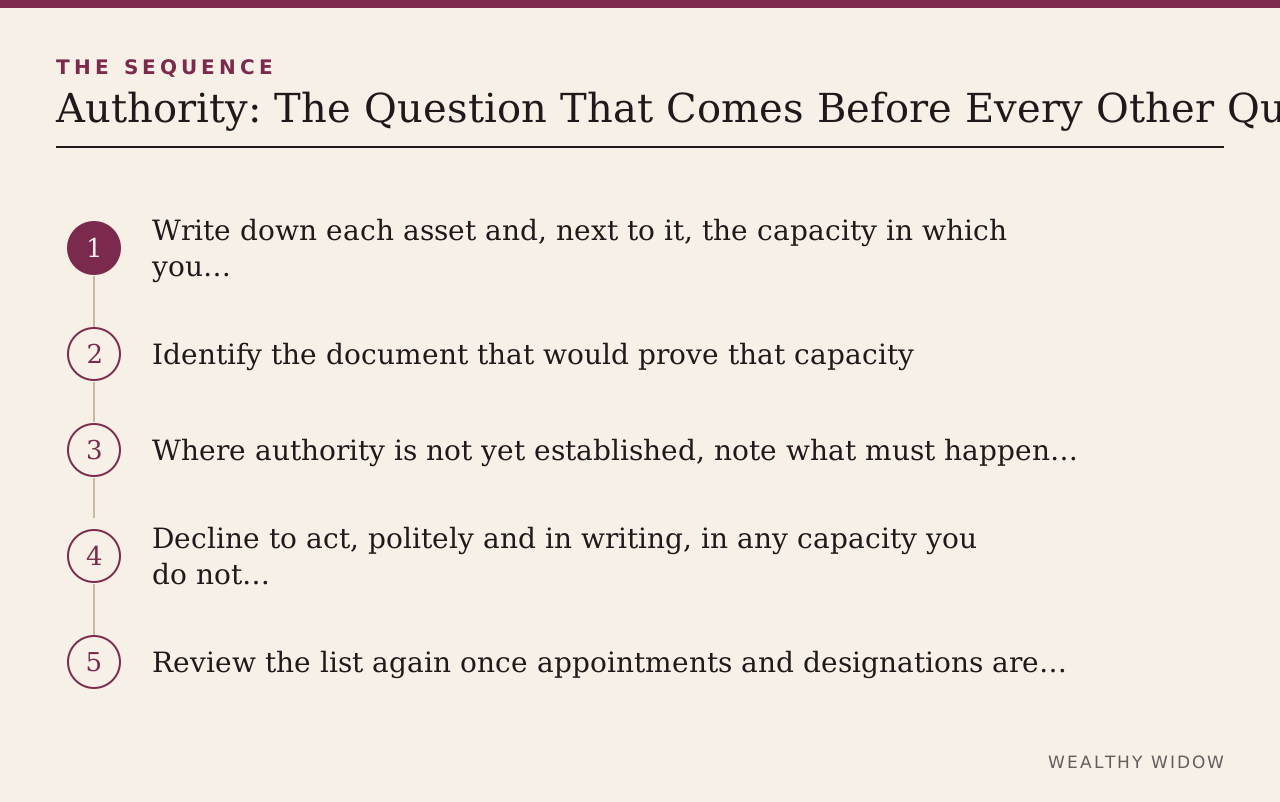
- Write down each asset and, next to it, the capacity in which you would be acting.
- Identify the document that would prove that capacity, and whether you currently hold it.
- Where authority is not yet established, note what must happen before you can act.
- Decline to act, politely and in writing, in any capacity you do not yet hold.
- Review the list again once appointments and designations are confirmed, because the answers change.
What tends to catch people out
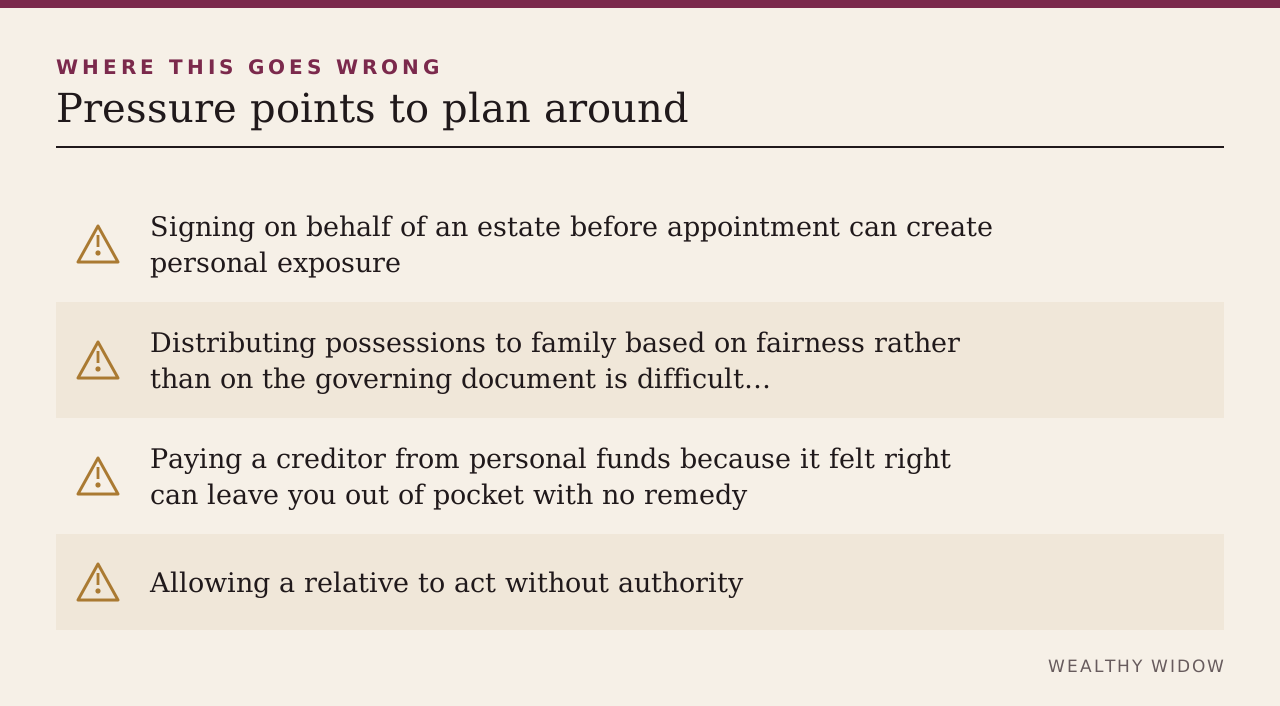
Anticipating these is most of the protection available to you, and it costs nothing but attention. Signing on behalf of an estate before appointment can create personal exposure.
Distributing possessions to family based on fairness rather than on the governing document is difficult to undo. Paying a creditor from personal funds because it felt right can leave you out of pocket with no remedy. Allowing a relative to act without authority, because it is convenient, transfers the risk to you.
What you will be asked to produce
Assemble this before the first conversation rather than during it.
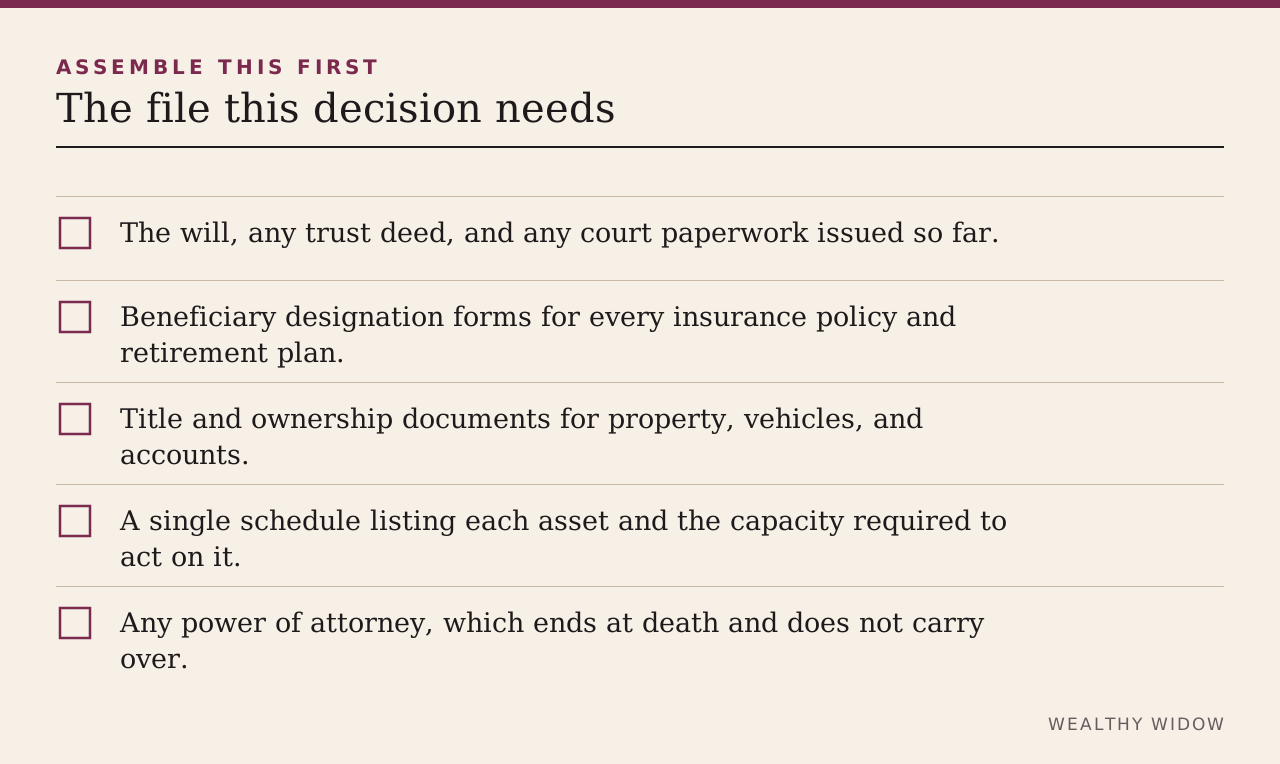
- The will, any trust deed, and any court paperwork issued so far.
- Beneficiary designation forms for every insurance policy and retirement plan.
- Title and ownership documents for property, vehicles, and accounts.
- A single schedule listing each asset and the capacity required to act on it.
- Any power of attorney, which ends at death and does not carry over.
Put these in writing, then proceed
A conversation is a starting point. These belong on paper.
- The capacity required for each account or asset.
- The document each institution will accept as proof of that capacity.
- Whether a court appointment is required, and its expected timescale.
- What you may and may not do in the interim.
Before anyone is engaged, ask these
Ask them plainly; the response tells you as much as the answer.
- In what capacity am I acting here, and what document proves it?
- What can I lawfully do before an appointment is made?
- Does a beneficiary designation override the will for this asset?
- What personal exposure do I take on by signing this?
The sources behind this
Anything that will drive a decision should be checked here rather than here-abouts.
- Internal Revenue Service — Information for executors
- Consumer Financial Protection Bureau — Taking control of your finances, help for surviving spouses
- USAGov — Dealing with the death of a loved one
- Legal Services Corporation — I need legal help
Where this guide stops
The boundary matters, because the wrong assumption here is expensive. It cannot tell you what capacity you hold. That is established by documents and, where a court appointment is needed, by the court.
In practice
Ask the authority question first and the substantive question second. Almost every early error after a death is a person acting in a capacity they did not hold, and almost every one of those is avoidable by asking which capacity applies.
For the step that usually comes next, read Family Requests: Acknowledging Without Deciding.
Primary sources
- Internal Revenue Service — Information for executors
- Consumer Financial Protection Bureau — Taking control of your finances, help for surviving spouses
- USAGov — Dealing with the death of a loved one
- Legal Services Corporation — I need legal help
This article provides general education, not individualized legal, tax, investment, insurance, or benefits advice. Rules and deadlines change; verify the current requirement with the agency and a qualified professional.