First 90 Days
A Payment Made Out to Someone Who Has Died
Cheques and payments issued in the name of the person who died cannot simply be paid in, and there is a procedure for each.

The pressure to resolve this quickly usually comes from outside you. Cheques and payments issued in the name of the person who died cannot simply be paid in, and there is a procedure for each.
Refunds, rebates, and final payments continue to arrive in the name of the person who died for a considerable period. Each has a route, and none of them is paying it into your own account.
A payment in the wrong name is redirected rather than lost, and the redirection has a defined route.
The substance beneath the process
These are the load-bearing facts. A payment in the name of a person who has died generally cannot be paid into a survivor’s personal account. The issuer can usually reissue in the name of the estate or of the entitled person. Where an estate account exists, most payments can be directed there.
Tax refunds have their own procedure and may require a specific claim form. Attempting to negotiate a payment you are not entitled to creates a real problem.
The order that protects you
Sequence matters, because some steps close options that later steps need.
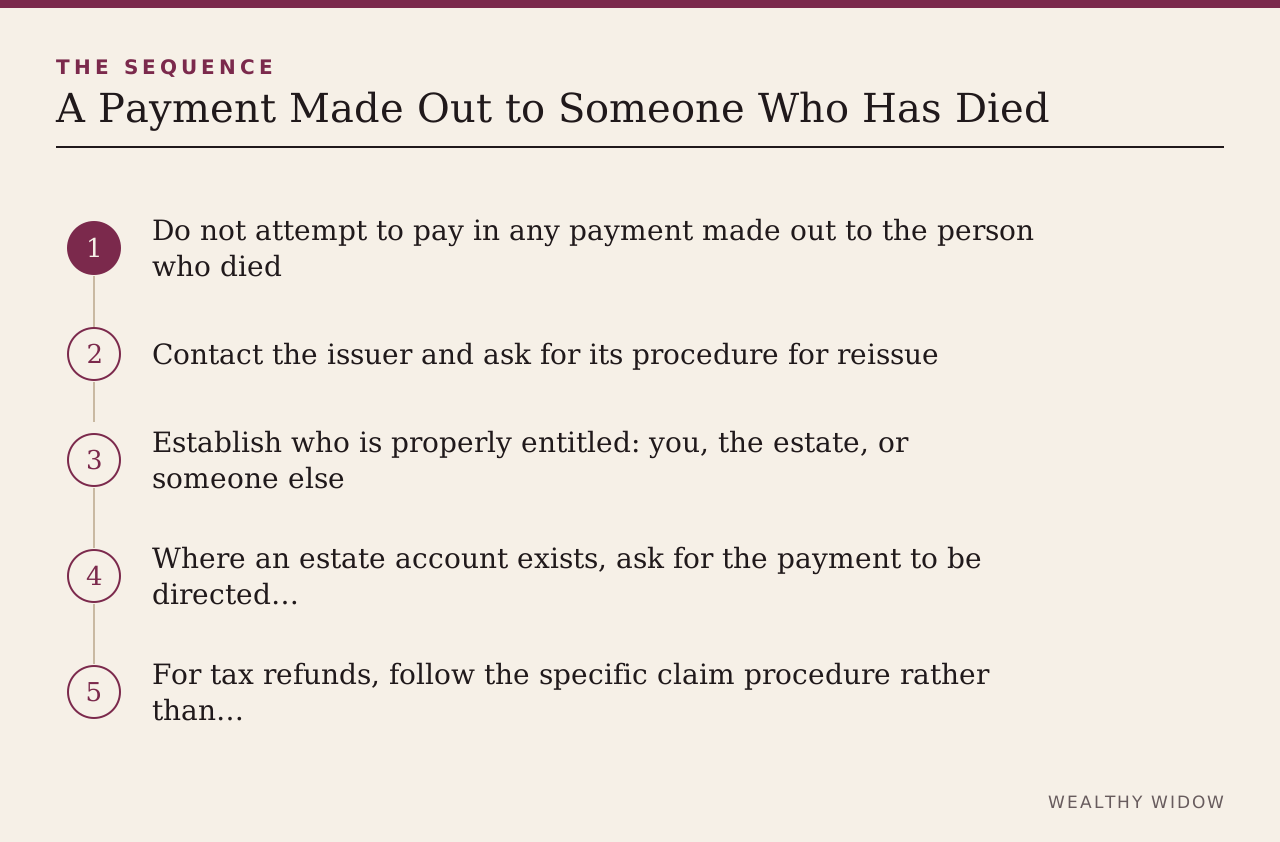
- Do not attempt to pay in any payment made out to the person who died.
- Contact the issuer and ask for its procedure for reissue.
- Establish who is properly entitled: you, the estate, or someone else.
- Where an estate account exists, ask for the payment to be directed there.
- For tax refunds, follow the specific claim procedure rather than the general one.
What tends to go wrong here
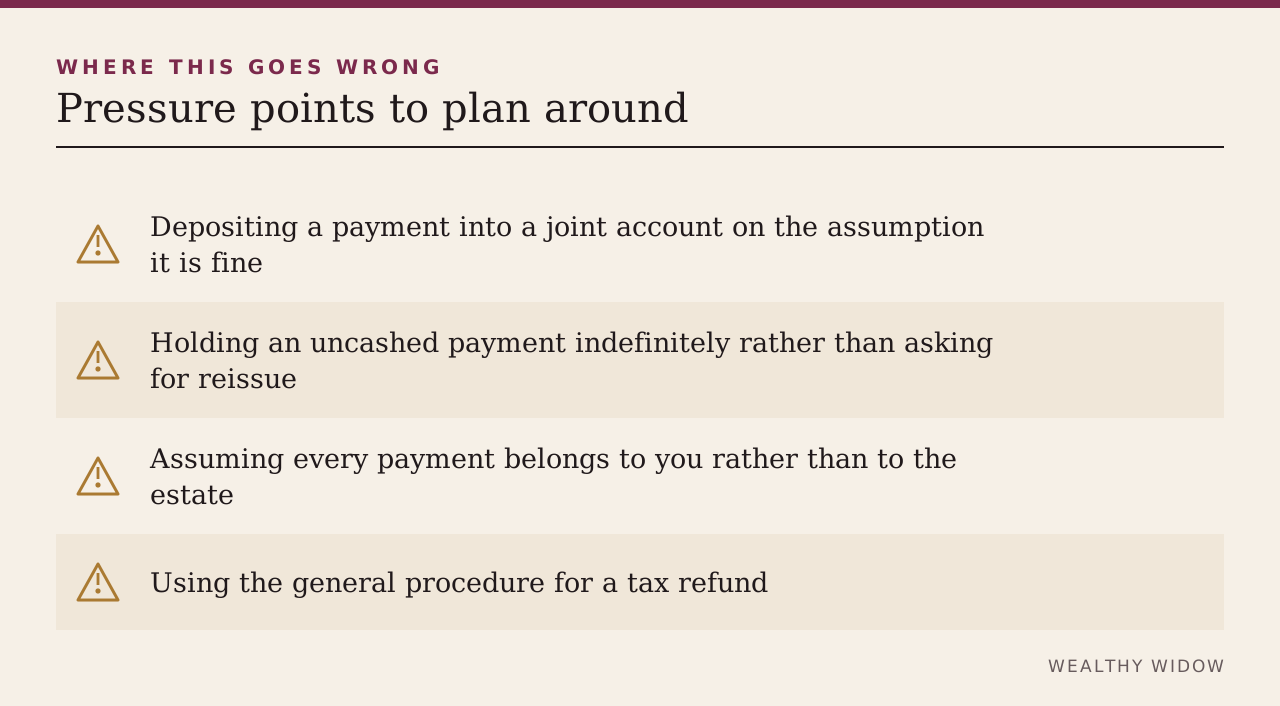
What follows is where readers most reliably lose ground. Depositing a payment into a joint account on the assumption it is fine.
Holding an uncashed payment indefinitely rather than asking for reissue. Assuming every payment belongs to you rather than to the estate. Using the general procedure for a tax refund, which has its own.
The paperwork this actually requires
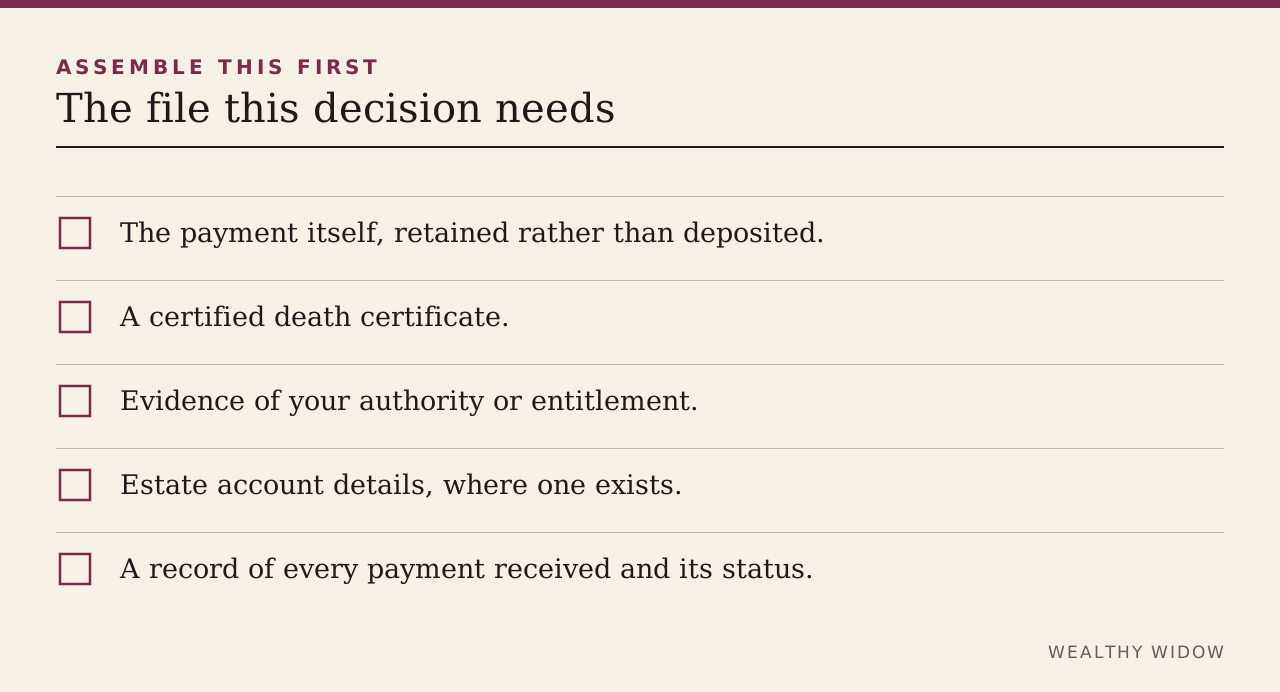
The file below does most of the work of establishing who you are.
- The payment itself, retained rather than deposited.
- A certified death certificate.
- Evidence of your authority or entitlement.
- Estate account details, where one exists.
- A record of every payment received and its status.
Written confirmation to insist on
Before you act on what you have been told, hold written confirmation of each point.
- Who is properly entitled to each payment.
- The issuer’s procedure for reissue.
- Whether the payment should go to you or to the estate.
- The specific procedure for any tax refund.
Take these questions to your adviser
Ask these before an engagement letter is signed, while you still have every option open to you.
- What is your procedure for reissuing this payment?
- Should this be reissued to me or to the estate?
- What evidence do you require?
- How long does reissue take?
Check it at source
These are the pages that change when the rules change, which is why they and not this guide are the authority.
- Consumer Financial Protection Bureau — Help for surviving spouses
- Internal Revenue Service — Information for executors
- Federal Deposit Insurance Corporation — Deposit insurance
- Internal Revenue Service — Form 1310, statement of person claiming refund due a deceased taxpayer
What still needs a professional
Be clear about what remains outside anything written for a general readership. It cannot tell you who is entitled, which depends on what the payment is for and how the estate is being administered.
The working conclusion
Hold the payment, ask the issuer for its reissue procedure, and establish entitlement before anything is banked. It is routine, it has a route, and the only error is trying to shortcut it.
Our related guide Making Sure Somebody Else Knows What Is Happening covers the adjacent problem.
Primary sources
- Consumer Financial Protection Bureau — Help for surviving spouses
- Internal Revenue Service — Information for executors
- Federal Deposit Insurance Corporation — Deposit insurance
- Internal Revenue Service — Form 1310, statement of person claiming refund due a deceased taxpayer
This article provides general education, not individualized legal, tax, investment, insurance, or benefits advice. Rules and deadlines change; verify the current requirement with the agency and a qualified professional.