First 90 Days
Utilities and Household Accounts: Transfer Rather Than Cancel
Household accounts in a late spouse’s name need transferring, not closing. Cancelling and reopening can mean deposits, credit checks, and service gaps.

The pressure to resolve this quickly usually comes from outside you. Household accounts in a late spouse’s name need transferring, not closing. Cancelling and reopening can mean deposits, credit checks, and service gaps.
Utilities are low-stakes individually and meaningful in aggregate, and the difference between transfer and closure is where the avoidable cost sits.
Transferring an account keeps its history. Closing and reopening the same service can cost a deposit and a credit check you did not need.
First, get the category right
Take the ground facts first, because most of the difficulty here dissolves once they are stated plainly. Most providers have a bereavement process that transfers an account into a survivor’s name without interrupting service. Closing and reopening can trigger a new deposit, a credit check, and a connection charge. Account history is often lost on closure, which can affect future terms.
Some providers offer protected services or priority registers for a household that has changed circumstances. Automatic payments attached to a cancelled card will fail regardless of the account status.
Take the steps in this order
Take these in order. Reversing them tends to create work rather than save it.
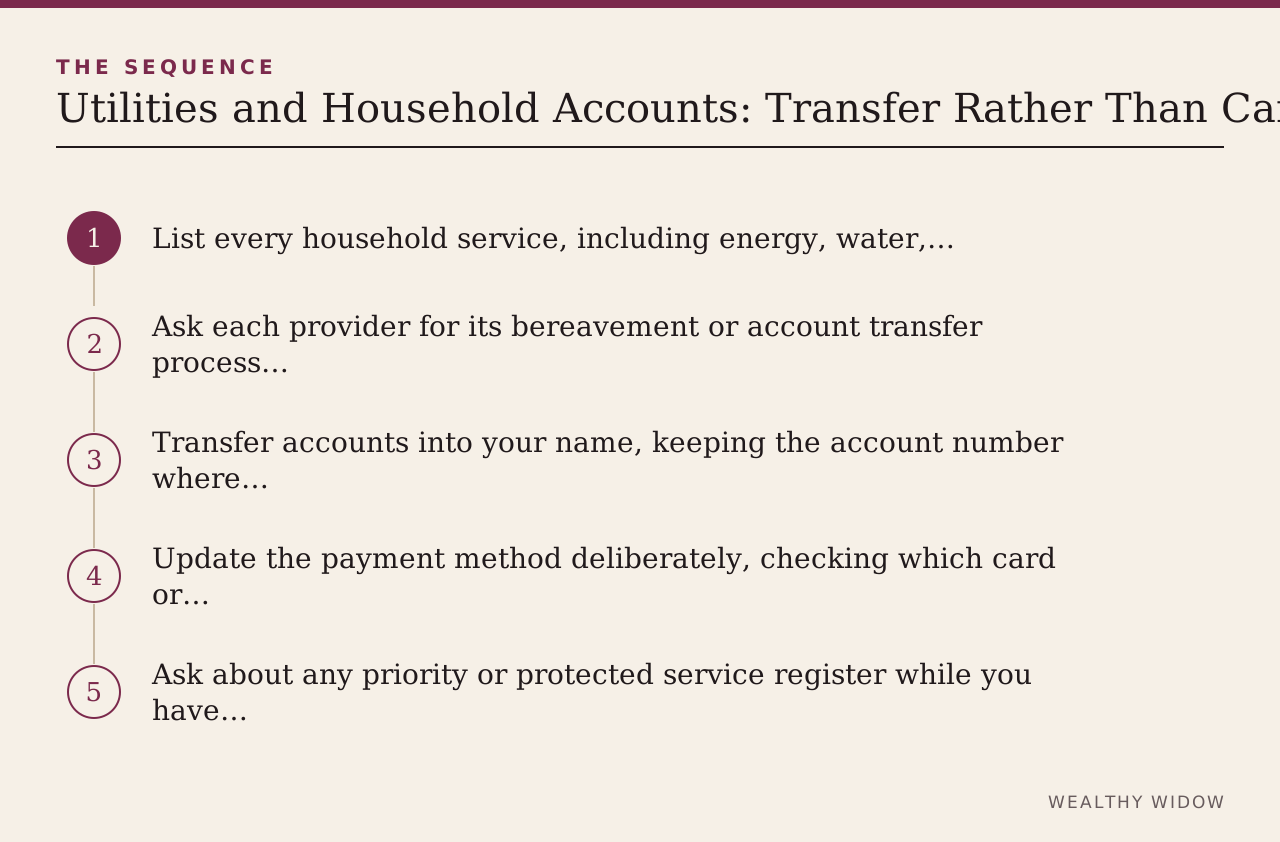
- List every household service, including energy, water, communications, waste, and property services.
- Ask each provider for its bereavement or account transfer process rather than announcing a cancellation.
- Transfer accounts into your name, keeping the account number where the provider allows.
- Update the payment method deliberately, checking which card or account each service uses.
- Ask about any priority or protected service register while you have the provider on the line.
What to watch for
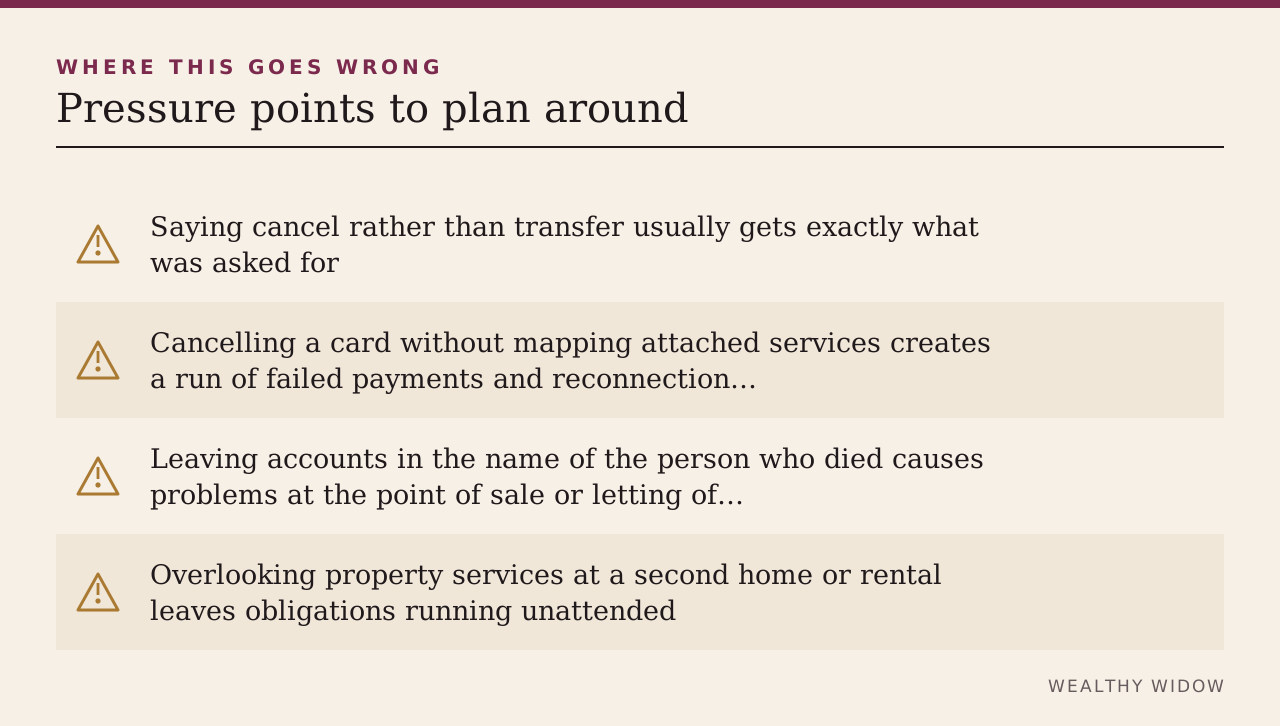
The failure modes below are predictable rather than unlucky, which is precisely what makes them avoidable. Saying cancel rather than transfer usually gets exactly what was asked for.
Cancelling a card without mapping attached services creates a run of failed payments and reconnection charges. Leaving accounts in the name of the person who died causes problems at the point of sale or letting of the property. Overlooking property services at a second home or rental leaves obligations running unattended.
Gather these before the first call
Every organisation involved will want some combination of the following, and several will want it more than once.
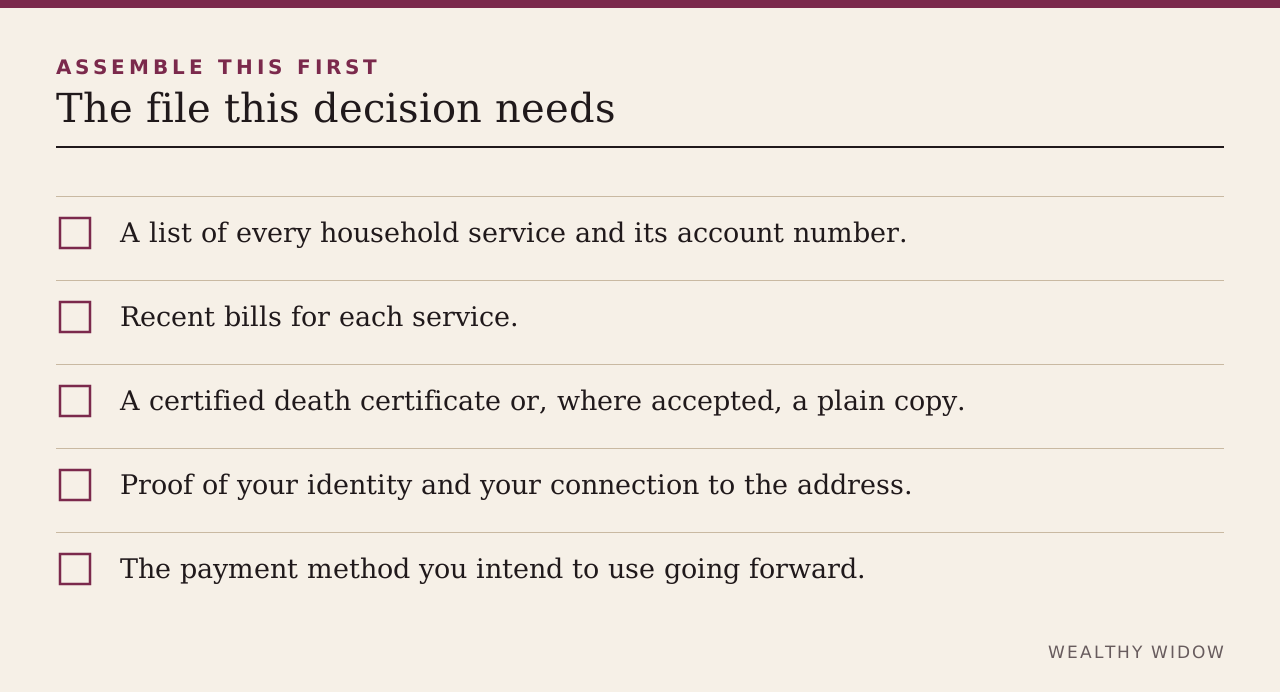
- A list of every household service and its account number.
- Recent bills for each service.
- A certified death certificate or, where accepted, a plain copy.
- Proof of your identity and your connection to the address.
- The payment method you intend to use going forward.
Get it on paper
Ask for each of the following in writing, by letter, secure message, or email you can save.
- That each account has been transferred rather than closed.
- The account number and effective date after transfer.
- Any deposit or charge applied, and why.
- Which payment method each service now uses.
Questions for the person advising you
Put these directly, note the answers, and record who gave them and when.
- What is your bereavement process, and does it preserve the account history?
- Can this be transferred into my name without a new deposit?
- Do you operate a priority services register I should be on?
- What happens to any credit or debit balance on the account?
Sources worth reading yourself
Where this guide and a source disagree, the source is right.
- Consumer Financial Protection Bureau — Help for surviving spouses
- Consumer Financial Protection Bureau — Taking control of your finances, help for surviving spouses
- USAGov — Dealing with the death of a loved one
The boundary of this guide
Be clear about the boundary; the wrong assumption here is expensive. It cannot tell you a specific provider’s policy, and those differ enough that the question is worth asking of each one.
Where this leaves you
Use the word transfer rather than the word cancel. It is a small vocabulary change that routinely saves deposits, credit checks, and a week of service interruption across a dozen accounts, and it keeps an account history that may matter when you next need credit or a new supply contract.
A companion guide, A Business Interest: The Asset That Cannot Wait, covers the decision that sits alongside this one.
Primary sources
- Consumer Financial Protection Bureau — Help for surviving spouses
- Consumer Financial Protection Bureau — Taking control of your finances, help for surviving spouses
- USAGov — Dealing with the death of a loved one
This article provides general education, not individualized legal, tax, investment, insurance, or benefits advice. Rules and deadlines change; verify the current requirement with the agency and a qualified professional.