First 90 Days
At Ninety Days: What Should Be Done and What Should Not Be
A structured review at three months separates what has actually been completed from what merely feels urgent.

The pressure to resolve this quickly usually comes from outside you. A structured review at three months separates what has actually been completed from what merely feels urgent.
Three months in is the natural point to take stock. Some things should be complete, several should be in progress, and a number should deliberately not have been touched.
The measure of the first ninety days is not how much was finished but whether anything irreversible was done wrongly.
First, get the category right
Take the ground facts first, because most of the difficulty here dissolves once they are stated plainly. Protective steps, including credit notification and securing the property, should be complete by this point. Benefit claims and insurance claims should at least be filed, with references recorded. Estate administration is frequently still in its early stages, which is normal rather than slow.
Permanent decisions about property and investments should generally still be open. The absence of a deadline is not the same as the absence of progress.
Take the steps in this order
Take these in order. Reversing them tends to create work rather than save it.
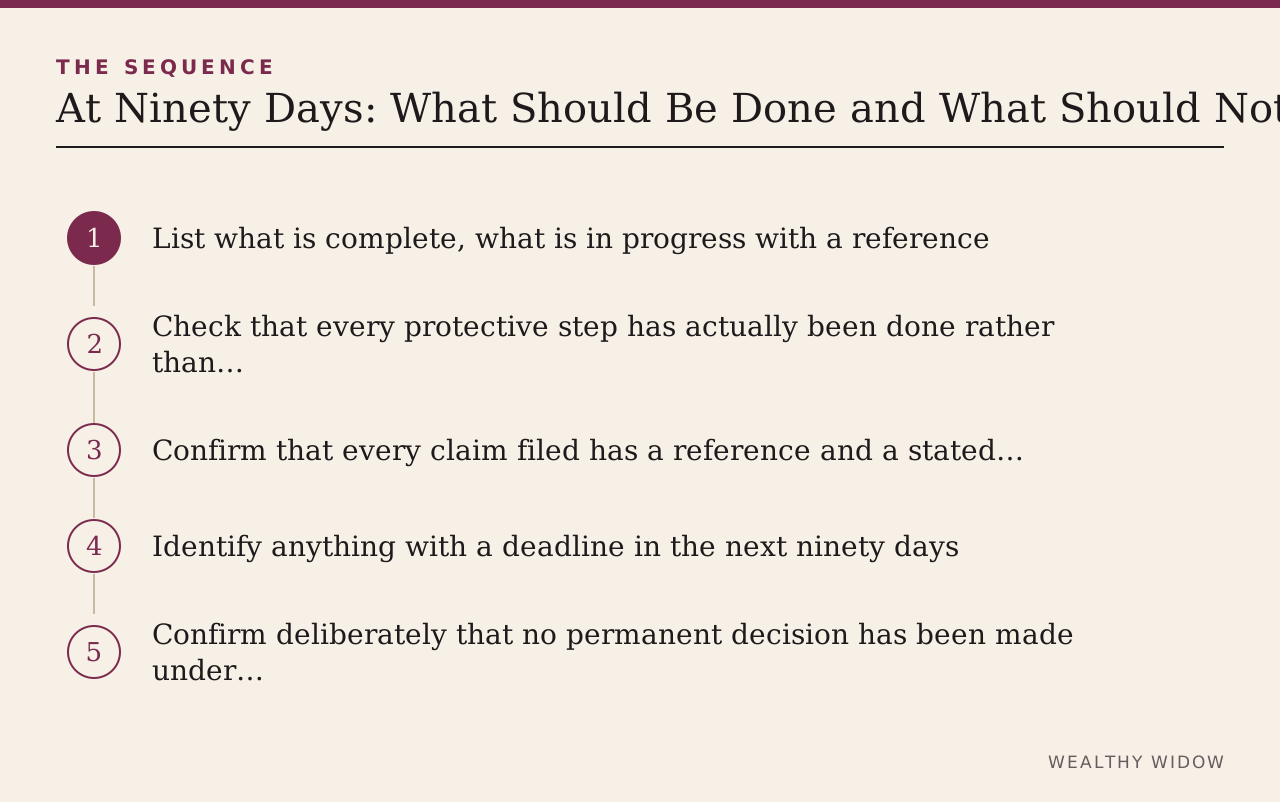
- List what is complete, what is in progress with a reference, and what has not been started.
- Check that every protective step has actually been done rather than intended.
- Confirm that every claim filed has a reference and a stated timescale.
- Identify anything with a deadline in the next ninety days.
- Confirm deliberately that no permanent decision has been made under pressure.
What to watch for
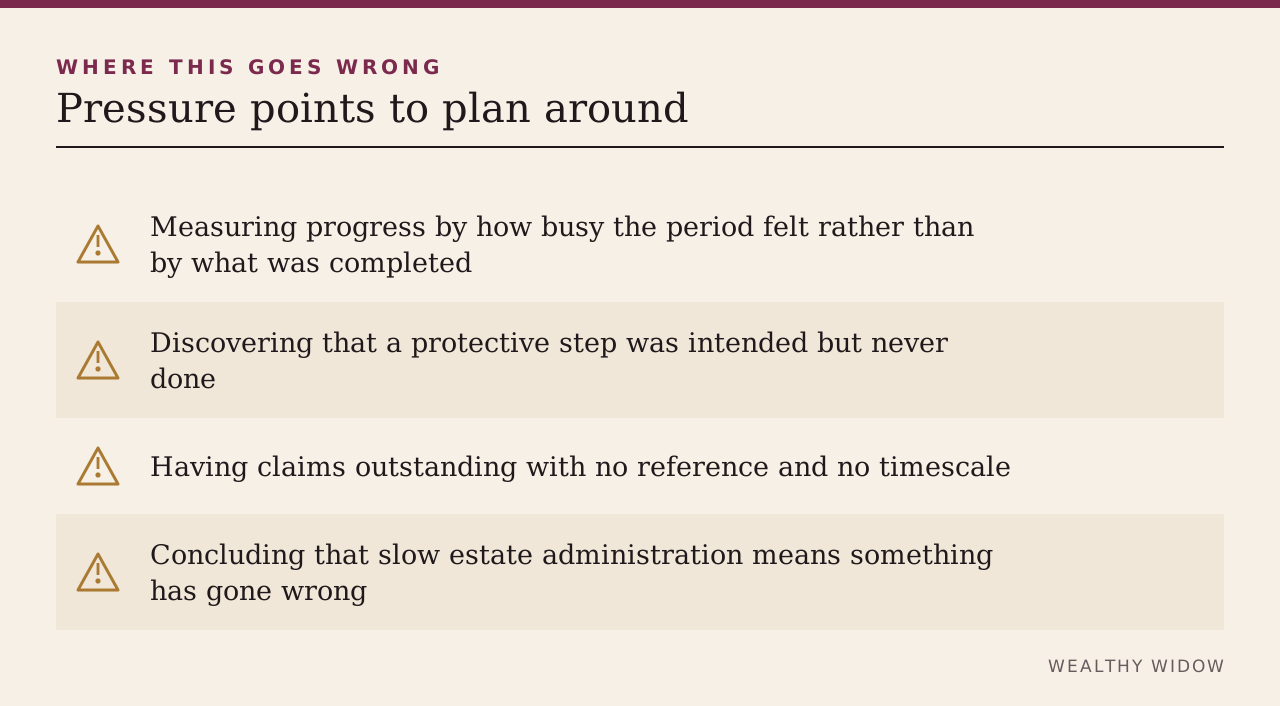
The failure modes below are predictable rather than unlucky, which is precisely what makes them avoidable. Measuring progress by how busy the period felt rather than by what was completed.
Discovering that a protective step was intended but never done. Having claims outstanding with no reference and no timescale. Concluding that slow estate administration means something has gone wrong.
Gather these before the first call
Every organisation involved will want some combination of the following, and several will want it more than once.
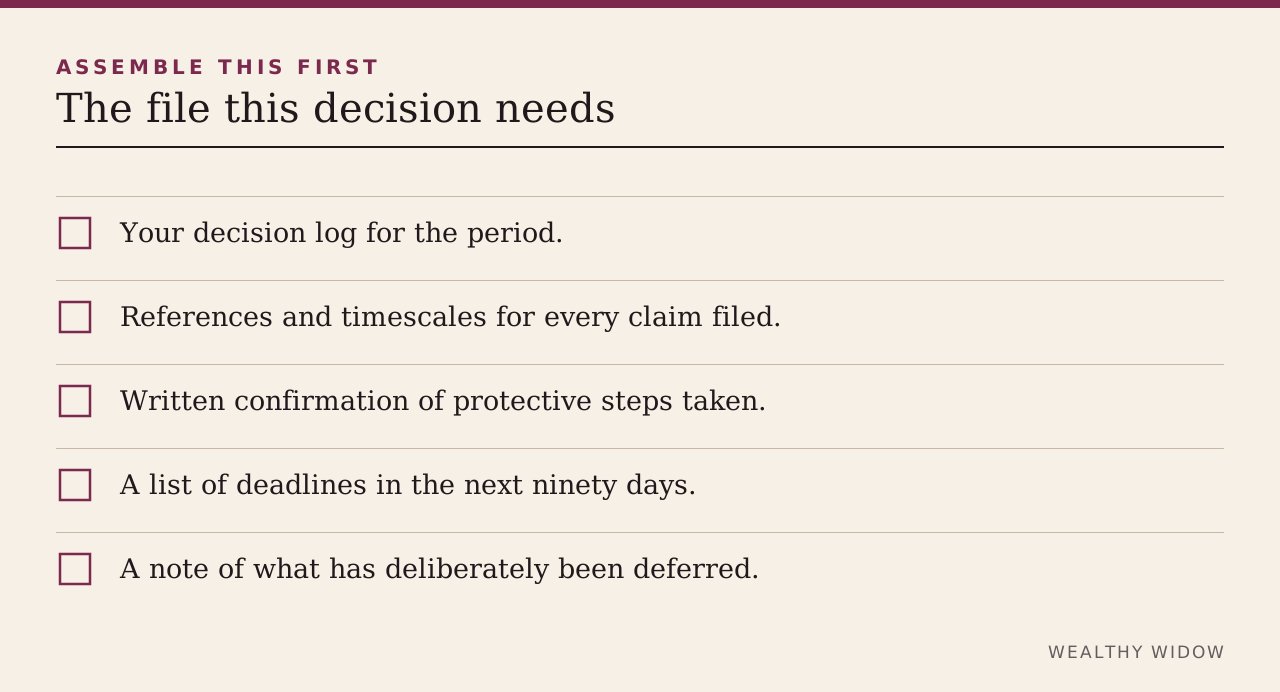
- Your decision log for the period.
- References and timescales for every claim filed.
- Written confirmation of protective steps taken.
- A list of deadlines in the next ninety days.
- A note of what has deliberately been deferred.
What belongs in your decision log
Get each of the following documented rather than described.
- That protective steps are complete rather than planned.
- That every claim has a reference and a stated timescale.
- What deadlines fall in the next ninety days.
- That nothing permanent has been decided under pressure.
Questions that reveal the answer
Each of the following is both a fair question and a revealing one, and no competent adviser will resent it.
- What is the current status of this claim, and what is outstanding?
- What should have happened by now that has not?
- What deadlines are approaching in the next three months?
- What would you expect still to be open at this stage?
Sources worth reading yourself
Where this guide and a source disagree, the source is right.
- Consumer Financial Protection Bureau — Help for surviving spouses
- Consumer Financial Protection Bureau — Taking control of your finances, help for surviving spouses
- USAGov — Dealing with the death of a loved one
- Social Security Administration — Survivor benefits
The boundary of this guide
Be clear about the boundary; the wrong assumption here is expensive. It cannot assess your particular position, and estate timescales in particular vary enormously with complexity.
Where this leaves you
Review by category rather than by feeling. Protective steps complete, claims filed with references, permanent decisions still open: that is a successful first ninety days, however unfinished it looks.
A companion guide, The Award Letter: Reading It Before Filing It, covers the decision that sits alongside this one.
Primary sources
- Consumer Financial Protection Bureau — Help for surviving spouses
- Consumer Financial Protection Bureau — Taking control of your finances, help for surviving spouses
- USAGov — Dealing with the death of a loved one
- Social Security Administration — Survivor benefits
This article provides general education, not individualized legal, tax, investment, insurance, or benefits advice. Rules and deadlines change; verify the current requirement with the agency and a qualified professional.