First 90 Days
The Decision Log: The Single Most Useful Habit of the First Year
Almost every avoidable problem after a death traces back to an undocumented conversation. A simple log converts memory into evidence.

Institutions will describe this as routine. For you it is not routine, and the stakes are not symmetrical. Almost every avoidable problem after a death traces back to an undocumented conversation. A simple log converts memory into evidence.
Grief measurably affects concentration and recall at exactly the moment when institutions begin making statements you will need to rely on months later. A log is the cheapest possible correction.
Grief affects recall at precisely the moment institutions begin making statements you will need to rely on later.
What this is, and what it is not
Take the ground facts first, because most of the difficulty here dissolves once they are stated plainly. Institutions rarely provide a usable record of what a representative said on a call, and internal notes are not written for you. Deadlines are frequently communicated verbally and inconsistently, and the version you remember is not evidence. Disputes months later almost always turn on who said what, when, and whether it was confirmed.
A log also prevents duplicated work, which is a substantial hidden cost across dozens of organisations. The same log becomes the handover document if you later engage a professional or delegate a task.
A workable order for this
Take these in order. Reversing them tends to create work rather than save it.
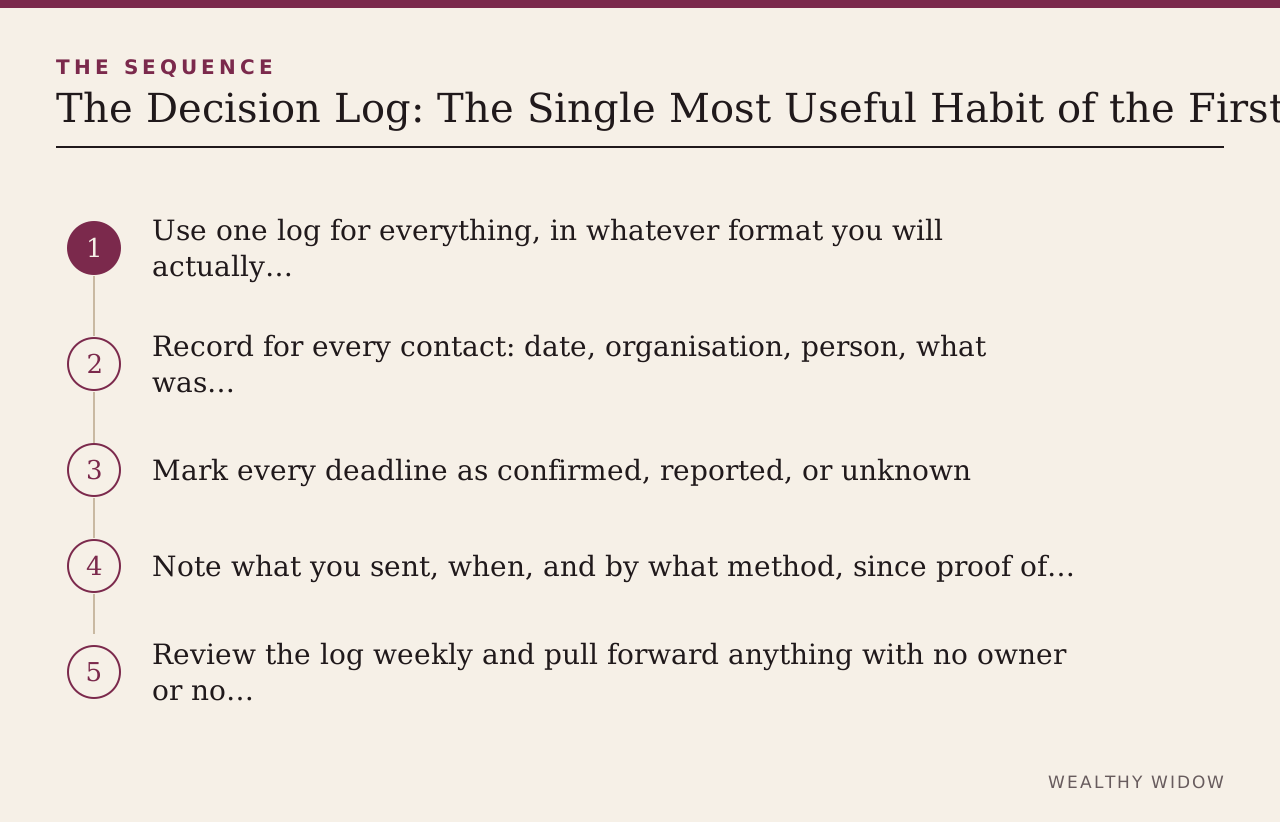
- Use one log for everything, in whatever format you will actually maintain, and keep a backup copy.
- Record for every contact: date, organisation, person, what was said, any reference number, and the next action with its owner.
- Mark every deadline as confirmed, reported, or unknown, and never let a reported deadline drive an irreversible act.
- Note what you sent, when, and by what method, since proof of dispatch resolves a large share of disputes.
- Review the log weekly and pull forward anything with no owner or no date.
Where good intentions go wrong
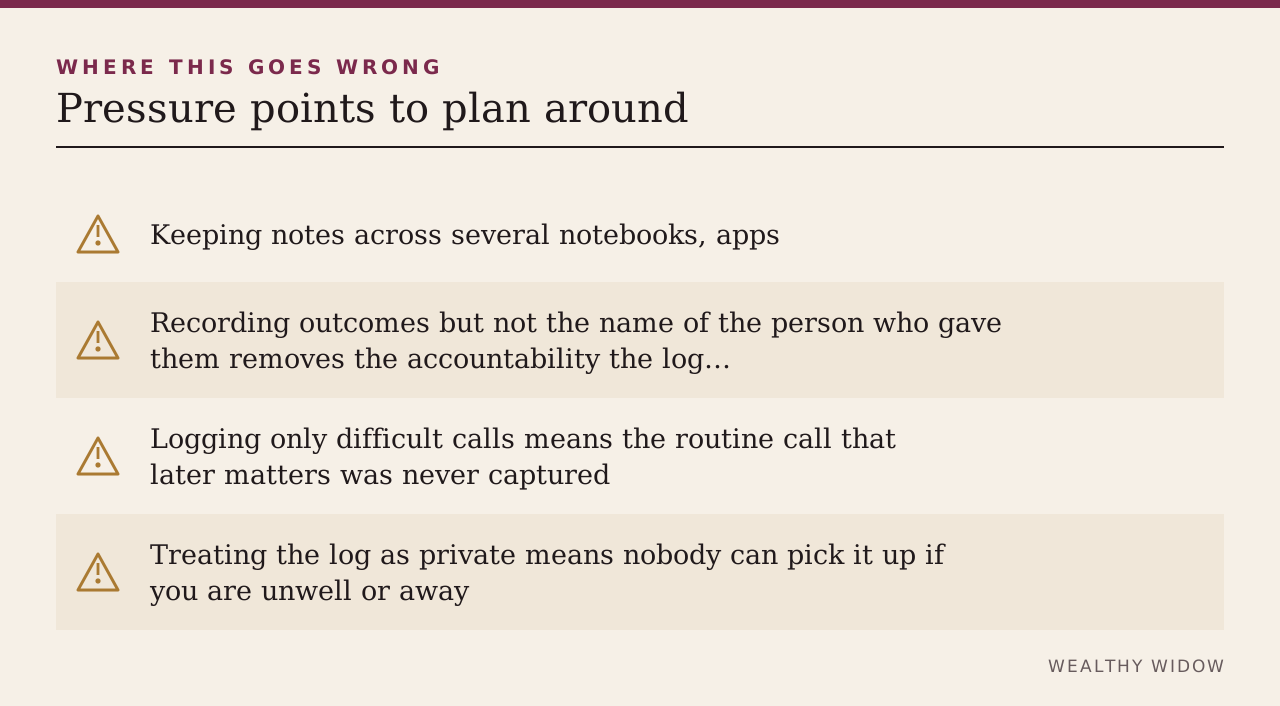
The failure modes below are predictable rather than unlucky, which is precisely what makes them avoidable. Keeping notes across several notebooks, apps, and envelopes defeats the purpose at the moment you need to search.
Recording outcomes but not the name of the person who gave them removes the accountability the log exists to create. Logging only difficult calls means the routine call that later matters was never captured. Treating the log as private means nobody can pick it up if you are unwell or away.
Gather these before the first call
Every organisation involved will want some combination of the following, and several will want it more than once.
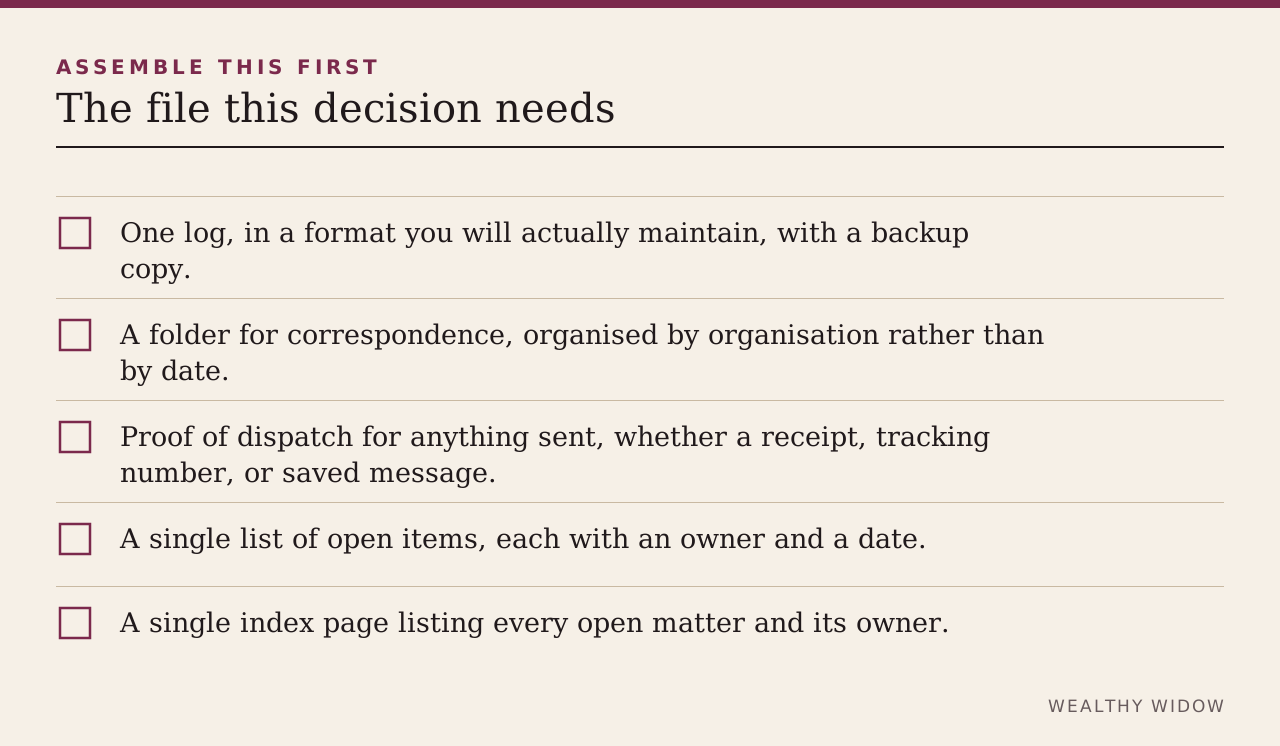
- One log, in a format you will actually maintain, with a backup copy.
- A folder for correspondence, organised by organisation rather than by date.
- Proof of dispatch for anything sent, whether a receipt, tracking number, or saved message.
- A single list of open items, each with an owner and a date.
- A single index page listing every open matter and its owner.
Get it on paper
Ask for each of the following in writing, by letter, secure message, or email you can save.
- Every stated deadline, in writing, from the organisation that stated it.
- Reference numbers for each claim, application, and dispute.
- What each organisation has committed to do next, and by when.
- Proof of dispatch for every document sent.
Questions for the person advising you
Put these directly, note the answers, and record who gave them and when.
- Can you confirm what you have just told me in writing or secure message?
- What is your reference for this conversation?
- What is the next step on your side, and by what date?
- If this is not completed on time, who do I escalate to?
The primary material
Each load-bearing point above traces to one of the following, and they are the versions that stay current.
- Consumer Financial Protection Bureau — Taking control of your finances, help for surviving spouses
- Consumer Financial Protection Bureau — Help for surviving spouses
- USAGov — Dealing with the death of a loved one
Where general guidance ends
Here is the line between what can usefully be written for a general readership and what cannot be written at all. It cannot decide any of the substantive questions in your file. It only ensures that when those questions are decided, the basis for the decision is recoverable.
What this comes down to
This is administrative rather than emotional work, and that is precisely its value. A log gives you something to consult instead of something to remember, and it turns a year of scattered calls into a record you can act on.
If this raised a further question, Recurring Payments: What to Stop, What to Keep, and What to Verify takes it further.
Primary sources
- Consumer Financial Protection Bureau — Taking control of your finances, help for surviving spouses
- Consumer Financial Protection Bureau — Help for surviving spouses
- USAGov — Dealing with the death of a loved one
This article provides general education, not individualized legal, tax, investment, insurance, or benefits advice. Rules and deadlines change; verify the current requirement with the agency and a qualified professional.