First 90 Days
Recurring Payments: What to Stop, What to Keep, and What to Verify
Cancelling everything after a death is as risky as cancelling nothing. Insurance, utilities, and services need sorting by consequence rather than by convenience.

The difficulty here is rarely the paperwork. It is knowing what is actually being asked. Cancelling everything after a death is as risky as cancelling nothing. Insurance, utilities, and services need sorting by consequence rather than by convenience.
Recurring payments are the clearest inventory of a household you will find, and they are also where an over-enthusiastic clear-out causes lapses that cost far more than the subscriptions saved.
A recurring payment is not proof a contract should continue, and stopping it is not proof it can safely end.
Name the decision before you make it
Start from the reliable ground, before anyone asks you to act on anything less certain than it. A recurring payment is not proof that a contract should continue, and it is not proof that it can safely be stopped. Insurance, utilities, property services, and mortgage payments frequently must continue regardless of who has died. Some cancellations create lapses, penalties, or reinstatement conditions that are worse than the payment itself.
The payment list is often the only reliable route to discovering accounts, policies, and memberships nobody documented. Cancelling a card can silently stop payments that the household still depends on.
How to work through it
Work through it deliberately rather than all at once, and stop at any point where an answer is missing.
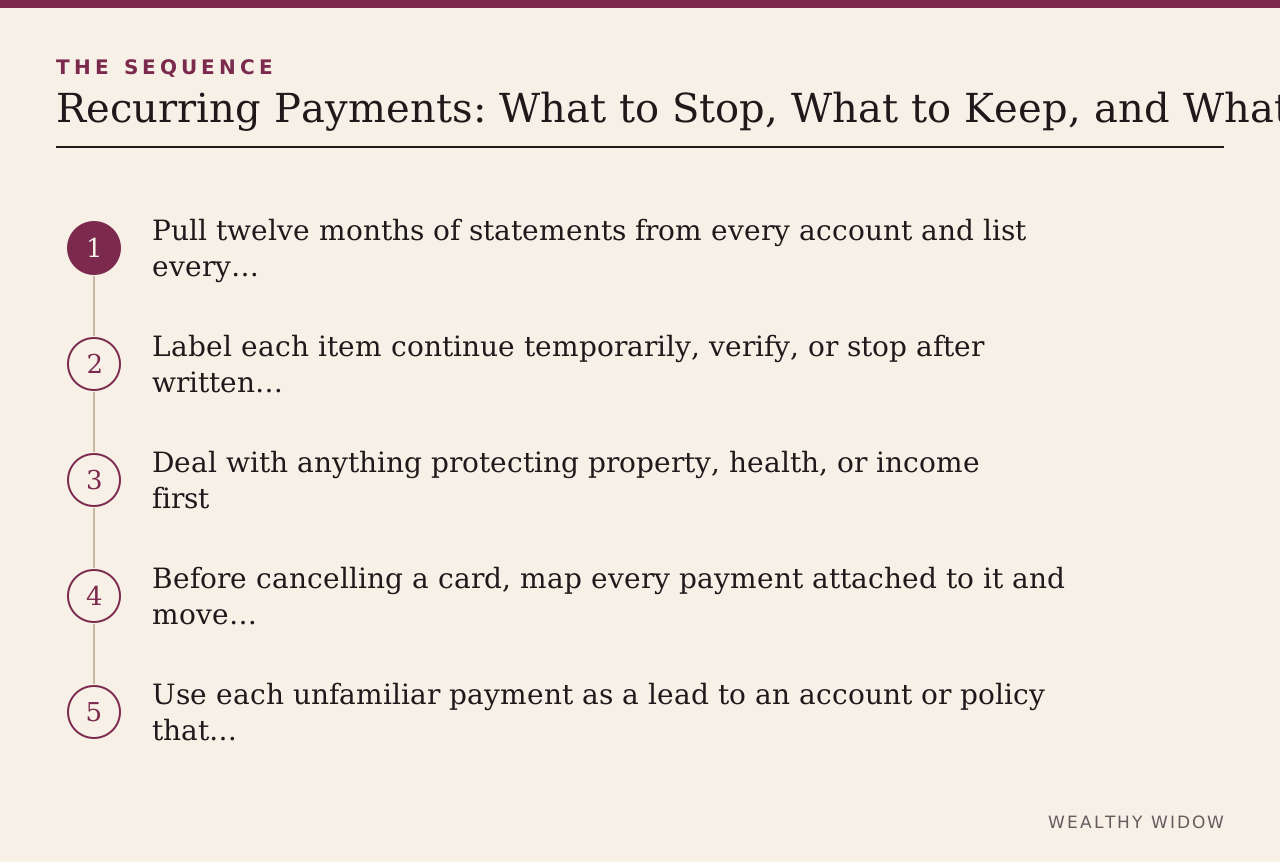
- Pull twelve months of statements from every account and list every recurring debit and credit.
- Label each item continue temporarily, verify, or stop after written confirmation.
- Deal with anything protecting property, health, or income first, and leave discretionary services until last.
- Before cancelling a card, map every payment attached to it and move the essential ones.
- Use each unfamiliar payment as a lead to an account or policy that may need claiming.
Known hazards
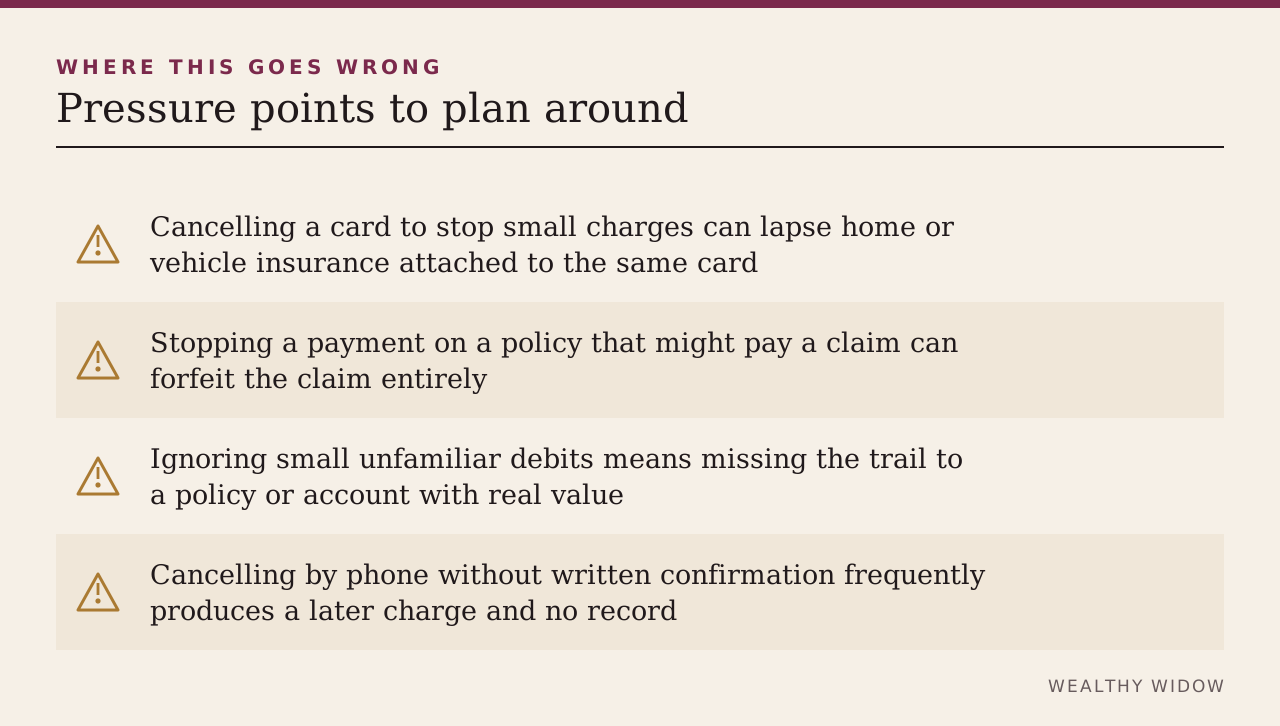
Each of these is a signal to stop and confirm rather than proceed. Cancelling a card to stop small charges can lapse home or vehicle insurance attached to the same card.
Stopping a payment on a policy that might pay a claim can forfeit the claim entirely. Ignoring small unfamiliar debits means missing the trail to a policy or account with real value. Cancelling by phone without written confirmation frequently produces a later charge and no record.
The evidence to gather
You will be asked for these in some combination by almost everyone involved.
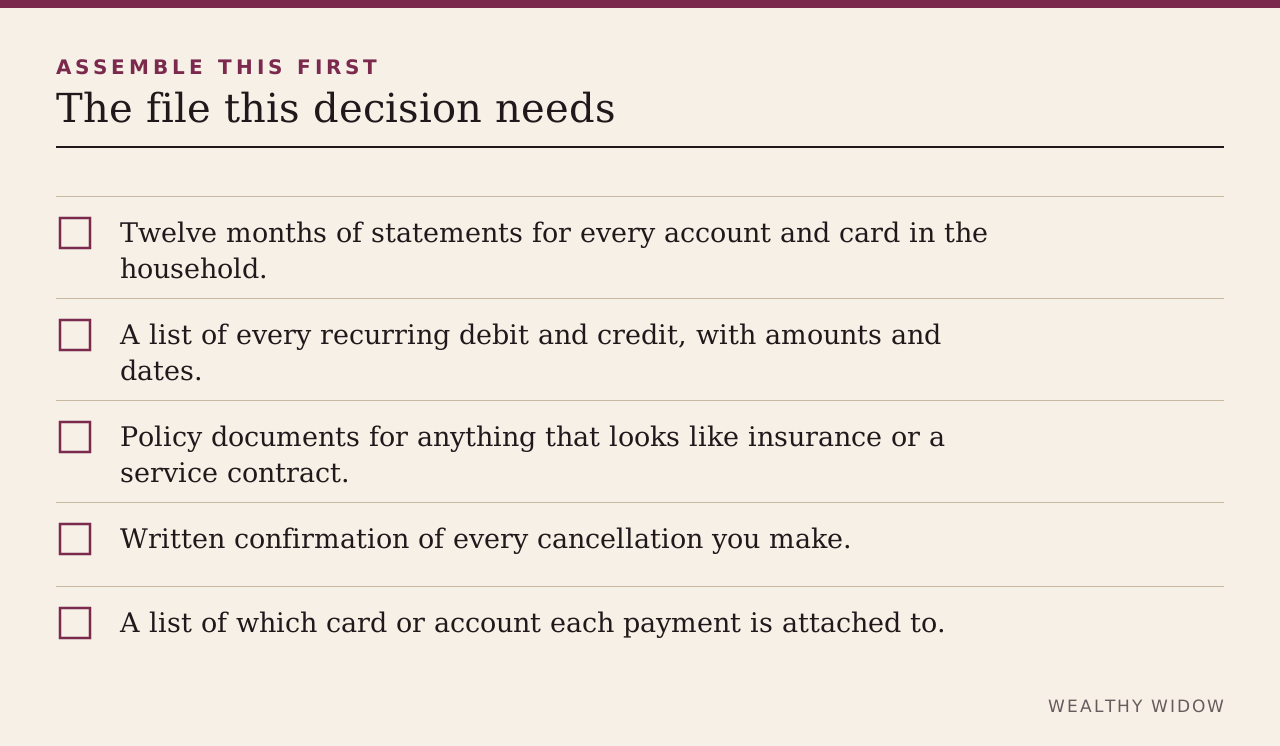
- Twelve months of statements for every account and card in the household.
- A list of every recurring debit and credit, with amounts and dates.
- Policy documents for anything that looks like insurance or a service contract.
- Written confirmation of every cancellation you make.
- A list of which card or account each payment is attached to.
Do not proceed on a verbal answer
Ask for each of these in a form you can save, date, and produce again months later if it is questioned.
- Written confirmation of every cancellation, with an effective date.
- That essential cover remains in force, and under whose name.
- Which payments must continue during the administration of the estate.
- What each unidentified payment actually relates to.
Put these questions directly
A competent professional will welcome these questions. Hesitation is itself information.
- Does stopping this payment affect any claim I might make on the same policy?
- What happens to this cover now that the policyholder has died?
- Can this be transferred into my name rather than cancelled and restarted?
- What is the reinstatement position if this lapses by mistake?
Check this against the source
These are the primary sources behind this guide. They are the ones that change, and the ones worth checking before you act.
- Consumer Financial Protection Bureau — Help for surviving spouses
- Consumer Financial Protection Bureau — Taking control of your finances, help for surviving spouses
- Federal Trade Commission — Consumer advice
The questions this cannot reach
No account written for a general readership can reach the following, and it should not pretend to. It cannot tell you which of your specific policies would lapse on non-payment, or what reinstatement would cost. Those terms are in each contract.
Taking it from here
Sorted by consequence, this becomes a single afternoon of controlled work. Sorted by impatience, it becomes a lapsed policy discovered at the worst possible moment. The list is the same; the order is what protects you.
Our related guide The Call to an Employer Is a Benefits Enquiry, Not a Courtesy covers the adjacent problem.
Primary sources
- Consumer Financial Protection Bureau — Help for surviving spouses
- Consumer Financial Protection Bureau — Taking control of your finances, help for surviving spouses
- Federal Trade Commission — Consumer advice
This article provides general education, not individualized legal, tax, investment, insurance, or benefits advice. Rules and deadlines change; verify the current requirement with the agency and a qualified professional.