First 90 Days
The Safe Deposit Box: Authority Comes Before Access
A safe deposit box often holds the will, deeds, and policies you need, and access frequently requires the very authority those documents establish.

Some decisions after a death are reversible. This one deserves more care than most. A safe deposit box often holds the will, deeds, and policies you need, and access frequently requires the very authority those documents establish.
The circularity here is genuine: the document proving your authority may be inside the box you need authority to open. Banks and states have established procedures for exactly this, and asking for them is faster than improvising.
The document proving your authority is sometimes inside the box you need authority to open, and banks have a procedure for exactly that.
Getting the question right first
Hold on to a small number of accurate points. Rights of access depend on how the box is rented and on state law, not on who holds a key. A joint renter generally has different rights from a person who merely knows the box exists. Many jurisdictions provide a limited-purpose opening to retrieve a will or burial instructions, usually supervised.
Removing contents without authority can create serious complications in the administration of the estate. The bank will normally require formal proof and will record what was removed.
Where to start, and what follows
This is the order that avoids closing doors you may still need.
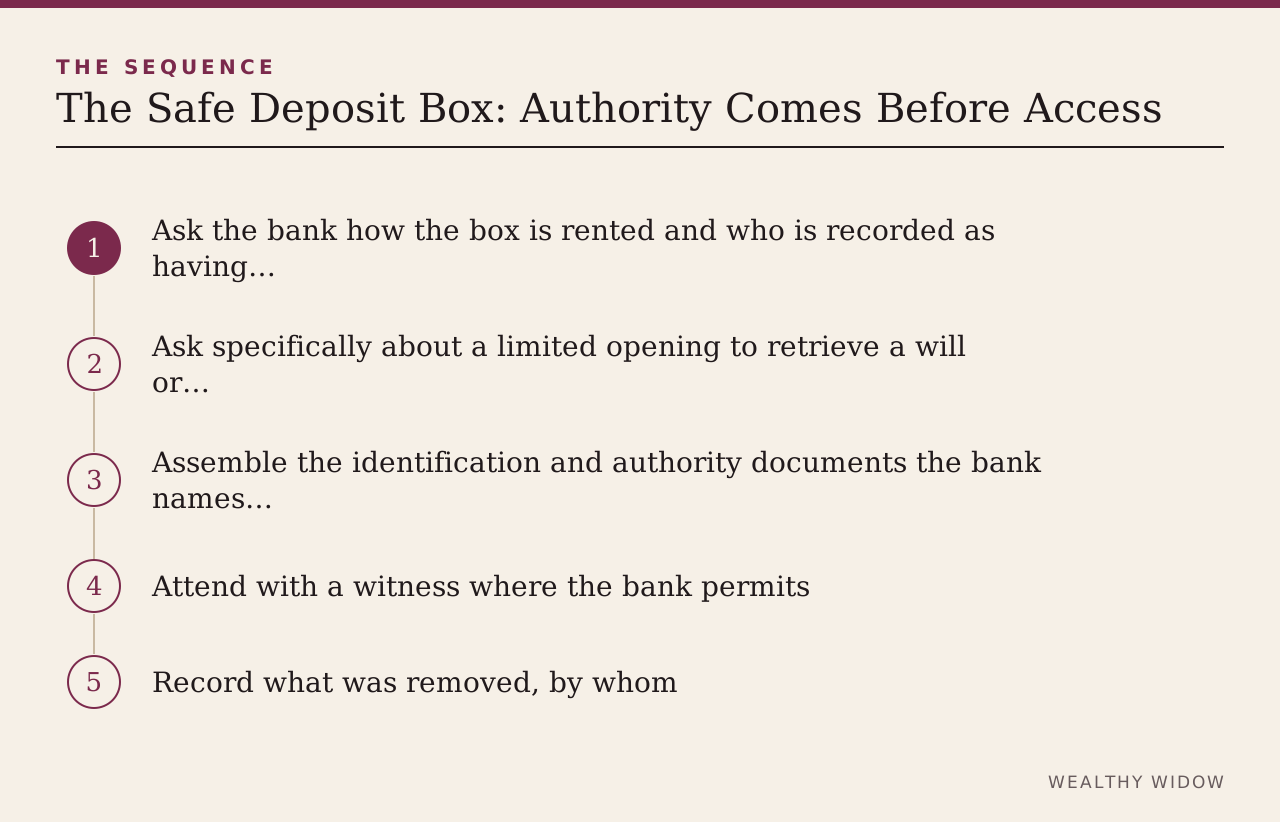
- Ask the bank how the box is rented and who is recorded as having rights of access.
- Ask specifically about a limited opening to retrieve a will or burial instructions, and what it requires.
- Assemble the identification and authority documents the bank names before attending.
- Attend with a witness where the bank permits, and take an inventory as items are removed.
- Record what was removed, by whom, and on what date, and keep that record with the estate file.
Where this commonly goes wrong
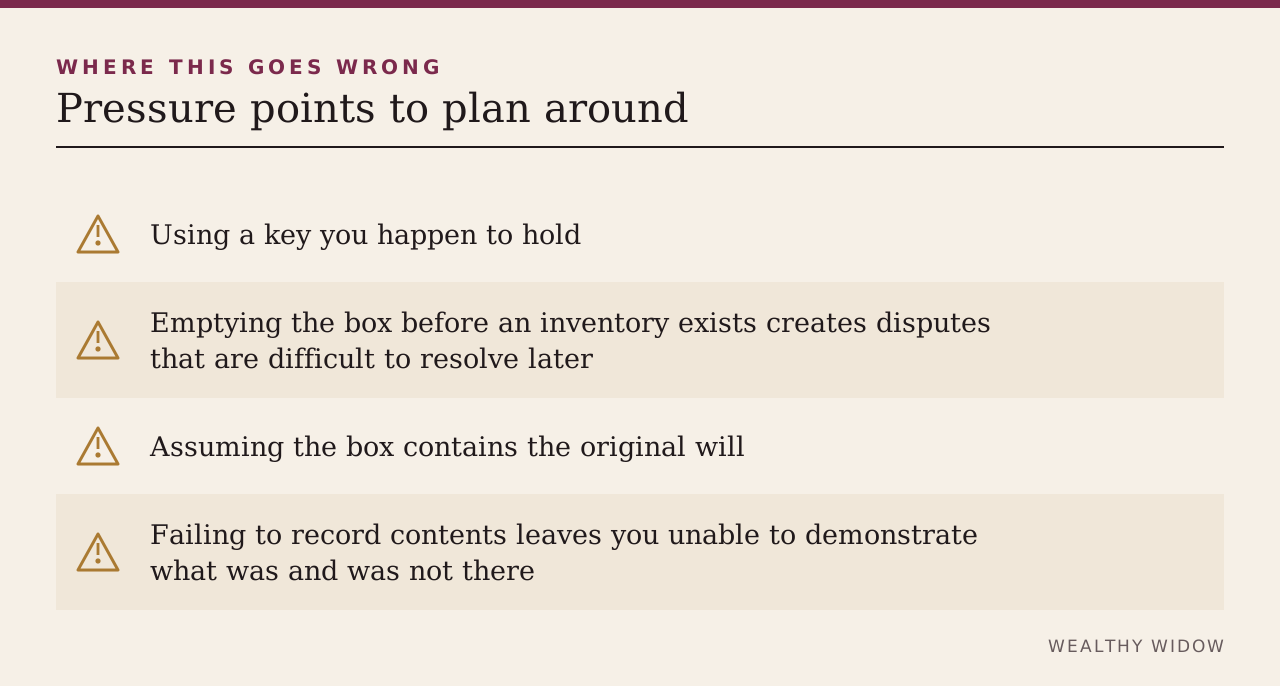
The errors here are well worn, which makes them avoidable. Using a key you happen to hold, without established authority, can be treated as an unauthorised removal.
Emptying the box before an inventory exists creates disputes that are difficult to resolve later. Assuming the box contains the original will, and acting on that assumption, delays probate when it does not. Failing to record contents leaves you unable to demonstrate what was and was not there.
What to have in front of you
Collect these once and keep them together, because you will be asked for them repeatedly over the coming months.
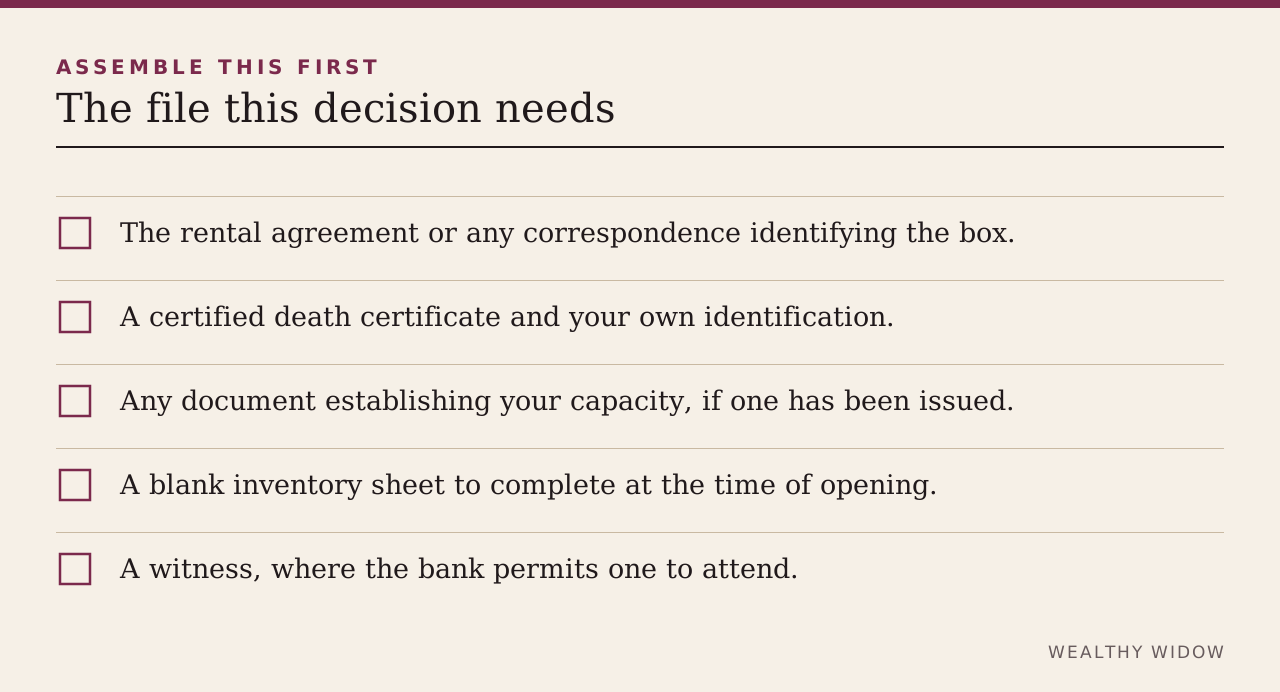
- The rental agreement or any correspondence identifying the box.
- A certified death certificate and your own identification.
- Any document establishing your capacity, if one has been issued.
- A blank inventory sheet to complete at the time of opening.
- A witness, where the bank permits one to attend.
Ask for this in writing
Each item below should exist somewhere other than your memory, because memory is not evidence in a dispute.
- How the box is rented and who holds rights of access.
- The bank’s written procedure for access after a death.
- What documents the bank requires, and from whom.
- A signed inventory of anything removed.
The questions to bring to the meeting
Take these to the attorney, tax professional, or planner handling this work.
- What is your procedure for a limited opening to retrieve a will?
- Who is recorded on this box, and in what capacity?
- What documentation will you accept as proof of my authority?
- Will you provide a written inventory of the contents?
Read the rule yourself
The sources below govern. This guide only summarises them.
- Consumer Financial Protection Bureau — Help for surviving spouses
- Consumer Financial Protection Bureau — Taking control of your finances, help for surviving spouses
- USAGov — Dealing with the death of a loved one
The limits of this guide
This is where general guidance ends and your own paperwork takes over. It cannot tell you the procedure your bank and your state require, and those two together decide who may open the box and on what terms.
What to hold on to
Ask the bank to state its own procedure rather than guessing at it. Authority first, inventory second, removal third: in that order the box becomes a source of documents rather than a source of dispute.
If this raised a further question, Digital Accounts: Why the Password Is Not the Permission takes it further.
Primary sources
- Consumer Financial Protection Bureau — Help for surviving spouses
- Consumer Financial Protection Bureau — Taking control of your finances, help for surviving spouses
- USAGov — Dealing with the death of a loved one
This article provides general education, not individualized legal, tax, investment, insurance, or benefits advice. Rules and deadlines change; verify the current requirement with the agency and a qualified professional.