First 90 Days
Which Agencies Need to Be Told, and Which Will Find Out Anyway
Notification after a death is not one task but many, with different agencies, different proofs, and very different consequences for getting the order wrong.

This guide covers a decision that is easy to make quickly and expensive to make wrongly. Notification after a death is not one task but many, with different agencies, different proofs, and very different consequences for getting the order wrong.
Notification lists circulate widely and most are simply long. What matters is which notifications start a benefit, which stop a payment, and which merely update a record, because those three carry different risks.
Sort the notification list by consequence, not alphabetically. Some calls start money, some stop it, and some change nothing at all.
Establish what this is
Hold on to a small number of accurate points. Some notifications begin a claim, some end a payment stream, and some only correct a file. Confusing an ending with a beginning is how survivors miss benefits. A death reported by a funeral home to Social Security is a report, not an application for anything. Payments that arrive after a death may have to be returned, and that is easier to resolve when the timing is documented from the start.
Tax obligations do not end with a death; a final individual return and possibly an estate return can still be required. Different agencies accept different proof, and several will not speak to you at all until authority is established.
A sequence, not a scramble
This is the order that avoids closing doors you may still need.
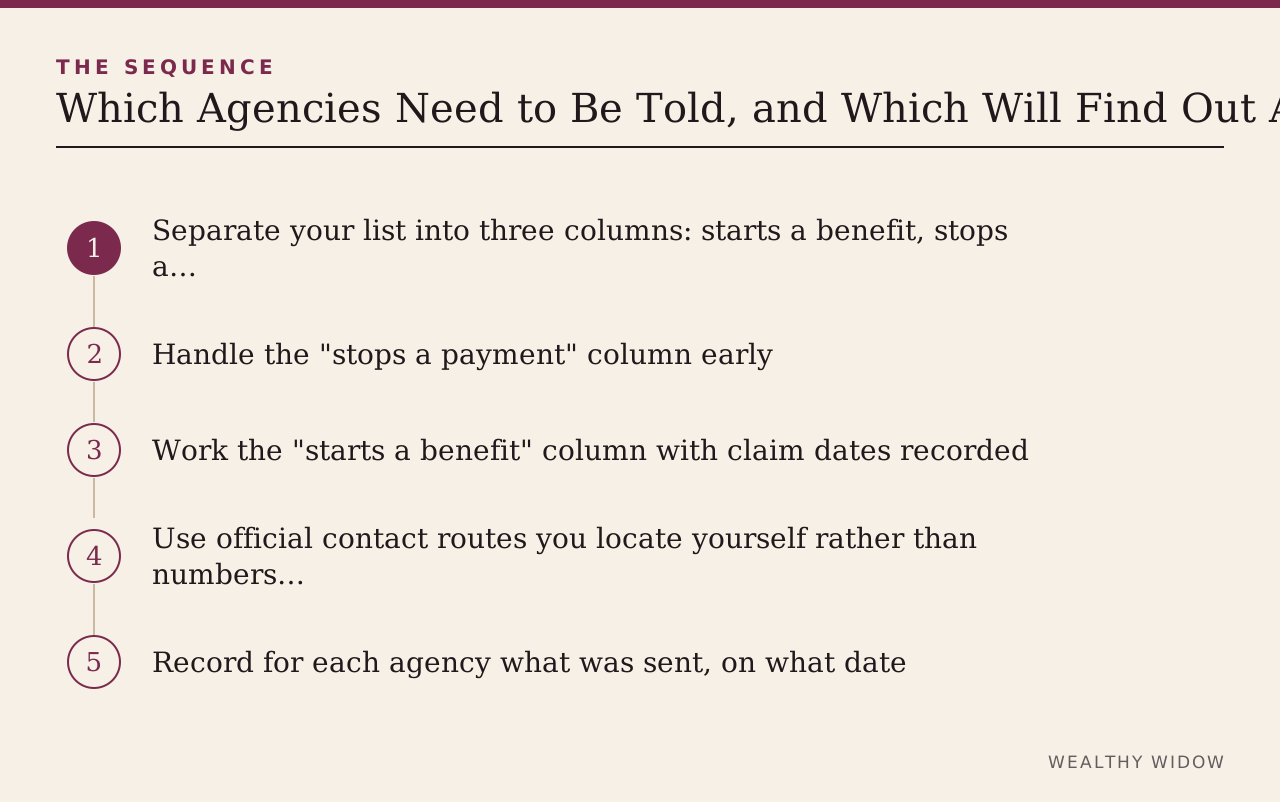
- Separate your list into three columns: starts a benefit, stops a payment, updates a record.
- Handle the “stops a payment” column early, because overpayments compound quietly and are recovered later.
- Work the “starts a benefit” column with claim dates recorded, since eligibility often runs from a filing date.
- Use official contact routes you locate yourself rather than numbers supplied by an inbound caller.
- Record for each agency what was sent, on what date, and what it said it would do next.
Common ways this decision is lost
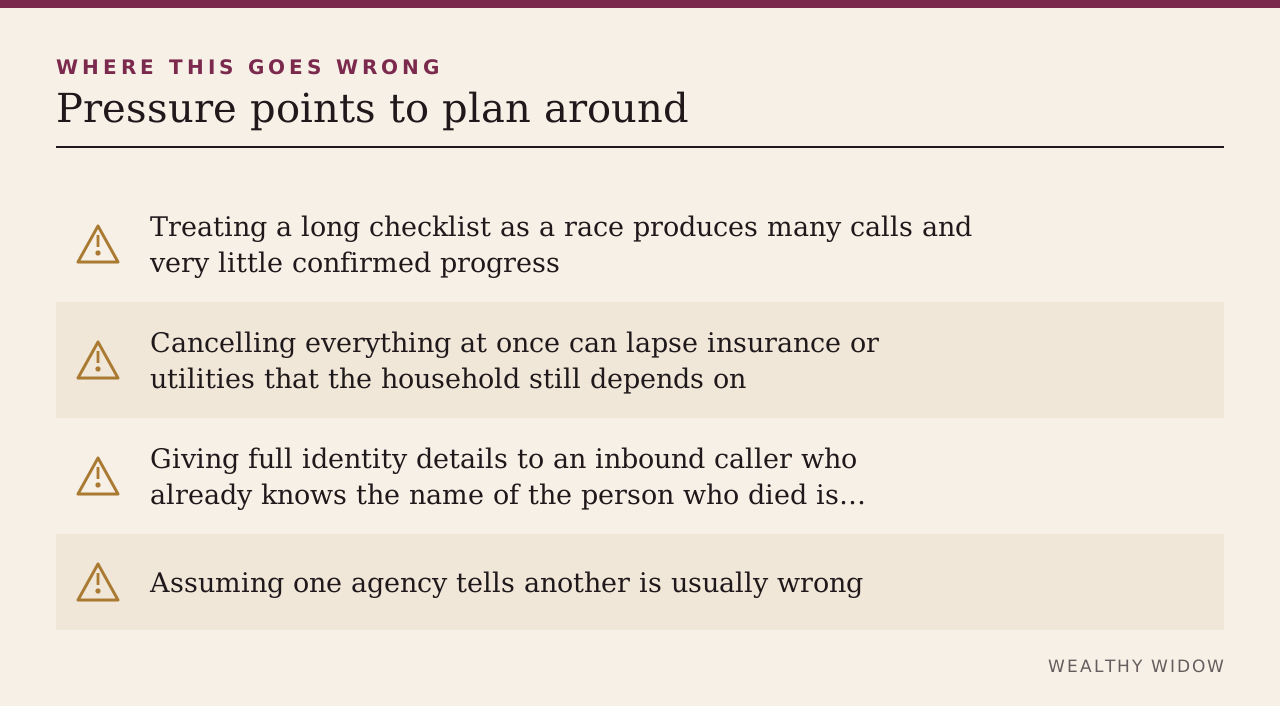
The errors here are well worn, which makes them avoidable. Treating a long checklist as a race produces many calls and very little confirmed progress.
Cancelling everything at once can lapse insurance or utilities that the household still depends on. Giving full identity details to an inbound caller who already knows the name of the person who died is a well-worn fraud route. Assuming one agency tells another is usually wrong, and the assumption is only discovered when a claim is late.
What to have in front of you
Collect these once and keep them together, because you will be asked for them repeatedly over the coming months.
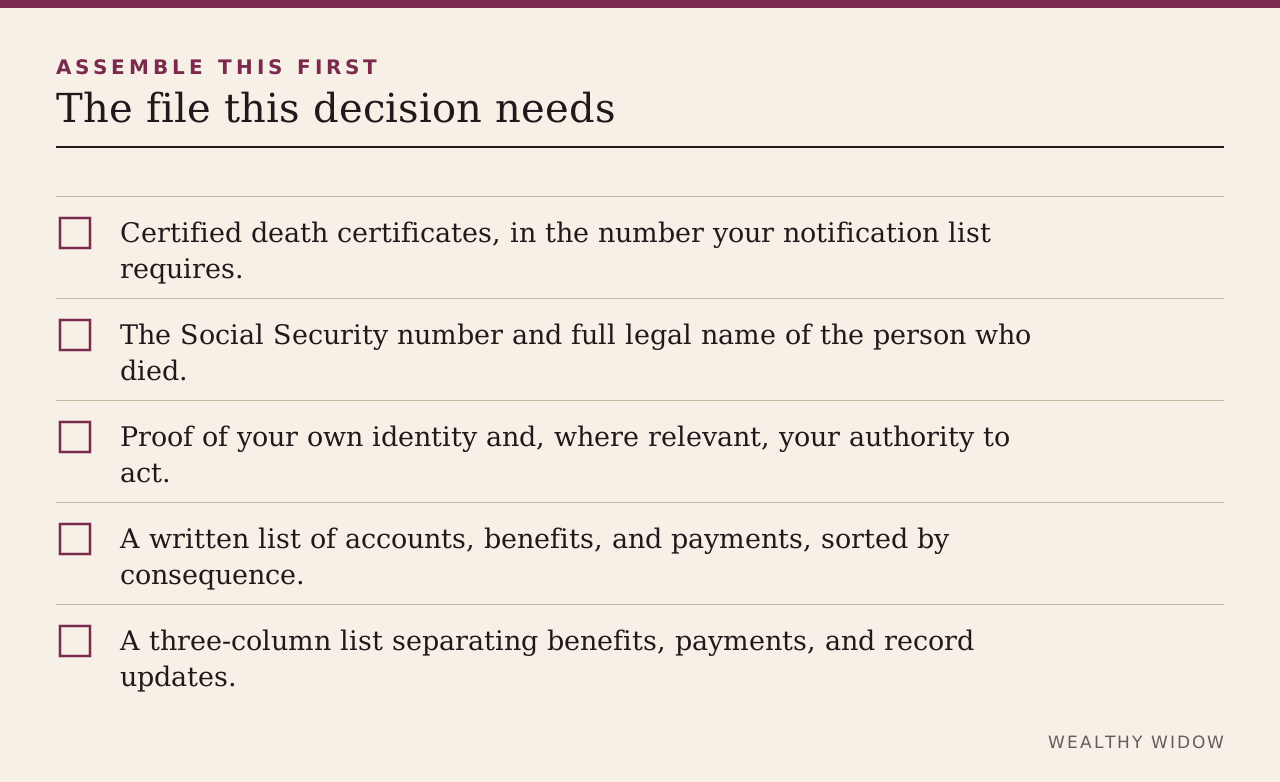
- Certified death certificates, in the number your notification list requires.
- The Social Security number and full legal name of the person who died.
- Proof of your own identity and, where relevant, your authority to act.
- A written list of accounts, benefits, and payments, sorted by consequence.
- A three-column list separating benefits, payments, and record updates.
Put these in writing, then proceed
A conversation is a starting point. These belong on paper.
- What each agency says it will do next, and by when.
- Whether any payment received after the death must be returned, and how.
- What proof of authority each agency requires from you specifically.
- The claim or effective date recorded for anything you have applied for.
Before anyone is engaged, ask these
Ask them plainly; the response tells you as much as the answer.
- Which of these notifications actually starts a claim, and which is only a record update?
- Is there a benefit here I would lose by notifying in the wrong order?
- What is the deadline you are working to, and where is it published?
- Who at your organisation is accountable if this is not processed?
Sources worth reading yourself
Where this guide and a source disagree, the source is right.
- USAGov — Agencies to notify when someone dies
- USAGov — Dealing with the death of a loved one
- Social Security Administration — Survivor benefits
- Internal Revenue Service — Deceased person
The boundary of this guide
Be clear about the boundary; the wrong assumption here is expensive. It cannot tell you which agencies apply to your household, because that depends on employment history, military service, benefits claimed, and where the person lived.
Where this leaves you
A notification plan beats a notification list. Sorted by consequence rather than by alphabet, the same set of calls stops producing anxiety and starts producing confirmed outcomes you can point to.
For the step that usually comes next, read The Mail Is a Security Problem Before It Is an Administrative One.
Primary sources
- USAGov — Agencies to notify when someone dies
- USAGov — Dealing with the death of a loved one
- Social Security Administration — Survivor benefits
- Internal Revenue Service — Deceased person
This article provides general education, not individualized legal, tax, investment, insurance, or benefits advice. Rules and deadlines change; verify the current requirement with the agency and a qualified professional.