First 90 Days
Reading the Will: What It Controls and What It Does Not
A will governs less than most families assume. Large parts of an estate typically pass outside it, and reading it alone can badly mislead.

Widowhood arrives with a queue of decisions that all look equally urgent. A will governs less than most families assume. Large parts of an estate typically pass outside it, and reading it alone can badly mislead. They are not the same task, and treating them as one is how good decisions get made badly.
Families often read the will expecting a complete picture and receive a partial one. Understanding the boundary between probate and non-probate property prevents a great deal of unnecessary distress.
A will directs probate property. Beneficiary designations, survivorship, and trusts frequently direct everything else, and they do not consult the will.
What this decision actually is
Before any advice, the ground facts. A will generally controls only property that passes through probate. Retirement accounts and insurance policies usually pass by beneficiary designation, outside the will. Property held with survivorship rights typically passes to the survivor regardless of what the will says.
Assets in a trust are governed by the trust deed rather than by the will. Being named executor in a will is not the same as being appointed by a court.
Work it in this order
Work through this deliberately. Each step assumes the one before it is done.
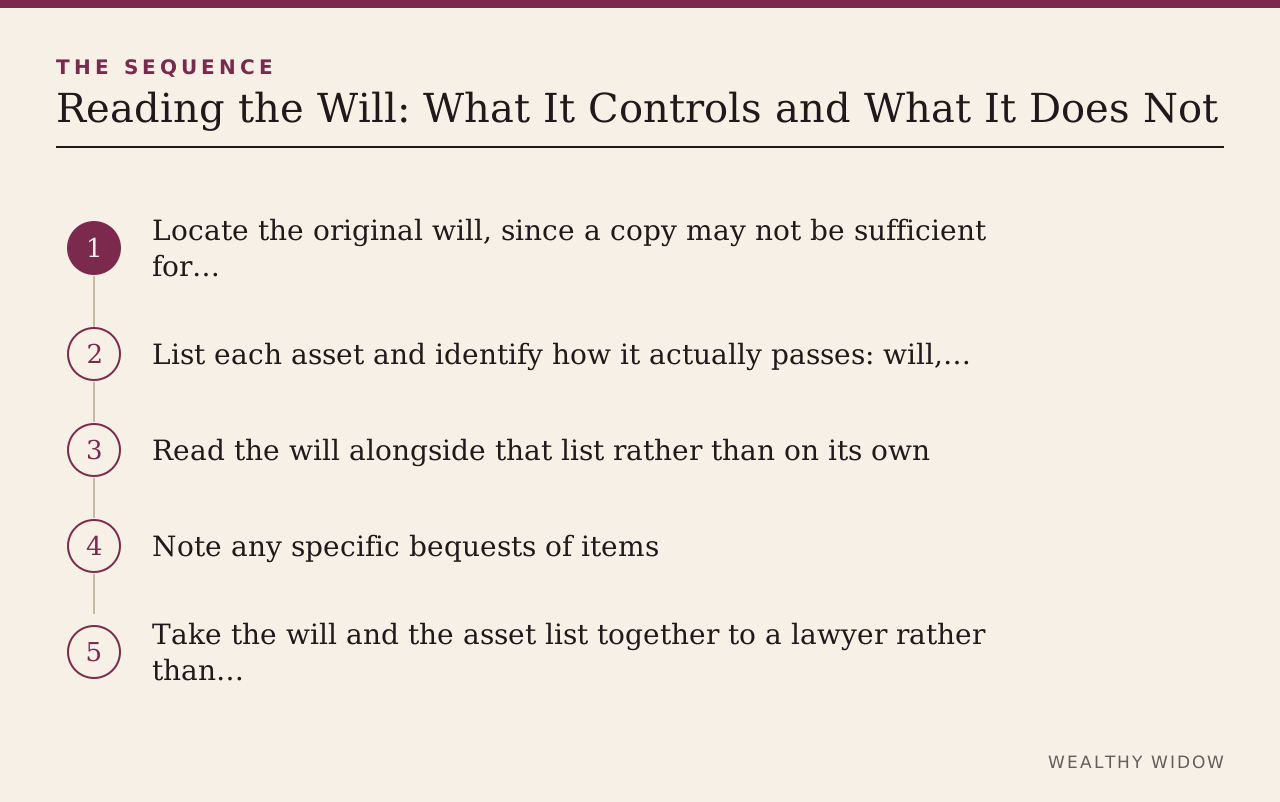
- Locate the original will, since a copy may not be sufficient for the court.
- List each asset and identify how it actually passes: will, designation, survivorship, or trust.
- Read the will alongside that list rather than on its own.
- Note any specific bequests of items, and stop any informal distribution of those items immediately.
- Take the will and the asset list together to a lawyer rather than seeking advice on the will alone.
The pressure points to watch
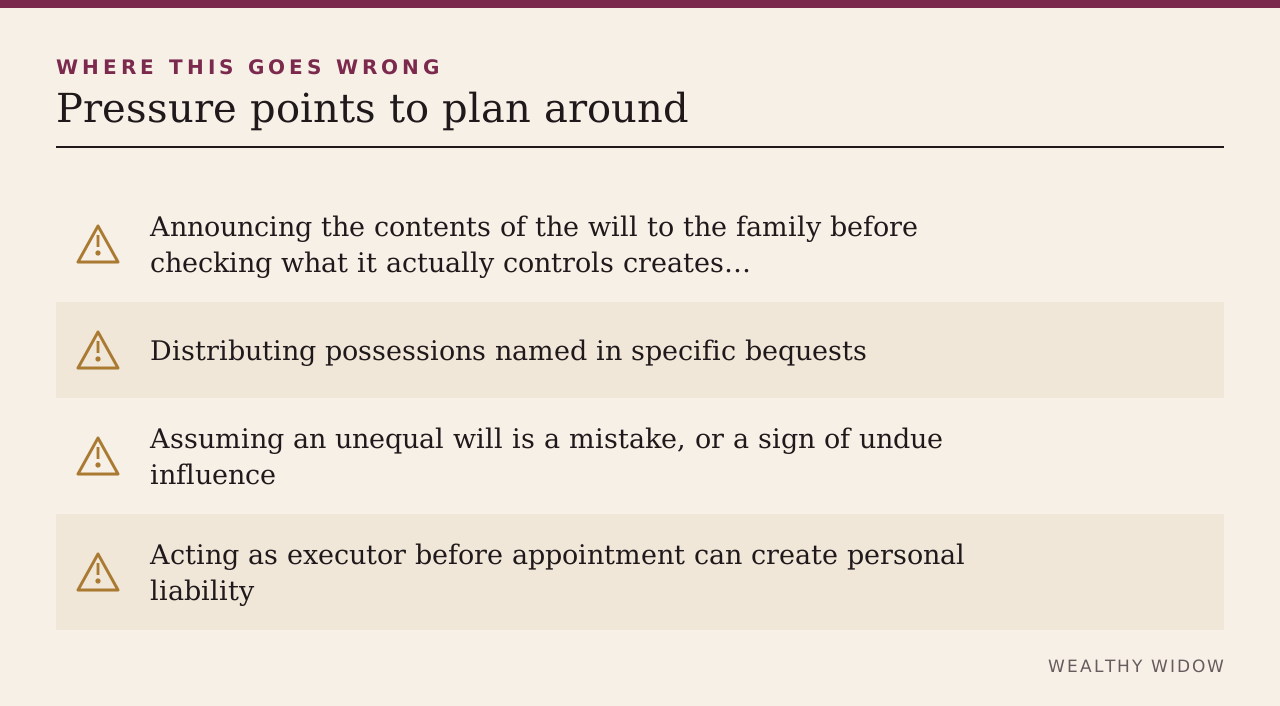
Anticipating these is most of the protection available to you, and it costs nothing but attention. Announcing the contents of the will to the family before checking what it actually controls creates expectations that later collapse.
Distributing possessions named in specific bequests, before probate, is difficult to undo. Assuming an unequal will is a mistake, or a sign of undue influence, without understanding non-probate transfers. Acting as executor before appointment can create personal liability.
What you will be asked to produce
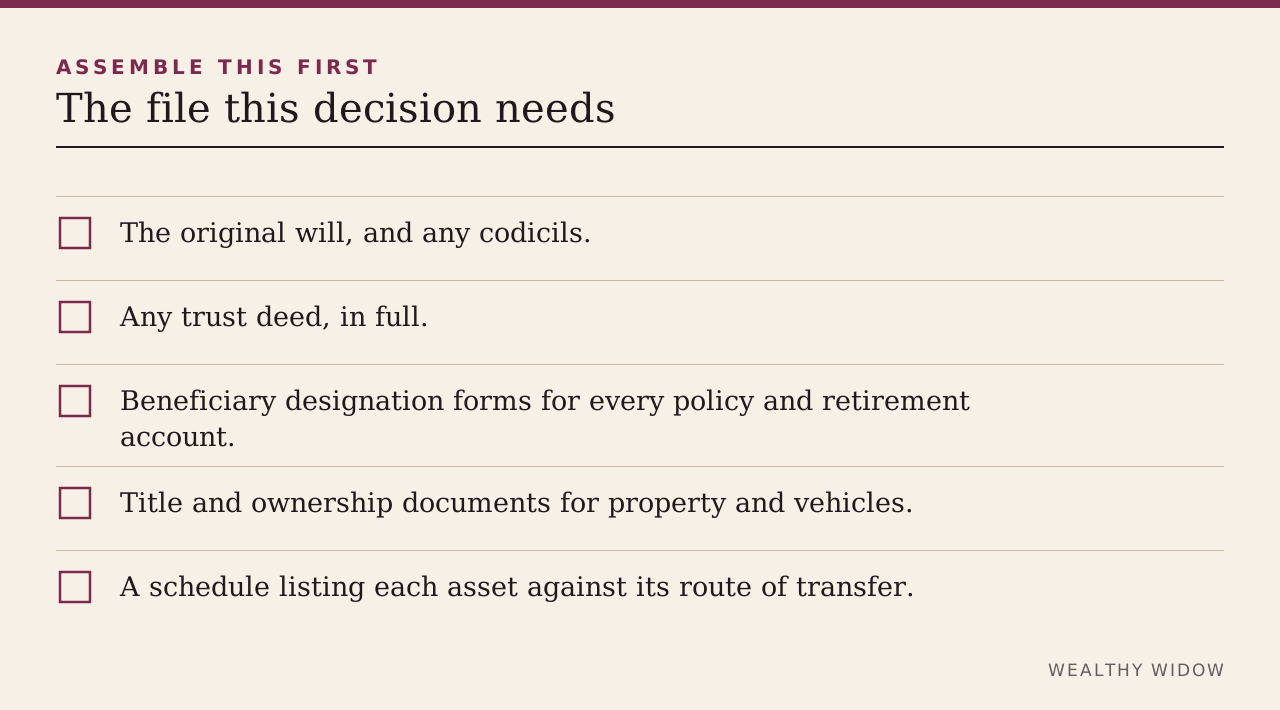
Assemble this before the first conversation rather than during it.
- The original will, and any codicils.
- Any trust deed, in full.
- Beneficiary designation forms for every policy and retirement account.
- Title and ownership documents for property and vehicles.
- A schedule listing each asset against its route of transfer.
Confirm these in writing before you act
Written confirmation is not distrust. It is ordinary governance. Ask for each of these.
- Whether the document you hold is the original and the most recent version.
- Which assets pass under the will and which pass outside it.
- Whether a court appointment is required, and its timescale.
- What you may and may not do before that appointment.
What to put to your adviser
Take these to whoever is advising you, in writing if you can.
- Which of these assets actually pass under the will?
- Is this the operative will, and is any earlier version relevant?
- What is my authority before the court appoints a representative?
- What should I do with items subject to a specific bequest in the meantime?
Confirm this against the rule
Do not take this guide as the authority. Each source below states the current rule for the part of this decision it covers.
- Internal Revenue Service — Information for executors
- Consumer Financial Protection Bureau — Taking control of your finances, help for surviving spouses
- Legal Services Corporation — I need legal help
- USAGov — Dealing with the death of a loved one
What is outside this
What follows is outside anything written for a general readership. It cannot interpret your will. Wording, state law, and the interaction with trusts and designations decide meaning, and that reading is a lawyer’s job.
The short version
Read the will against a complete asset schedule, never on its own. The document that looks like the whole answer is usually one of several, and understanding that early prevents most of the disputes that follow.
A companion guide, The Car: Title, Insurance, and the Gap Between Them, covers the decision that sits alongside this one.
Primary sources
- Internal Revenue Service — Information for executors
- Consumer Financial Protection Bureau — Taking control of your finances, help for surviving spouses
- Legal Services Corporation — I need legal help
- USAGov — Dealing with the death of a loved one
This article provides general education, not individualized legal, tax, investment, insurance, or benefits advice. Rules and deadlines change; verify the current requirement with the agency and a qualified professional.