Estate
Real Property in Another State: A Second Process
A holiday home or investment property in another state can require its own administration, running alongside the main estate.

Widowhood arrives with a queue of decisions that all look equally urgent. A holiday home or investment property in another state can require its own administration, running alongside the main estate. They are not the same task, and treating them as one is how good decisions get made badly.
Households with a second property frequently discover only after a death that two processes are required. Planning during your own lifetime can avoid the same outcome for your beneficiaries.
Real property is governed by the law of the state where it sits, regardless of where the owner lived or died.
What is really being decided here
The facts that govern this are narrower than the anxiety around it. Real property is generally administered under the law of the state in which it is located. That may require a separate, ancillary proceeding in addition to the main administration. Each state sets its own procedure, thresholds, and documentation requirements.
Local counsel is frequently required, adding cost and time. Ownership structures such as trusts or survivorship titling can avoid the second process entirely.
What to do, and in what order
Follow it in order, and leave anything requiring a signature until the end rather than the beginning.
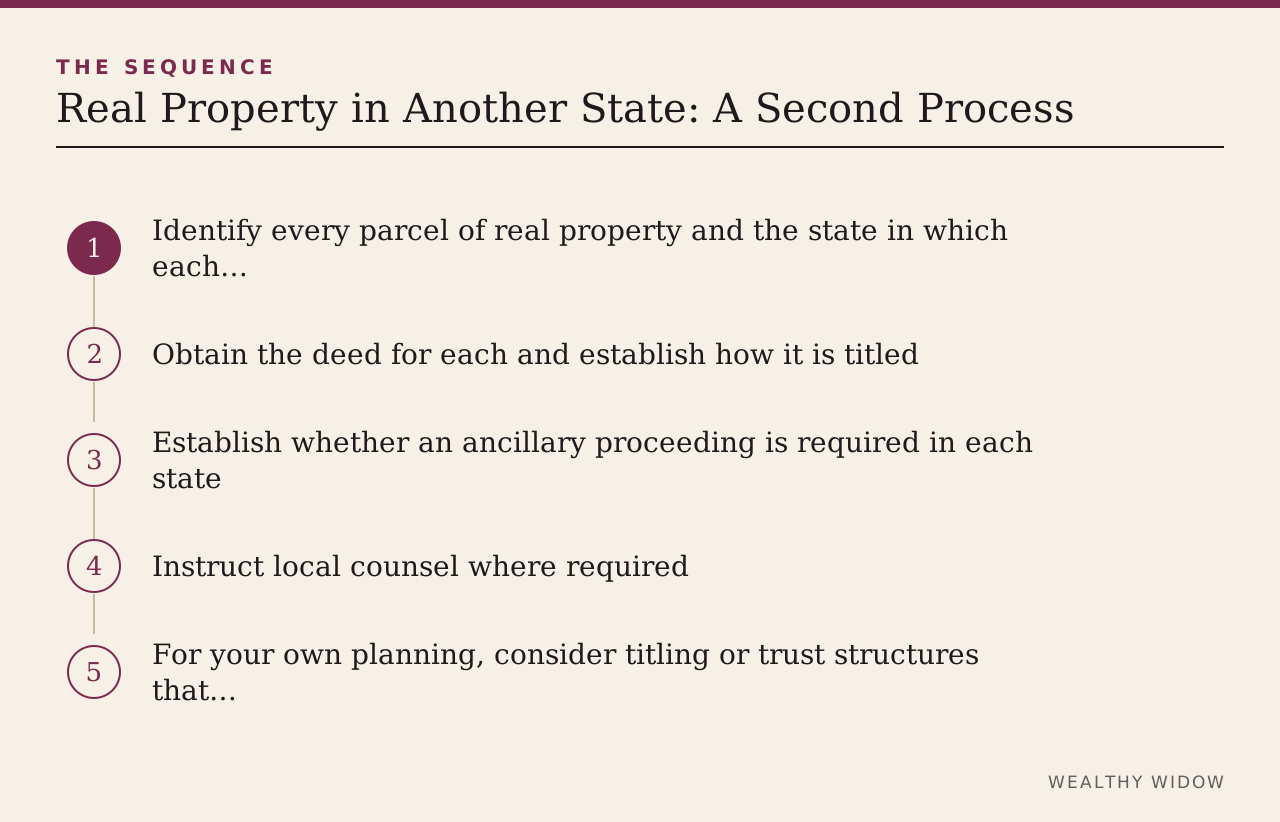
- Identify every parcel of real property and the state in which each sits.
- Obtain the deed for each and establish how it is titled.
- Establish whether an ancillary proceeding is required in each state.
- Instruct local counsel where required, and coordinate the two administrations.
- For your own planning, consider titling or trust structures that avoid a repeat.
The mistakes that are hard to reverse
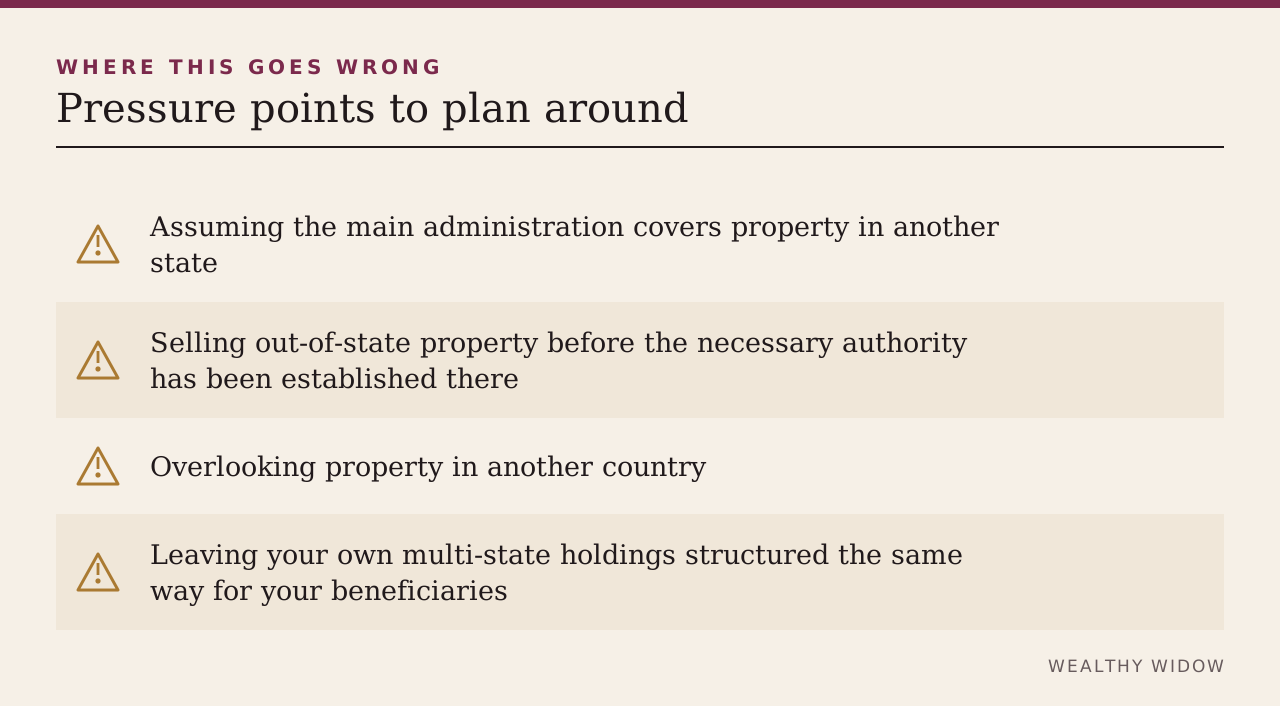
Each of the following is a signal to pause and confirm rather than to proceed on the assumption that it is fine. Assuming the main administration covers property in another state.
Selling out-of-state property before the necessary authority has been established there. Overlooking property in another country, which raises further issues entirely. Leaving your own multi-state holdings structured the same way for your beneficiaries.
The documents to assemble first
The evidence below does most of the work of establishing who you are and what you may do.
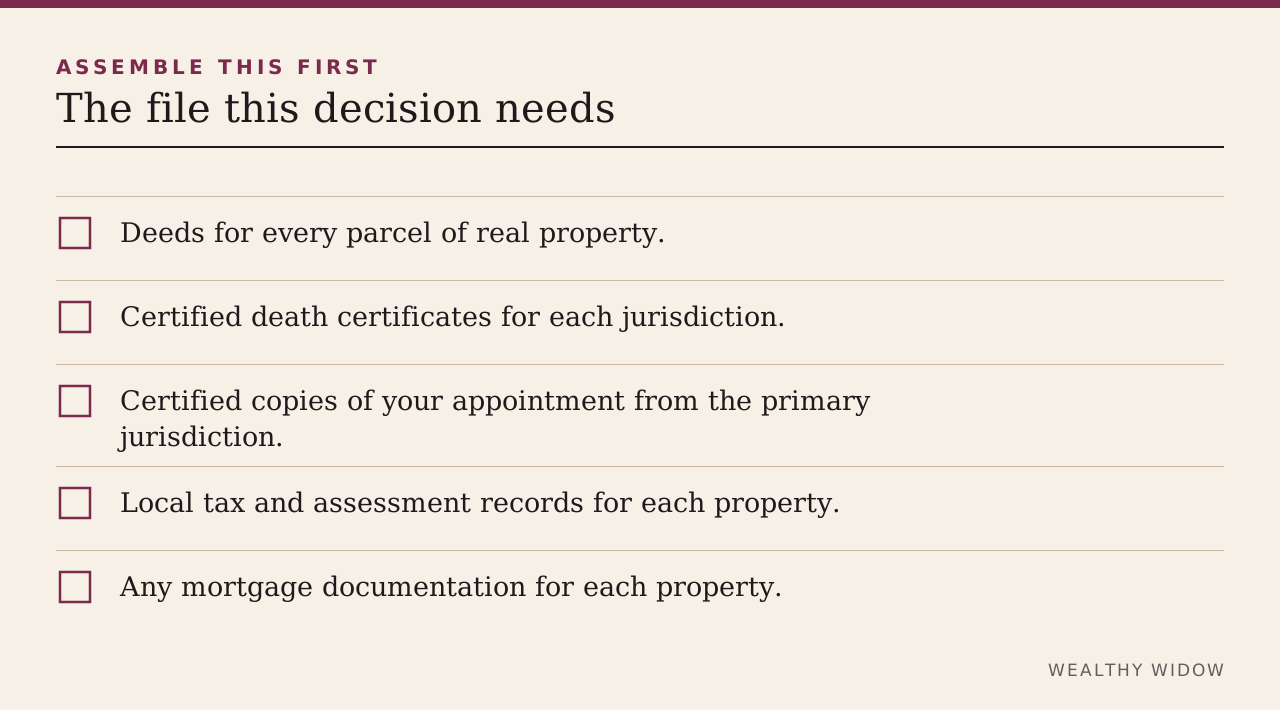
- Deeds for every parcel of real property.
- Certified death certificates for each jurisdiction.
- Certified copies of your appointment from the primary jurisdiction.
- Local tax and assessment records for each property.
- Any mortgage documentation for each property.
The written trail to keep
Written confirmation is ordinary practice, not suspicion.
- Whether an ancillary proceeding is required in each state.
- How each property is titled.
- What documentation each jurisdiction requires.
- The expected timescale for each process.
Questions to take to a professional
If an answer to any of these is vague, that is your answer about the adviser.
- Is an ancillary proceeding required for this property?
- How is this property titled, and does that change the answer?
- What would avoid a second process for my own beneficiaries?
- Can the two administrations run in parallel?
Confirm this against the rule
Do not take this guide as the authority. Each source below states the current rule for the part of this decision it covers.
- Legal Services Corporation — I need legal help
- American Bar Association — Find legal help
- Internal Revenue Service — Information for executors
- USAGov — Get copies of vital records and ID cards
What is outside this
What follows is outside anything written for a general readership. It cannot describe the procedure in another state, which sets its own rules and frequently requires counsel admitted there.
The short version
Establish the titling of every parcel early and instruct local counsel where a second process is required. Then structure your own holdings so your beneficiaries face one administration rather than two.
Our related guide Dividing Possessions Without Dividing the Family covers the adjacent problem.
Primary sources
- Legal Services Corporation — I need legal help
- American Bar Association — Find legal help
- Internal Revenue Service — Information for executors
- USAGov — Get copies of vital records and ID cards
This article provides general education, not individualized legal, tax, investment, insurance, or benefits advice. Rules and deadlines change; verify the current requirement with the agency and a qualified professional.