First 90 Days
Payments That Arrive After the Death, and Why They May Go Back
Benefits, pensions, and salary paid after the date of death frequently have to be returned, and quiet spending makes that harder to resolve.

Widowhood arrives with a queue of decisions that all look equally urgent. Benefits, pensions, and salary paid after the date of death frequently have to be returned, and quiet spending makes that harder to resolve. They are not the same task, and treating them as one is how good decisions get made badly.
Payment systems run on cycles, so money frequently arrives for a period that had already ended. Recovery is routine and usually mechanical, but it lands badly on a household that has already budgeted for the money.
Money that arrives after a death is not automatically yours, and the cheapest time to establish that is before it is spent.
First, get the category right
A handful of accurate points does most of the work here, and the rest is noise generated by other people’s urgency. Benefit and pension payments generally relate to a period, and payments covering a period after the death are usually recoverable. Recovery can occur by direct debit reversal from the account, sometimes without notice. Final salary and accrued leave are different in character and may be genuinely due to the estate.
Returning a payment promptly is normally simpler than repaying it after it has been recovered. Where an amount is disputed, there is an appeal or review route rather than an obligation to simply accept it.
Take the steps in this order
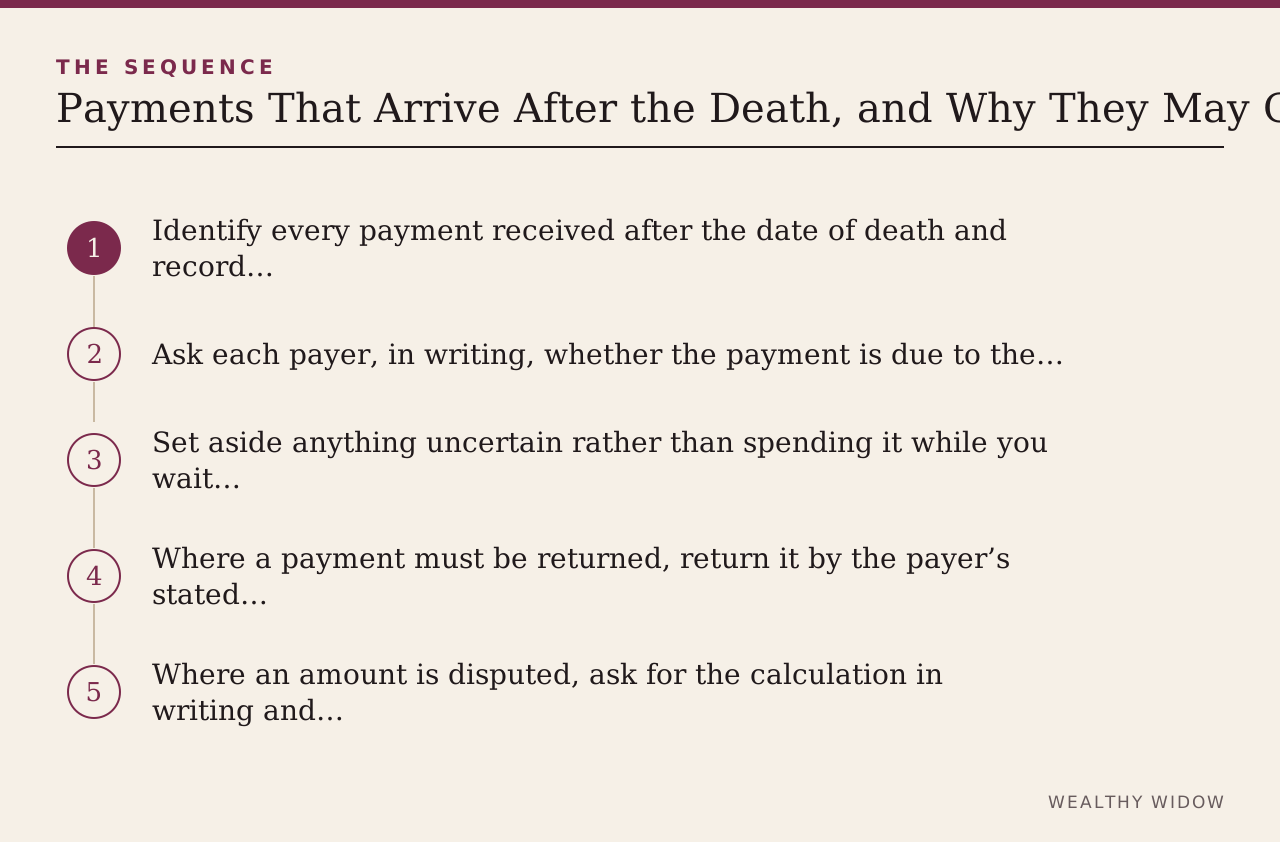
The order below keeps your options open for as long as possible.
- Identify every payment received after the date of death and record its source, amount, and the period it covers.
- Ask each payer, in writing, whether the payment is due to the estate or must be returned.
- Set aside anything uncertain rather than spending it while you wait for an answer.
- Where a payment must be returned, return it by the payer’s stated route and keep proof.
- Where an amount is disputed, ask for the calculation in writing and the review procedure.
What to watch for
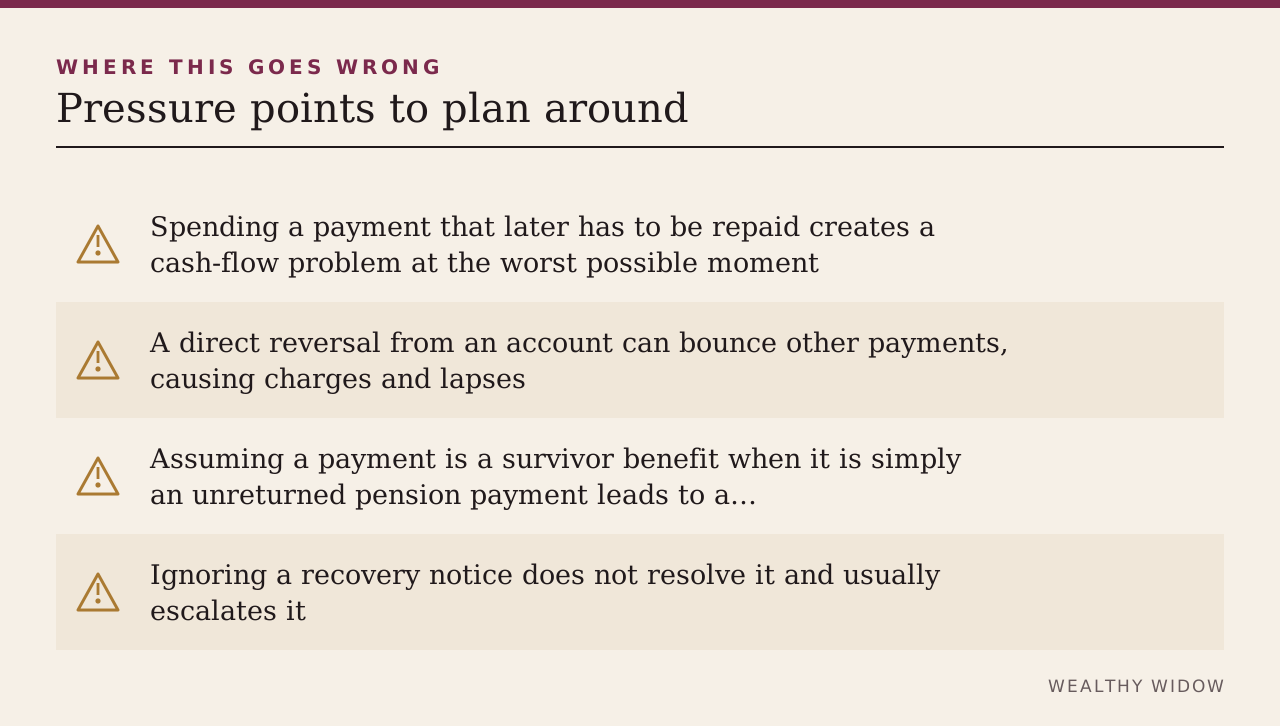
Treat each of the following as a reason to slow down. Spending a payment that later has to be repaid creates a cash-flow problem at the worst possible moment.
A direct reversal from an account can bounce other payments, causing charges and lapses. Assuming a payment is a survivor benefit when it is simply an unreturned pension payment leads to a false view of income. Ignoring a recovery notice does not resolve it and usually escalates it.
The file this decision needs
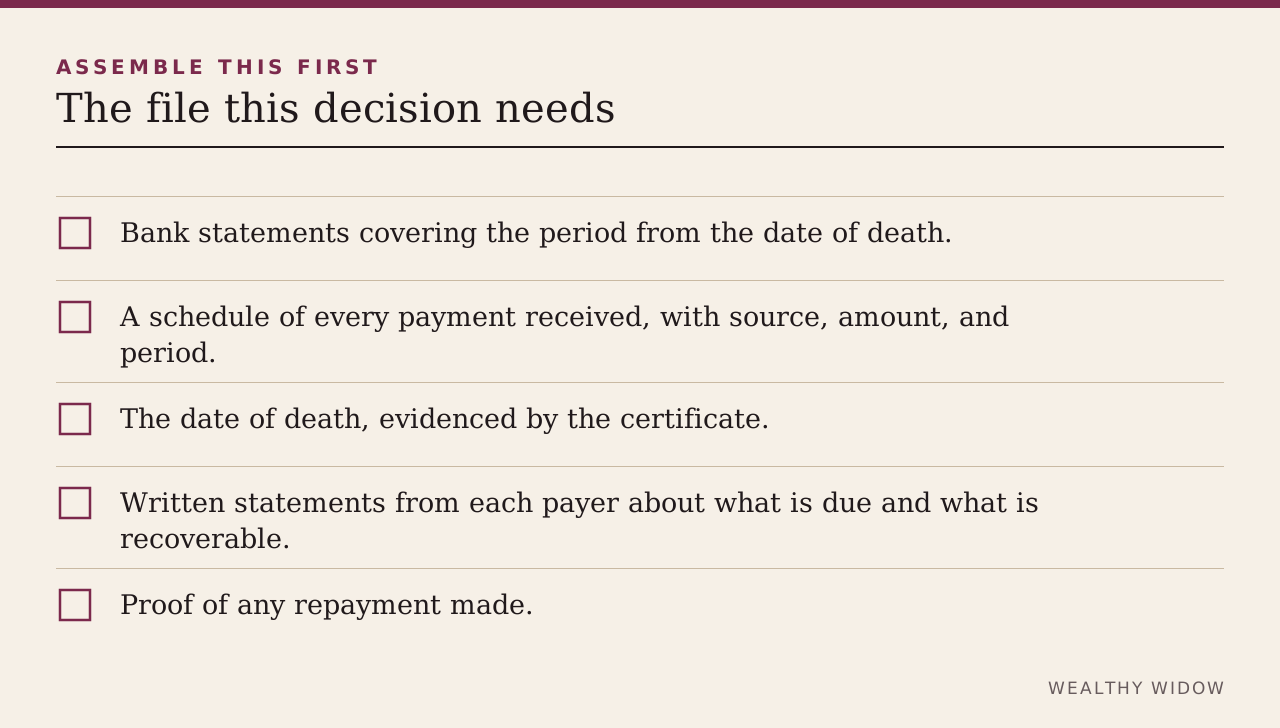
Keep these together in one place, and note where every copy goes and on what date it was sent.
- Bank statements covering the period from the date of death.
- A schedule of every payment received, with source, amount, and period.
- The date of death, evidenced by the certificate.
- Written statements from each payer about what is due and what is recoverable.
- Proof of any repayment made.
Written confirmation to insist on
Before you act on what you have been told, hold written confirmation of each point.
- For each payment, whether it is due to the estate or recoverable.
- The method and deadline for returning anything recoverable.
- How and when any recovery will be taken, if not returned voluntarily.
- The review route for any amount you dispute.
Take these questions to your adviser
Ask these before an engagement letter is signed, while you still have every option open to you.
- Is this payment due to the estate, or must it be returned?
- How will you recover it if I do not return it voluntarily?
- Can you provide the calculation in writing?
- What is the review or appeal process if I disagree?
Where the current rule lives
Read the source directly for any figure, date, or threshold that will actually drive a decision you make.
- Social Security Administration — Survivor benefits
- USAGov — Report the death of a Social Security or Medicare beneficiary
- U.S. Office of Personnel Management — Survivor benefits
- Consumer Financial Protection Bureau — Help for surviving spouses
What this cannot decide for you
General guidance sets out the shape of a decision. Your documents settle it. It cannot tell you whether a particular payment is recoverable, because that depends on the rules of the scheme that made it.
Before you move on
Ring-fence anything that arrived after the date of death until each payer has confirmed its status in writing. It is a small discipline that prevents a genuinely painful conversation two months later.
A companion guide, At Ninety Days: What Should Be Done and What Should Not Be, covers the decision that sits alongside this one.
Primary sources
- Social Security Administration — Survivor benefits
- USAGov — Report the death of a Social Security or Medicare beneficiary
- U.S. Office of Personnel Management — Survivor benefits
- Consumer Financial Protection Bureau — Help for surviving spouses
This article provides general education, not individualized legal, tax, investment, insurance, or benefits advice. Rules and deadlines change; verify the current requirement with the agency and a qualified professional.