First 90 Days
Setting Up a Filing System You Will Still Use in a Year
The volume of paperwork in the first months is large enough that an ad hoc system fails, usually just when it matters.

Widowhood arrives with a queue of decisions that all look equally urgent. The volume of paperwork in the first months is large enough that an ad hoc system fails, usually just when it matters. They are not the same task, and treating them as one is how good decisions get made badly.
Paperwork arrives faster than it can be dealt with, and the natural response is a pile. A simple structure set up at the start saves a great deal of searching later.
Organise by organisation rather than by date, because every question you will be asked is about an organisation.
Start by naming the decision correctly
The position is narrower than it looks once it is stated plainly. Almost every query in this period concerns one organisation and one account. Chronological filing makes those queries slow to answer. Originals, certified copies, and ordinary copies need to be distinguishable at a glance.
Proof of dispatch is frequently the decisive document in a dispute. The same file will later serve the estate accounting and any professional you instruct.
The order of operations
This is the working order most readers find keeps them in control.
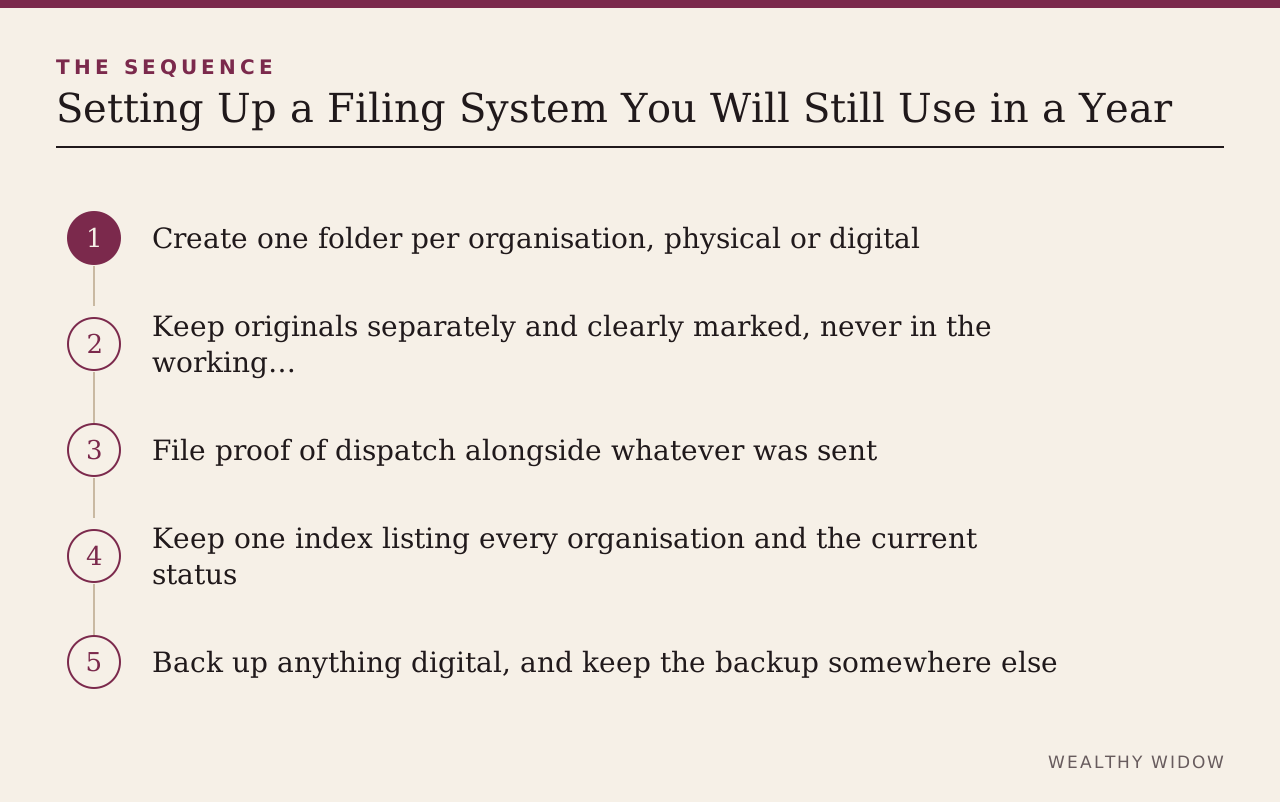
- Create one folder per organisation, physical or digital, and file everything into it.
- Keep originals separately and clearly marked, never in the working folders.
- File proof of dispatch alongside whatever was sent.
- Keep one index listing every organisation and the current status.
- Back up anything digital, and keep the backup somewhere else.
Where readers most often get hurt
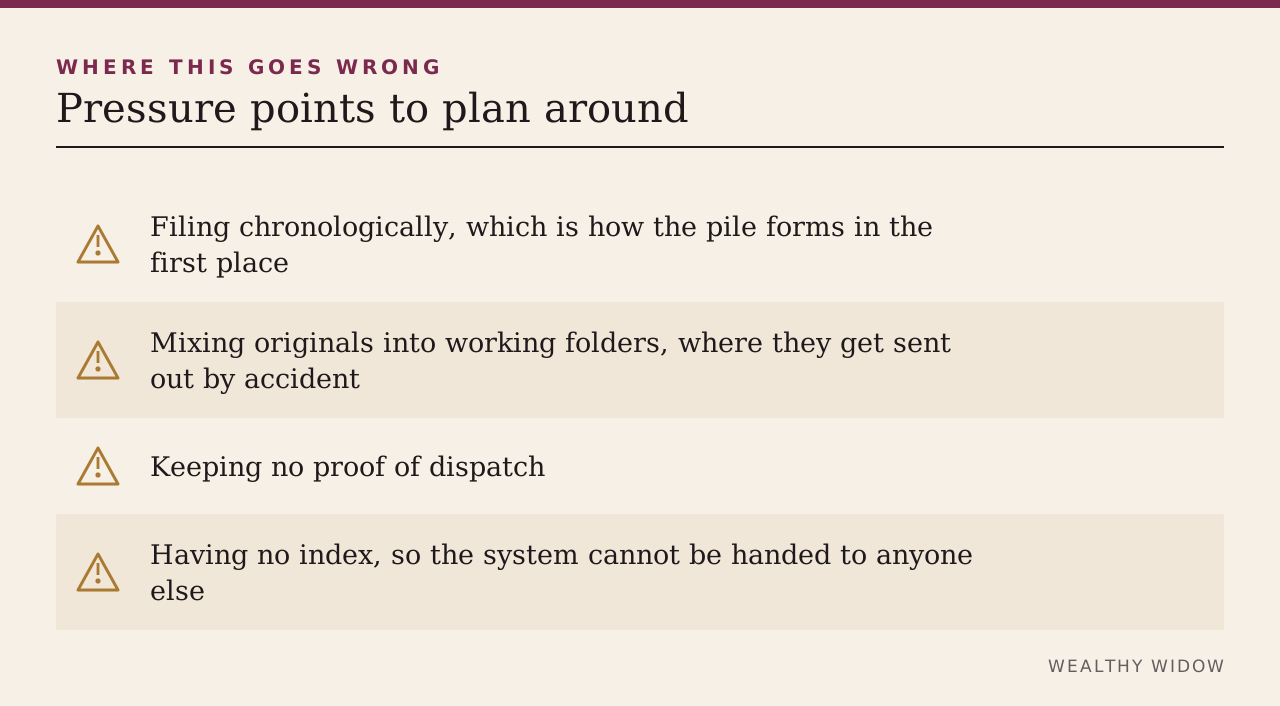
Knowing the failure modes in advance is most of the protection. Filing chronologically, which is how the pile forms in the first place.
Mixing originals into working folders, where they get sent out by accident. Keeping no proof of dispatch, which is what disputes turn on. Having no index, so the system cannot be handed to anyone else.
The paperwork to collect first
Gather these first and the rest of the process moves considerably faster, because most delays are missing paperwork.
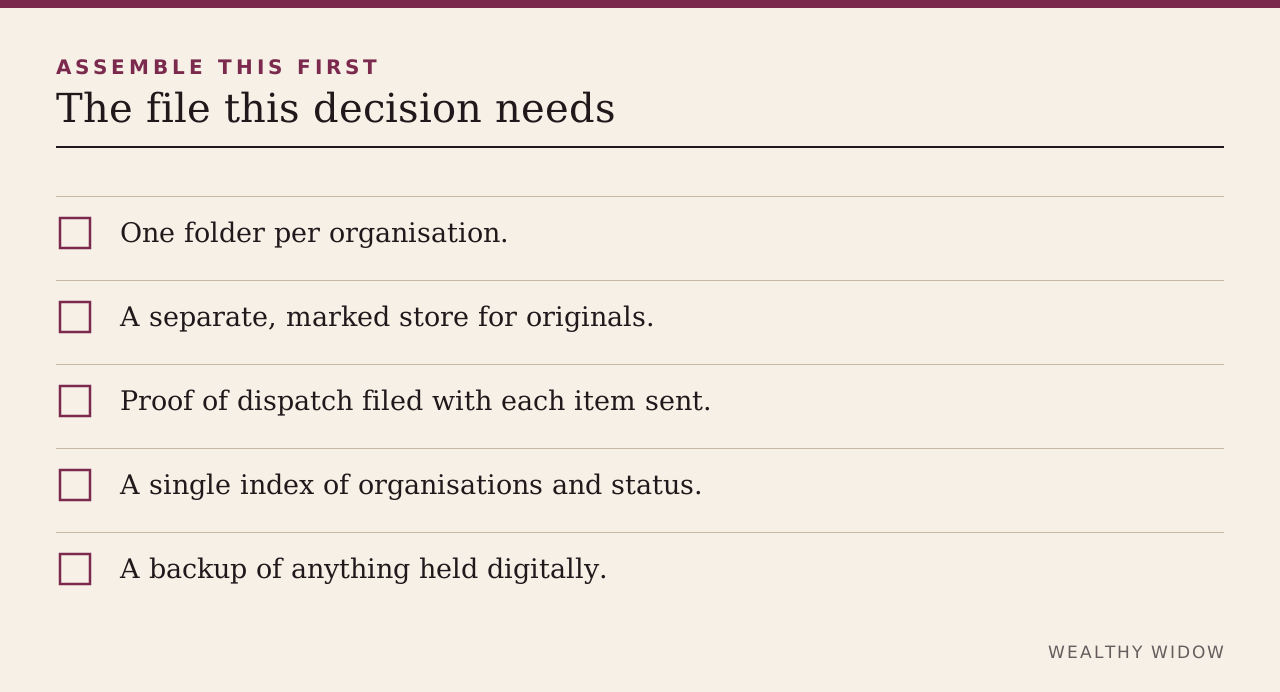
- One folder per organisation.
- A separate, marked store for originals.
- Proof of dispatch filed with each item sent.
- A single index of organisations and status.
- A backup of anything held digitally.
Ask for this in writing
Each item below should exist somewhere other than your memory, because memory is not evidence in a dispute.
- That originals are stored separately and identifiably.
- That every dispatch has proof filed with it.
- That the index reflects the current position.
- That a backup exists elsewhere.
The questions to bring to the meeting
Take these to the attorney, tax professional, or planner handling this work.
- What is your reference for this matter?
- What should I keep, and what can you provide again if needed?
- Do you require an original, a certified copy, or an ordinary copy?
- Can you confirm receipt in writing?
Verify each point at source
Check anything that will drive a decision against the source itself, not against this summary of it.
- Consumer Financial Protection Bureau — Taking control of your finances, help for surviving spouses
- Consumer Financial Protection Bureau — Help for surviving spouses
- Internal Revenue Service — Information for executors
- USAGov — Dealing with the death of a loved one
What this guide does not settle
What follows is the shape of the problem, not an answer to your version of it. It cannot organise your paperwork, and the structure matters less than the fact that there is one and it is used consistently.
Closing the loop
One folder per organisation, originals kept apart, proof of dispatch filed with everything sent, and a single index. It takes an hour at the start and saves considerably more than that within the first month.
If this raised a further question, Preparing for the Bank Appointment takes it further.
Primary sources
- Consumer Financial Protection Bureau — Taking control of your finances, help for surviving spouses
- Consumer Financial Protection Bureau — Help for surviving spouses
- Internal Revenue Service — Information for executors
- USAGov — Dealing with the death of a loved one
This article provides general education, not individualized legal, tax, investment, insurance, or benefits advice. Rules and deadlines change; verify the current requirement with the agency and a qualified professional.