First 90 Days
The Organisations Nobody Puts on the List
Professional bodies, unions, clubs, and associations frequently hold benefits, and they are absent from every standard checklist.

The pressure to resolve this quickly usually comes from outside you. Professional bodies, unions, clubs, and associations frequently hold benefits, and they are absent from every standard checklist.
Standard notification lists cover government and financial institutions. Membership bodies sit outside them and are a recurring source of unclaimed small benefits.
Membership organisations frequently carry small benefits that nobody remembers and nobody will volunteer.
Getting the question right first
Take the ground facts first, because most of the difficulty here dissolves once they are stated plainly. Unions, professional bodies, and associations frequently offer death or survivor benefits to members. Fraternal organisations may hold life cover arranged through membership. Alumni bodies, professional associations, and trade organisations sometimes hold group insurance arranged decades earlier and never mentioned since.
These benefits are frequently modest individually and worth a meaningful amount collectively, particularly where several memberships were held over a long career. They are almost never identified without someone specifically asking, because the organisation has no way of knowing a member has died and no obligation to look.
Where to start, and what follows
Take these in order. Reversing them tends to create work rather than save it.
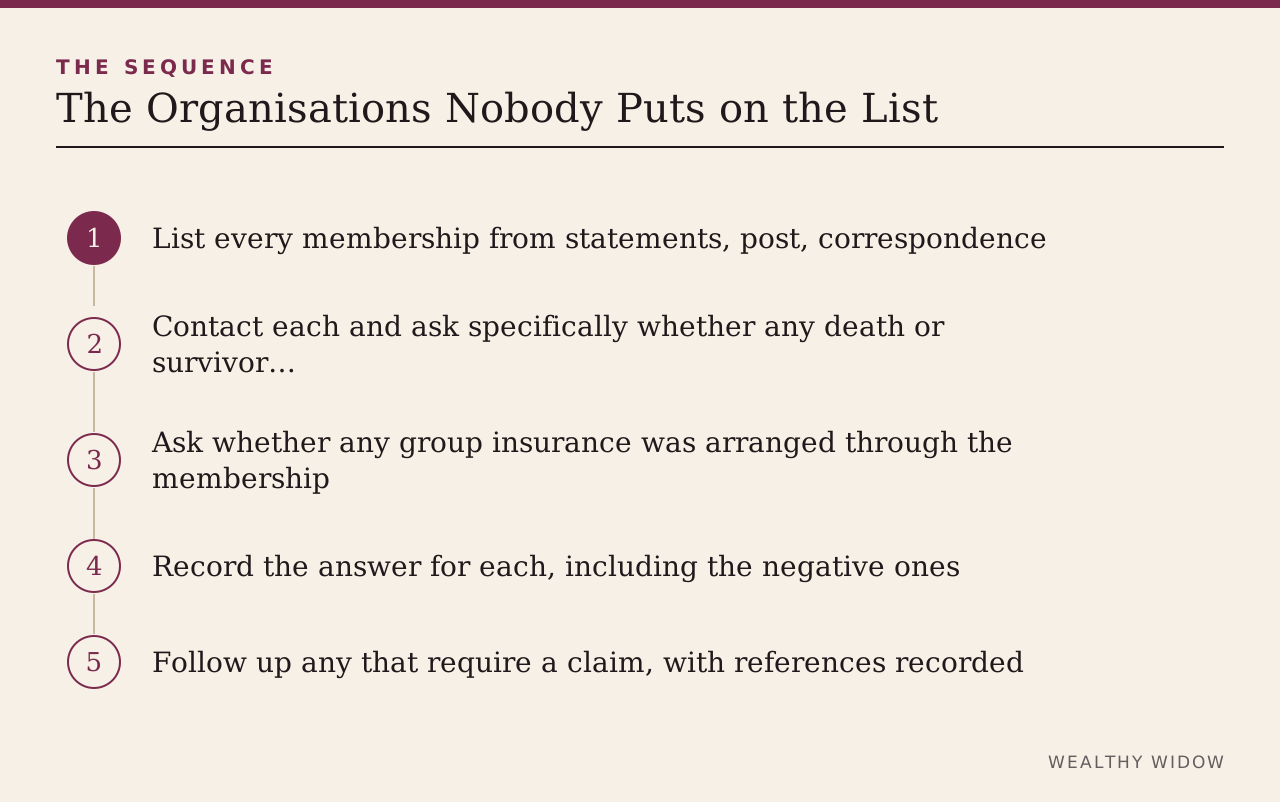
- List every membership from statements, post, correspondence, and memory.
- Contact each and ask specifically whether any death or survivor benefit exists.
- Ask whether any group insurance was arranged through the membership.
- Record the answer for each, including the negative ones.
- Follow up any that require a claim, with references recorded.
Where this commonly goes wrong
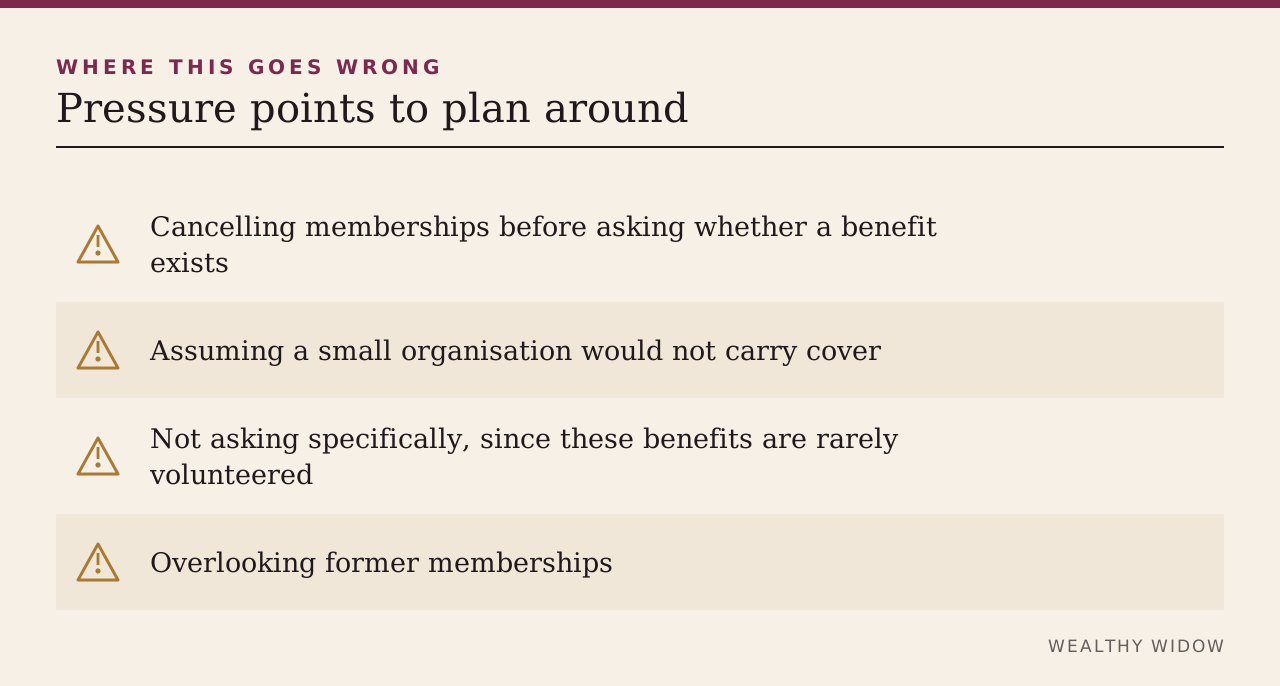
The failure modes below are predictable rather than unlucky, which is precisely what makes them avoidable. Cancelling memberships before asking whether a benefit exists.
Assuming a small organisation would not carry cover. Not asking specifically, since these benefits are rarely volunteered. Overlooking former memberships, which sometimes retain benefits.
Gather these before the first call
Every organisation involved will want some combination of the following, and several will want it more than once.
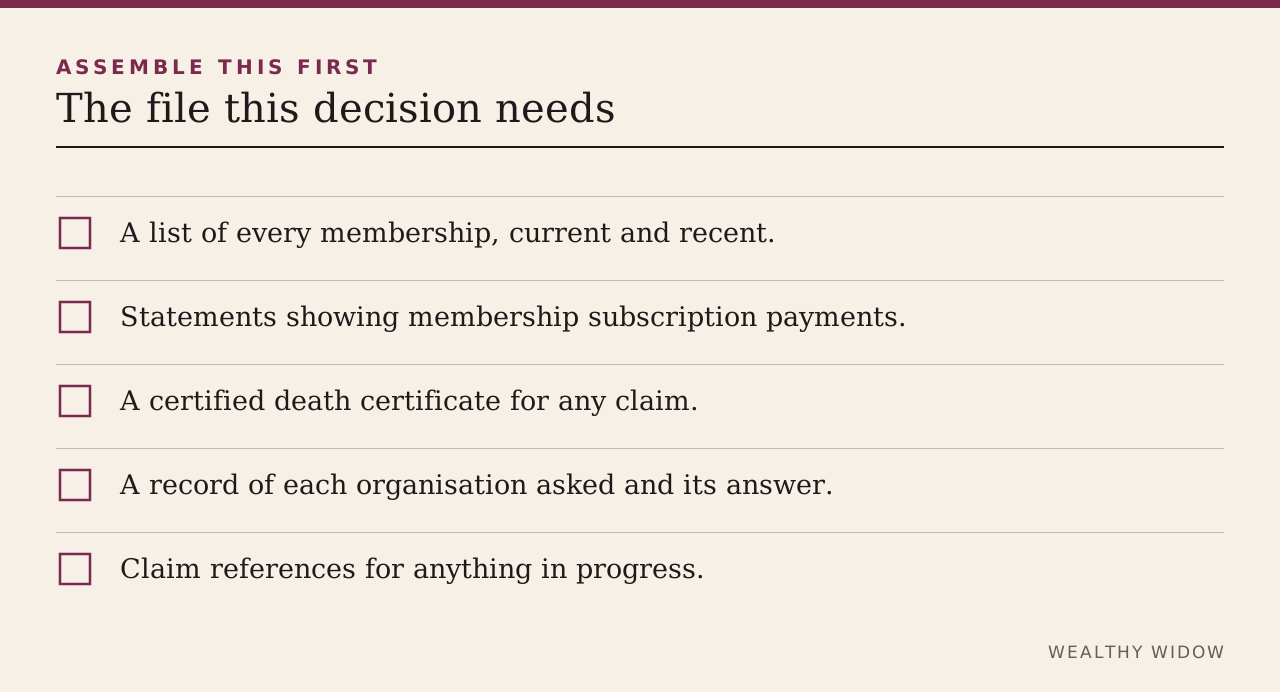
- A list of every membership, current and recent.
- Statements showing membership subscription payments.
- A certified death certificate for any claim.
- A record of each organisation asked and its answer.
- Claim references for anything in progress.
The written trail to keep
Written confirmation is ordinary practice, not suspicion.
- Whether each organisation carries any benefit.
- Whether group insurance was arranged through membership.
- What evidence any claim requires.
- That the answer has been recorded for each, including negatives.
Questions to take to a professional
If an answer to any of these is vague, that is your answer about the adviser.
- Does membership carry any death or survivor benefit?
- Was any group insurance arranged through this membership?
- Does a former member’s family retain any entitlement?
- What would a claim require?
Sources worth reading yourself
Where this guide and a source disagree, the source is right.
- USAGov — Agencies to notify when someone dies
- USAGov — Government death benefits
- National Association of Insurance Commissioners — How to use the life insurance policy locator
- Pension Benefit Guaranty Corporation — External resources for locating benefits
The boundary of this guide
Be clear about the boundary; the wrong assumption here is expensive. It cannot tell you what any organisation offers, and asking each one directly is the only way to find out.
Where this leaves you
Build the membership list from twelve months of subscription payments and then ask each organisation directly whether any benefit exists. The amounts are individually modest, collectively worth having, and entirely invisible unless somebody asks the question, because no membership body monitors whether its members are still alive.
If this raised a further question, A Payment Made Out to Someone Who Has Died takes it further.
Primary sources
- USAGov — Agencies to notify when someone dies
- USAGov — Government death benefits
- National Association of Insurance Commissioners — How to use the life insurance policy locator
- Pension Benefit Guaranty Corporation — External resources for locating benefits
This article provides general education, not individualized legal, tax, investment, insurance, or benefits advice. Rules and deadlines change; verify the current requirement with the agency and a qualified professional.