First 90 Days
The Lump-Sum Death Payment: A Small Sum With a Short Window
Social Security pays a one-time death payment to certain survivors, and it is entirely separate from the monthly survivor benefit that matters far more.

Widowhood arrives with a queue of decisions that all look equally urgent. Social Security pays a one-time death payment to certain survivors, and it is entirely separate from the monthly survivor benefit that matters far more. They are not the same task, and treating them as one is how good decisions get made badly.
Two different Social Security payments are in play after a death, decided in different places on different timetables. Confusing them is the most common way survivors leave money unclaimed.
Reporting a death and claiming a benefit are two different acts, and only one of them puts money in your account.
Separate the label from the decision
The position is narrower than it looks once it is stated plainly. The lump-sum death payment is a single one-time payment, not a monthly benefit, and it is paid only to a qualifying surviving spouse or, in limited cases, a qualifying child. It is handled separately from the monthly survivor benefit, so receiving one tells you nothing about your eligibility for the other. Eligibility generally turns on the work record of the person who died and on your relationship and living arrangements at the time of death.
The amount is set by statute rather than calculated from the estate, so it does not scale with the size of the accounts involved. Neither payment is automatic simply because a death was reported; reporting a death and filing a claim are separate acts.
A working sequence for this decision
This is the working order most readers find keeps them in control.
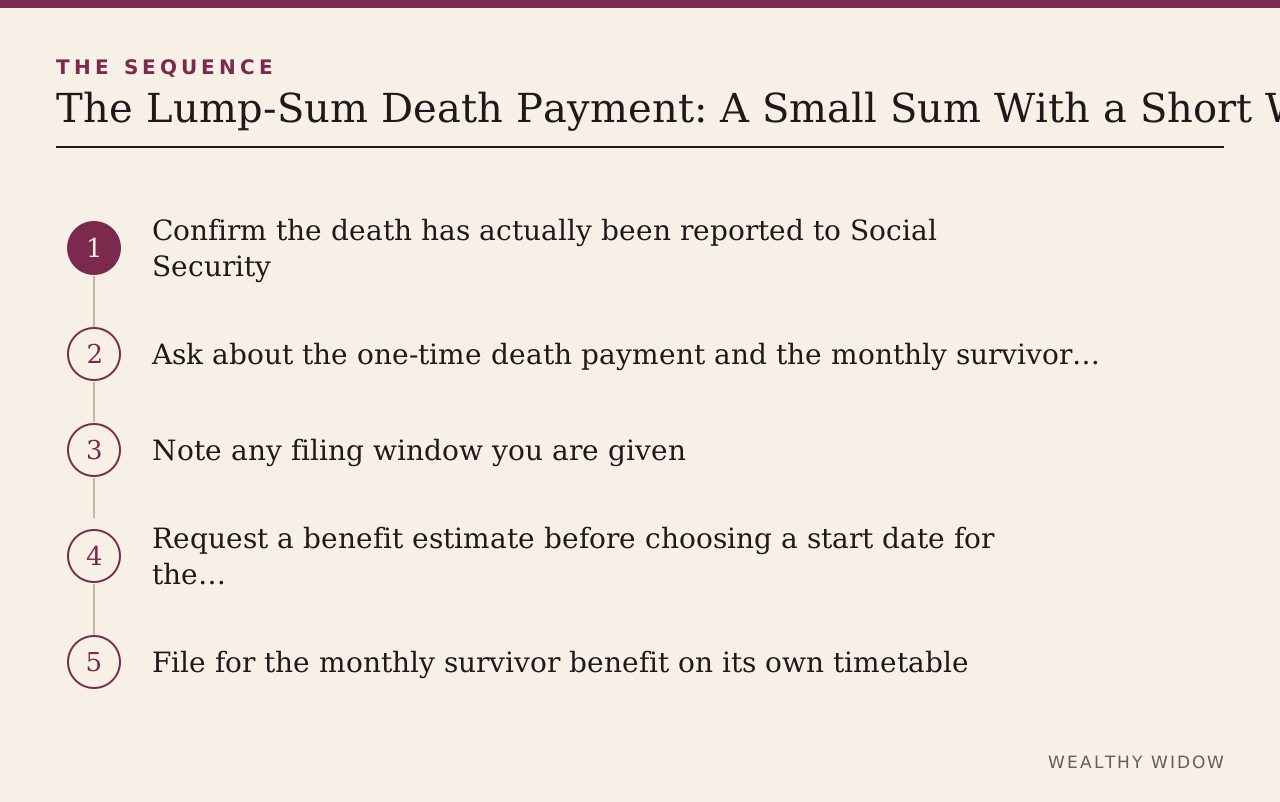
- Confirm the death has actually been reported to Social Security. A funeral home usually reports it, but usually is not always.
- Ask about the one-time death payment and the monthly survivor benefit as two separate items, and write down two separate answers.
- Note any filing window you are given, and ask the representative to point you to the page that states it.
- Request a benefit estimate before choosing a start date for the monthly benefit, so the comparison is on paper rather than in memory.
- File for the monthly survivor benefit on its own timetable. Do not let the smaller payment set the pace for the larger decision.
The predictable errors
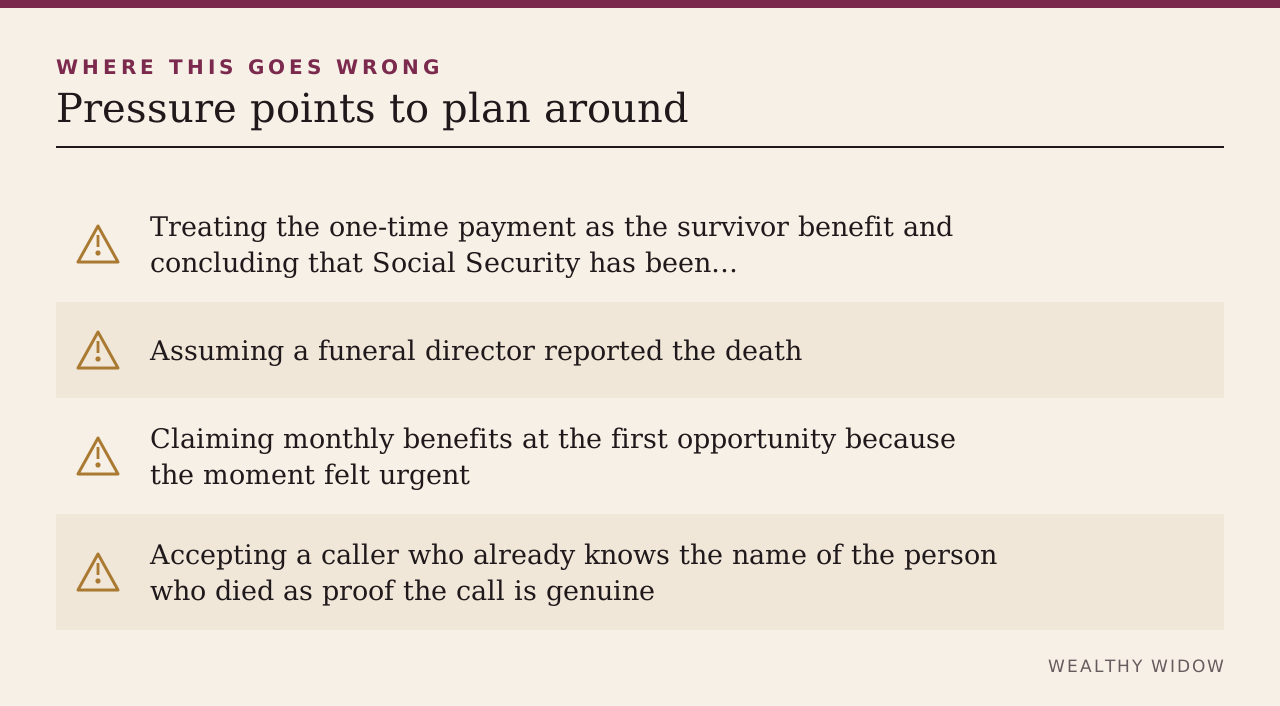
Knowing the failure modes in advance is most of the protection. The most common error is treating the one-time payment as the survivor benefit and concluding that Social Security has been handled.
A second is assuming a funeral director reported the death, which can leave a claim unfiled while a window quietly runs. A third is claiming monthly benefits at the first opportunity because the moment felt urgent, without an estimate of what a different start date would produce. A fourth is accepting a caller who already knows the name of the person who died as proof the call is genuine. Obituaries make that trivial to fake.
The paperwork to collect first
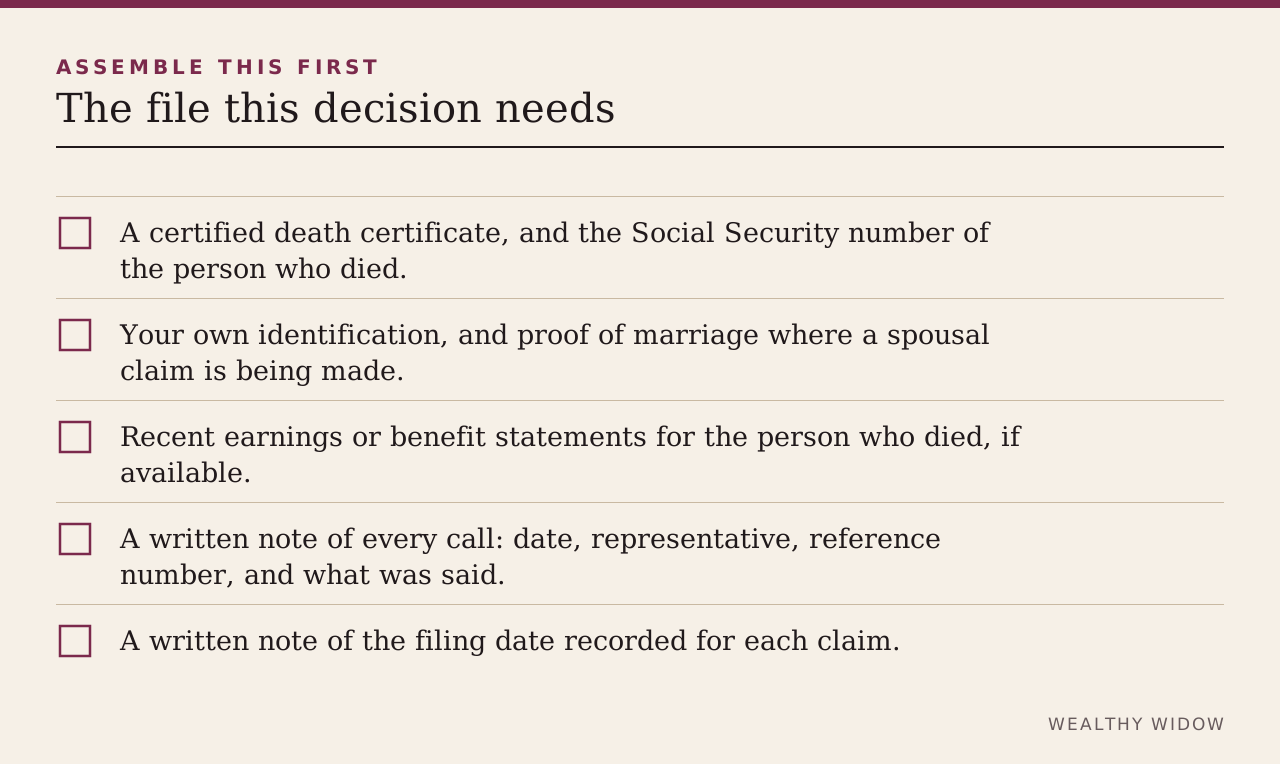
Gather these first and the rest of the process moves considerably faster, because most delays are missing paperwork.
- A certified death certificate, and the Social Security number of the person who died.
- Your own identification, and proof of marriage where a spousal claim is being made.
- Recent earnings or benefit statements for the person who died, if available.
- A written note of every call: date, representative, reference number, and what was said.
- A written note of the filing date recorded for each claim.
Get it on paper
Ask for each of the following in writing, by letter, secure message, or email you can save.
- That the death has been reported, and the date it was recorded.
- Whether you qualify for the one-time payment, and the deadline that applies.
- Your separate eligibility, and the claim date, for the monthly survivor benefit.
- The documents still outstanding, and the exact route Social Security wants them sent by.
Questions for the person advising you
Put these directly, note the answers, and record who gave them and when.
- How does claiming the monthly survivor benefit now compare with claiming it later, in my specific case?
- Does taking a survivor benefit now affect my ability to switch to my own retirement benefit later?
- What documents do you still need, and what is the consequence of each arriving late?
- If I am still working, how does that interact with a survivor benefit claimed this year?
Verify each point at source
Check anything that will drive a decision against the source itself, not against this summary of it.
- Social Security Administration — Survivor benefits
- Social Security Administration — Who can get survivor benefits
- USAGov — Report the death of a Social Security or Medicare beneficiary
What this guide does not settle
What follows is the shape of the problem, not an answer to your version of it. It cannot tell you whether claiming now or later produces more over your lifetime, because that turns on your own earnings record, age, health, and other income.
Closing the loop
The one-time payment is worth claiming and is not worth organising your month around. The monthly survivor benefit is the decision with lasting consequences, and it deserves an estimate, a comparison, and a written note of what you were told before you choose a start date.
For the step that usually comes next, read Certified Death Certificates: How Many, and Who Actually Needs One.
Primary sources
- Social Security Administration — Survivor benefits
- Social Security Administration — Who can get survivor benefits
- USAGov — Report the death of a Social Security or Medicare beneficiary
This article provides general education, not individualized legal, tax, investment, insurance, or benefits advice. Rules and deadlines change; verify the current requirement with the agency and a qualified professional.