First 90 Days
Finding a Policy Nobody Can Find
Unclaimed life insurance benefits run to billions because nobody knew a policy existed. There are structured ways to search rather than hope.

Institutions will describe this as routine. For you it is not routine, and the stakes are not symmetrical. Unclaimed life insurance benefits run to billions because nobody knew a policy existed. There are structured ways to search rather than hope.
Cover bought decades ago, provided by a former employer, or attached to a loan is routinely forgotten. Regulators run a search service precisely because the problem is so widespread.
A policy nobody remembers is still a policy, and there is a formal search route rather than a hopeful rummage through drawers.
The question underneath the paperwork
Take the ground facts first, because most of the difficulty here dissolves once they are stated plainly. A national policy locator service operated by state insurance regulators allows survivors to request a search across participating insurers. Searches through that service can take a considerable time, so starting early matters more than checking often. Cover may exist through a former employer, a union, a professional association, a lender, or a credit card.
Insurers merge and rebrand, so a policy issued by a company that no longer exists may still be live under a successor. Where a benefit was never claimed, funds may eventually pass to a state unclaimed property office rather than disappear.
Sequence the work deliberately
Take these in order. Reversing them tends to create work rather than save it.
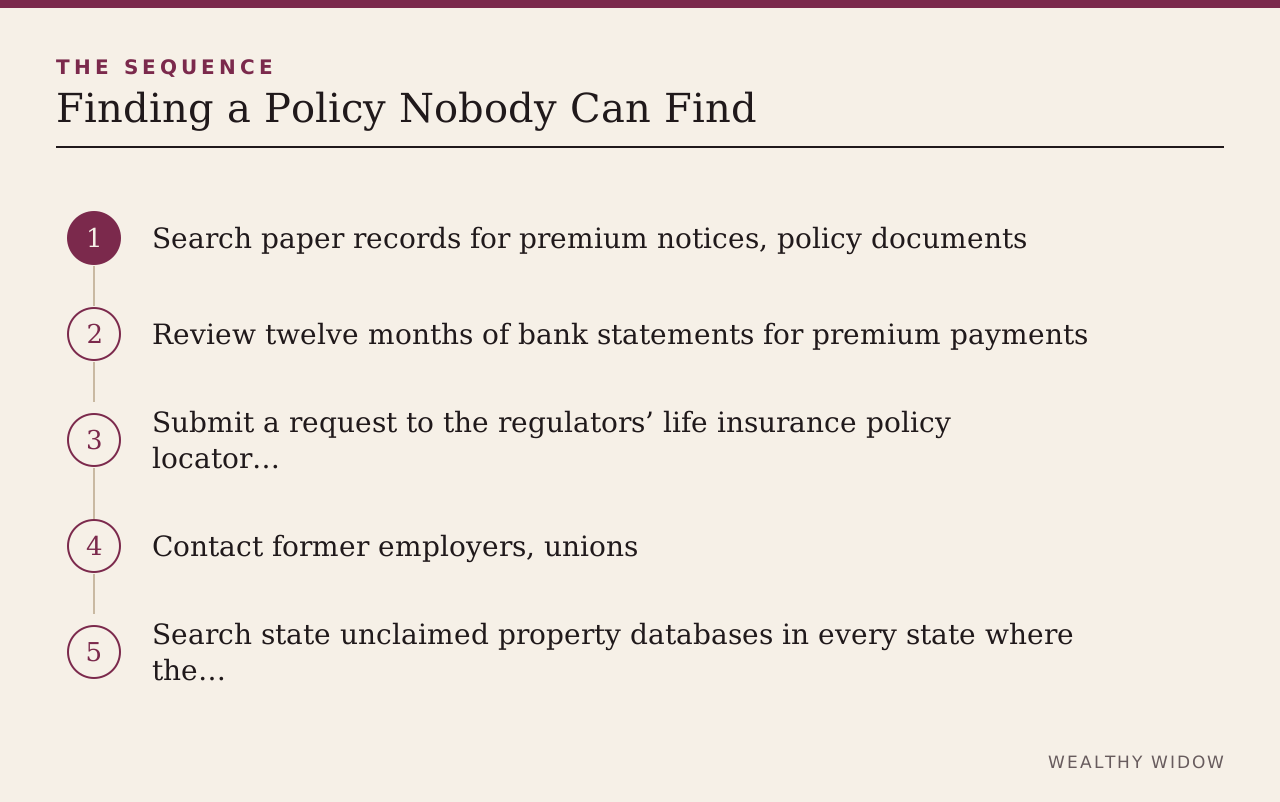
- Search paper records for premium notices, policy documents, and annual statements before assuming nothing exists.
- Review twelve months of bank statements for premium payments, which is often the only surviving trace.
- Submit a request to the regulators’ life insurance policy locator service.
- Contact former employers, unions, and associations separately, since group cover is rarely documented at home.
- Search state unclaimed property databases in every state where the person lived or worked.
What to refuse, and why
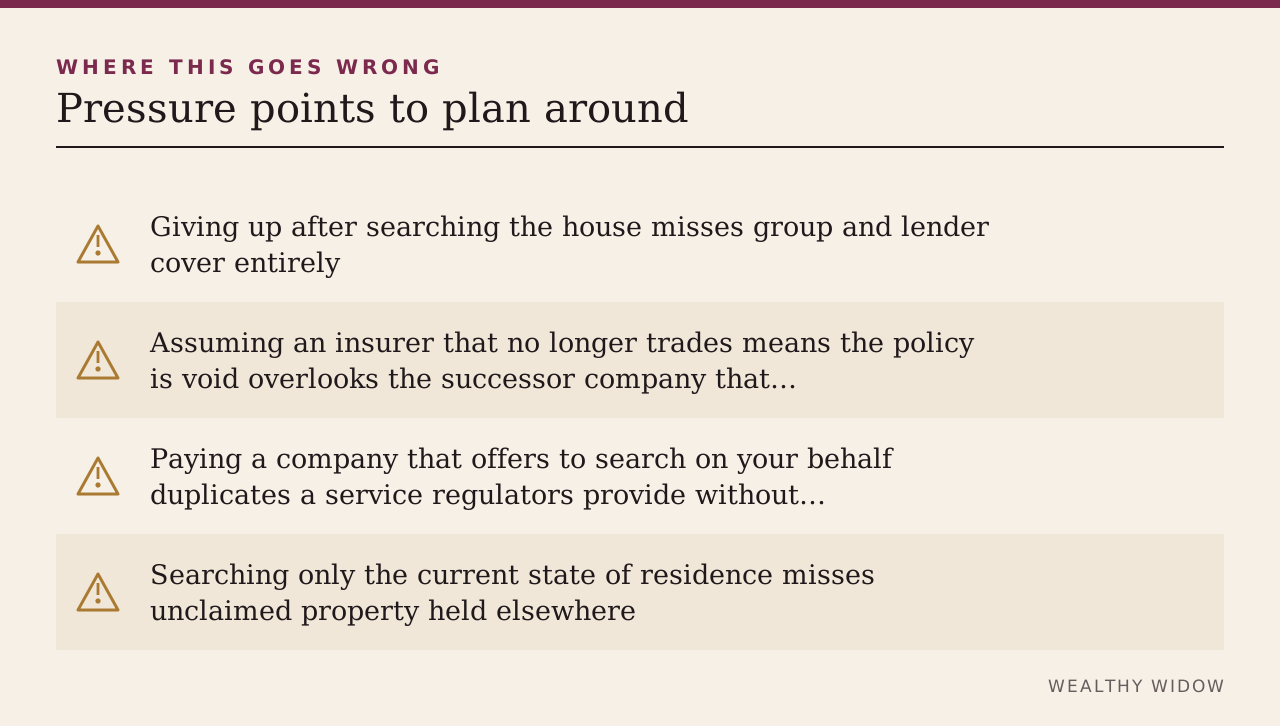
The failure modes below are predictable rather than unlucky, which is precisely what makes them avoidable. Giving up after searching the house misses group and lender cover entirely, which is where forgotten policies usually sit.
Assuming an insurer that no longer trades means the policy is void overlooks the successor company that now holds the book. Paying a company that offers to search on your behalf duplicates a service regulators provide without charge. Searching only the current state of residence misses unclaimed property held elsewhere.
Gather these before the first call
Every organisation involved will want some combination of the following, and several will want it more than once.
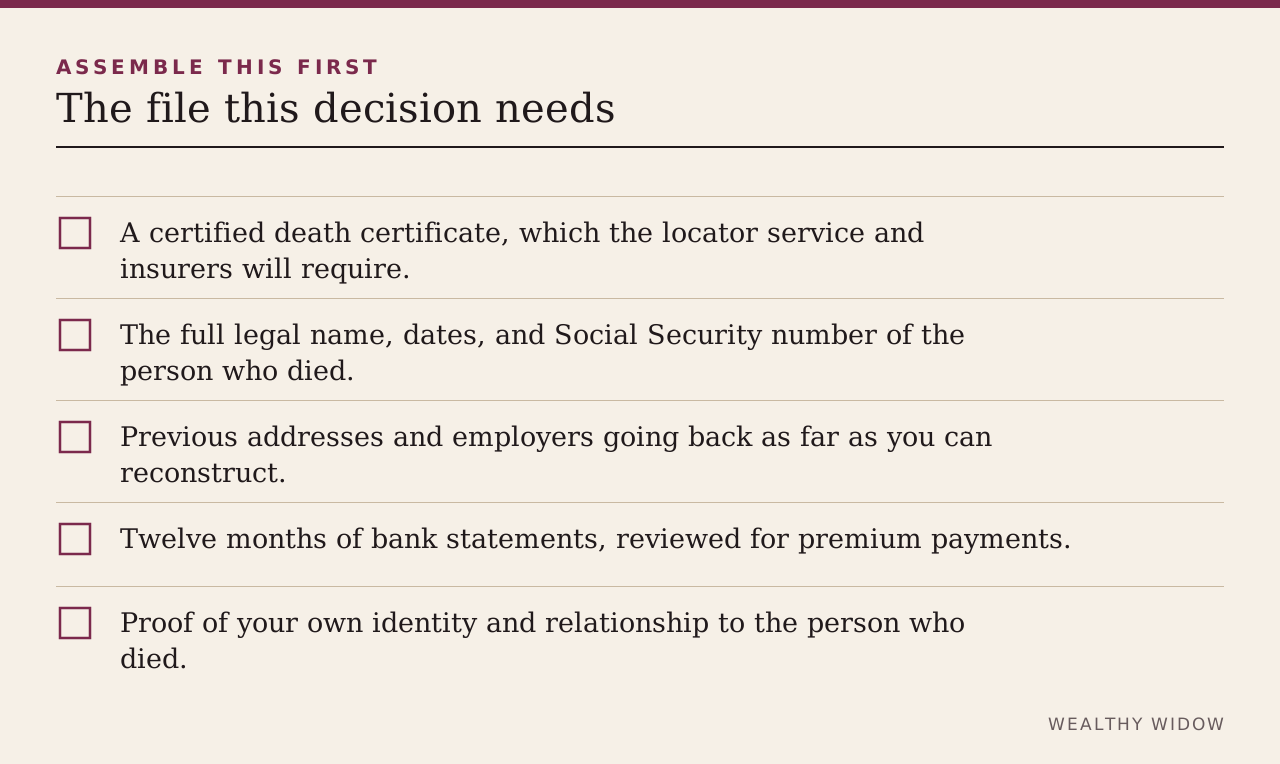
- A certified death certificate, which the locator service and insurers will require.
- The full legal name, dates, and Social Security number of the person who died.
- Previous addresses and employers going back as far as you can reconstruct.
- Twelve months of bank statements, reviewed for premium payments.
- Proof of your own identity and relationship to the person who died.
The record to build as you go
A verbal answer is a starting point, not a record. Get each of these documented.
- The reference and expected timescale for any locator request submitted.
- Whether each former employer held group cover, answered in writing.
- The successor insurer for any company that has merged or rebranded.
- The result of each state unclaimed property search, with the date searched.
Ask these before anyone is paid
Vagueness on any of these is itself an answer, and it is worth treating as one.
- Did this employment include group life cover, and who administers it now?
- Which company now holds policies originally issued by this insurer?
- What evidence do you require from a beneficiary who cannot produce the policy document?
- If a benefit was never claimed, where would those funds be held now?
Read the rule yourself
The sources below govern. This guide only summarises them.
- National Association of Insurance Commissioners — How to use the life insurance policy locator
- National Association of Insurance Commissioners — Life insurance policy locator helps consumers find lost benefits
- National Association of Insurance Commissioners — Consumer life company locator
- National Association of Unclaimed Property Administrators — Search beyond your state
The limits of this guide
This is where general guidance ends and your own paperwork takes over. It cannot tell you whether a policy exists. It can only make sure that if one does, the search that would find it has actually been run.
What to hold on to
Searching properly costs a few hours and no money. The alternative is a benefit that was genuinely payable sitting unclaimed because nobody made the request that would have surfaced it.
Read Retirement Plans: The Beneficiary Form Outranks the Will next; the two decisions interact.
Primary sources
- National Association of Insurance Commissioners — How to use the life insurance policy locator
- National Association of Insurance Commissioners — Life insurance policy locator helps consumers find lost benefits
- National Association of Insurance Commissioners — Consumer life company locator
- National Association of Unclaimed Property Administrators — Search beyond your state
This article provides general education, not individualized legal, tax, investment, insurance, or benefits advice. Rules and deadlines change; verify the current requirement with the agency and a qualified professional.