First 90 Days
Notifying a Life Insurer: The First Call Sets the Timetable
A life insurance claim is a defined process with defined evidence, and the first call determines how long the rest of it takes.

There is a version of this decision that takes ten minutes and a version that takes a season. A life insurance claim is a defined process with defined evidence, and the first call determines how long the rest of it takes. The difference is whether the facts were assembled first.
Life insurance is frequently the largest liquid sum arriving after a death, and it is also where a poorly handled first call adds months. The process is administrative rather than adversarial if it is started correctly.
The beneficiary designation controls the money, not the will, and the two are surprisingly often different.
What this decision actually is
Before any advice, the ground facts. The named beneficiary on the policy controls payment, not the will. Insurers require specific evidence, typically including a certified death certificate and a claim form per beneficiary. Policies may exist through an employer, a union, a lender, or a credit card that nobody in the household recalls.
Payment options frequently include a lump sum or a retained account, and the two are materially different. A retained asset account is not a bank account, and its terms should be read before it is chosen by default.
Work it in this order
Work through this deliberately. Each step assumes the one before it is done.
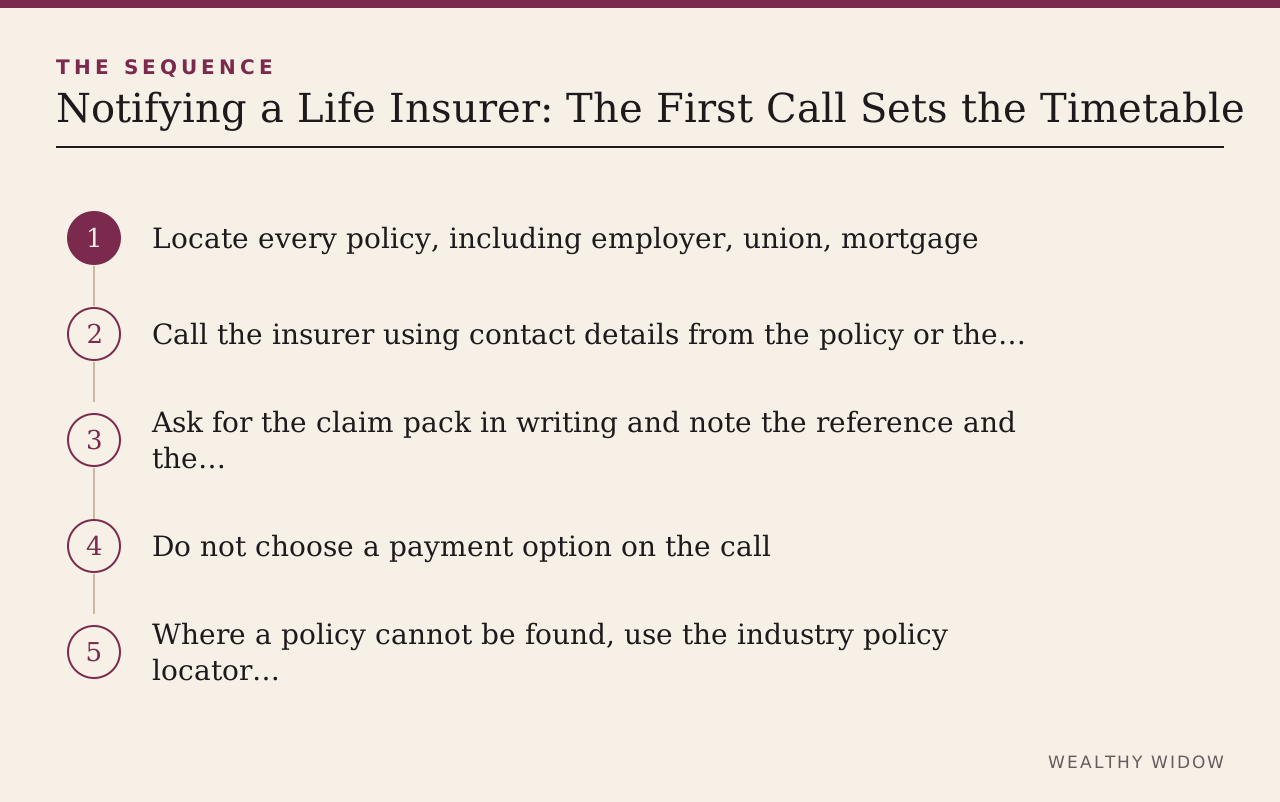
- Locate every policy, including employer, union, mortgage, and card-linked cover, before contacting anyone.
- Call the insurer using contact details from the policy or the insurer’s own site, and ask what it requires.
- Ask for the claim pack in writing and note the reference and the stated processing time.
- Do not choose a payment option on the call; ask for the options in writing and consider them separately.
- Where a policy cannot be found, use the industry policy locator service before concluding none exists.
The pressure points to watch
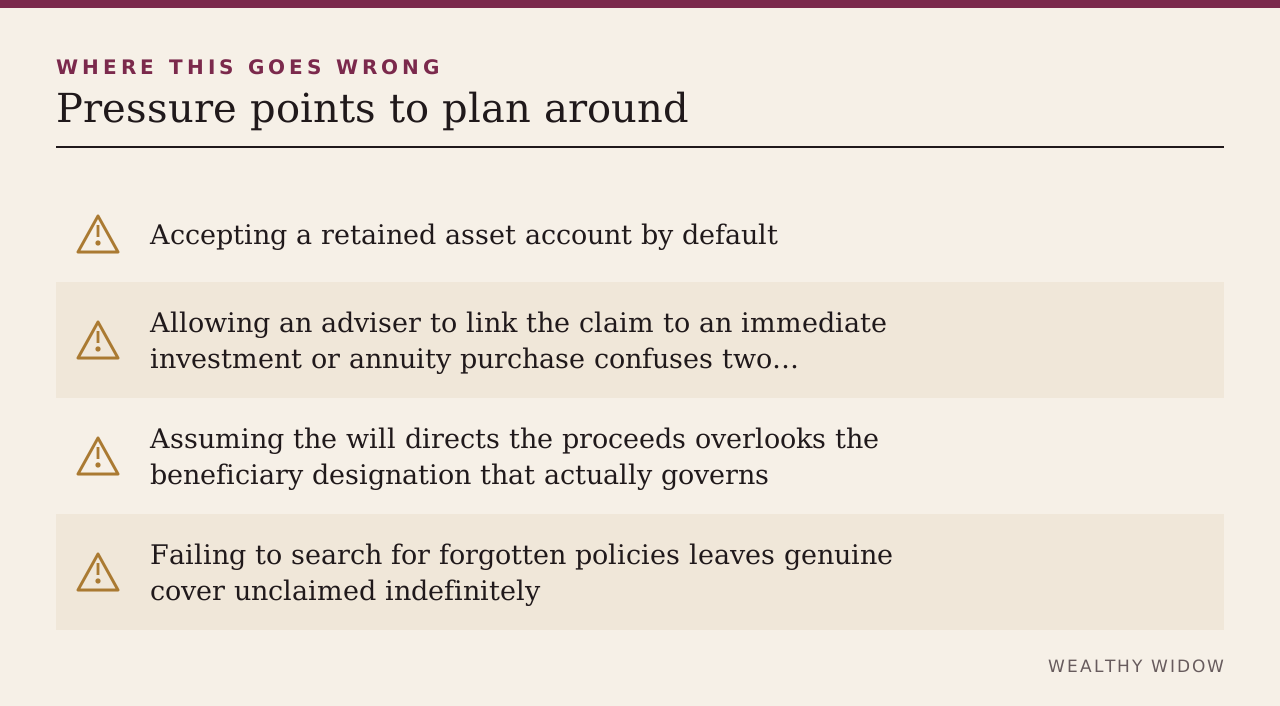
Anticipating these is most of the protection available to you, and it costs nothing but attention. Accepting a retained asset account by default, because it was the option presented, is extremely common.
Allowing an adviser to link the claim to an immediate investment or annuity purchase confuses two decisions. Assuming the will directs the proceeds overlooks the beneficiary designation that actually governs. Failing to search for forgotten policies leaves genuine cover unclaimed indefinitely.
What you will be asked to produce
Assemble this before the first conversation rather than during it.
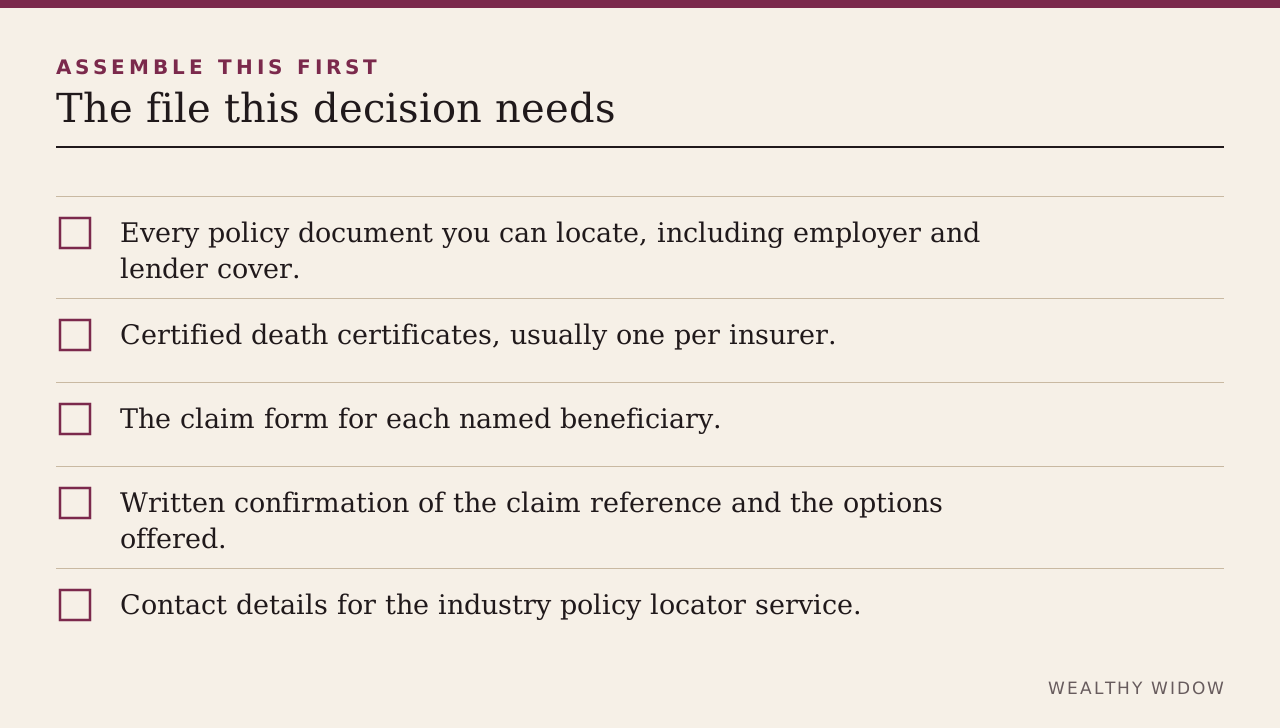
- Every policy document you can locate, including employer and lender cover.
- Certified death certificates, usually one per insurer.
- The claim form for each named beneficiary.
- Written confirmation of the claim reference and the options offered.
- Contact details for the industry policy locator service.
Put these in writing, then proceed
A conversation is a starting point. These belong on paper.
- The claim reference and the insurer’s stated processing timescale.
- The evidence required, listed in writing.
- The payment options available, with the terms of each.
- The named beneficiary of record on each policy.
Before anyone is engaged, ask these
Ask them plainly; the response tells you as much as the answer.
- What are all the payment options, and what are the terms of each in writing?
- Is any interest payable on the claim, and from what date?
- What outstanding evidence is holding this claim, and who is it with?
- Is there any other policy with you under this name or this employer?
Confirm this against the rule
Do not take this guide as the authority. Each source below states the current rule for the part of this decision it covers.
- National Association of Insurance Commissioners — Consumer resources
- National Association of Insurance Commissioners — How to use the life insurance policy locator
- Consumer Financial Protection Bureau — Help for surviving spouses
What is outside this
What follows is outside anything written for a general readership. It cannot tell you which payment option suits you, because that depends on your tax position, your other liquidity, and what the retained account terms actually say.
The short version
Find every policy first, then make one prepared call. The proceeds are not urgent in the way the process feels, and the payment option is a decision that deserves reading rather than a box ticked on a claim form.
A companion guide, Finding a Policy Nobody Can Find, covers the decision that sits alongside this one.
Primary sources
- National Association of Insurance Commissioners — Consumer resources
- National Association of Insurance Commissioners — How to use the life insurance policy locator
- Consumer Financial Protection Bureau — Help for surviving spouses
This article provides general education, not individualized legal, tax, investment, insurance, or benefits advice. Rules and deadlines change; verify the current requirement with the agency and a qualified professional.