First 90 Days
Making Sure Somebody Else Knows What Is Happening
Handling an estate alone creates a single point of failure, and the fix is telling one other person where things stand.

Institutions will describe this as routine. For you it is not routine, and the stakes are not symmetrical. Handling an estate alone creates a single point of failure, and the fix is telling one other person where things stand.
Estate administration frequently rests on one person who holds all the context. That is a risk to the estate and a burden on the person, and both are reduced by a single conversation.
If you were unwell tomorrow, somebody would need to pick this up, and at present nobody could.
What is actually on the table
Take the ground facts first, because most of the difficulty here dissolves once they are stated plainly. Estate administration involves deadlines that continue regardless of the representative’s health. Context held only in one person’s head cannot be transferred quickly. A second person does not need authority to be useful; they need information.
Where formal authority might be needed, that requires documents prepared in advance. Telling someone also reduces the isolation of doing this alone.
The path through this
Take these in order. Reversing them tends to create work rather than save it.
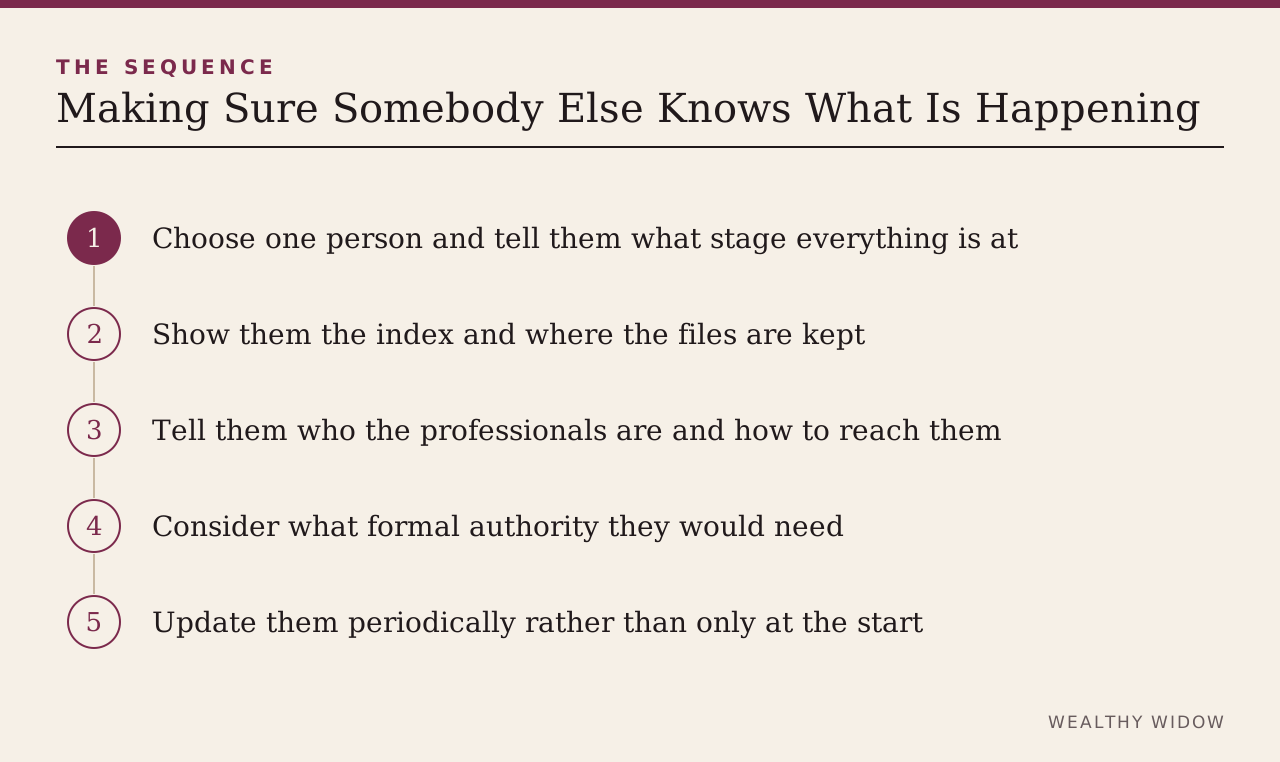
- Choose one person and tell them what stage everything is at.
- Show them the index and where the files are kept.
- Tell them who the professionals are and how to reach them.
- Consider what formal authority they would need, and whether to arrange it.
- Update them periodically rather than only at the start.
What tends to catch people out
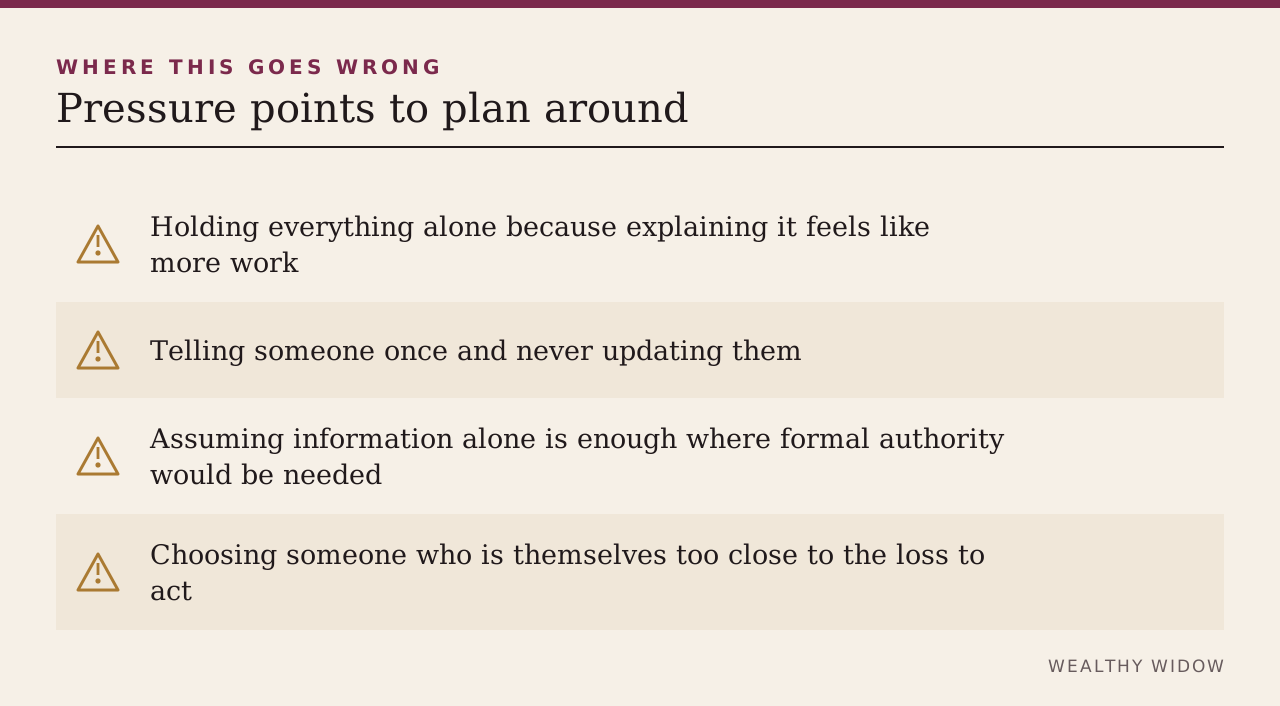
The failure modes below are predictable rather than unlucky, which is precisely what makes them avoidable. Holding everything alone because explaining it feels like more work.
Telling someone once and never updating them. Assuming information alone is enough where formal authority would be needed. Choosing someone who is themselves too close to the loss to act.
Gather these before the first call
Every organisation involved will want some combination of the following, and several will want it more than once.
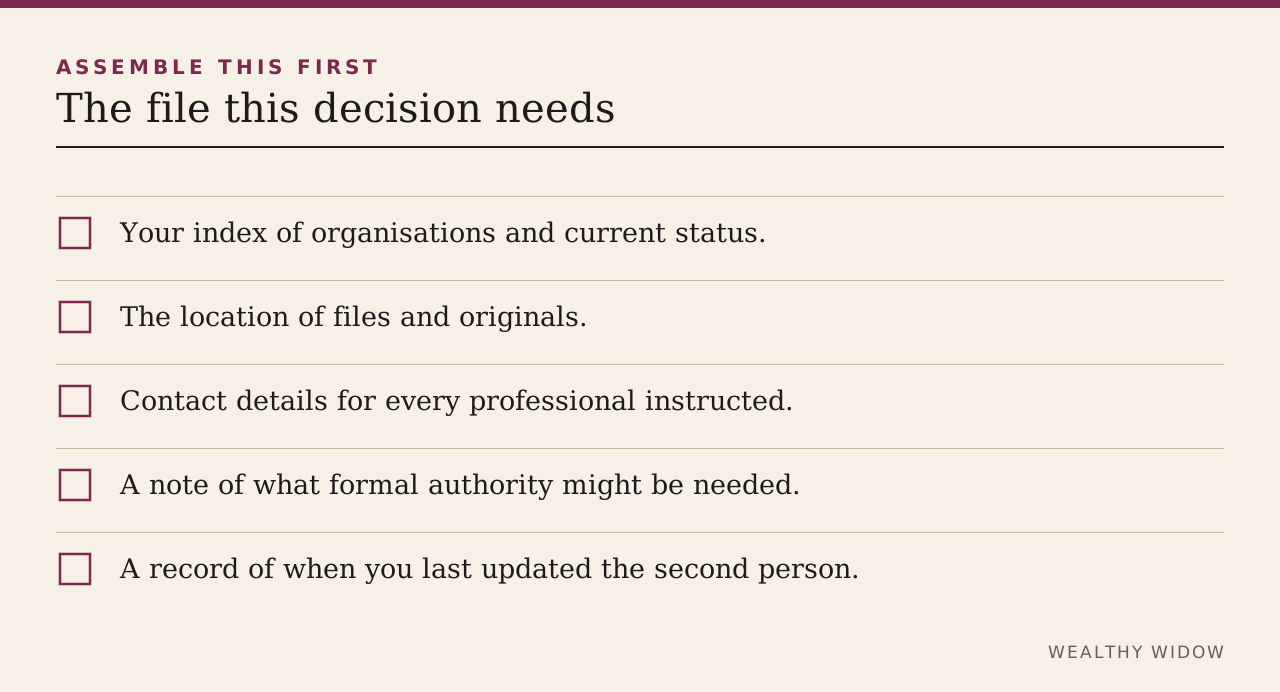
- Your index of organisations and current status.
- The location of files and originals.
- Contact details for every professional instructed.
- A note of what formal authority might be needed.
- A record of when you last updated the second person.
Nothing here on a verbal answer
None of the following should rest on a phone call alone, however clear the call felt at the time.
- That someone else knows the current position.
- That they can reach the files and the professionals.
- What they could and could not do without formal authority.
- That the arrangement is being kept current.
The questions that change the answer
A competent professional answers each of these without hesitation.
- Would you be willing to be the person who knows where things stand?
- What would you need from me to pick this up if you had to?
- What formal authority would be required for you to act?
- Shall we review this every month or so?
The primary material
Each load-bearing point above traces to one of the following, and they are the versions that stay current.
- Consumer Financial Protection Bureau — Taking control of your finances, help for surviving spouses
- National Institute on Aging — Advance care planning and advance directives
- Consumer Financial Protection Bureau — Help for surviving spouses
- Legal Services Corporation — I need legal help
Where general guidance ends
Here is the line between what can usefully be written for a general readership and what cannot be written at all. It cannot confer authority, and where a second person may need to act formally that requires documents prepared in advance.
What this comes down to
Tell one person, show them the index, and update them occasionally. It removes a genuine single point of failure and makes the work considerably less isolating.
For the step that usually comes next, read Inheriting Professionals You Did Not Choose.
Primary sources
- Consumer Financial Protection Bureau — Taking control of your finances, help for surviving spouses
- National Institute on Aging — Advance care planning and advance directives
- Consumer Financial Protection Bureau — Help for surviving spouses
- Legal Services Corporation — I need legal help
This article provides general education, not individualized legal, tax, investment, insurance, or benefits advice. Rules and deadlines change; verify the current requirement with the agency and a qualified professional.