First 90 Days
Joint Accounts: What Survives, What Freezes, and What to Ask
A joint bank account is not one arrangement but several, and which one you hold decides whether money stays available or becomes part of the estate.

Some decisions after a death are reversible. This one deserves more care than most. A joint bank account is not one arrangement but several, and which one you hold decides whether money stays available or becomes part of the estate.
The word joint covers several legally distinct arrangements with different survivorship consequences. Banks vary in how quickly they act, so the practical answer and the legal answer can diverge for weeks.
The word joint describes several different legal arrangements, and only the bank’s own record tells you which one you have.
What is actually on the table
What follows is what is actually true, stripped of the anxiety around it. Ownership style, not the word joint, decides what happens. Survivorship rights, tenancy in common, and convenience arrangements behave differently. An account that passes by survivorship may sit outside probate entirely, while another account at the same bank does not. Deposit insurance coverage can change when ownership changes, which matters where balances are substantial.
A bank may restrict an account on notification while it verifies documents, even where survivorship applies. Continuing to use a card or login belonging to the person who died is not authorised by grief or by joint status.
The path through this
Do these in sequence, and do not skip ahead to the signature.
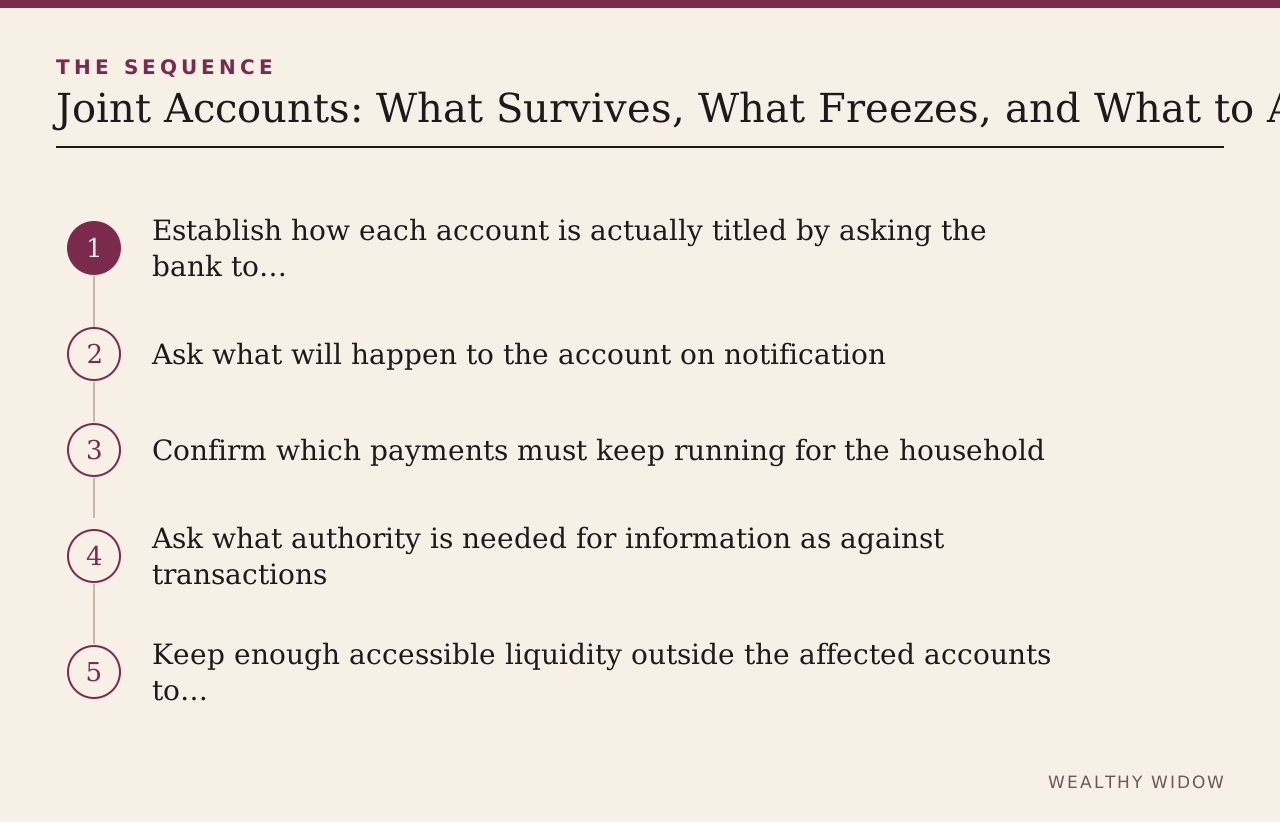
- Establish how each account is actually titled by asking the bank to state the ownership style in writing.
- Ask what will happen to the account on notification, and whether any automatic payments will continue.
- Confirm which payments must keep running for the household, and arrange an alternative route for them before anything is restricted.
- Ask what authority is needed for information as against transactions, since the two thresholds differ.
- Keep enough accessible liquidity outside the affected accounts to cover ordinary bills through the verification period.
What tends to catch people out
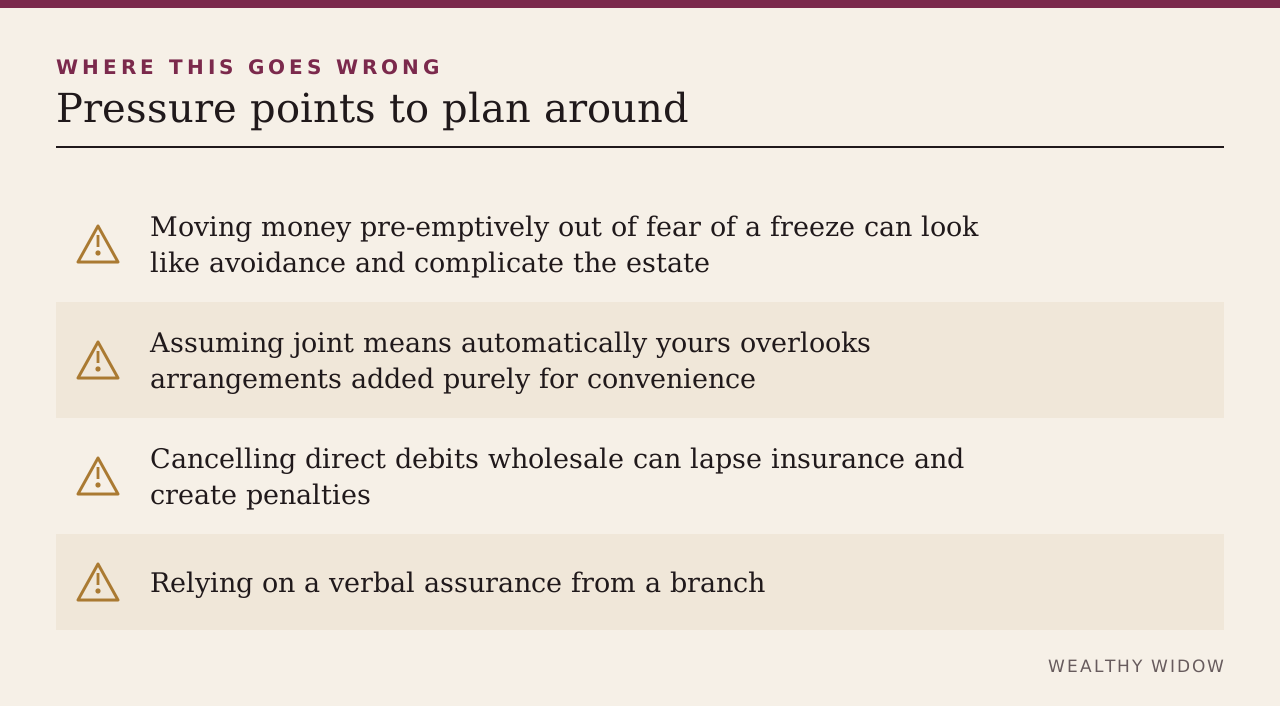
The failures here are predictable, which means they are avoidable. Moving money pre-emptively out of fear of a freeze can look like avoidance and complicate the estate.
Assuming joint means automatically yours overlooks arrangements added purely for convenience. Cancelling direct debits wholesale can lapse insurance and create penalties. Relying on a verbal assurance from a branch, without written confirmation, leaves nothing to point to later.
What to have to hand
The paperwork below is what turns a long process into a short one.
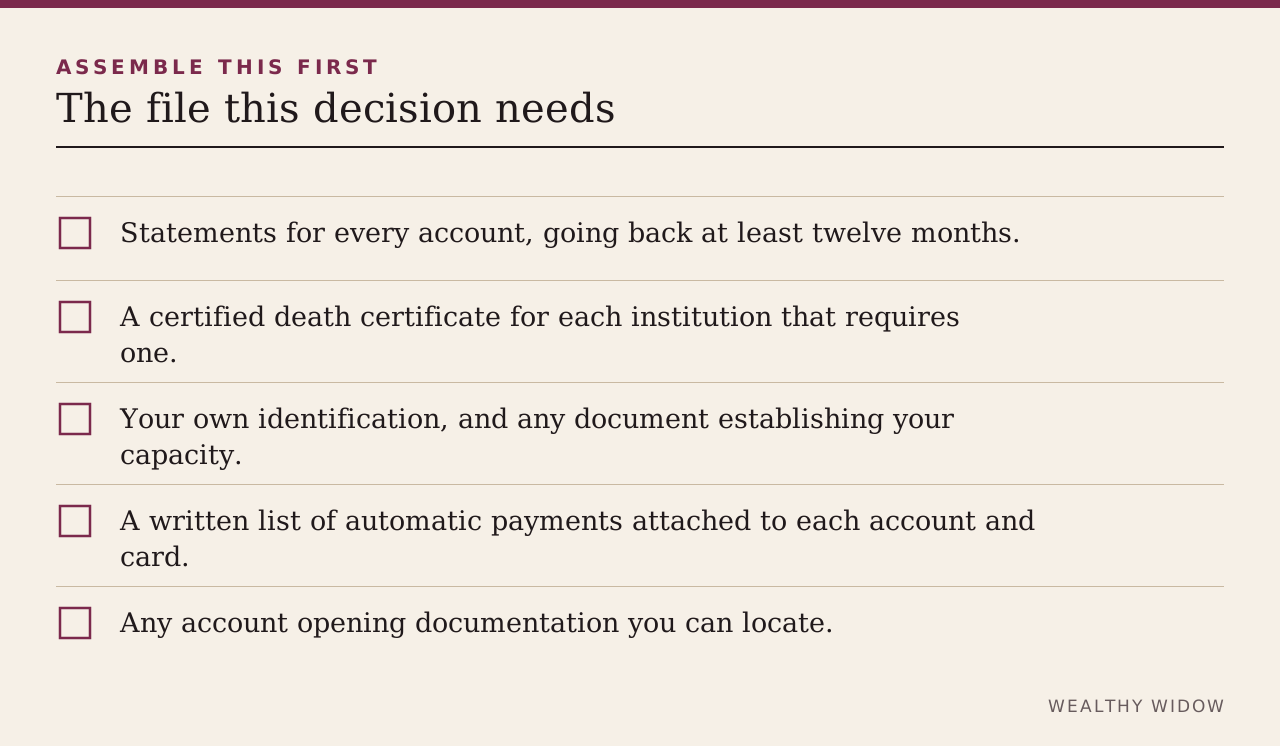
- Statements for every account, going back at least twelve months.
- A certified death certificate for each institution that requires one.
- Your own identification, and any document establishing your capacity.
- A written list of automatic payments attached to each account and card.
- Any account opening documentation you can locate.
What to have documented
Put each of these in the file with a date against it.
- The exact ownership style recorded for each account.
- What the bank will restrict on notification, and for how long.
- Which automatic payments will continue and which will stop.
- What authority is required for information as opposed to transactions.
What to ask before you sign
Ask these before an engagement letter is signed or a product is recommended.
- Does this account pass outside the estate, and what document establishes that?
- What deposit insurance coverage applies now that ownership has changed?
- What is your written timescale for releasing or retitling this account?
- What is the correct way to handle payments received after the date of death?
The primary material
Each load-bearing point above traces to one of the following, and they are the versions that stay current.
- Consumer Financial Protection Bureau — Help for surviving spouses
- Federal Deposit Insurance Corporation — Deposit insurance
- Consumer Financial Protection Bureau — Taking control of your finances, help for surviving spouses
Where general guidance ends
Here is the line between what can usefully be written for a general readership and what cannot be written at all. It cannot tell you how your accounts are actually titled. Only the bank’s own record answers that, and it is worth asking for in writing.
What this comes down to
Ask the bank to describe the account rather than describing it yourself. Ownership style, written confirmation, and a liquidity plan for the verification window will keep a routine administrative process from becoming a household cash-flow problem.
For the step that usually comes next, read Closing the Credit File of Someone Who Has Died.
Primary sources
- Consumer Financial Protection Bureau — Help for surviving spouses
- Federal Deposit Insurance Corporation — Deposit insurance
- Consumer Financial Protection Bureau — Taking control of your finances, help for surviving spouses
This article provides general education, not individualized legal, tax, investment, insurance, or benefits advice. Rules and deadlines change; verify the current requirement with the agency and a qualified professional.