First 90 Days
Cash Flow in the First Weeks: How Much, For How Long, From Where
Before any investment or property decision, the household needs a clear answer to one question: what covers the next ninety days of ordinary bills.

Some decisions after a death are reversible. This one deserves more care than most. Before any investment or property decision, the household needs a clear answer to one question: what covers the next ninety days of ordinary bills.
Most pressure to make a permanent financial decision early comes from uncertainty about short-term cash rather than from the decision itself. Answering the cash question removes the pressure.
A ninety-day cash answer is what allows every larger decision to wait until the facts are in.
The question underneath the paperwork
What follows is what is actually true, stripped of the anxiety around it. Income may change abruptly where a salary, pension, or benefit ended at the date of death. Some accounts may be temporarily restricted while institutions verify documents, even where you are entitled to them. Ordinary household costs continue on their normal schedule regardless of administrative delays.
Selling assets to solve a temporary liquidity gap can create permanent tax and investment consequences. A short, specific cash plan is usually enough to defer every large decision safely.
Sequence the work deliberately
Do these in sequence, and do not skip ahead to the signature.
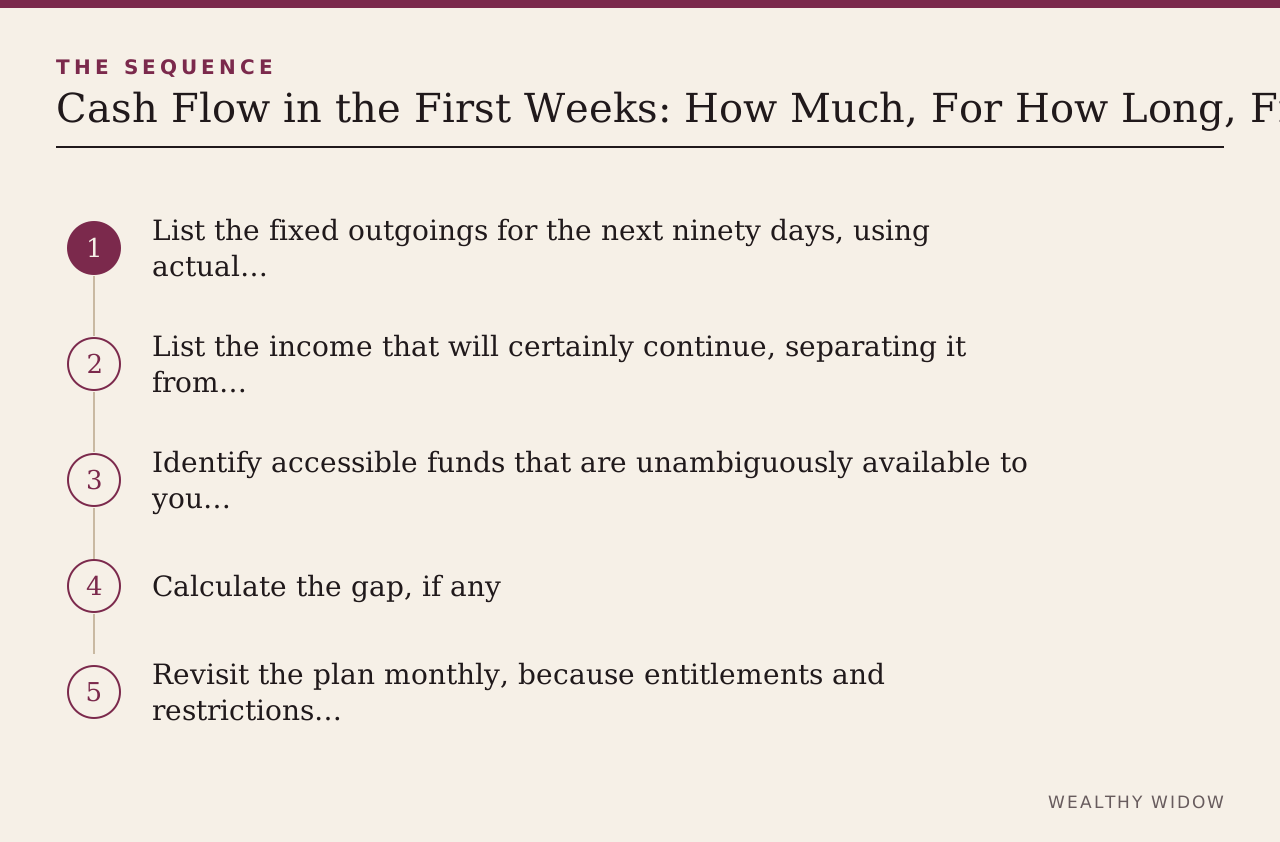
- List the fixed outgoings for the next ninety days, using actual statements rather than estimates.
- List the income that will certainly continue, separating it from income that is uncertain.
- Identify accessible funds that are unambiguously available to you now.
- Calculate the gap, if any, and decide how to bridge it with the least permanent action available.
- Revisit the plan monthly, because entitlements and restrictions both change during this period.
What to refuse, and why
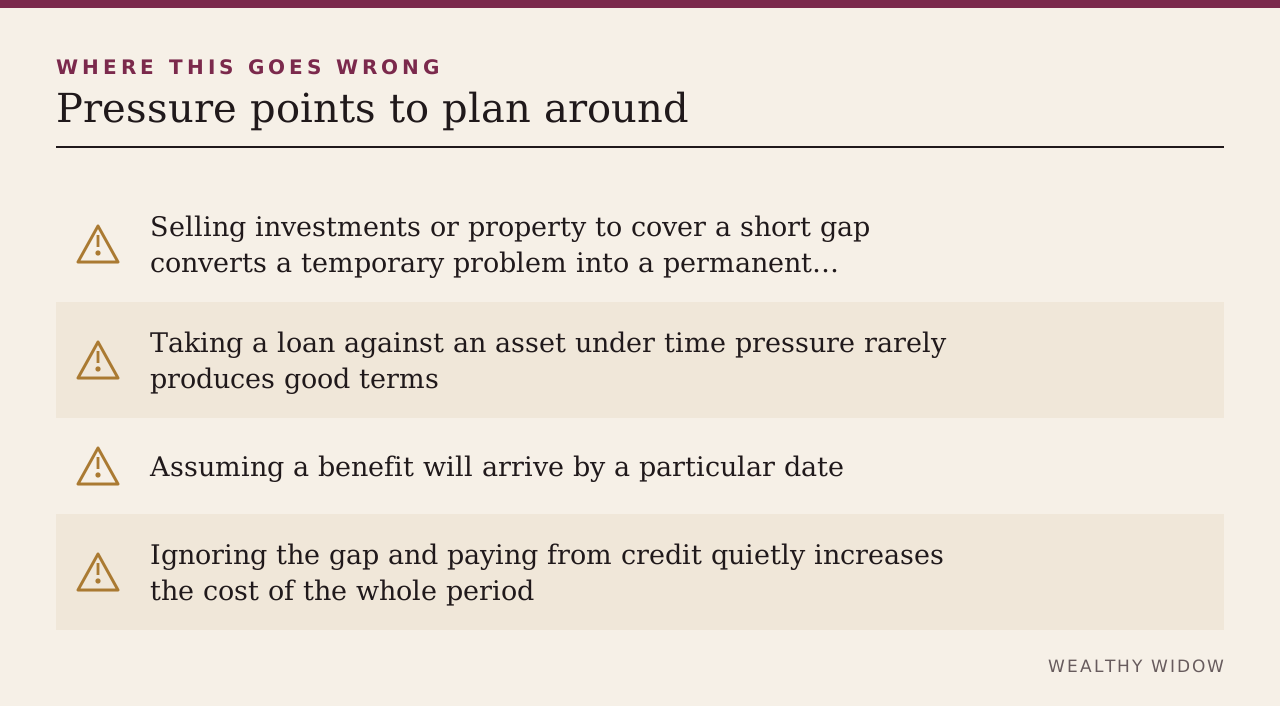
The failures here are predictable, which means they are avoidable. Selling investments or property to cover a short gap converts a temporary problem into a permanent decision.
Taking a loan against an asset under time pressure rarely produces good terms. Assuming a benefit will arrive by a particular date, and spending accordingly, creates a second gap. Ignoring the gap and paying from credit quietly increases the cost of the whole period.
What to have to hand
The paperwork below is what turns a long process into a short one.
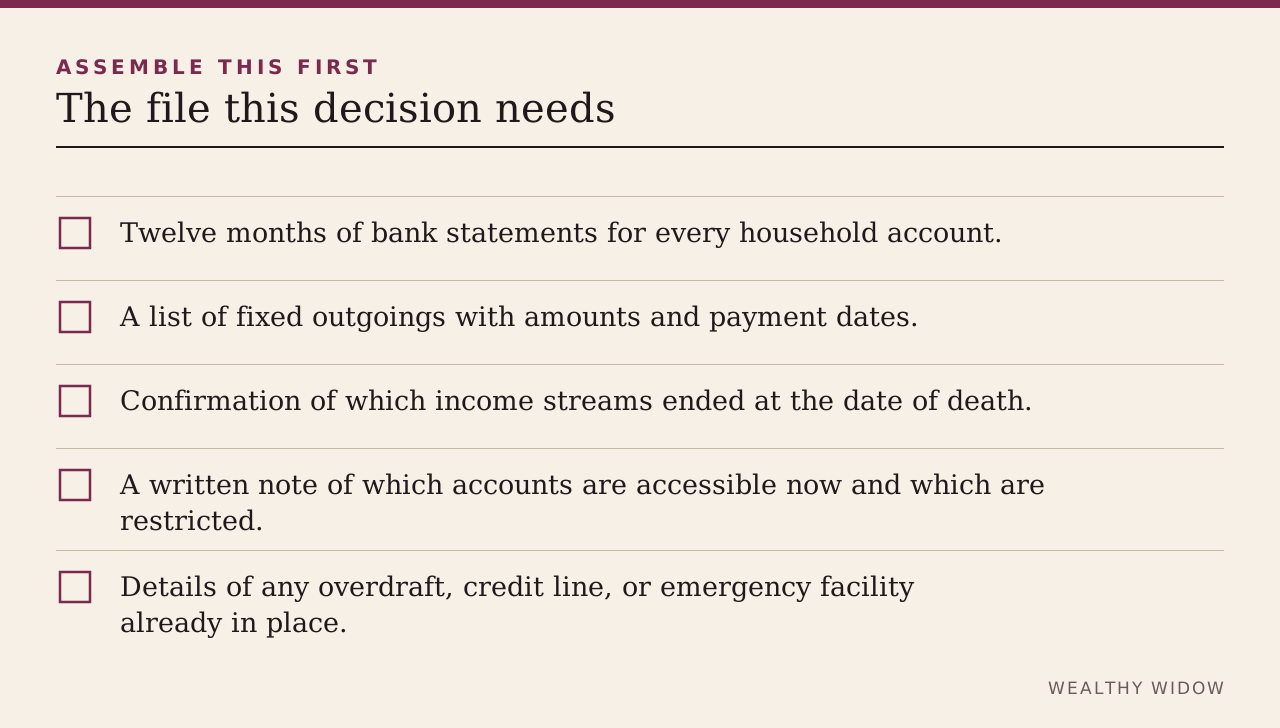
- Twelve months of bank statements for every household account.
- A list of fixed outgoings with amounts and payment dates.
- Confirmation of which income streams ended at the date of death.
- A written note of which accounts are accessible now and which are restricted.
- Details of any overdraft, credit line, or emergency facility already in place.
What to have documented
Put each of these in the file with a date against it.
- Which income streams have ended, and on what date.
- Which accounts are accessible now, and which are restricted and until when.
- The expected timing of any benefit or claim payment.
- The actual monthly requirement, from statements.
What to ask before you sign
Ask these before an engagement letter is signed or a product is recommended.
- What is the least permanent way to cover this gap?
- What are the tax consequences of raising cash from this particular asset?
- Is there an advance or interim payment available on any claim in progress?
- What would you not do in my position over the next ninety days?
Read the rule yourself
The sources below govern. This guide only summarises them.
- Consumer Financial Protection Bureau — Help for surviving spouses
- Consumer Financial Protection Bureau — Taking control of your finances, help for surviving spouses
- U.S. Securities and Exchange Commission — Investor.gov
The limits of this guide
This is where general guidance ends and your own paperwork takes over. It cannot tell you which asset to draw on, because the tax and investment consequences differ sharply by account type and by your own position.
What to hold on to
A ninety-day cash answer is what allows every other decision to wait. It is a modest piece of arithmetic and it buys the one thing that improves financial decisions after a death, which is time.
Read Ghosting: Why Fraud Follows an Obituary next; the two decisions interact.
Primary sources
- Consumer Financial Protection Bureau — Help for surviving spouses
- Consumer Financial Protection Bureau — Taking control of your finances, help for surviving spouses
- U.S. Securities and Exchange Commission — Investor.gov
This article provides general education, not individualized legal, tax, investment, insurance, or benefits advice. Rules and deadlines change; verify the current requirement with the agency and a qualified professional.