First 90 Days
Health Coverage: The Gap That Opens Quietly
Where health insurance came through a spouse’s employer, coverage for the survivor may end on a date nobody mentioned, with a short window to act.

There is a version of this decision that takes ten minutes and a version that takes a season. Where health insurance came through a spouse’s employer, coverage for the survivor may end on a date nobody mentioned, with a short window to act. The difference is whether the facts were assembled first.
Health coverage after a death is time-critical in a way that most other administration is not. Election windows are finite, and a missed one can leave a household uninsured with no straightforward route back.
Losing coverage is an event with a deadline attached, and the deadline runs whether or not anyone told you it had started.
What you are really being asked
These are the points the rest of the decision rests on, so it is worth being sure of them before going further. Employer-provided coverage for a surviving spouse and dependants may end at a defined point after the death. Continuation coverage is often available but must be elected within a limited window. A death can qualify a household for a special enrolment period in the individual insurance market.
Where the survivor is approaching or over the qualifying age, a Medicare enrolment question may arise at the same moment. Continuation coverage and marketplace coverage are alternatives with very different costs, and the comparison is worth making.
The sequence that keeps options open
Take it in this sequence. Reversing the order tends to create work rather than save it, and occasionally forecloses a choice.
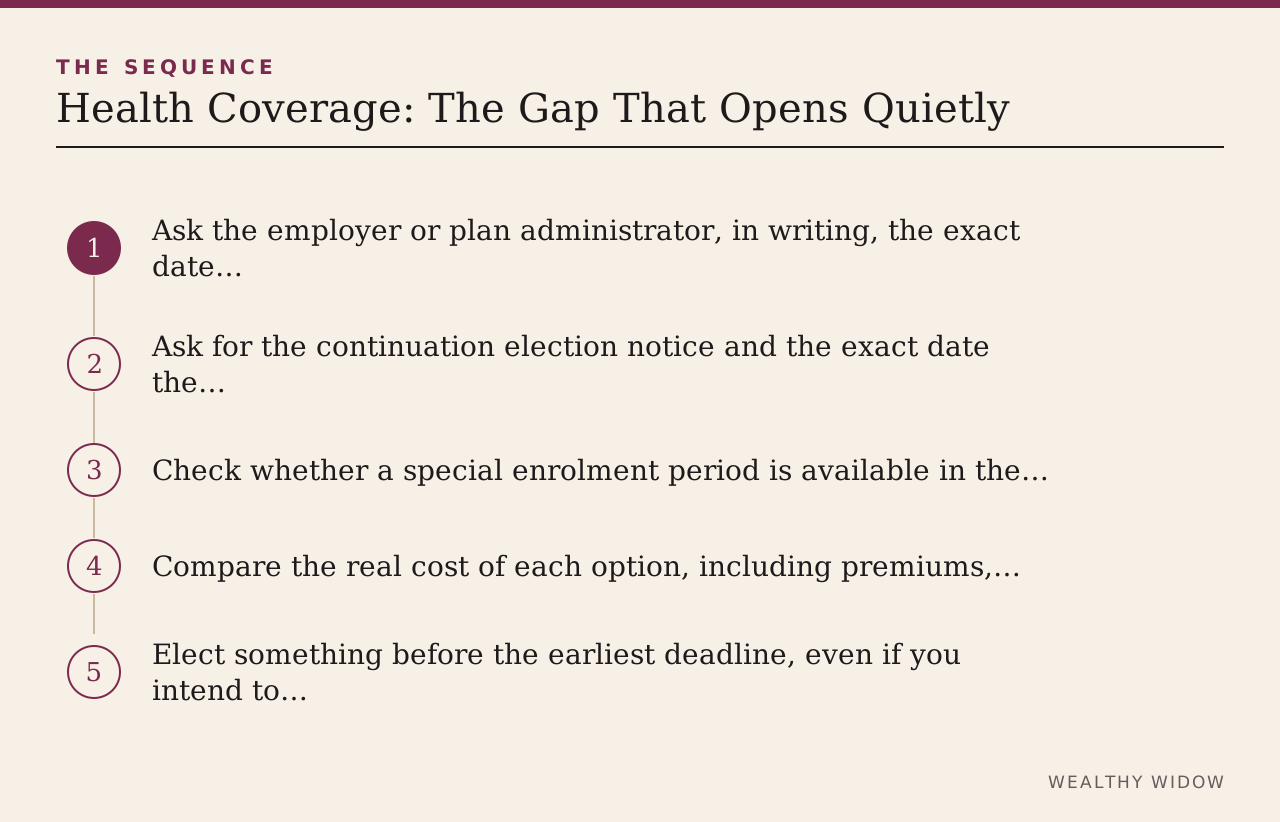
- Ask the employer or plan administrator, in writing, the exact date current coverage ends.
- Ask for the continuation election notice and the exact date the election window closes.
- Check whether a special enrolment period is available in the individual market, and for how long.
- Compare the real cost of each option, including premiums, deductibles, and whether current doctors are covered.
- Elect something before the earliest deadline, even if you intend to change later.
The failure modes to plan around
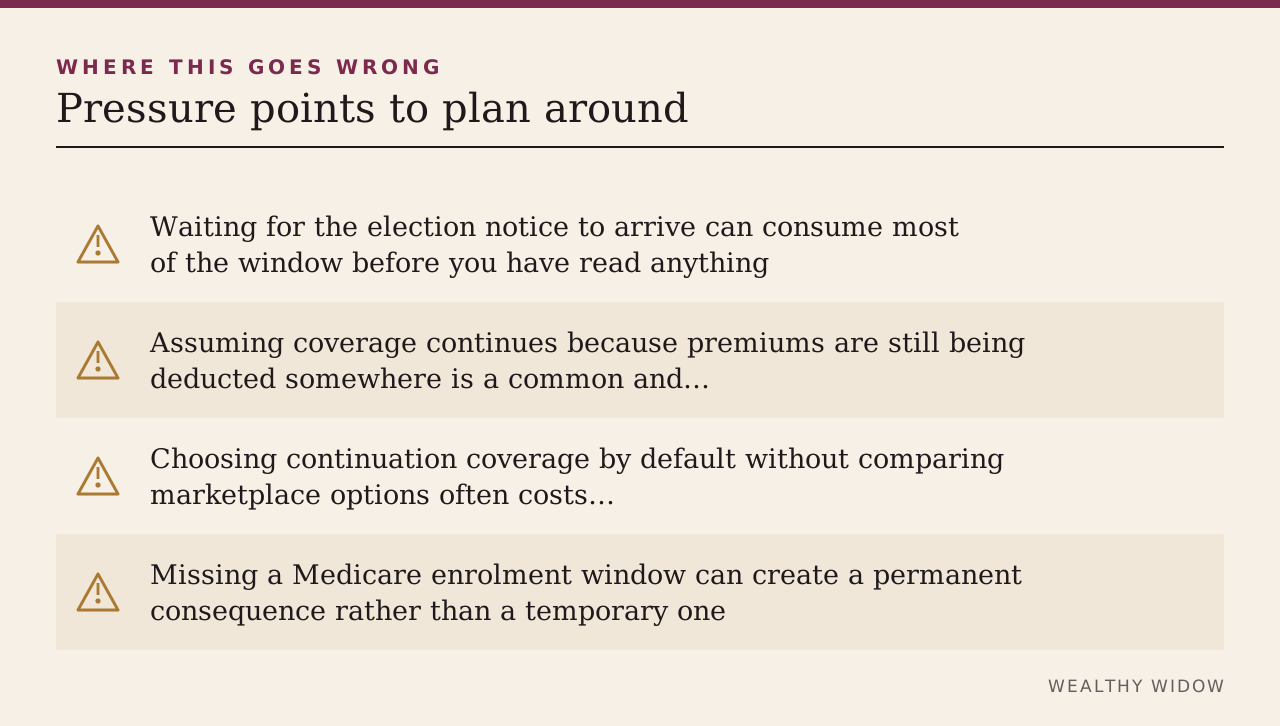
Watch for the following, and treat each as a reason to slow down. Waiting for the election notice to arrive can consume most of the window before you have read anything.
Assuming coverage continues because premiums are still being deducted somewhere is a common and expensive error. Choosing continuation coverage by default without comparing marketplace options often costs substantially more. Missing a Medicare enrolment window can create a permanent consequence rather than a temporary one.
Assemble the file
Having the file complete before the first call removes most of the back and forth that follows.
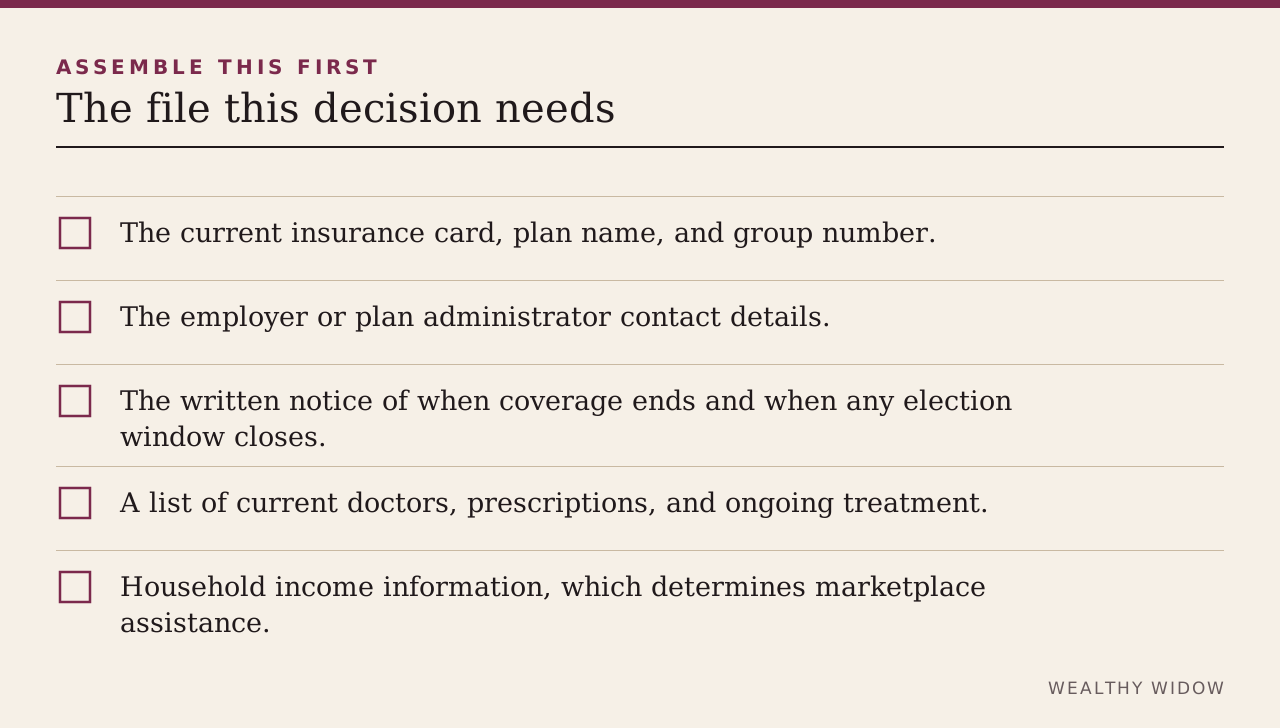
- The current insurance card, plan name, and group number.
- The employer or plan administrator contact details.
- The written notice of when coverage ends and when any election window closes.
- A list of current doctors, prescriptions, and ongoing treatment.
- Household income information, which determines marketplace assistance.
The record to build as you go
A verbal answer is a starting point, not a record. Get each of these documented.
- The exact date current coverage ends.
- The exact date any election window closes.
- The full cost of continuation coverage, including any administrative charge.
- Whether your current doctors and prescriptions are covered under each option.
Ask these before anyone is paid
Vagueness on any of these is itself an answer, and it is worth treating as one.
- What is the last date I can elect continuation coverage?
- Does this death create a special enrolment period, and how long does it run?
- How does continuation coverage compare in total cost with a marketplace plan for my household?
- Does anything here affect a Medicare enrolment deadline for me?
Confirm this against the rule
Do not take this guide as the authority. Each source below states the current rule for the part of this decision it covers.
- U.S. Department of Labor — Continuation of health coverage, COBRA
- U.S. Department of Labor — COBRA continuation coverage
- HealthCare.gov — Reporting income, household, and other changes
- Medicare.gov — Get started with Medicare
What is outside this
What follows is outside anything written for a general readership. It cannot compare the specific plans available to you. Networks, formularies, and subsidies vary by state and by household, and the comparison has to be done on your own numbers.
The short version
This is one of the genuinely urgent items. Establish the two dates that matter, coverage end and election close, and make a decision before the earlier of them, even if it is a decision you later revise.
Read When a Collector Calls: What You Owe and What You Do Not next; the two decisions interact.
Primary sources
- U.S. Department of Labor — Continuation of health coverage, COBRA
- U.S. Department of Labor — COBRA continuation coverage
- HealthCare.gov — Reporting income, household, and other changes
- Medicare.gov — Get started with Medicare
This article provides general education, not individualized legal, tax, investment, insurance, or benefits advice. Rules and deadlines change; verify the current requirement with the agency and a qualified professional.