First 90 Days
Closing the Credit File of Someone Who Has Died
A dormant credit file is a standing invitation. Notifying the credit bureaus early is one of the few purely protective steps available in the first weeks.

Widowhood arrives with a queue of decisions that all look equally urgent. A dormant credit file is a standing invitation. Notifying the credit bureaus early is one of the few purely protective steps available in the first weeks. They are not the same task, and treating them as one is how good decisions get made badly.
Credit applications in the name of someone who has died are common and are usually discovered late, when a collection letter arrives. The protective step is unglamorous and takes an afternoon.
This is one of the few tasks in the first month with real protective value and no downside whatever.
Name the decision before you make it
These are the points the rest of the decision rests on, so it is worth being sure of them before going further. A credit file does not close automatically on death, and it can remain open to new applications for a considerable period. Notification generally requires proof of death and proof of your own identity and relationship. The three major bureaus operate separately; notifying one does not notify the others.
Fraud in the name of someone who has died is often detected only when a collector contacts the surviving family. Your own credit file is a separate matter and may also need review where accounts were shared.
How to work through it
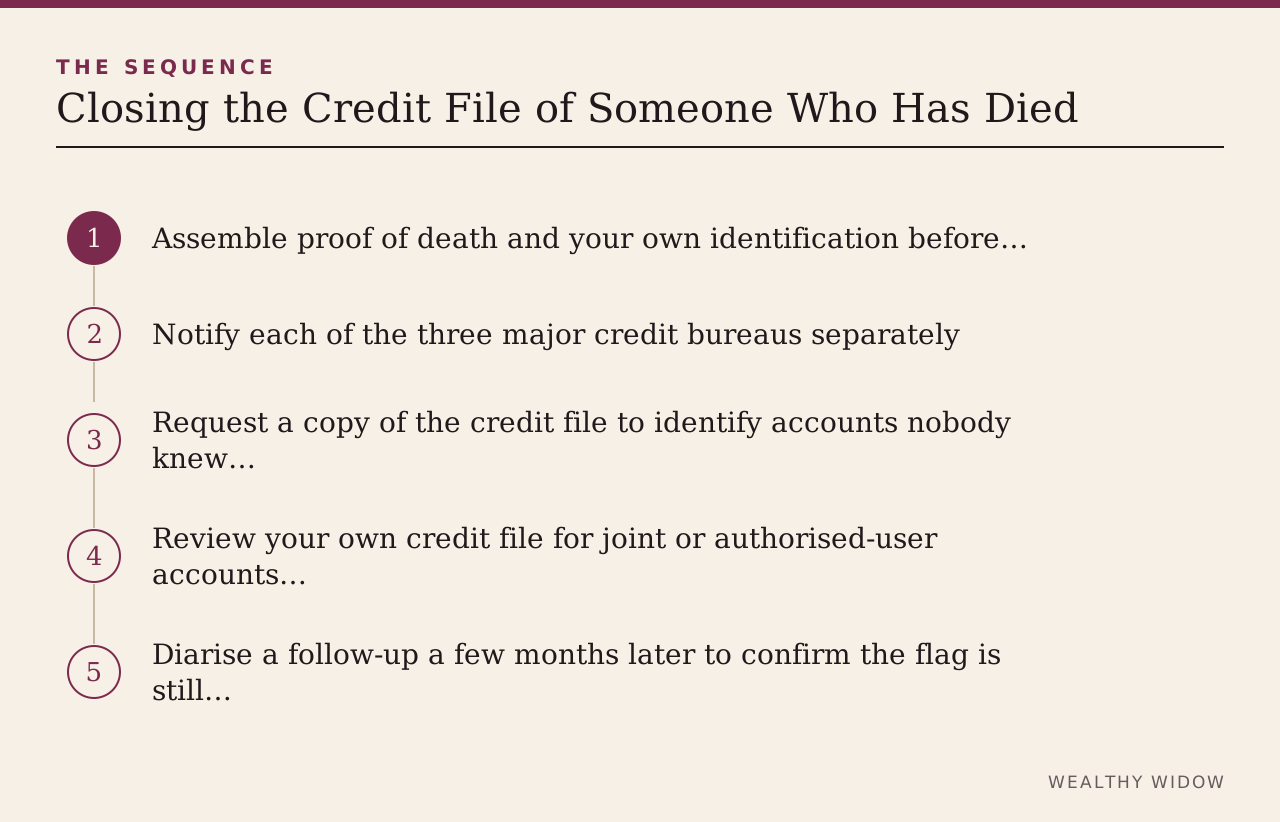
Take it in this sequence. Reversing the order tends to create work rather than save it, and occasionally forecloses a choice.
- Assemble proof of death and your own identification before contacting anyone, since each bureau will ask for both.
- Notify each of the three major credit bureaus separately, and request written confirmation of the deceased flag.
- Request a copy of the credit file to identify accounts nobody knew about.
- Review your own credit file for joint or authorised-user accounts that need attention.
- Diarise a follow-up a few months later to confirm the flag is still in place and no new activity has appeared.
Known hazards
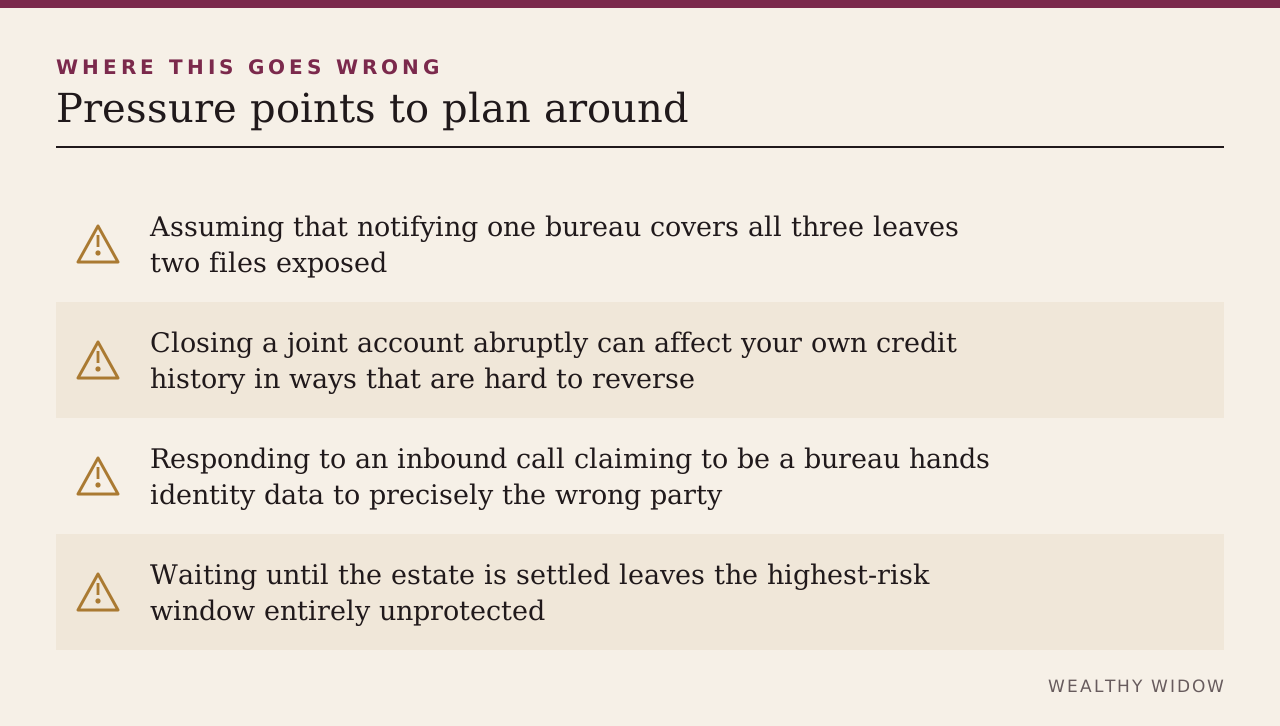
Watch for the following, and treat each as a reason to slow down. Assuming that notifying one bureau covers all three leaves two files exposed.
Closing a joint account abruptly can affect your own credit history in ways that are hard to reverse. Responding to an inbound call claiming to be a bureau hands identity data to precisely the wrong party. Waiting until the estate is settled leaves the highest-risk window entirely unprotected.
Assemble the file
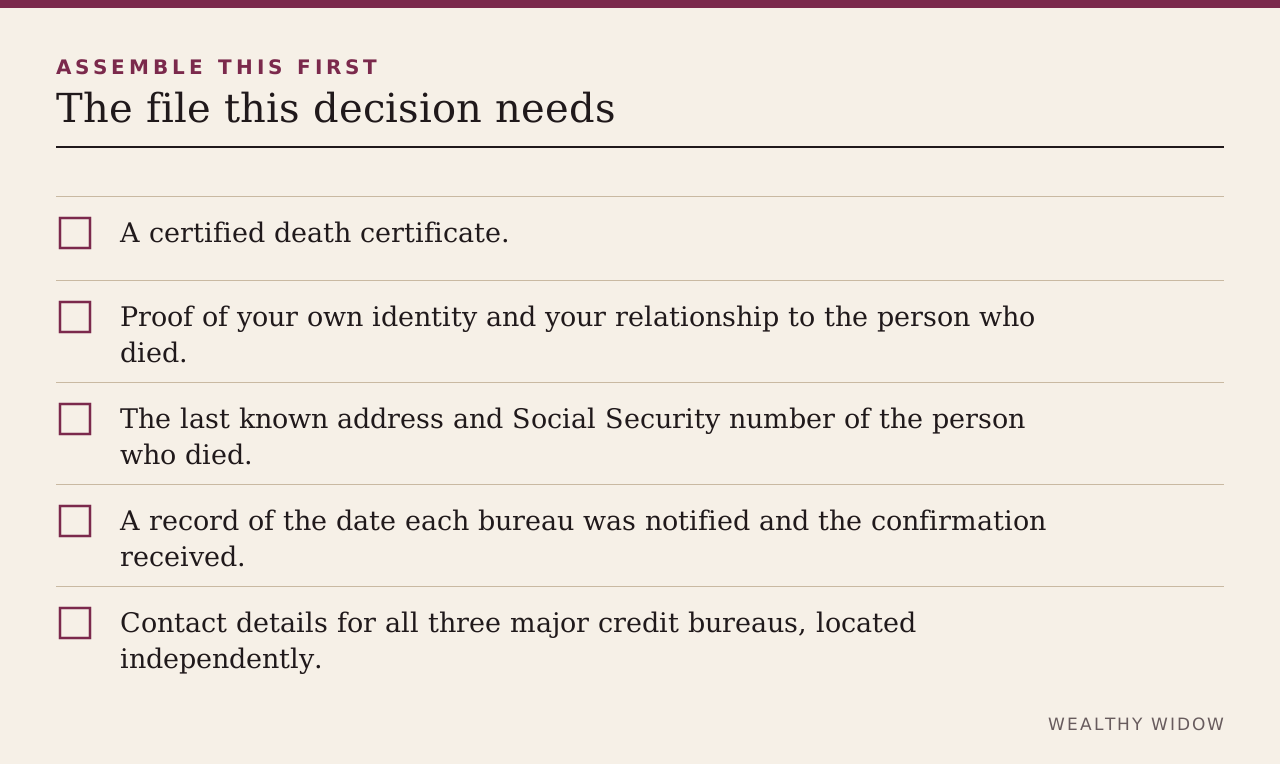
Having the file complete before the first call removes most of the back and forth that follows.
- A certified death certificate.
- Proof of your own identity and your relationship to the person who died.
- The last known address and Social Security number of the person who died.
- A record of the date each bureau was notified and the confirmation received.
- Contact details for all three major credit bureaus, located independently.
Get these in writing
Put each item below in your file with a date and a named source.
- Written confirmation from each bureau that the file is flagged.
- A copy of the credit file, and a list of accounts you did not previously know about.
- The status of any account on which you were a joint holder or authorised user.
- The date you notified each bureau.
The questions worth asking
These are the questions whose answers change what you decide, rather than merely confirming what you assumed.
- Which accounts on this file are my legal responsibility, and which are not?
- What is the correct way to close a joint account without damaging my own credit?
- If fraudulent credit has already been taken out, what is the recovery process?
- Should I place a freeze on my own file as well, and what would that affect?
Where the current rule lives
Read the source directly for any figure, date, or threshold that will actually drive a decision you make.
- Federal Trade Commission — Identity theft
- Federal Trade Commission — Scams and identity theft
- Consumer Financial Protection Bureau — Help for surviving spouses
What this cannot decide for you
General guidance sets out the shape of a decision. Your documents settle it. It cannot tell you which accounts on a credit file are your legal responsibility. That turns on how each account was opened and on the law of your state.
Before you move on
This is one of the rare tasks with no downside and a meaningful protective effect. Done early and confirmed in writing, it closes off a category of harm that is far harder to unwind once it has started.
Our related guide The Decision Log: The Single Most Useful Habit of the First Year covers the adjacent problem.
Primary sources
- Federal Trade Commission — Identity theft
- Federal Trade Commission — Scams and identity theft
- Consumer Financial Protection Bureau — Help for surviving spouses
This article provides general education, not individualized legal, tax, investment, insurance, or benefits advice. Rules and deadlines change; verify the current requirement with the agency and a qualified professional.