First 90 Days
The Call to an Employer Is a Benefits Enquiry, Not a Courtesy
A late spouse’s employer may hold life cover, unpaid compensation, retirement plan elections, and health coverage decisions with real deadlines attached.

Widowhood arrives with a queue of decisions that all look equally urgent. A late spouse’s employer may hold life cover, unpaid compensation, retirement plan elections, and health coverage decisions with real deadlines attached. They are not the same task, and treating them as one is how good decisions get made badly.
Employers frequently hold more of a household’s financial architecture than the household realises, and several of those items carry election windows that expire quietly.
The company handles it is not a status update unless you know which plan, which claim, and which deadline.
The substance beneath the process
Start from the reliable ground, before anyone asks you to act on anything less certain than it. Employer-provided life insurance is common and is often larger than any policy the household arranged itself. Final compensation may include unpaid salary, accrued leave, bonuses, commissions, or deferred amounts. Retirement plan benefits are governed by the plan document and beneficiary designations, not by the will.
Health coverage for surviving dependants may be continued only within a defined election window. The phrase the company handles it is not a status update unless you know which plan, which claim, and which deadline.
The order that protects you
Work through it deliberately rather than all at once, and stop at any point where an answer is missing.
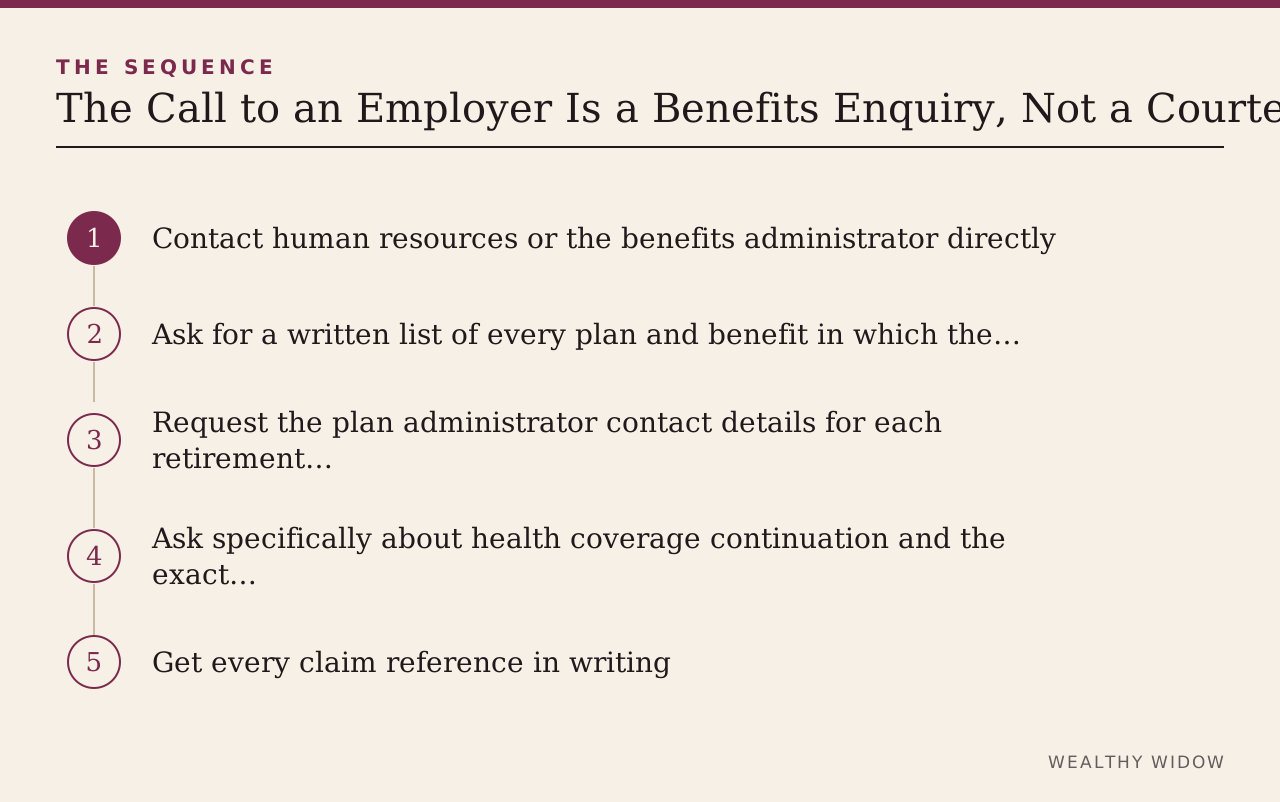
- Contact human resources or the benefits administrator directly, rather than a line manager or colleague.
- Ask for a written list of every plan and benefit in which the person who died participated.
- Request the plan administrator contact details for each retirement or insurance plan separately.
- Ask specifically about health coverage continuation and the exact date any election window closes.
- Get every claim reference in writing, and diarise each stated deadline.
What tends to go wrong here
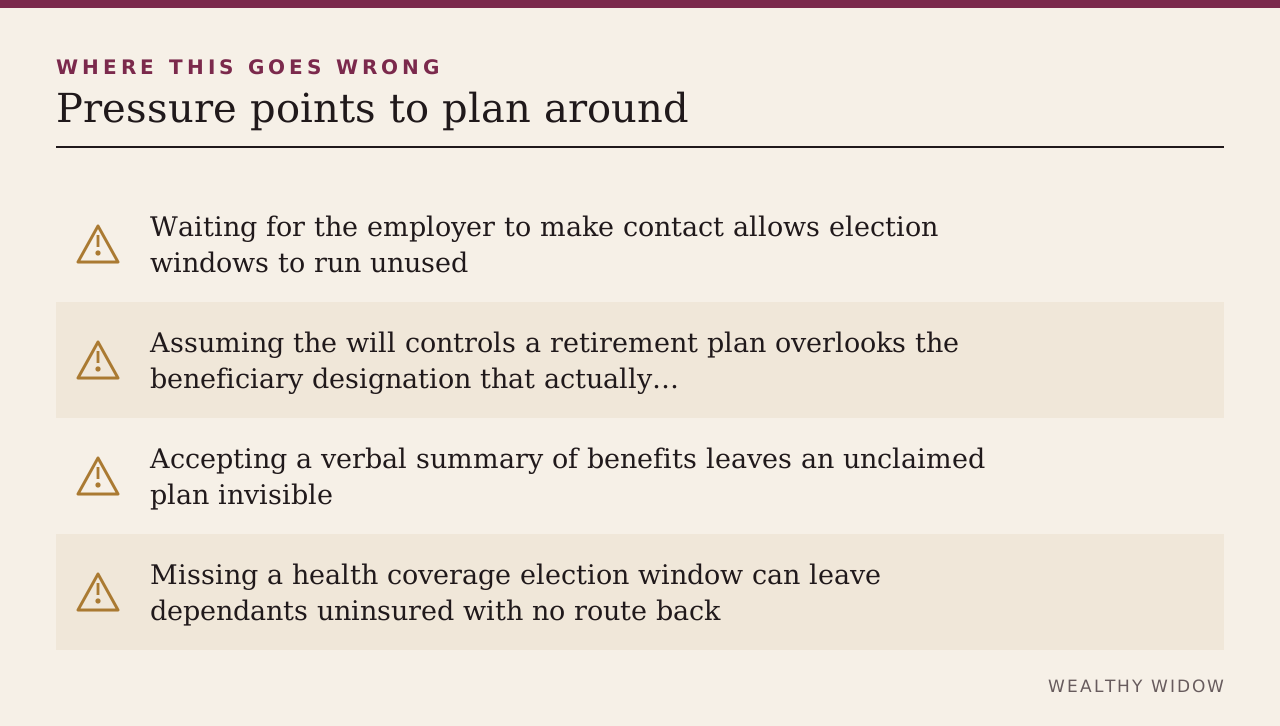
Each of these is a signal to stop and confirm rather than proceed. Waiting for the employer to make contact allows election windows to run unused.
Assuming the will controls a retirement plan overlooks the beneficiary designation that actually governs it. Accepting a verbal summary of benefits leaves an unclaimed plan invisible. Missing a health coverage election window can leave dependants uninsured with no route back.
The evidence to gather
You will be asked for these in some combination by almost everyone involved.
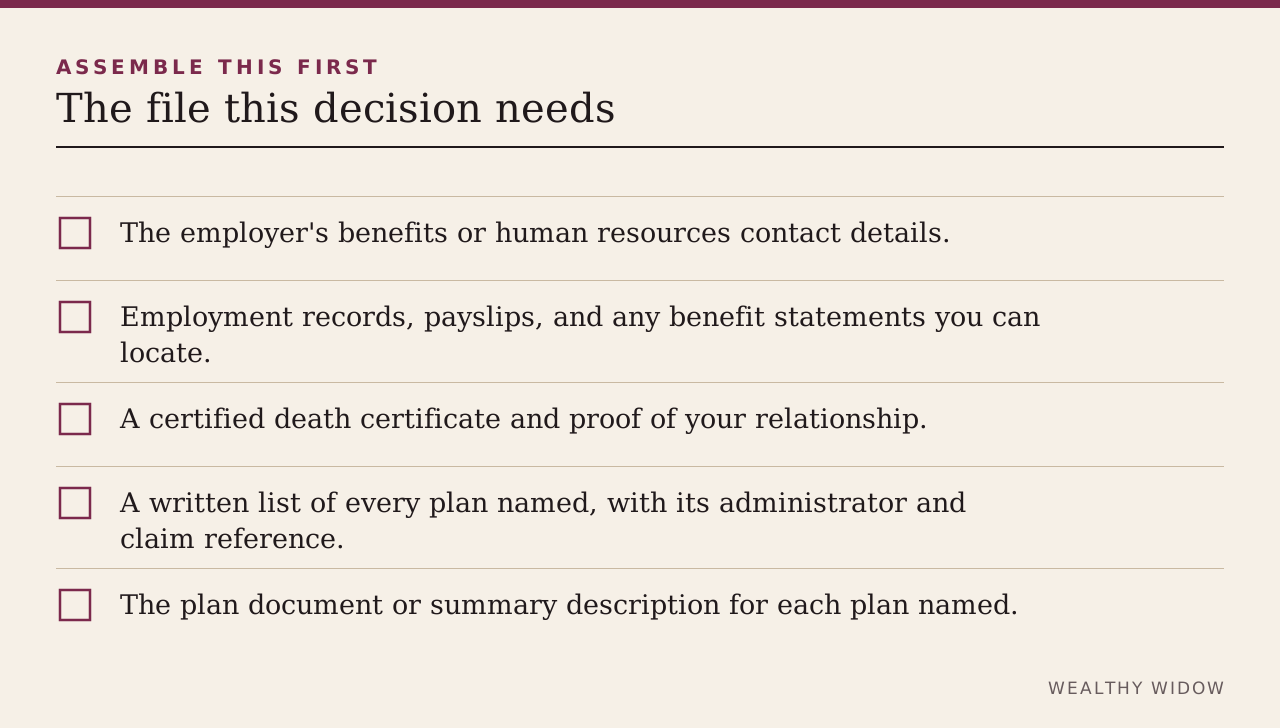
- The employer’s benefits or human resources contact details.
- Employment records, payslips, and any benefit statements you can locate.
- A certified death certificate and proof of your relationship.
- A written list of every plan named, with its administrator and claim reference.
- The plan document or summary description for each plan named.
The written record you should hold
Hold written confirmation of each of these points before you rely on any of them to make a decision.
- A written list of every plan and benefit, with plan names and administrators.
- The exact deadline for any coverage continuation election.
- The amounts and timing of any final compensation due.
- Claim references for every benefit being processed.
What a good adviser will answer plainly
Whoever advises you should be able to answer each of these plainly and in writing.
- Which of these benefits has a deadline, and what is the date for each?
- Who is the plan administrator for each retirement and insurance plan?
- What beneficiary designation is on file for each plan?
- What happens to health coverage for dependants, and by when must I decide?
Verify each point at source
Check anything that will drive a decision against the source itself, not against this summary of it.
- U.S. Department of Labor — Continuation of health coverage, COBRA
- U.S. Department of Labor — COBRA continuation coverage
- U.S. Department of Labor — Reporting and disclosure guide for employee benefit plans
- Consumer Financial Protection Bureau — Help for surviving spouses
What this guide does not settle
What follows is the shape of the problem, not an answer to your version of it. It cannot tell you what a particular plan document says about survivor elections, because plans differ substantially and the document controls.
Closing the loop
One well-prepared call to a benefits administrator often surfaces more value than weeks of household paperwork. Ask for the list in writing, capture every deadline, and treat each plan as a separate claim with its own reference.
Our related guide The Safe Deposit Box: Authority Comes Before Access covers the adjacent problem.
Primary sources
- U.S. Department of Labor — Continuation of health coverage, COBRA
- U.S. Department of Labor — COBRA continuation coverage
- U.S. Department of Labor — Reporting and disclosure guide for employee benefit plans
- Consumer Financial Protection Bureau — Help for surviving spouses
This article provides general education, not individualized legal, tax, investment, insurance, or benefits advice. Rules and deadlines change; verify the current requirement with the agency and a qualified professional.