First 90 Days
Digital Accounts: Why the Password Is Not the Permission
Knowing the login to an account belonging to someone who has died does not make using it lawful, and the shortcut can create genuine problems.

The difficulty here is rarely the paperwork. It is knowing what is actually being asked. Knowing the login to an account belonging to someone who has died does not make using it lawful, and the shortcut can create genuine problems.
Digital accounts hold documents, photographs, subscriptions, and financial records, and the practical temptation to simply log in is enormous. Providers, terms of service, and state law increasingly treat that differently from how it feels.
Knowing the password is not the same as holding permission, and the difference matters more than it feels like it should.
What is actually on the table
Before any advice, the ground facts. Access to an account is governed by the provider’s terms and by applicable law, not by possession of the credentials. Many providers offer a formal process for a legacy contact or an authorised representative, with defined evidence requirements. Continuing to transact on a financial account after death, even to pay household bills, can create real complications.
Two-factor authentication tied to a phone number can lock an entire digital estate when the number is cancelled. Some accounts hold assets with genuine value, and some hold only sentiment; the process for each may differ.
The path through this
Work through this deliberately. Each step assumes the one before it is done.
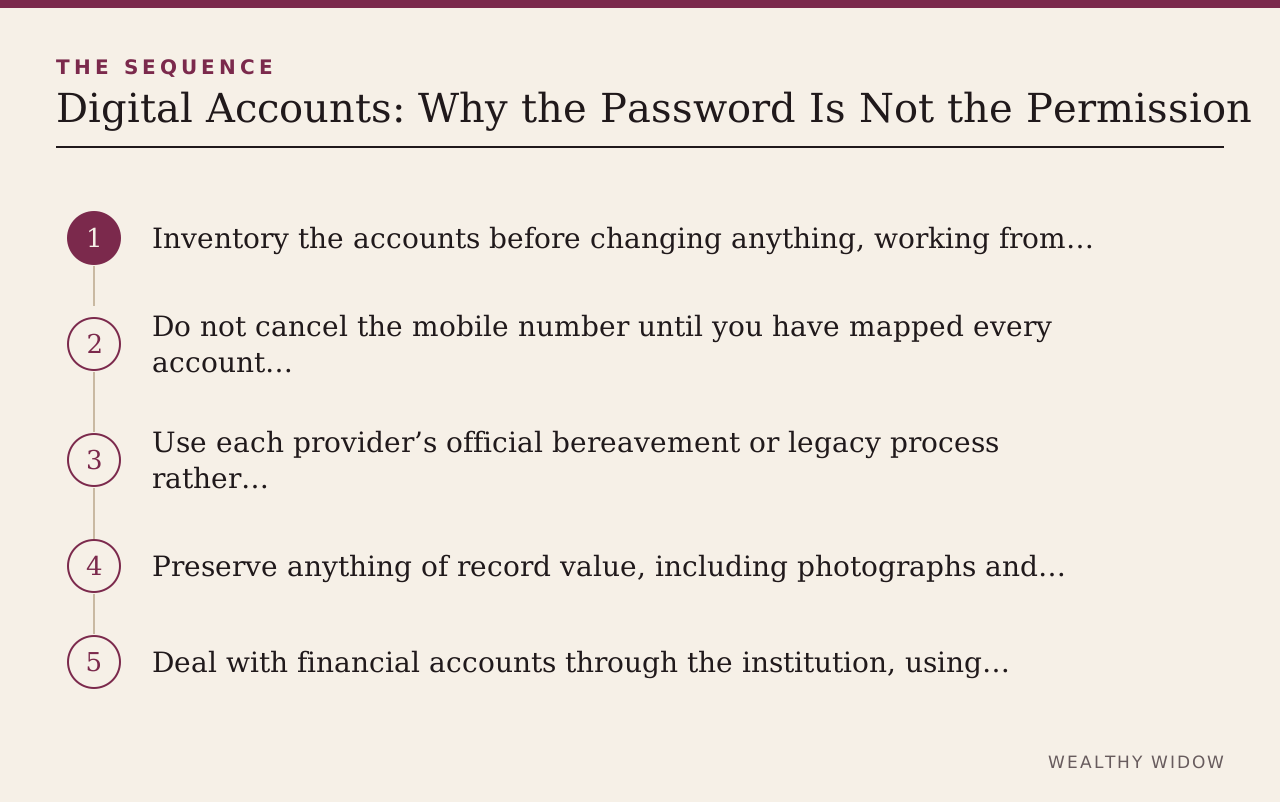
- Inventory the accounts before changing anything, working from statements, post, and the recurring payment list.
- Do not cancel the mobile number until you have mapped every account that uses it for verification.
- Use each provider’s official bereavement or legacy process rather than logging in.
- Preserve anything of record value, including photographs and correspondence, before closing anything.
- Deal with financial accounts through the institution, using established authority, rather than through the app.
What tends to catch people out
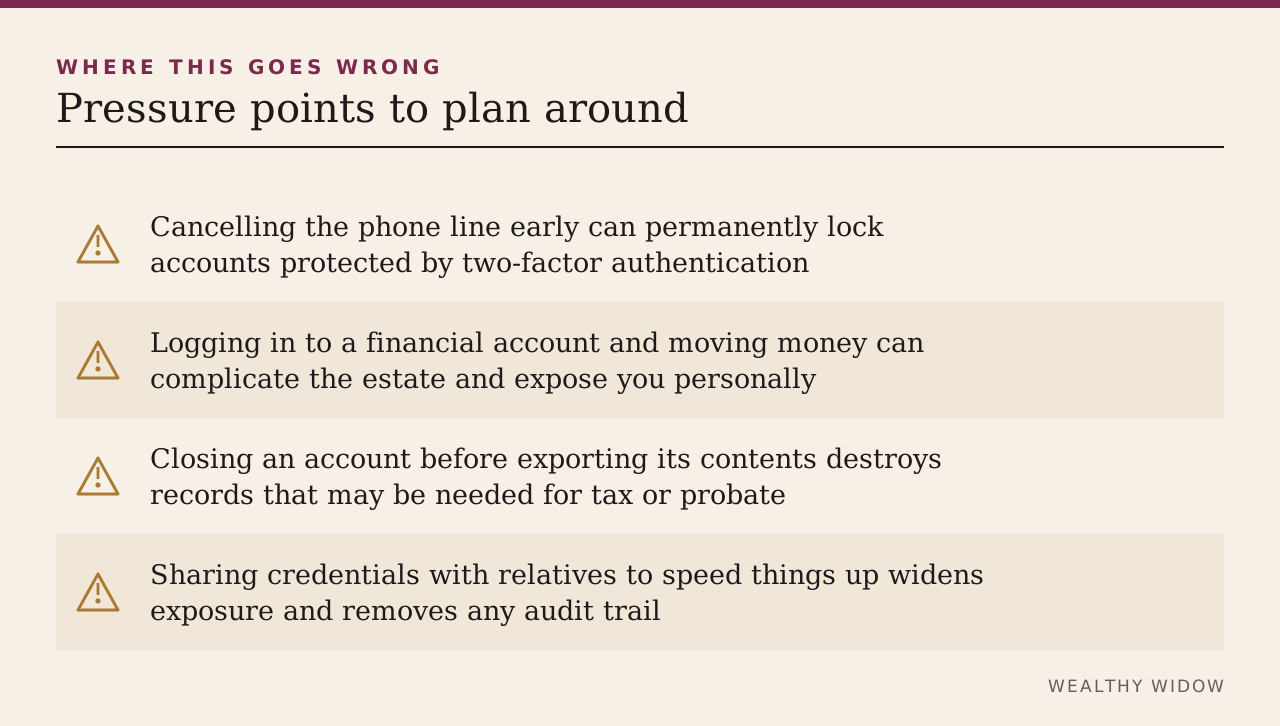
Anticipating these is most of the protection available to you, and it costs nothing but attention. Cancelling the phone line early can permanently lock accounts protected by two-factor authentication.
Logging in to a financial account and moving money can complicate the estate and expose you personally. Closing an account before exporting its contents destroys records that may be needed for tax or probate. Sharing credentials with relatives to speed things up widens exposure and removes any audit trail.
What you will be asked to produce
Assemble this before the first conversation rather than during it.
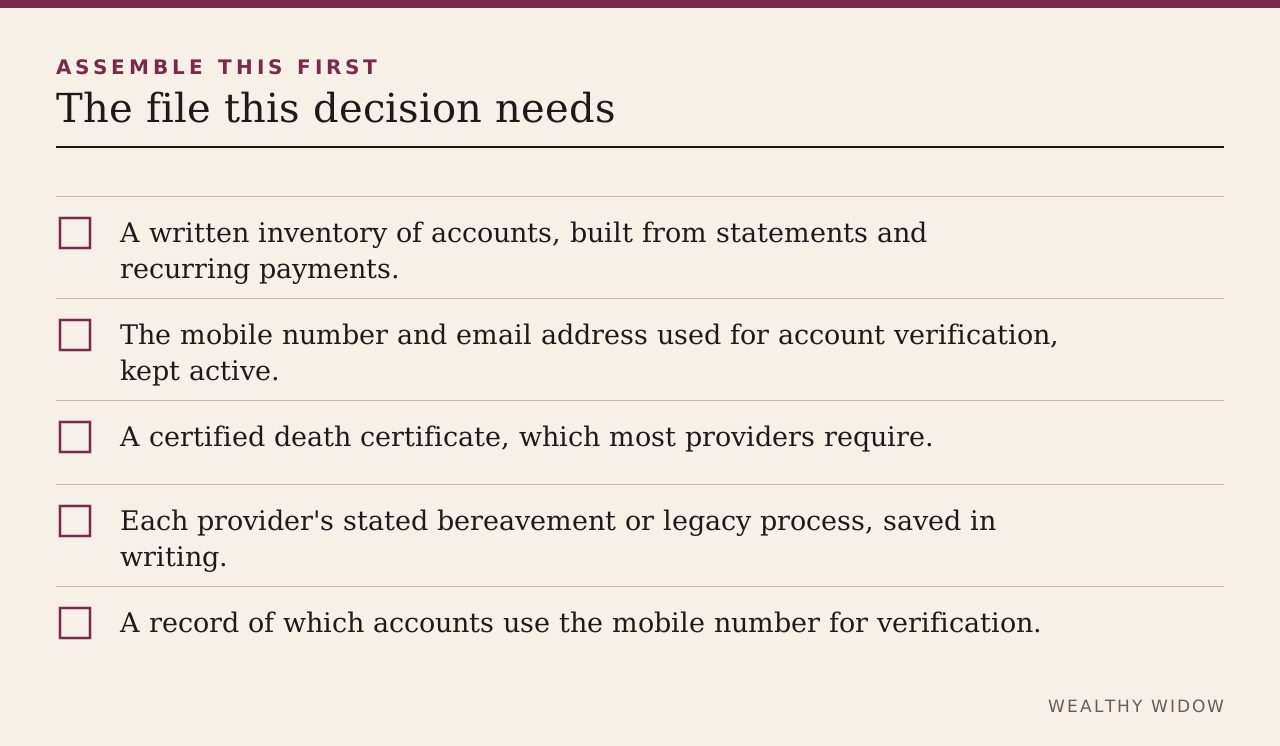
- A written inventory of accounts, built from statements and recurring payments.
- The mobile number and email address used for account verification, kept active.
- A certified death certificate, which most providers require.
- Each provider’s stated bereavement or legacy process, saved in writing.
- A record of which accounts use the mobile number for verification.
Put these in writing, then proceed
A conversation is a starting point. These belong on paper.
- Each provider’s written process for accounts after a death.
- What evidence of authority each provider requires.
- Which accounts hold assets, records, or obligations rather than only content.
- That anything of value has been preserved before closure.
Before anyone is engaged, ask these
Ask them plainly; the response tells you as much as the answer.
- What is your bereavement process, and what evidence do you require?
- Can content be preserved or exported before the account is closed?
- Does this account hold anything with a monetary value that forms part of the estate?
- What happens to the account if I do nothing for now?
The sources behind this
Anything that will drive a decision should be checked here rather than here-abouts.
- Consumer Financial Protection Bureau — Help for surviving spouses
- Federal Trade Commission — Identity theft
- USAGov — Dealing with the death of a loved one
Where this guide stops
The boundary matters, because the wrong assumption here is expensive. It cannot tell you what a specific provider’s terms permit, nor how your state’s law on digital assets applies to the accounts in your inventory.
In practice
Inventory before you change anything, and keep the phone number alive until you know what depends on it. Using the provider’s own process is slower for a week and materially safer for a year.
For the step that usually comes next, read Funeral Costs: Buying Under Time Pressure You Did Not Choose.
Primary sources
- Consumer Financial Protection Bureau — Help for surviving spouses
- Federal Trade Commission — Identity theft
- USAGov — Dealing with the death of a loved one
This article provides general education, not individualized legal, tax, investment, insurance, or benefits advice. Rules and deadlines change; verify the current requirement with the agency and a qualified professional.