First 90 Days
When a Collector Calls: What You Owe and What You Do Not
Debt collectors contact surviving family early and often, and the most important fact is one they rarely volunteer: you are usually not personally liable.

Institutions will describe this as routine. For you it is not routine, and the stakes are not symmetrical. Debt collectors contact surviving family early and often, and the most important fact is one they rarely volunteer: you are usually not personally liable.
Collection contact after a death is lawful in defined circumstances and is frequently conducted in a way that implies a personal obligation which does not exist. Knowing the rule changes the conversation entirely.
Debts of a person who has died are generally paid from their estate, not from the pocket of the person who answers the phone.
The decision behind the form
A short set of facts governs this, and they are worth holding on to when the surrounding pressure is not. Debts are generally owed by and paid from the estate of the person who died, not by surviving relatives personally. Exceptions exist, including jointly held debts and obligations arising under state law, so the answer is not automatic. A collector may not state or imply that you must pay another person’s debt from your own money.
You are entitled to written validation of a debt rather than a verbal assertion of it. Paying a debt you do not owe, to end the calls, is difficult to reverse afterwards.
Step by step, in this order
This order is designed to keep your choices open for as long as possible.
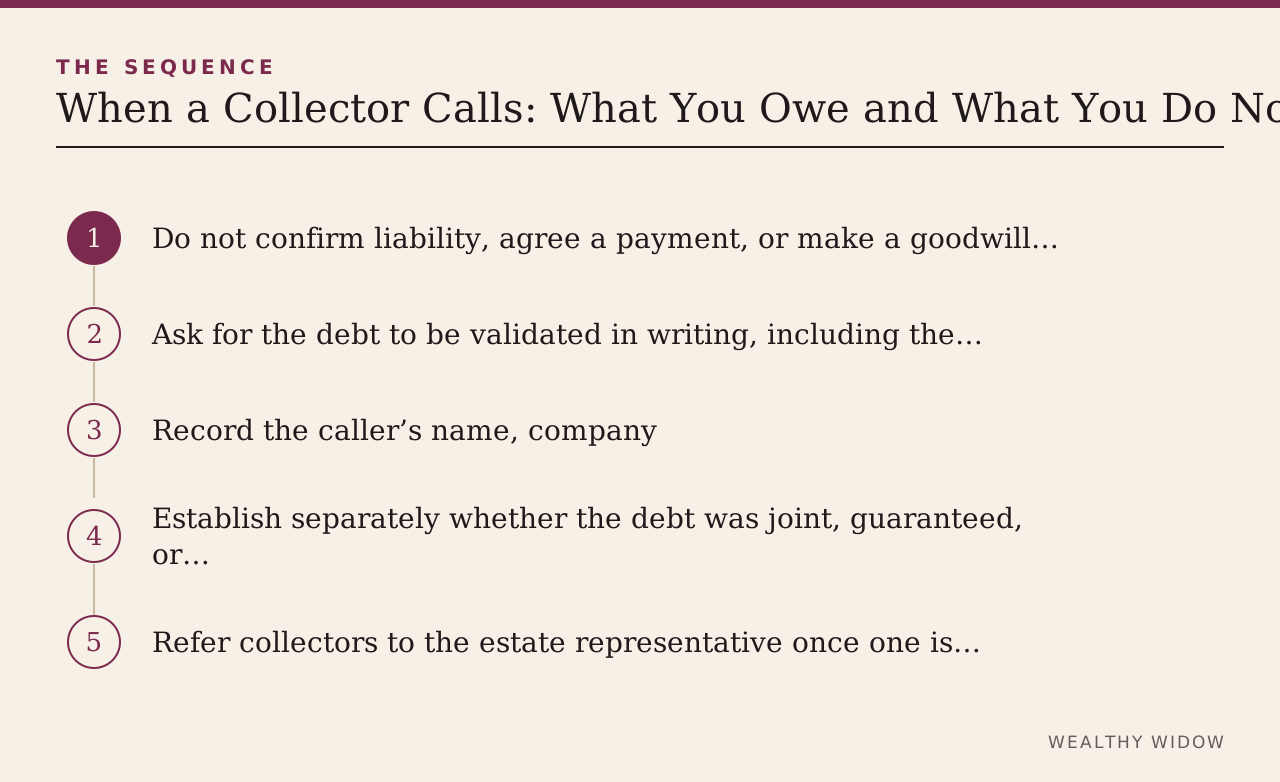
- Do not confirm liability, agree a payment, or make a goodwill payment on a first call.
- Ask for the debt to be validated in writing, including the creditor, the amount, and the basis of the claim.
- Record the caller’s name, company, and the date, and log what was said.
- Establish separately whether the debt was joint, guaranteed, or otherwise your responsibility.
- Refer collectors to the estate representative once one is appointed, in writing.
The costly misreadings
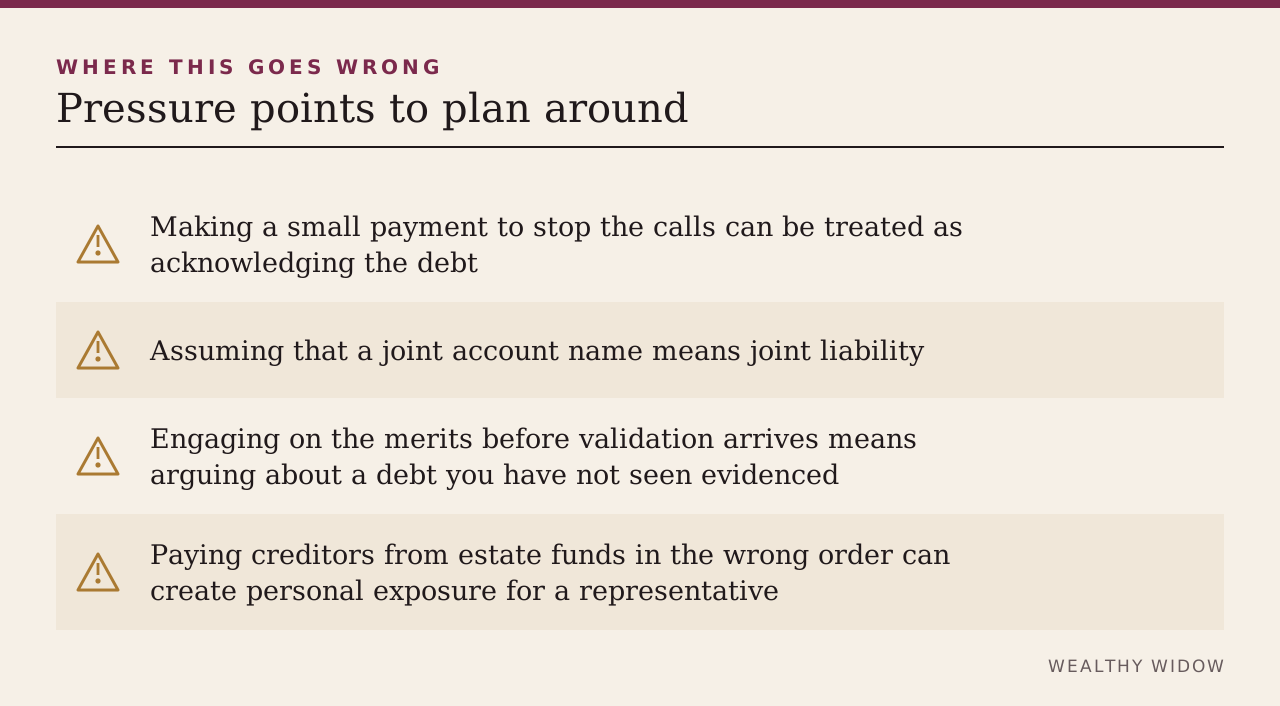
The problems below recur often enough to be planned for. Making a small payment to stop the calls can be treated as acknowledging the debt.
Assuming that a joint account name means joint liability, without checking, concedes a point that may be wrong. Engaging on the merits before validation arrives means arguing about a debt you have not seen evidenced. Paying creditors from estate funds in the wrong order can create personal exposure for a representative.
What every organisation will ask for
Each item below will be requested more than once. Collect them in one place and log where each copy goes.
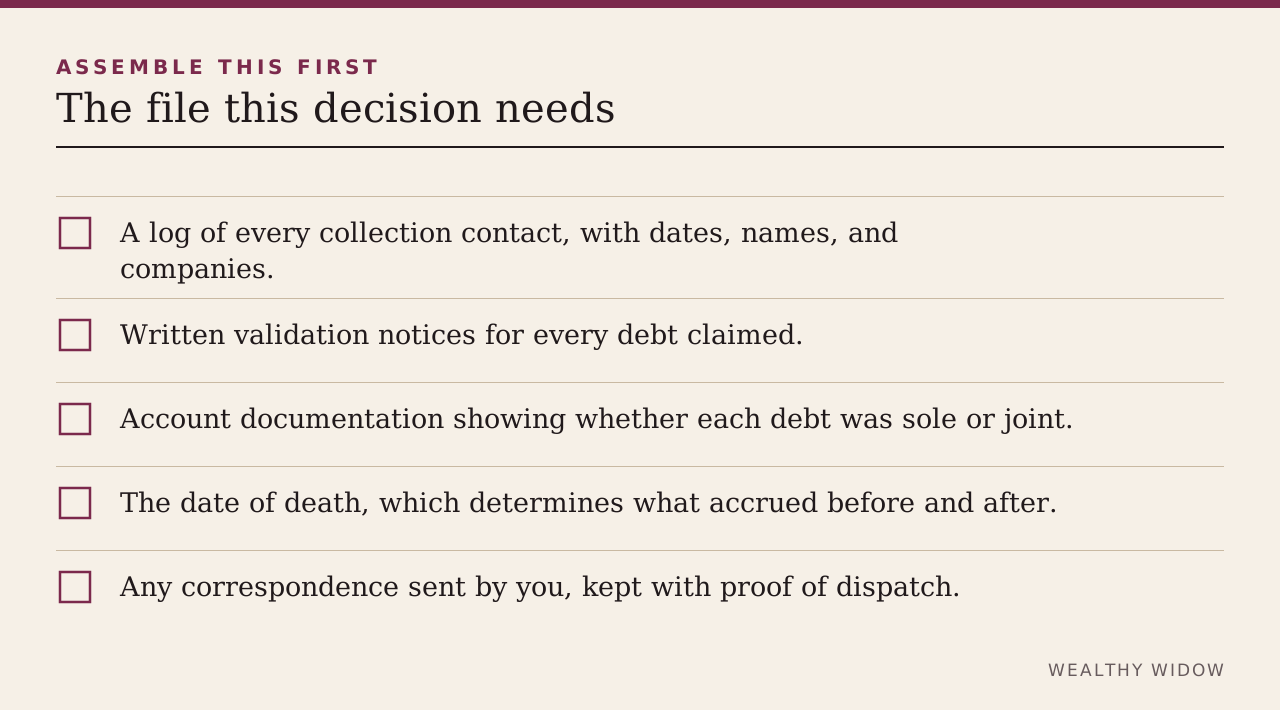
- A log of every collection contact, with dates, names, and companies.
- Written validation notices for every debt claimed.
- Account documentation showing whether each debt was sole or joint.
- The date of death, which determines what accrued before and after.
- Any correspondence sent by you, kept with proof of dispatch.
Put these in writing, then proceed
A conversation is a starting point. These belong on paper.
- Written validation of each debt claimed.
- Whether each debt was solely in the name of the person who died.
- The correct order in which estate debts must be paid.
- That collectors have been notified of the estate representative in writing.
Before anyone is engaged, ask these
Ask them plainly; the response tells you as much as the answer.
- Am I personally liable for this debt, and on what legal basis?
- What is the correct order of payment for the debts of this estate?
- What should I do about a collector who continues to contact me directly?
- Does state law create any liability for me that the account documents do not?
Where to verify this
Every load-bearing point above traces to one of the following. Where a figure or deadline matters to you, read it there.
- Federal Trade Commission — Debts and deceased relatives
- Consumer Financial Protection Bureau — Am I responsible for my spouse’s debts after they die?
- Consumer Financial Protection Bureau — Does a person’s debt go away when they die?
- Consumer Financial Protection Bureau — When a loved one dies and debt collectors come calling
What a professional still has to decide
The limits of a guide matter as much as its content, because acting past them is where the cost sits. It cannot tell you whether a specific debt is yours. That turns on how the account was opened, on any guarantee given, and on the law of your state.
What good looks like here
The rule is simple even when the calls are not. Validate in writing, establish liability from documents rather than assertions, and route collectors to the estate. None of that requires a confrontation.
Read Reading the Will: What It Controls and What It Does Not next; the two decisions interact.
Primary sources
- Federal Trade Commission — Debts and deceased relatives
- Consumer Financial Protection Bureau — Am I responsible for my spouse’s debts after they die?
- Consumer Financial Protection Bureau — Does a person’s debt go away when they die?
- Consumer Financial Protection Bureau — When a loved one dies and debt collectors come calling
This article provides general education, not individualized legal, tax, investment, insurance, or benefits advice. Rules and deadlines change; verify the current requirement with the agency and a qualified professional.