First 90 Days
Certified Death Certificates: How Many, and Who Actually Needs One
Ordering certified copies is one of the first errands after a death. Ordering the wrong number, or sending originals away, creates weeks of avoidable delay.

You may be told this is simply a form to sign. It is a decision with consequences. Ordering certified copies is one of the first errands after a death. Ordering the wrong number, or sending originals away, creates weeks of avoidable delay.
A certified death certificate is the key that unlocks almost every other conversation, and institutions differ sharply in whether they will accept a copy. Getting the count right early saves repeated ordering fees and lost weeks.
A certified copy sent to an organisation that only needed to see one is a document you have spent and cannot recover.
The substance beneath the process
The position is narrower than it looks once it is stated plainly. The federal government does not hold death records. They are filed with the state or local vital records office where the death occurred. A certified copy carries a raised seal or other security feature; a photocopy of one is not the same document and is often refused. Some organisations require a certified copy they will keep, some will sight one and return it, and some accept a plain copy. These are three different requirements.
A funeral director will frequently order the first batch on your behalf, which means the count was chosen before you knew how many accounts existed. Ordering additional copies later is possible, but it adds processing time at exactly the point when other deadlines are running.
The order that protects you
This is the working order most readers find keeps them in control.
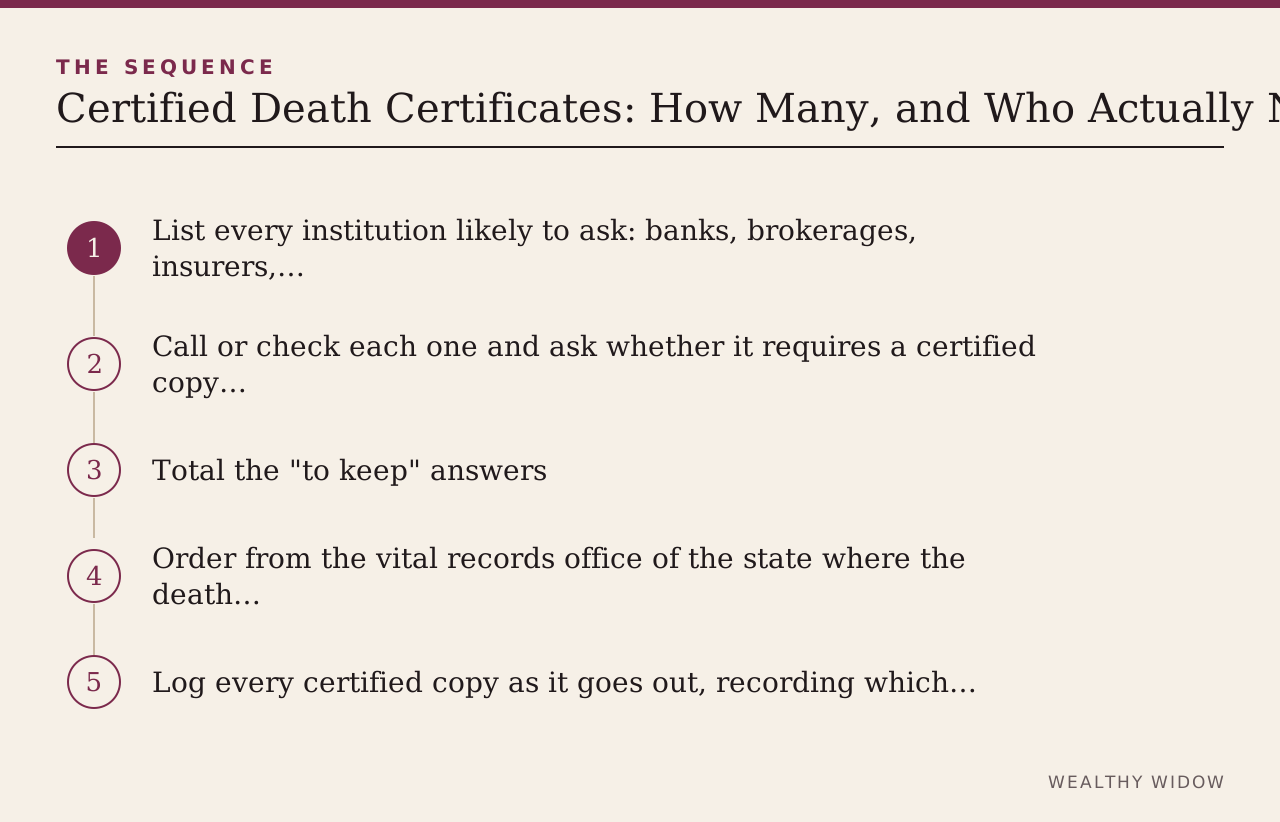
- List every institution likely to ask: banks, brokerages, insurers, pension and retirement plans, the mortgage servicer, employers, registries, and the probate court.
- Call or check each one and ask whether it requires a certified copy to keep, a certified copy to sight, or a plain copy.
- Total the “to keep” answers, then add several spare copies for institutions you have not yet discovered.
- Order from the vital records office of the state where the death occurred, following its stated identification and eligibility rules.
- Log every certified copy as it goes out, recording which organisation received it and on what date.
What tends to go wrong here
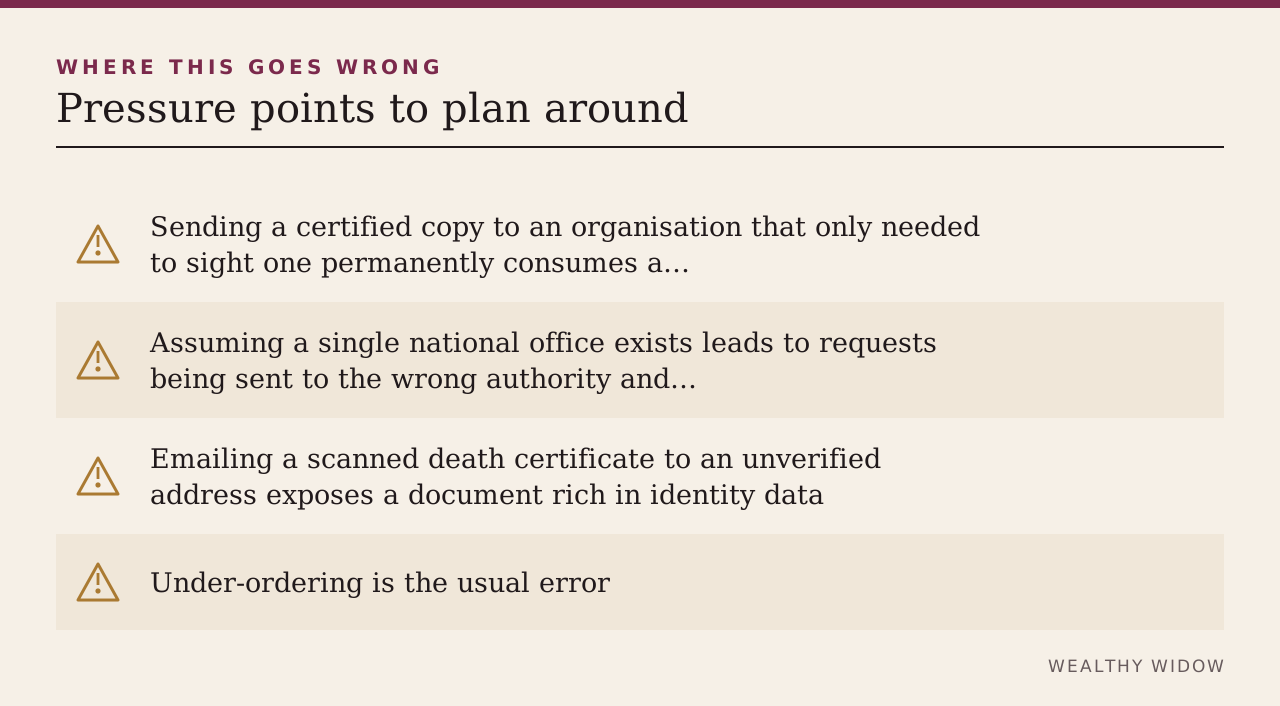
Knowing the failure modes in advance is most of the protection. Sending a certified copy to an organisation that only needed to sight one permanently consumes a document you paid for.
Assuming a single national office exists leads to requests being sent to the wrong authority and returned weeks later. Emailing a scanned death certificate to an unverified address exposes a document rich in identity data. Under-ordering is the usual error, and the second order almost always arrives during the week you needed it.
The paperwork to collect first
Gather these first and the rest of the process moves considerably faster, because most delays are missing paperwork.
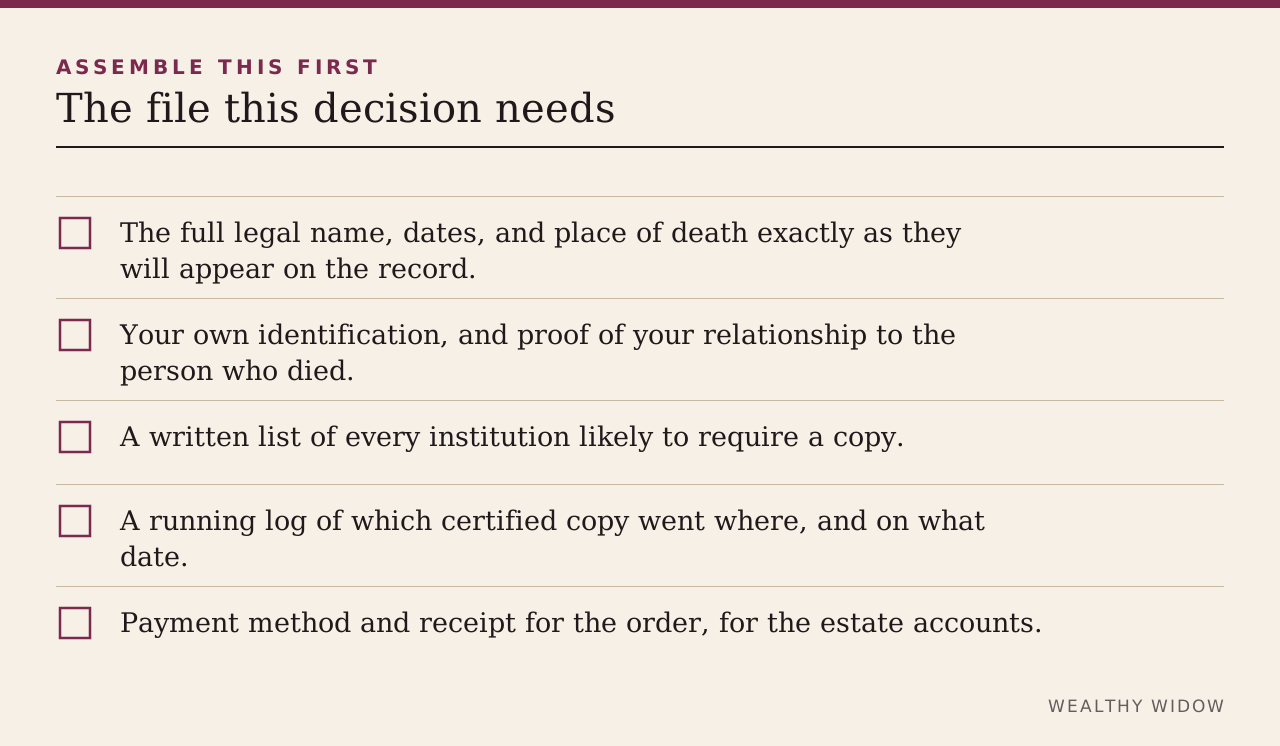
- The full legal name, dates, and place of death exactly as they will appear on the record.
- Your own identification, and proof of your relationship to the person who died.
- A written list of every institution likely to require a copy.
- A running log of which certified copy went where, and on what date.
- Payment method and receipt for the order, for the estate accounts.
Ask for this in writing
Each item below should exist somewhere other than your memory, because memory is not evidence in a dispute.
- Which form of the certificate each institution requires, and whether it will be returned.
- The vital records office that actually holds the record, and its current identification requirements.
- Who is legally eligible to request a certified copy in that state.
- The date each certified copy was sent, and to whom.
The questions to bring to the meeting
Take these to the attorney, tax professional, or planner handling this work.
- Will you return this certified copy, and if so, by what method and when?
- Would a certified copy sighted in a branch satisfy you instead of one you keep?
- What else do you require alongside the certificate to act on this account?
- If the record is later amended, what would you need from me?
Read the agency, not this summary
Treat these as the authority and this guide as an index to them.
- USAGov — How to get a certified copy of a death certificate
- Centers for Disease Control and Prevention — Where to write for vital records
- Centers for Disease Control and Prevention — Vital records application guidelines
What only your documents can answer
This is where a guide stops being useful and your own paperwork takes over. It cannot tell you what your state requires of a requester, or which institutions in your particular case will insist on keeping an original rather than sighting one.
The last word on this
Treat certified copies as a controlled asset rather than stationery. A short list of who needs what, a modest surplus, and a log of where each copy went will remove one entire category of delay from the months ahead.
Our related guide Which Agencies Need to Be Told, and Which Will Find Out Anyway covers the adjacent problem.
Primary sources
- USAGov — How to get a certified copy of a death certificate
- Centers for Disease Control and Prevention — Where to write for vital records
- Centers for Disease Control and Prevention — Vital records application guidelines
This article provides general education, not individualized legal, tax, investment, insurance, or benefits advice. Rules and deadlines change; verify the current requirement with the agency and a qualified professional.