First 90 Days
A Death Abroad: Two Systems, One Family
When a spouse dies outside the country, the local authorities and the home country both have processes, and neither one runs the other.

Institutions will describe this as routine. For you it is not routine, and the stakes are not symmetrical. When a spouse dies outside the country, the local authorities and the home country both have processes, and neither one runs the other.
A death abroad doubles the administrative work and introduces documents most families have never encountered. The sequence is well established, and consular services exist precisely to help with it.
A foreign death certificate is the local record. The consular report is what most institutions at home will actually accept.
The shape of this decision
Take the ground facts first, because most of the difficulty here dissolves once they are stated plainly. The local authority where the death occurred issues the death certificate under its own law. A consular report of death abroad is the document generally used to settle affairs at home. Repatriation of remains is subject to the rules of both countries and can be costly.
Estate procedures may run in both jurisdictions, and they do not necessarily reach the same result. Documents issued abroad frequently require translation and formal authentication before they will be accepted.
Order of play
Take these in order. Reversing them tends to create work rather than save it.
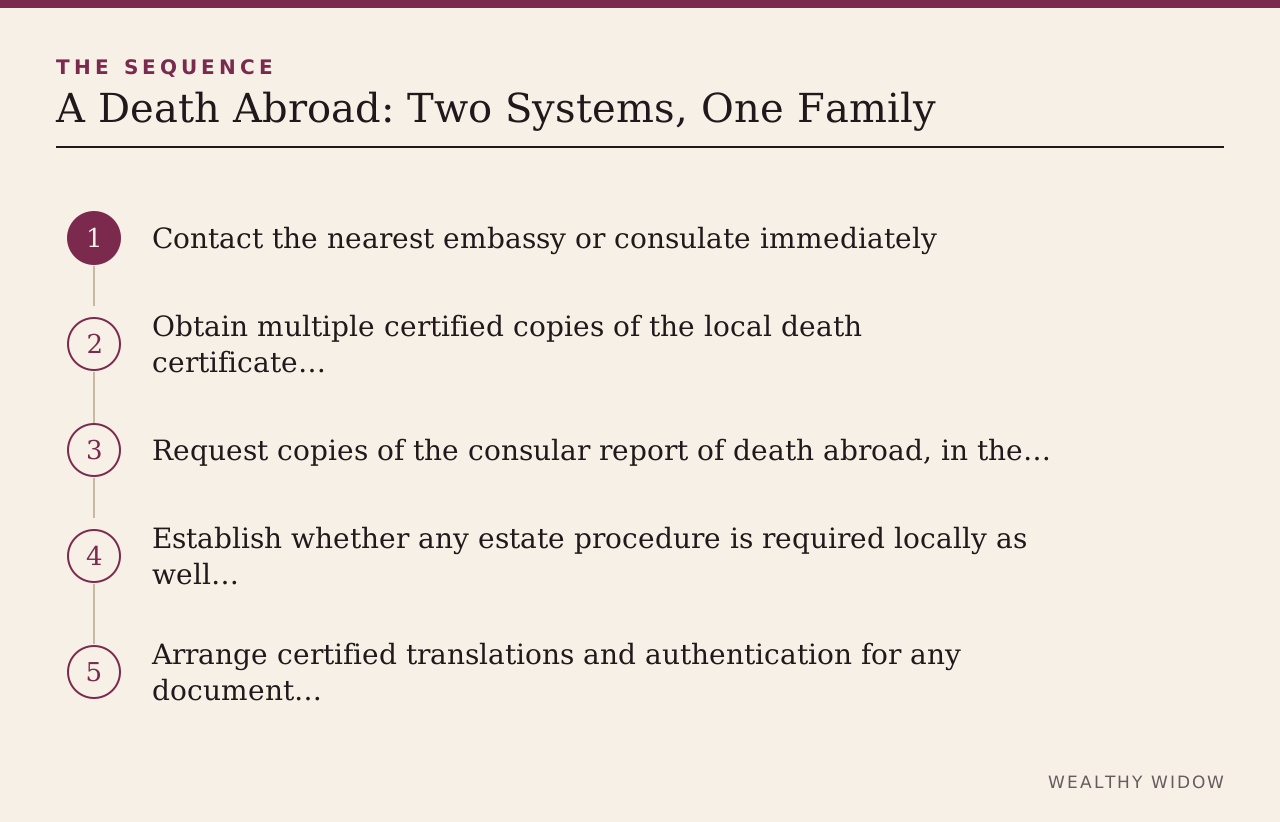
- Contact the nearest embassy or consulate immediately; that is the route to the consular report.
- Obtain multiple certified copies of the local death certificate before leaving the country if possible.
- Request copies of the consular report of death abroad, in the number your notification list requires.
- Establish whether any estate procedure is required locally as well as at home.
- Arrange certified translations and authentication for any document that will be used at home.
The errors worth naming in advance
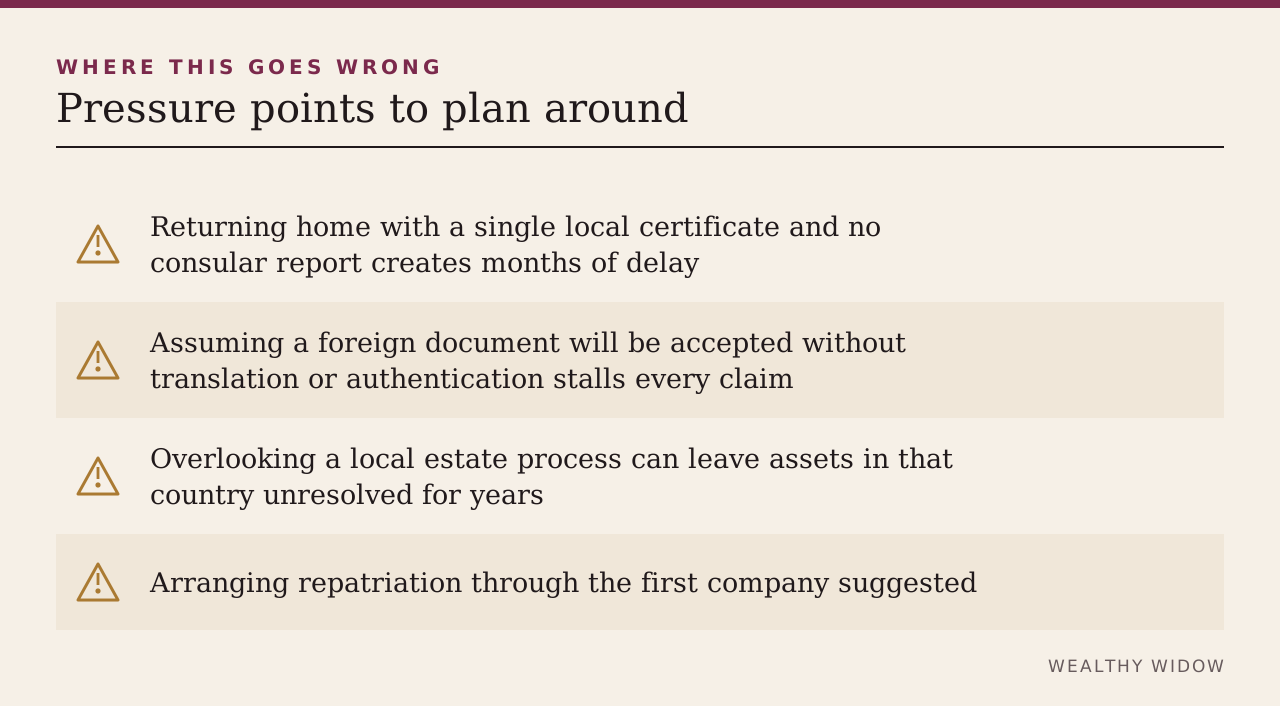
The failure modes below are predictable rather than unlucky, which is precisely what makes them avoidable. Returning home with a single local certificate and no consular report creates months of delay.
Assuming a foreign document will be accepted without translation or authentication stalls every claim. Overlooking a local estate process can leave assets in that country unresolved for years. Arranging repatriation through the first company suggested, without comparison, is very expensive.
Gather these before the first call
Every organisation involved will want some combination of the following, and several will want it more than once.
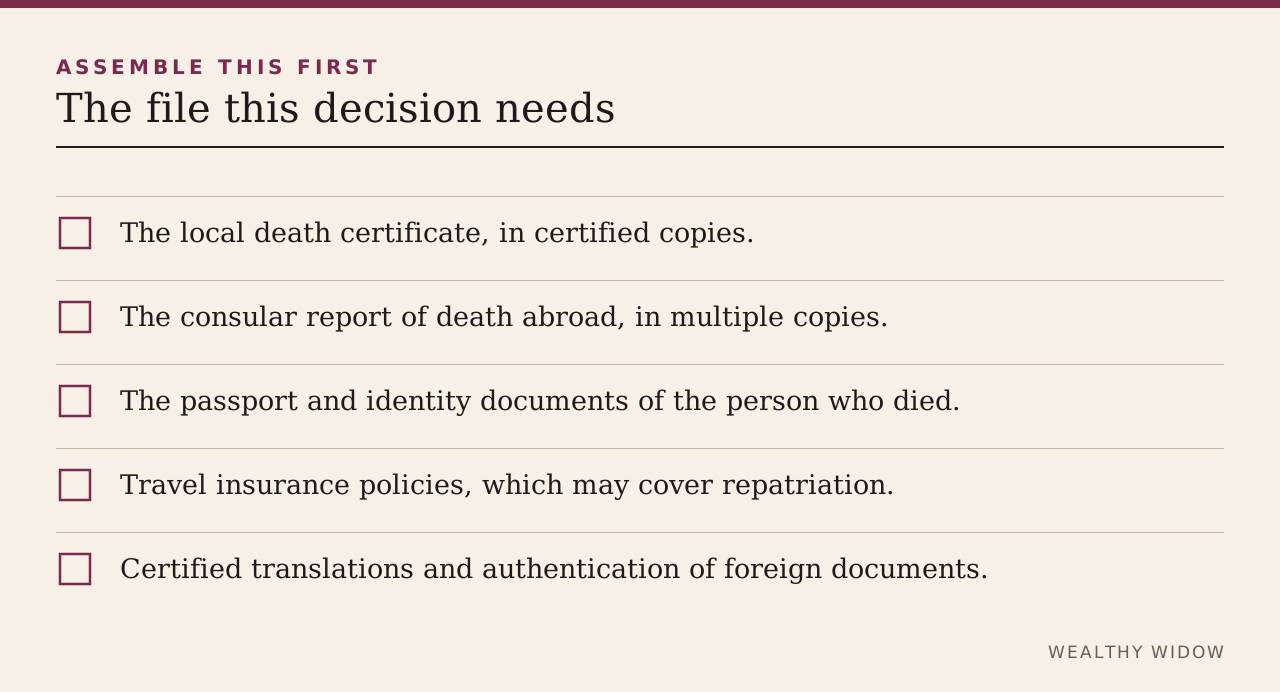
- The local death certificate, in certified copies.
- The consular report of death abroad, in multiple copies.
- The passport and identity documents of the person who died.
- Travel insurance policies, which may cover repatriation.
- Certified translations and authentication of foreign documents.
Put these in writing, then proceed
A conversation is a starting point. These belong on paper.
- How many copies of each document you will need, before leaving the country.
- Whether a local estate procedure applies to assets held there.
- What translation and authentication each home institution requires.
- What travel or other insurance covers in these circumstances.
Before anyone is engaged, ask these
Ask them plainly; the response tells you as much as the answer.
- What documents will institutions at home require, and in what form?
- Is a separate estate procedure needed in this country?
- Does any policy cover repatriation, and what does it require?
- What authentication is needed for these documents to be accepted at home?
Where to verify this
Every load-bearing point above traces to one of the following. Where a figure or deadline matters to you, read it there.
- U.S. Department of State — Estates of deceased U.S. citizens abroad
- U.S. Department of State — Requesting a consular report of death abroad
- USAGov — How to get a certified copy of a death certificate
- USAGov — Dealing with the death of a loved one
What a professional still has to decide
The limits of a guide matter as much as its content, because acting past them is where the cost sits. It cannot address the law of the country where the death occurred, and that law governs both the local certificate and any assets held there.
What good looks like here
Work through the consulate from the first day and over-order documents while you are still in the country. Returning without the right paperwork turns a difficult situation into a much longer one.
A companion guide, Which Professional to Call First, and Which Can Wait, covers the decision that sits alongside this one.
Primary sources
- U.S. Department of State — Estates of deceased U.S. citizens abroad
- U.S. Department of State — Requesting a consular report of death abroad
- USAGov — How to get a certified copy of a death certificate
- USAGov — Dealing with the death of a loved one
This article provides general education, not individualized legal, tax, investment, insurance, or benefits advice. Rules and deadlines change; verify the current requirement with the agency and a qualified professional.