First 90 Days
Which Professional to Call First, and Which Can Wait
Lawyer, accountant, financial planner, benefits counsellor: four different roles, none of which covers the others, and only some of which are urgent.

There is a version of this decision that takes ten minutes and a version that takes a season. Lawyer, accountant, financial planner, benefits counsellor: four different roles, none of which covers the others, and only some of which are urgent. The difference is whether the facts were assembled first.
Survivors are often advised to assemble a team, which is sound but unhelpfully vague. What matters early is which single question is most time-sensitive, because that determines who to call first.
No single adviser covers estate law, tax, benefits, and investments, and the one who says otherwise is selling something.
The question underneath the paperwork
Most of the confusion here clears once a few things are stated plainly. Estate administration, tax, benefits, and investment advice are four distinct disciplines with different qualifications. Some advisers are paid by commission on products sold, and some by fees agreed with you; the difference changes the advice. Free or low-cost help exists for tax preparation, benefits counselling, and legal aid, subject to eligibility.
Registration and disciplinary history for investment professionals is publicly searchable. The urgent question early is almost always a deadline, not an investment decision.
Sequence the work deliberately
Work deliberately, one step at a time, and treat each as complete before the next one starts.
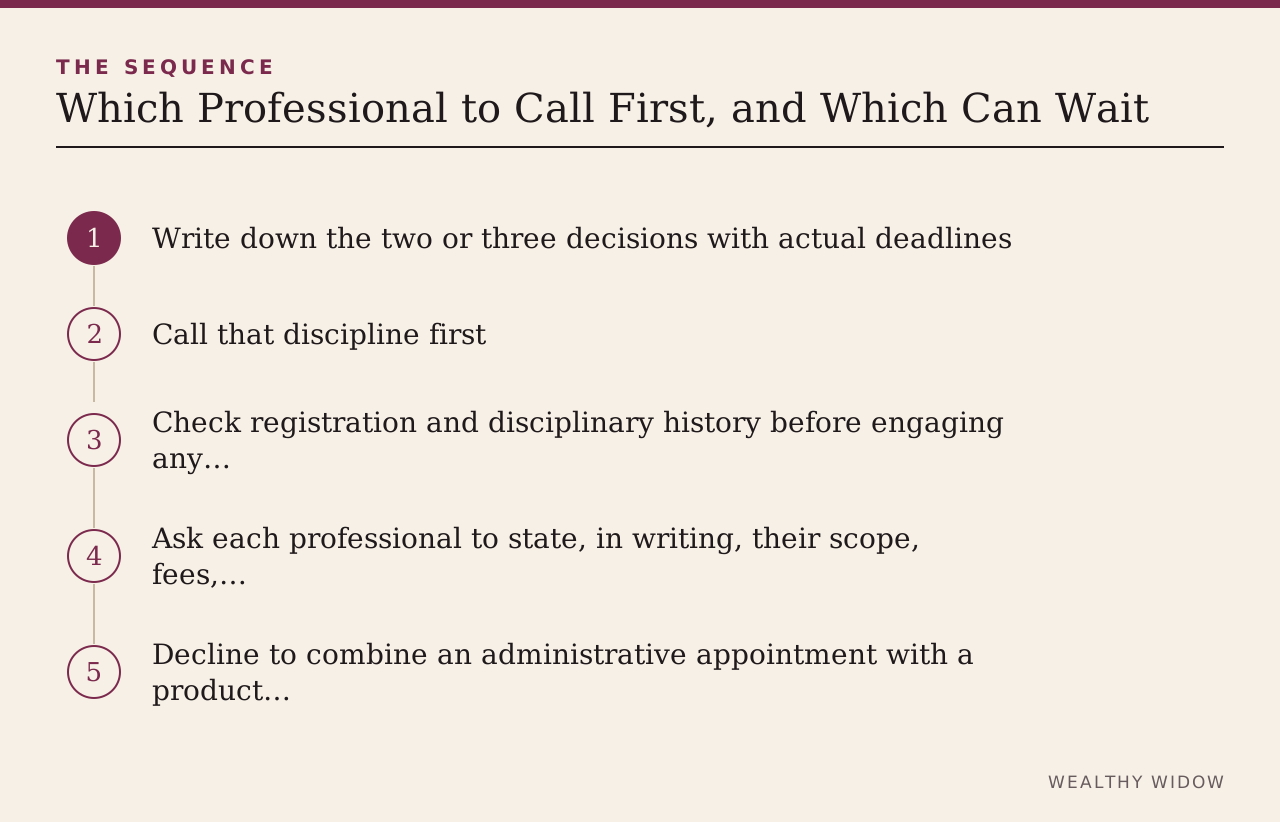
- Write down the two or three decisions with actual deadlines, and identify which discipline each belongs to.
- Call that discipline first, and defer the others explicitly rather than by neglect.
- Check registration and disciplinary history before engaging any investment professional.
- Ask each professional to state, in writing, their scope, fees, conflicts, and what remains your decision.
- Decline to combine an administrative appointment with a product recommendation.
What to refuse, and why
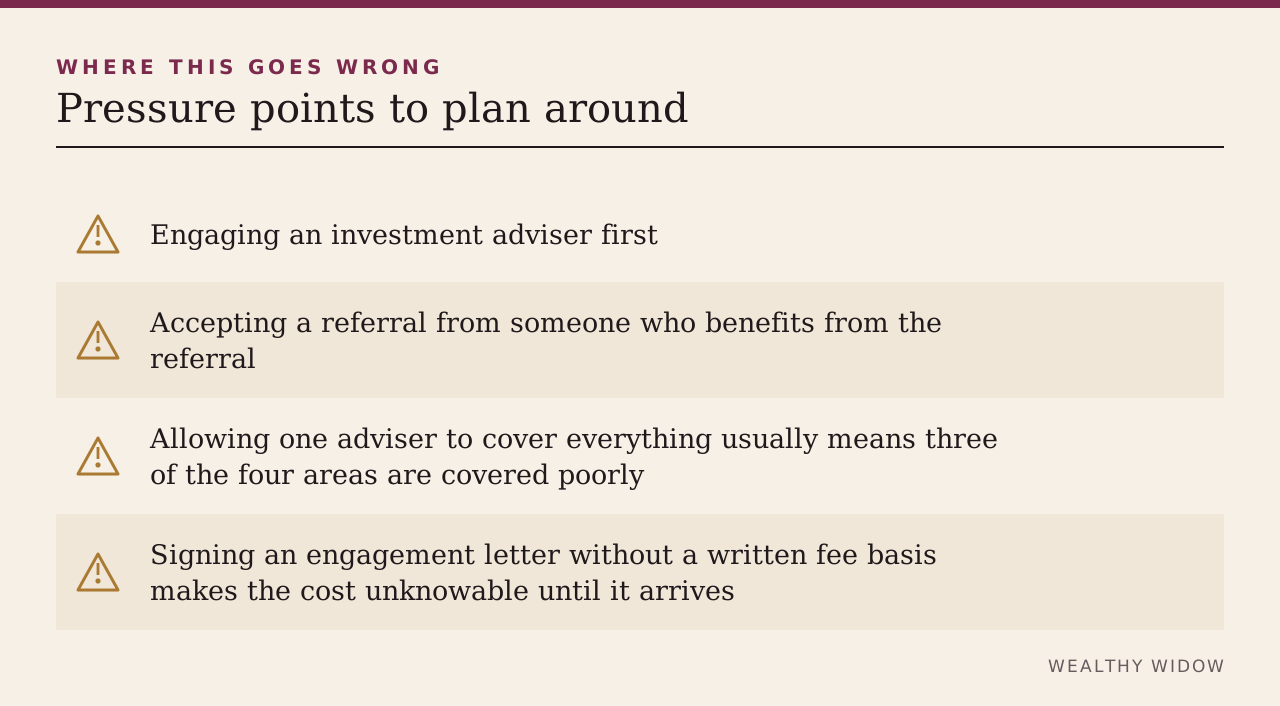
Knowing the failure modes is half of it; the following are the usual ways this goes wrong. Engaging an investment adviser first, before the estate and benefits position is known, invites premature decisions.
Accepting a referral from someone who benefits from the referral, without checking, is a recurring pattern. Allowing one adviser to cover everything usually means three of the four areas are covered poorly. Signing an engagement letter without a written fee basis makes the cost unknowable until it arrives.
Assemble this evidence before you start
A call made without these usually has to be made again.
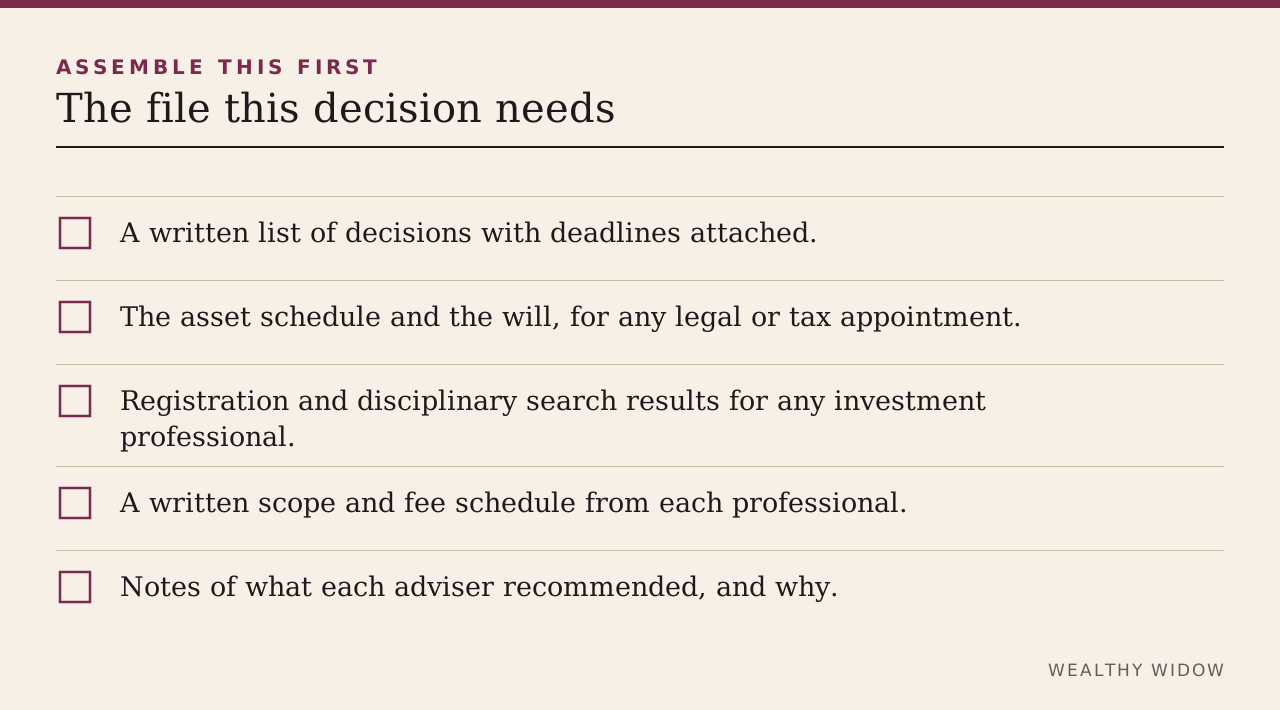
- A written list of decisions with deadlines attached.
- The asset schedule and the will, for any legal or tax appointment.
- Registration and disciplinary search results for any investment professional.
- A written scope and fee schedule from each professional.
- Notes of what each adviser recommended, and why.
Nothing here on a verbal answer
None of the following should rest on a phone call alone, however clear the call felt at the time.
- Each adviser’s scope of engagement, in writing.
- How each adviser is paid, and by whom.
- Any conflicts of interest, disclosed in writing.
- What decisions remain yours rather than theirs.
The questions that change the answer
A competent professional answers each of these without hesitation.
- How are you paid, and does anyone else pay you in connection with my account?
- What is outside your scope, and who should I speak to about it?
- Are you acting in my interest, and is that obligation in writing?
- What is the deadline you are working to, and what happens if it is missed?
Where the current rule lives
Read the source directly for any figure, date, or threshold that will actually drive a decision you make.
- U.S. Securities and Exchange Commission — Check out your investment professional
- U.S. Securities and Exchange Commission — Ask and check
- Legal Services Corporation — I need legal help
- Internal Revenue Service — Topic no. 101, volunteer tax assistance and outreach
What this cannot decide for you
General guidance sets out the shape of a decision. Your documents settle it. It cannot choose an adviser for you. It can only ensure that when you do, the scope, the fee basis, and the conflicts were stated before anyone was engaged.
Before you move on
Start with the deadline, not the discipline. Once you know which decision genuinely cannot wait, the question of who to call answers itself, and the rest can be sequenced calmly.
Read Payments That Arrive After the Death, and Why They May Go Back next; the two decisions interact.
Primary sources
- U.S. Securities and Exchange Commission — Check out your investment professional
- U.S. Securities and Exchange Commission — Ask and check
- Legal Services Corporation — I need legal help
- Internal Revenue Service — Topic no. 101, volunteer tax assistance and outreach
This article provides general education, not individualized legal, tax, investment, insurance, or benefits advice. Rules and deadlines change; verify the current requirement with the agency and a qualified professional.