First 90 Days
A Business Interest: The Asset That Cannot Wait
Where a spouse held a business interest, decisions cannot wait for probate. Employees, customers, and contracts continue whether or not authority is settled.

Institutions will describe this as routine. For you it is not routine, and the stakes are not symmetrical. Where a spouse held a business interest, decisions cannot wait for probate. Employees, customers, and contracts continue whether or not authority is settled.
Most estate administration can proceed slowly without harm. A trading business cannot, because payroll, suppliers, and customers do not pause, and value can erode quickly.
A business is the one estate asset that deteriorates while you wait for permission to deal with it.
First, get the category right
Begin with what can be said with confidence, and treat everything beyond it as still to be established. A business interest may be governed by a partnership deed, shareholder agreement, or operating agreement rather than by the will. Those agreements often contain buy-sell provisions triggered by death, sometimes with short deadlines. Key-person or buy-sell insurance may exist specifically to fund a transfer.
The business may have its own tax filing and payroll obligations that continue immediately. Authority to act for the business may differ from authority over the estate generally.
Take the steps in this order
A workable order follows. Each step assumes the last one is done.
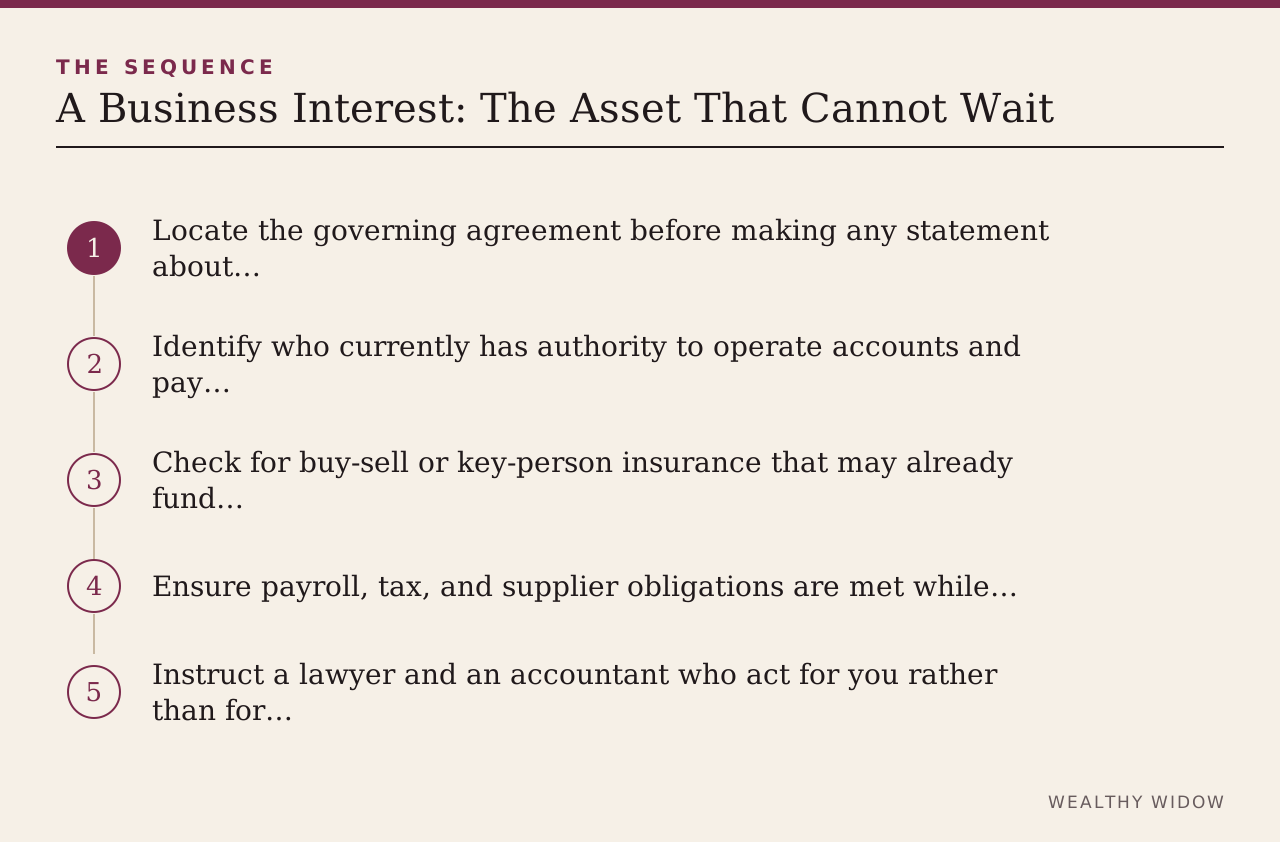
- Locate the governing agreement before making any statement about the future of the business.
- Identify who currently has authority to operate accounts and pay staff, and confirm it in writing.
- Check for buy-sell or key-person insurance that may already fund the outcome the agreement requires.
- Ensure payroll, tax, and supplier obligations are met while authority is established.
- Instruct a lawyer and an accountant who act for you rather than for the business or the other owners.
What to watch for
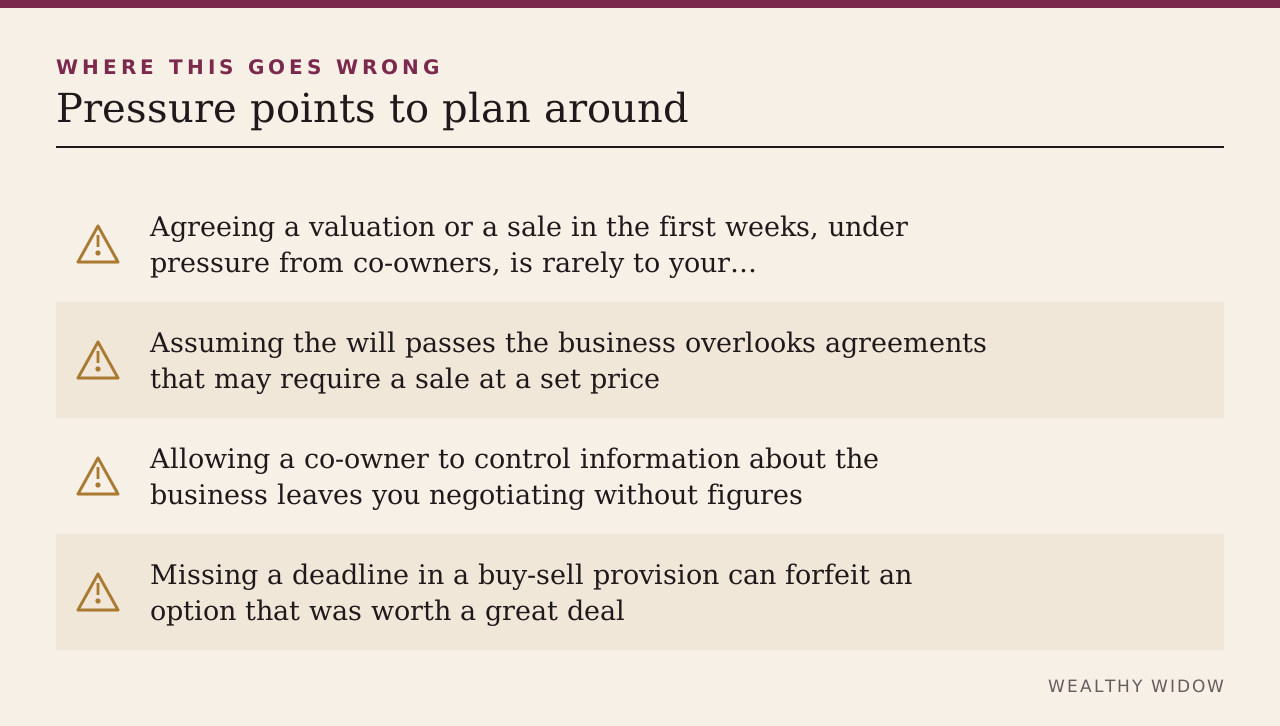
These are the places where readers most often lose ground. Agreeing a valuation or a sale in the first weeks, under pressure from co-owners, is rarely to your advantage.
Assuming the will passes the business overlooks agreements that may require a sale at a set price. Allowing a co-owner to control information about the business leaves you negotiating without figures. Missing a deadline in a buy-sell provision can forfeit an option that was worth a great deal.
Documents this decision needs
Organisations will ask for these repeatedly, so assemble them once and keep them together.
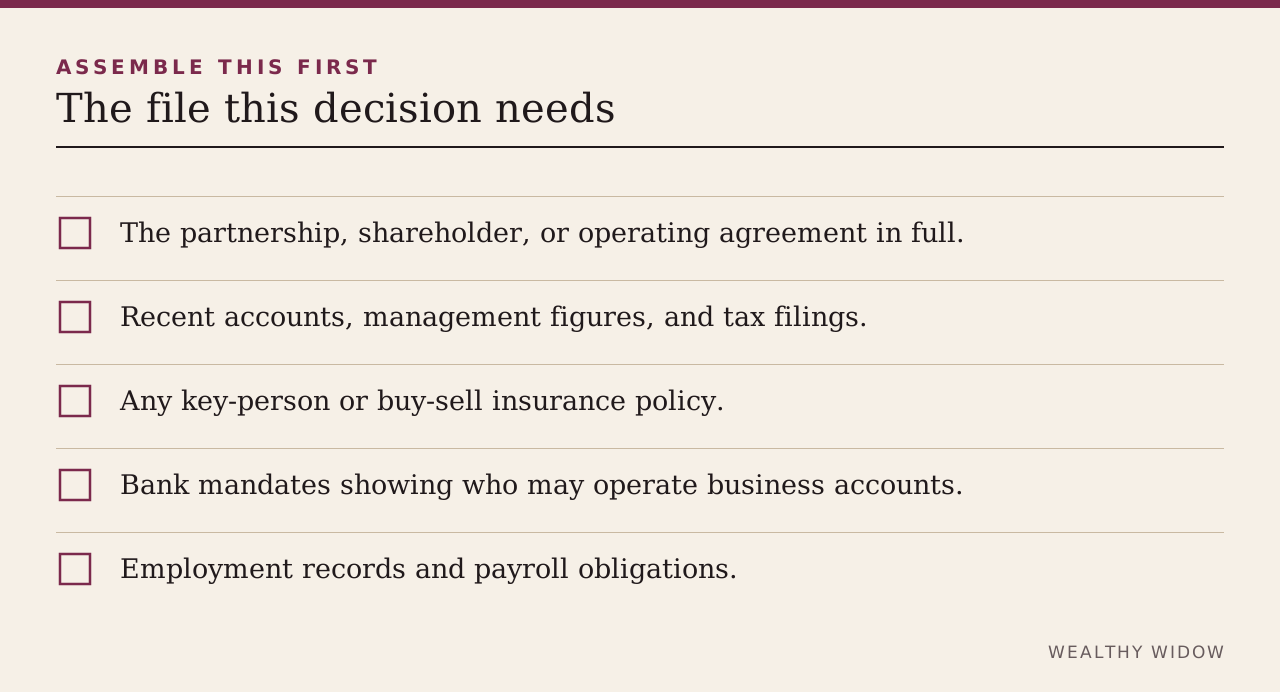
- The partnership, shareholder, or operating agreement in full.
- Recent accounts, management figures, and tax filings.
- Any key-person or buy-sell insurance policy.
- Bank mandates showing who may operate business accounts.
- Employment records and payroll obligations.
Confirm these in writing before you act
Written confirmation is not distrust. It is ordinary governance. Ask for each of these.
- What the governing agreement requires on death, and by when.
- Who currently has authority to operate the business.
- Whether insurance exists to fund a buy-out.
- The immediate tax and payroll obligations, and who is meeting them.
What to put to your adviser
Take these to whoever is advising you, in writing if you can.
- What does the agreement require to happen now, and what is the deadline?
- How is the valuation determined, and can I obtain an independent one?
- What is my authority over the business before the estate is administered?
- Whose interests do you act for in this matter?
Read the rule yourself
The sources below govern. This guide only summarises them.
- Internal Revenue Service — Information for executors
- Internal Revenue Service — File an estate tax income tax return
- Legal Services Corporation — I need legal help
- USAGov — Dealing with the death of a loved one
The limits of this guide
This is where general guidance ends and your own paperwork takes over. It cannot advise on a specific business. Valuation, agreements, and tax interact in ways that need professionals who have read your documents.
What to hold on to
Get the governing agreement in front of a lawyer who acts for you, quickly. Everything else about a business interest, including its value, follows from what that document requires.
A companion guide, A Death Abroad: Two Systems, One Family, covers the decision that sits alongside this one.
Primary sources
- Internal Revenue Service — Information for executors
- Internal Revenue Service — File an estate tax income tax return
- Legal Services Corporation — I need legal help
- USAGov — Dealing with the death of a loved one
This article provides general education, not individualized legal, tax, investment, insurance, or benefits advice. Rules and deadlines change; verify the current requirement with the agency and a qualified professional.