First 90 Days
Some Things Will Be Missed, and Most Are Recoverable
Nobody handles this period without errors, and knowing which mistakes are recoverable makes the rest considerably less frightening.

Widowhood arrives with a queue of decisions that all look equally urgent. Nobody handles this period without errors, and knowing which mistakes are recoverable makes the rest considerably less frightening. They are not the same task, and treating them as one is how good decisions get made badly.
The fear of getting something wrong is itself a source of paralysis. Distinguishing the recoverable from the irreversible is what allows the recoverable to be dealt with calmly.
A small number of decisions are genuinely irreversible, and almost everything else can be corrected later.
First, get the category right
The position is narrower than it looks once it is stated plainly. Unclaimed assets remain claimable, frequently without time limit, through state offices. Missed tax filings can generally be corrected, sometimes with penalty relief. Lost policies can be traced through regulator search services.
Genuinely irreversible decisions are few: selling property, surrendering products, and certain elections. An error identified late is usually cheaper to fix than an irreversible decision made early.
Take the steps in this order
This is the working order most readers find keeps them in control.
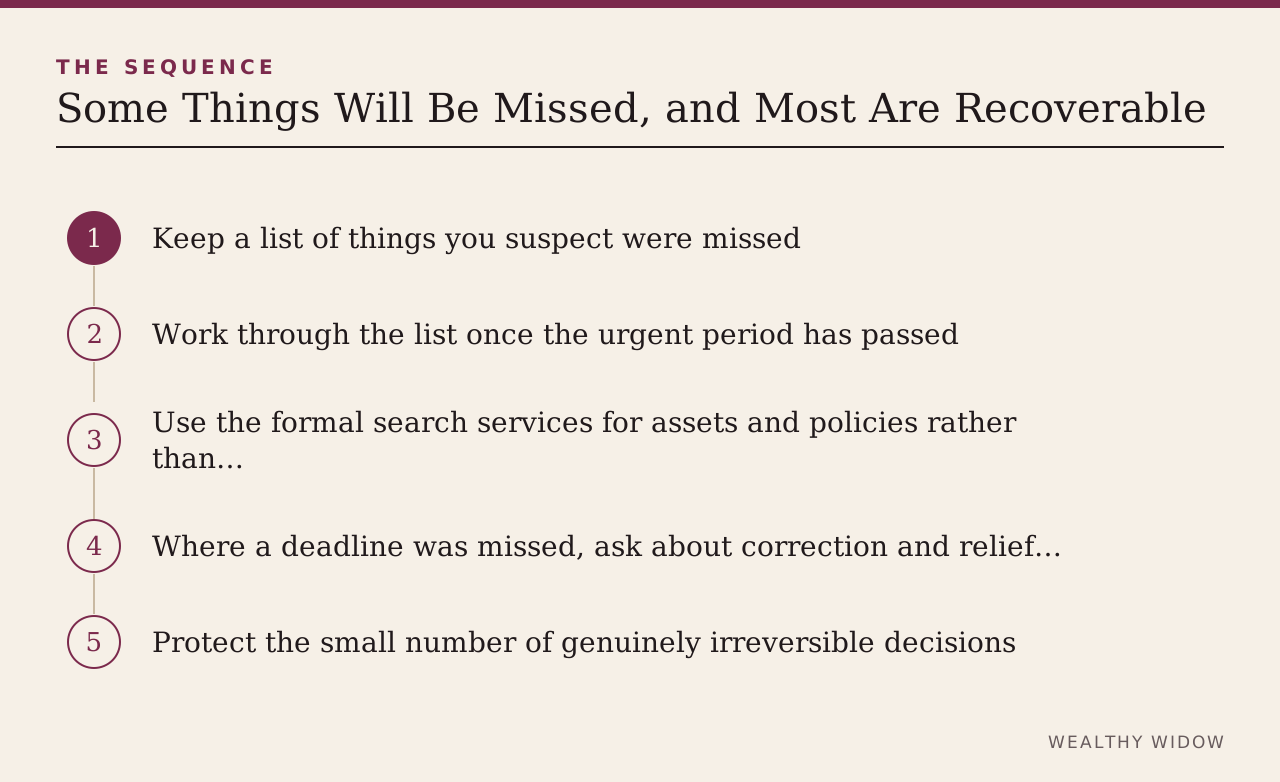
- Keep a list of things you suspect were missed, rather than worrying about them.
- Work through the list once the urgent period has passed.
- Use the formal search services for assets and policies rather than relying on memory.
- Where a deadline was missed, ask about correction and relief promptly.
- Protect the small number of genuinely irreversible decisions, and let the rest wait.
What to watch for
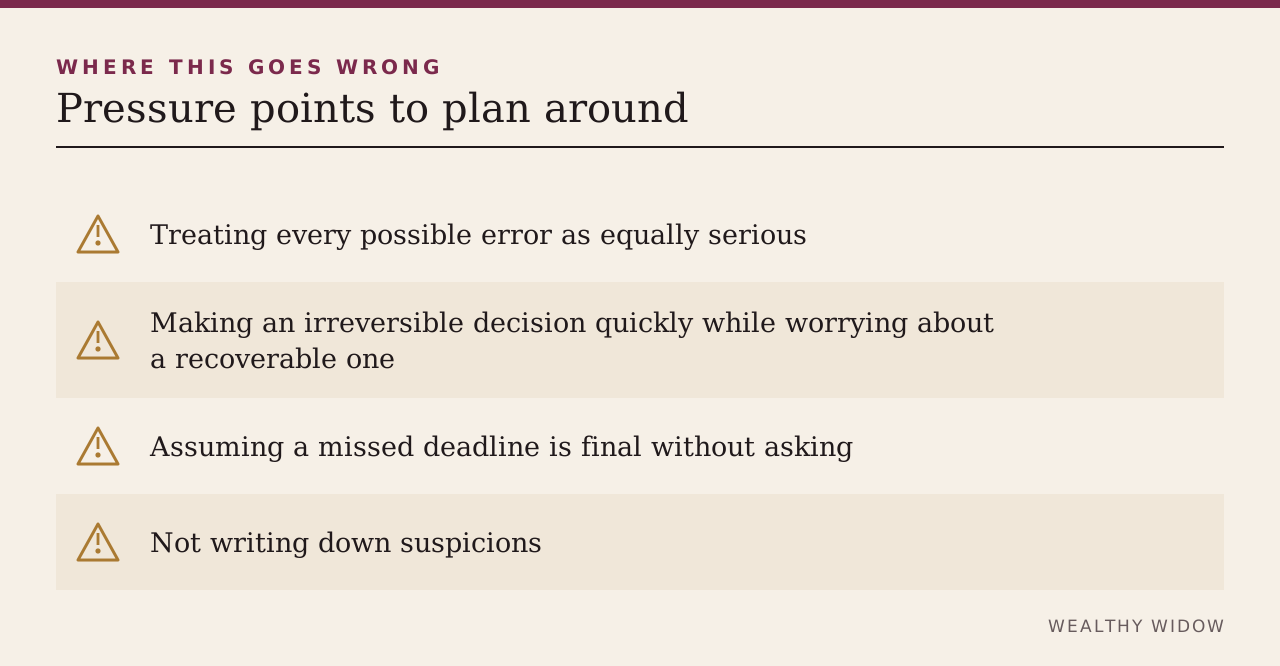
Knowing the failure modes in advance is most of the protection. Treating every possible error as equally serious.
Making an irreversible decision quickly while worrying about a recoverable one. Assuming a missed deadline is final without asking. Not writing down suspicions, which then circulate as anxiety instead.
The paperwork to collect first
Gather these first and the rest of the process moves considerably faster, because most delays are missing paperwork.
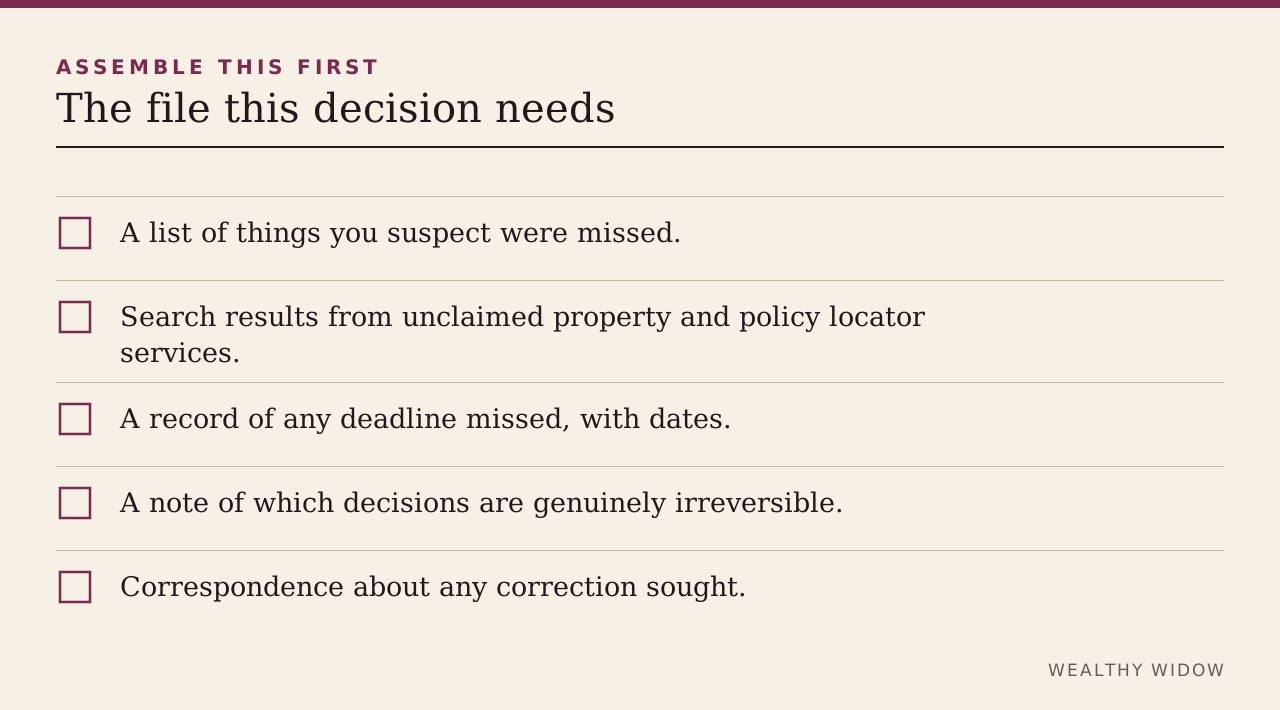
- A list of things you suspect were missed.
- Search results from unclaimed property and policy locator services.
- A record of any deadline missed, with dates.
- A note of which decisions are genuinely irreversible.
- Correspondence about any correction sought.
What to have documented
Put each of these in the file with a date against it.
- Which decisions in your situation are genuinely irreversible.
- Whether any missed deadline can still be corrected.
- That the formal search services have been used.
- That the recoverable items are on a list rather than in your head.
What to ask before you sign
Ask these before an engagement letter is signed or a product is recommended.
- Is this recoverable, and if so how?
- What is genuinely irreversible in my situation?
- Can this missed deadline still be corrected?
- What would you prioritise from this list?
Where the current rule lives
Read the source directly for any figure, date, or threshold that will actually drive a decision you make.
- Taxpayer Advocate Service — An independent organization within the IRS
- National Association of Unclaimed Property Administrators — Search beyond your state
- National Association of Insurance Commissioners — How to use the life insurance policy locator
- Consumer Financial Protection Bureau — Help for surviving spouses
What this cannot decide for you
General guidance sets out the shape of a decision. Your documents settle it. It cannot tell you what you have missed, only that most of it is recoverable and that a list is better than a worry.
Before you move on
Write down what you think was missed, protect the handful of irreversible decisions, and work the list later. Almost everything in this period can be corrected; the exceptions are few and they are knowable.
A companion guide, The Lump-Sum Death Payment: A Small Sum With a Short Window, covers the decision that sits alongside this one.
Primary sources
- Taxpayer Advocate Service — An independent organization within the IRS
- National Association of Unclaimed Property Administrators — Search beyond your state
- National Association of Insurance Commissioners — How to use the life insurance policy locator
- Consumer Financial Protection Bureau — Help for surviving spouses
This article provides general education, not individualized legal, tax, investment, insurance, or benefits advice. Rules and deadlines change; verify the current requirement with the agency and a qualified professional.