Estate
Does This Estate Have to File an Estate Tax Return?
Most estates do not owe federal estate tax, but a return may still be worth filing, and in some cases must be.

The difficulty here is rarely the paperwork. It is knowing what is actually being asked. Most estates do not owe federal estate tax, but a return may still be worth filing, and in some cases must be.
Federal estate tax affects a small minority of estates, which leads many families to assume no filing is needed. There are circumstances where a return should be filed even where no tax is due, and the deadline is not generous.
Owing nothing and needing to file nothing are different questions, and the second one has a deadline.
Separate the label from the decision
The position is narrower than it looks once it is stated plainly. A federal estate tax return is required where the estate exceeds a filing threshold set by statute for the year of death. The threshold changes between years, so the figure applying is the one for the year the person died. A return may be filed voluntarily to make certain elections available, even where no tax is due.
States may impose their own estate or inheritance tax with thresholds far lower than the federal one. Extensions of time to file exist but are not automatic, and an extension to file is not an extension to pay.
A working sequence for this decision
This is the working order most readers find keeps them in control.
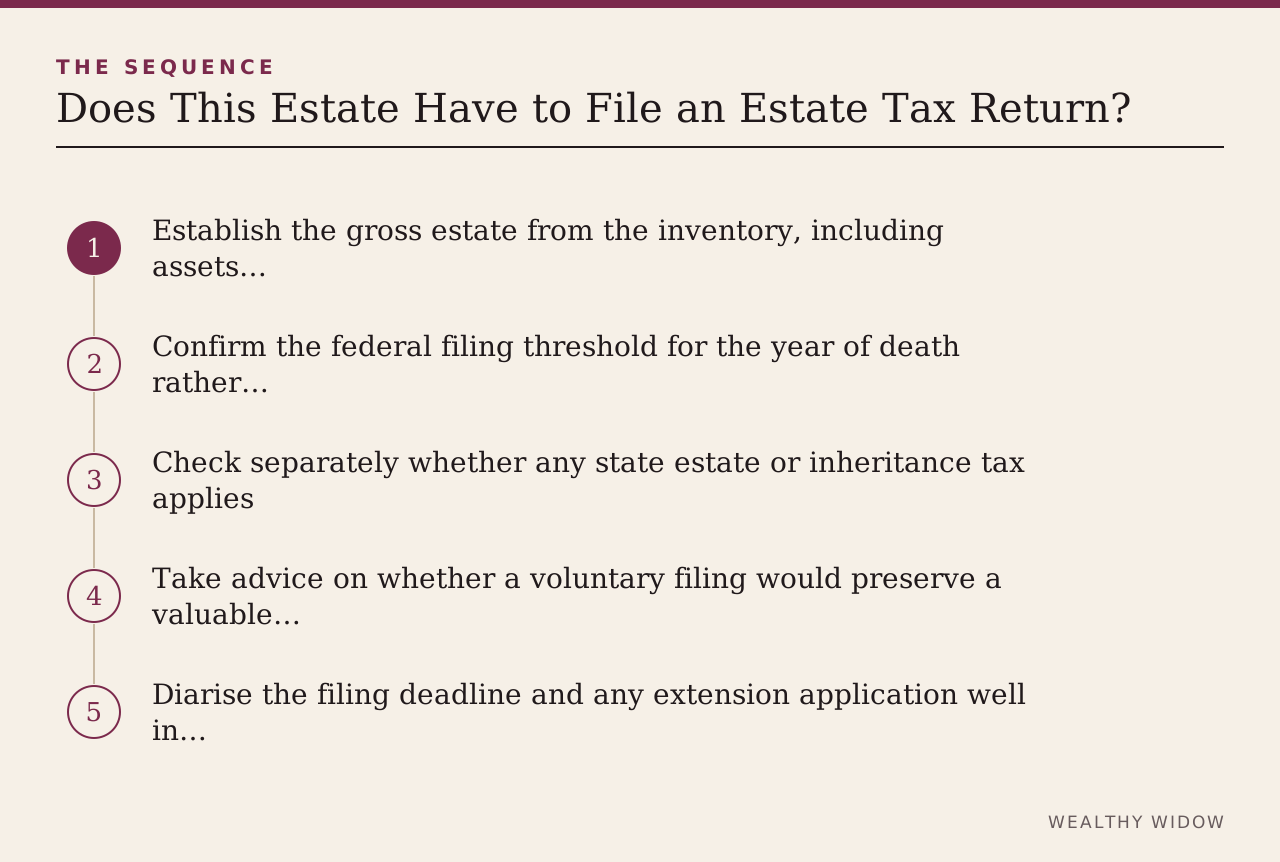
- Establish the gross estate from the inventory, including assets passing outside probate.
- Confirm the federal filing threshold for the year of death rather than the current year.
- Check separately whether any state estate or inheritance tax applies.
- Take advice on whether a voluntary filing would preserve a valuable election.
- Diarise the filing deadline and any extension application well in advance.
The predictable errors
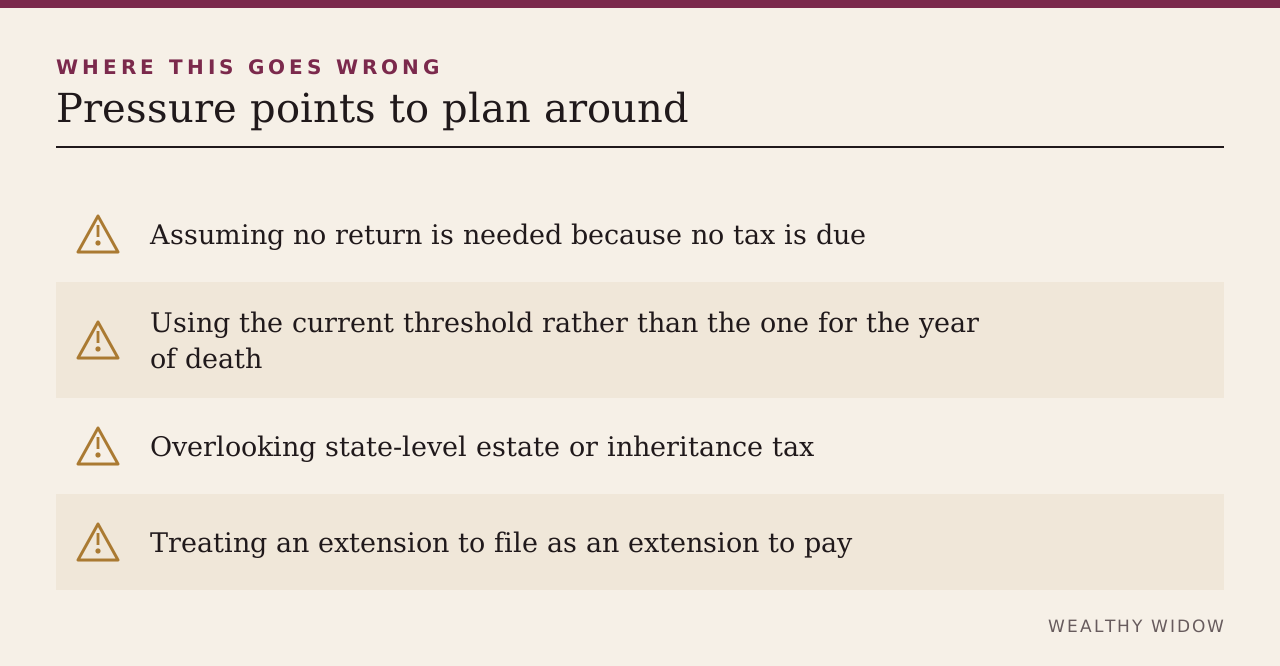
Knowing the failure modes in advance is most of the protection. Assuming no return is needed because no tax is due, and losing an election that required a filing.
Using the current threshold rather than the one for the year of death. Overlooking state-level estate or inheritance tax, which can apply at much lower levels. Treating an extension to file as an extension to pay, which it is not.
The paperwork to collect first
Gather these first and the rest of the process moves considerably faster, because most delays are missing paperwork.
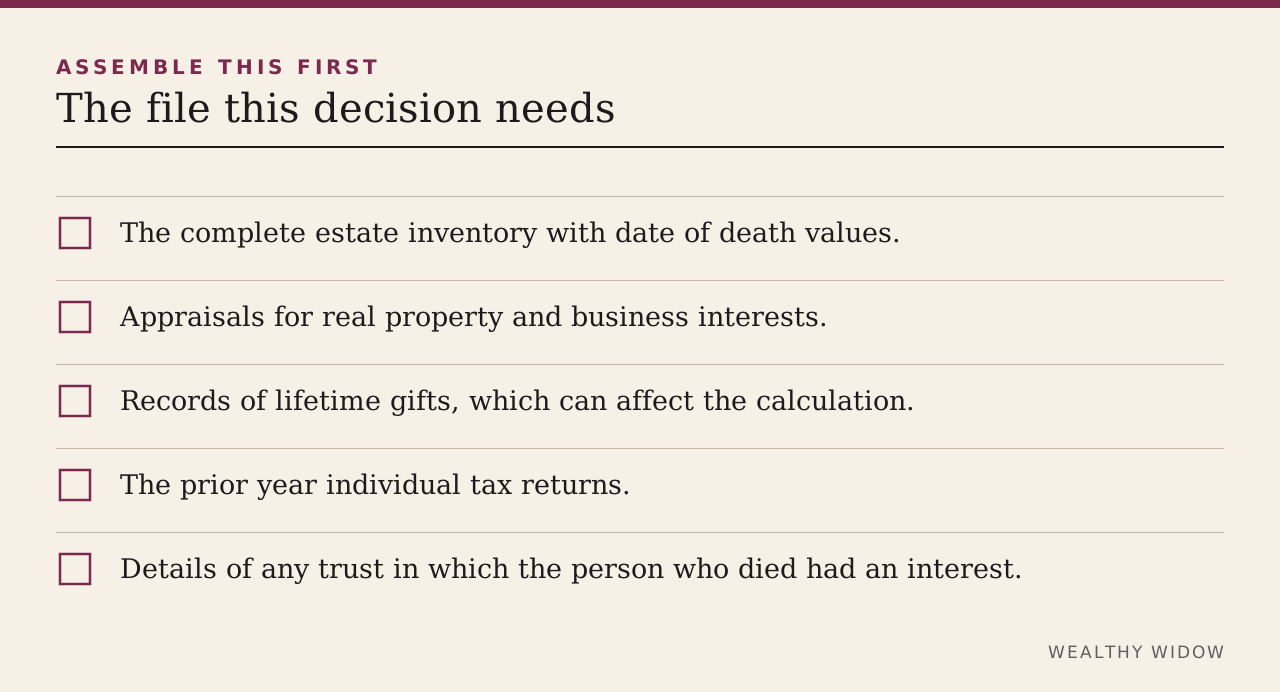
- The complete estate inventory with date of death values.
- Appraisals for real property and business interests.
- Records of lifetime gifts, which can affect the calculation.
- The prior year individual tax returns.
- Details of any trust in which the person who died had an interest.
Do not proceed on a verbal answer
Ask for each of these in a form you can save, date, and produce again months later if it is questioned.
- The federal filing threshold for the year of death.
- Whether any state tax applies, and its threshold.
- The filing deadline and any available extension.
- Whether a voluntary filing would preserve an election worth having.
Put these questions directly
A competent professional will welcome these questions. Hesitation is itself information.
- Is a federal return required, and if not, should one be filed anyway?
- Does any state estate or inheritance tax apply here?
- What elections would a filing preserve, and what are they worth?
- What is the deadline, and what does an extension actually extend?
Read the agency, not this summary
Treat these as the authority and this guide as an index to them.
- Internal Revenue Service — About Form 706, United States estate tax return
- Internal Revenue Service — Filing estate and gift tax returns
- Internal Revenue Service — Forms and publications, estate and gift tax
- Internal Revenue Service — Information for executors
What only your documents can answer
This is where a guide stops being useful and your own paperwork takes over. It cannot state thresholds or rates. Those are set by statute for the year of death, and they must be confirmed at source.
The last word on this
Establish the gross estate, confirm the threshold for the correct year, and check the state position separately. Even where no tax is due, a filing may be worth making, and that decision has a deadline attached.
For the step that usually comes next, read The Election That Can Only Be Made Now.
Primary sources
- Internal Revenue Service — About Form 706, United States estate tax return
- Internal Revenue Service — Filing estate and gift tax returns
- Internal Revenue Service — Forms and publications, estate and gift tax
- Internal Revenue Service — Information for executors
This article provides general education, not individualized legal, tax, investment, insurance, or benefits advice. Rules and deadlines change; verify the current requirement with the agency and a qualified professional.