Taxes
A Bill You Cannot Pay: The Options That Exist
Where a tax liability exceeds available cash, arrangements exist. Ignoring the bill is the one approach that reliably makes it worse.

This guide covers a decision that is easy to make quickly and expensive to make wrongly. Where a tax liability exceeds available cash, arrangements exist. Ignoring the bill is the one approach that reliably makes it worse.
A liability can arise from an estate distribution, a retirement withdrawal, or simply a changed filing status, and cash may be tied up in assets. Structured options exist and are routinely used.
Filing on time and paying late is a substantially better position than not filing at all.
The decision behind the form
Start with what is actually true of this decision. Filing and paying carry separate consequences, and failing to file is generally treated more seriously. Payment plans and installment agreements are available and can be applied for online in many cases. Interest and penalties may continue to accrue under an arrangement, so it is not cost free.
Certain fees may be waived or reimbursed for lower-income taxpayers entering an agreement. Where hardship exists or normal channels have failed, an independent advocate service can assist.
Step by step, in this order
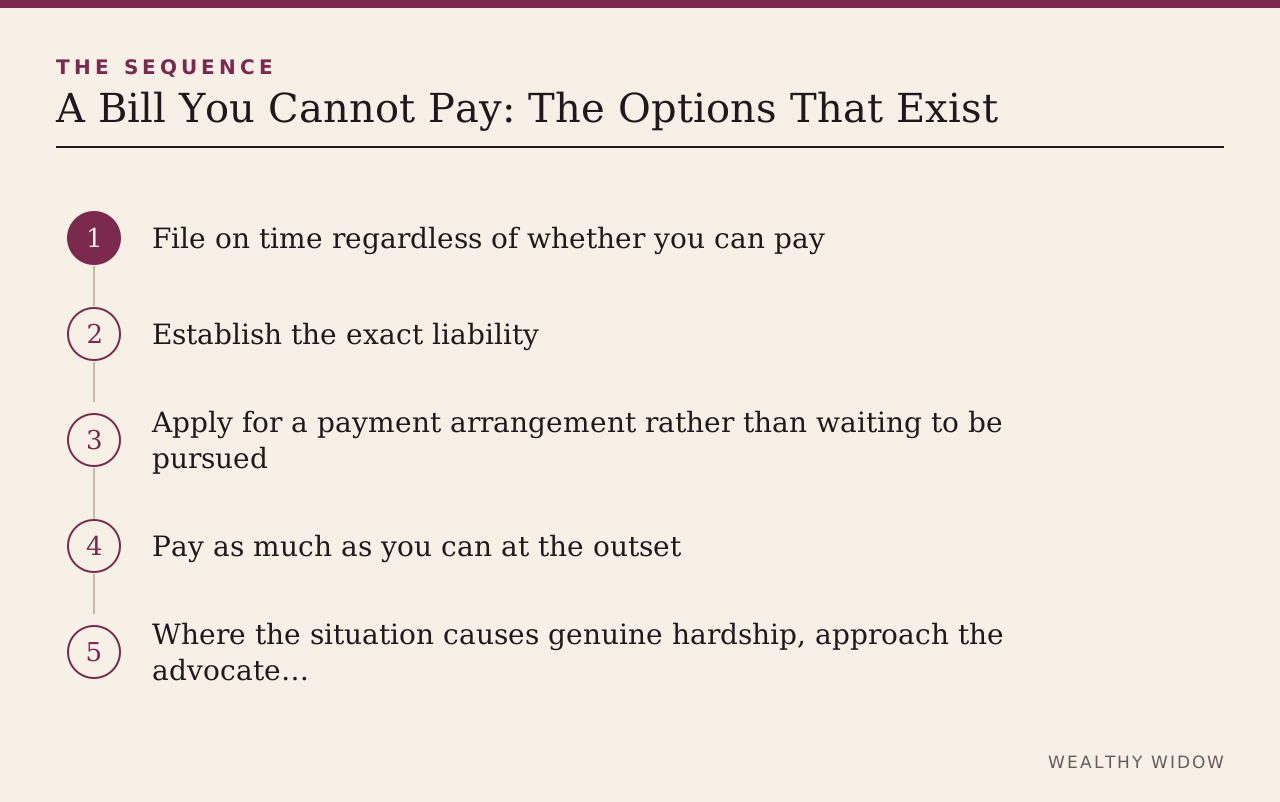
The sequence below is the one that keeps you in control of the pace.
- File on time regardless of whether you can pay.
- Establish the exact liability, and check it rather than assuming the assessment is correct.
- Apply for a payment arrangement rather than waiting to be pursued.
- Pay as much as you can at the outset, since interest runs on the balance.
- Where the situation causes genuine hardship, approach the advocate service.
The costly misreadings
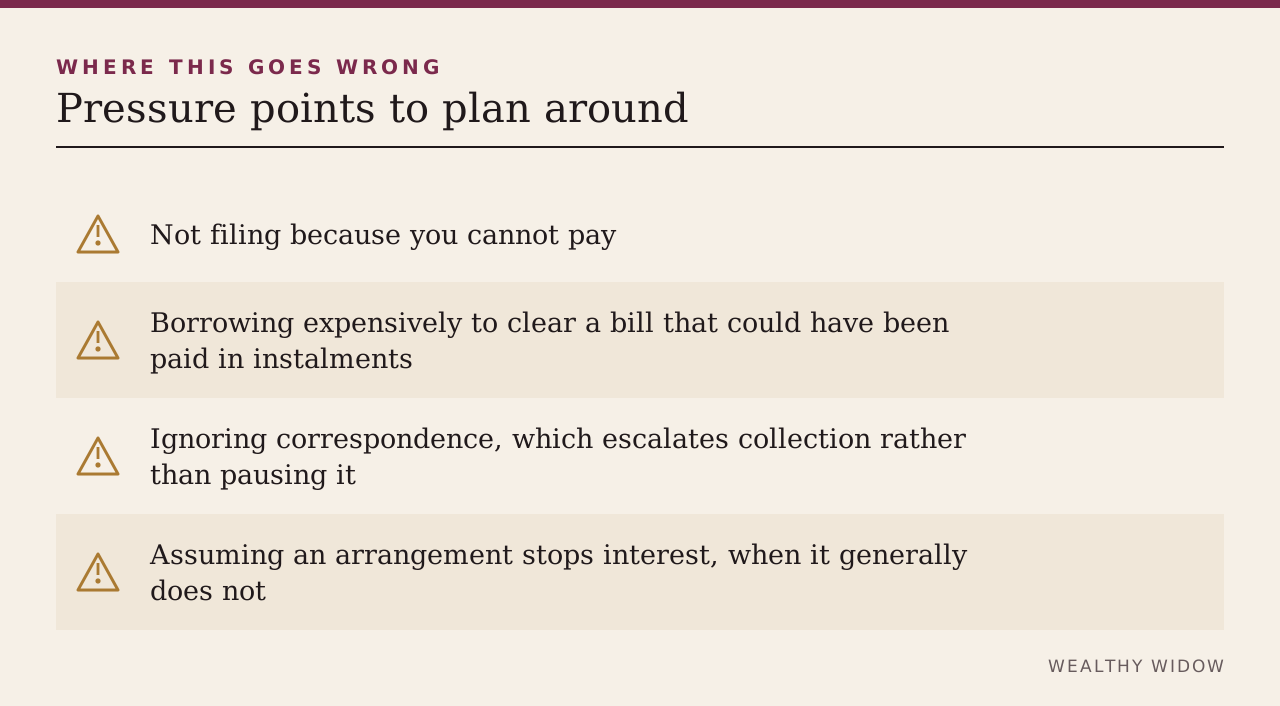
These recur often enough across households to be planned around rather than discovered one at a time. Not filing because you cannot pay, which adds a separate and larger consequence.
Borrowing expensively to clear a bill that could have been paid in instalments. Ignoring correspondence, which escalates collection rather than pausing it. Assuming an arrangement stops interest, when it generally does not.
Before the first call, collect these
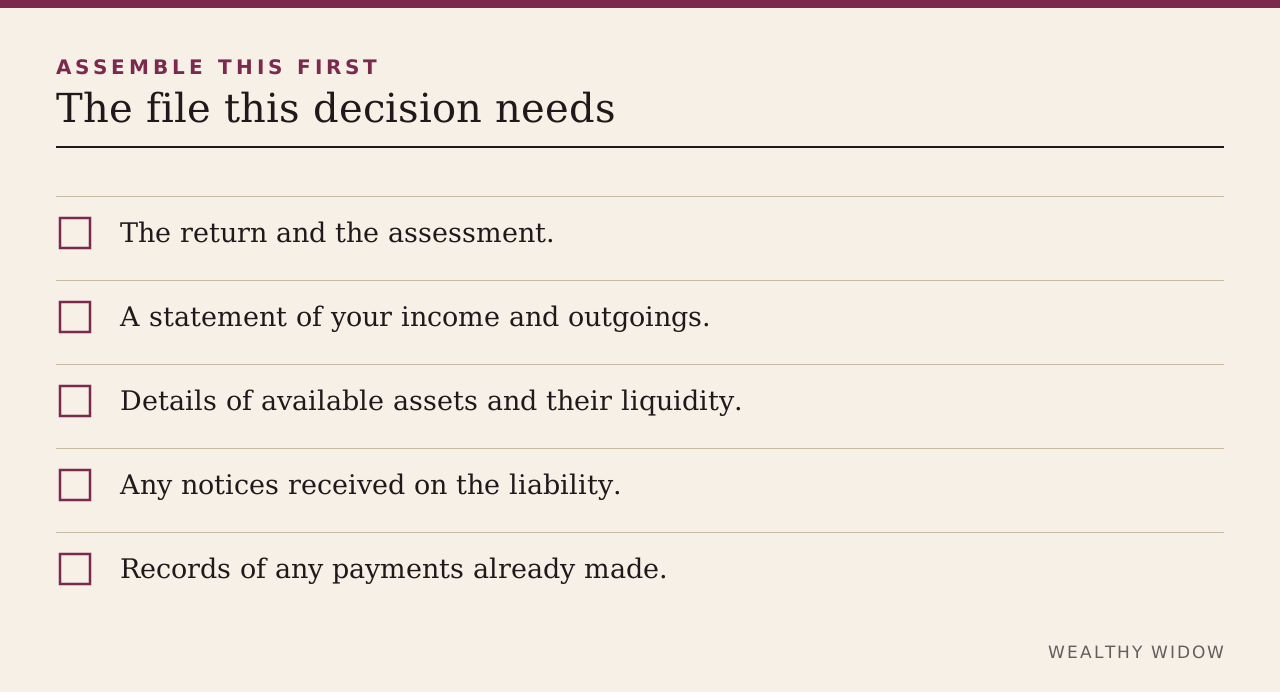
Gather these first. A call made without them usually has to be made again.
- The return and the assessment.
- A statement of your income and outgoings.
- Details of available assets and their liquidity.
- Any notices received on the liability.
- Records of any payments already made.
Do not proceed on a verbal answer
Ask for each of these in a form you can save, date, and produce again months later if it is questioned.
- The exact liability, checked rather than assumed.
- The arrangements available to you.
- What interest and penalties continue to accrue.
- Any fee waiver available in your circumstances.
Put these questions directly
A competent professional will welcome these questions. Hesitation is itself information.
- Is this assessment correct, and what would it take to challenge it?
- What payment arrangements am I eligible for?
- What continues to accrue under an arrangement?
- Does my situation qualify for advocate service assistance?
Check it at source
These are the pages that change when the rules change, which is why they and not this guide are the authority.
- Internal Revenue Service — Payment plans and installment agreements
- Taxpayer Advocate Service — An independent organization within the IRS
- Internal Revenue Service — Who may use the Taxpayer Advocate Service
- Internal Revenue Service — Estimated taxes
What still needs a professional
Be clear about what remains outside anything written for a general readership. It cannot negotiate on your behalf or state current interest and penalty rates, which change and should be confirmed at source.
The working conclusion
File on time, check the figure, and apply for an arrangement early. Every option available improves the moment you engage with the liability rather than waiting for it to find you.
Read Which Tax Records to Keep, and For How Long next; the two decisions interact.
Primary sources
- Internal Revenue Service — Payment plans and installment agreements
- Taxpayer Advocate Service — An independent organization within the IRS
- Internal Revenue Service — Who may use the Taxpayer Advocate Service
- Internal Revenue Service — Estimated taxes
This article provides general education, not individualized legal, tax, investment, insurance, or benefits advice. Rules and deadlines change; verify the current requirement with the agency and a qualified professional.