Estate
No Will: The State Has Already Written One
Dying without a will does not mean the estate is undirected. State intestacy rules apply, and they may not match what the family expected.

This guide covers a decision that is easy to make quickly and expensive to make wrongly. Dying without a will does not mean the estate is undirected. State intestacy rules apply, and they may not match what the family expected.
Families often assume that without a will the surviving spouse simply inherits everything. In many states that is not the outcome, particularly where there are children from an earlier relationship.
Intestacy is not an absence of rules. It is a set of rules chosen by the legislature rather than by the person who died.
What is actually on the table
Begin with what can be said with confidence, and treat everything beyond it as still to be established. Each state sets an order of inheritance that applies where there is no valid will. A surviving spouse does not always inherit the entire estate; children and other relatives may share. The rules can differ where children are from a previous relationship.
Assets passing by designation, survivorship, or trust are unaffected by intestacy. The court appoints an administrator, and the order of priority for that role is also set by statute.
The path through this
A workable order follows. Each step assumes the last one is done.
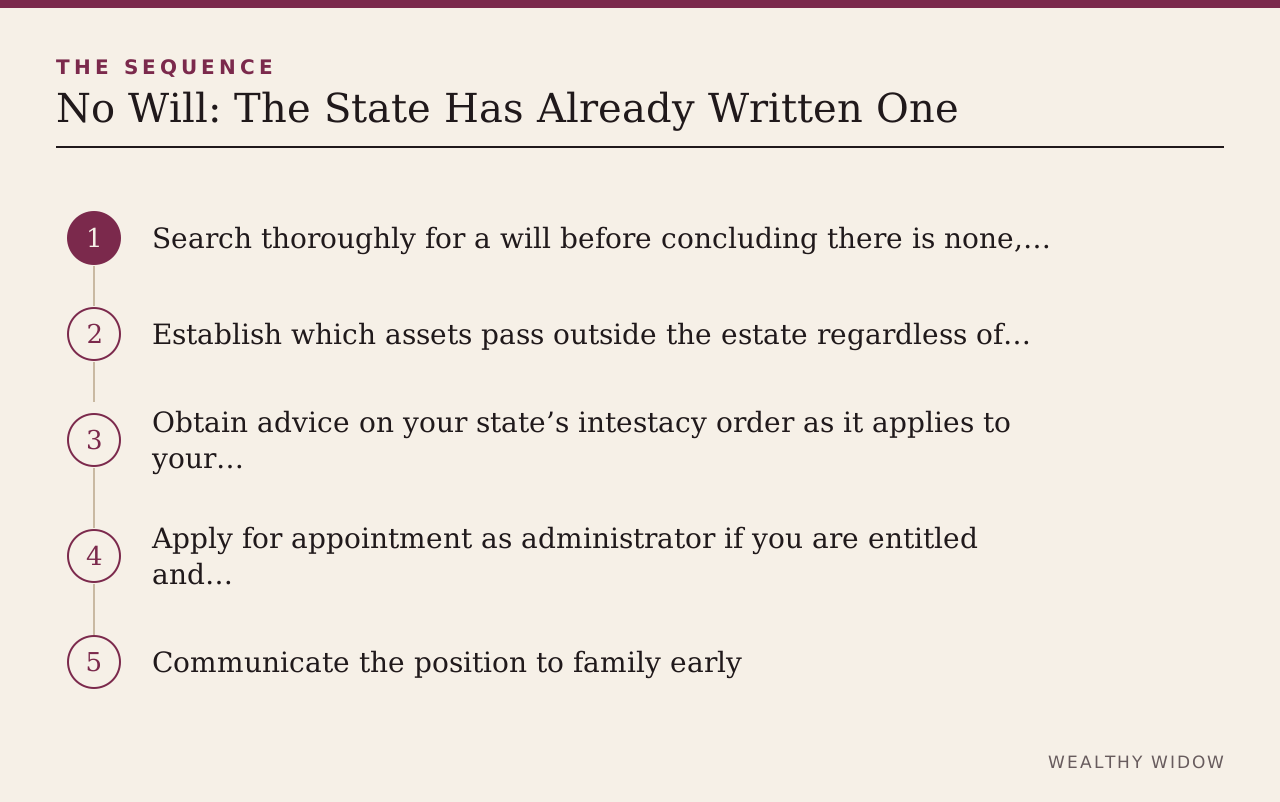
- Search thoroughly for a will before concluding there is none, including with lawyers and in safe deposit boxes.
- Establish which assets pass outside the estate regardless of intestacy.
- Obtain advice on your state’s intestacy order as it applies to your family.
- Apply for appointment as administrator if you are entitled and willing.
- Communicate the position to family early, since expectations and rules frequently differ.
What tends to catch people out
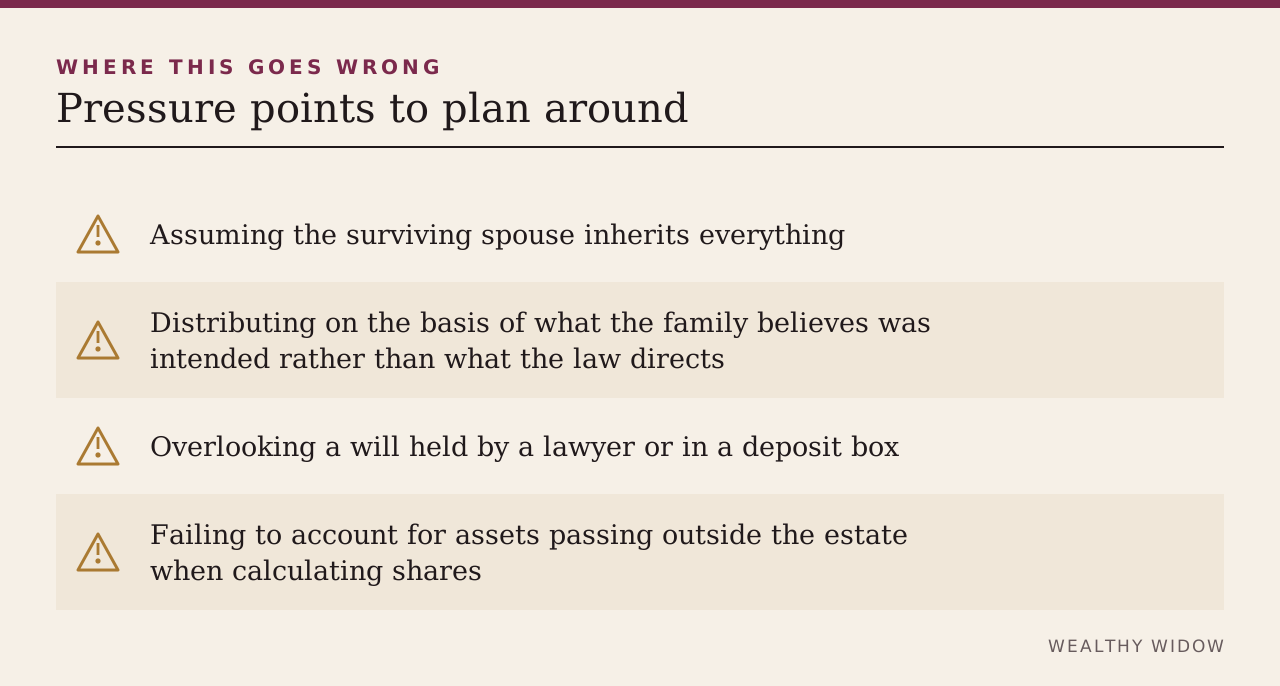
These are the places where readers most often lose ground. Assuming the surviving spouse inherits everything, which is not the rule in every state.
Distributing on the basis of what the family believes was intended rather than what the law directs. Overlooking a will held by a lawyer or in a deposit box, and administering as if intestate. Failing to account for assets passing outside the estate when calculating shares.
Documents this decision needs
Organisations will ask for these repeatedly, so assemble them once and keep them together.
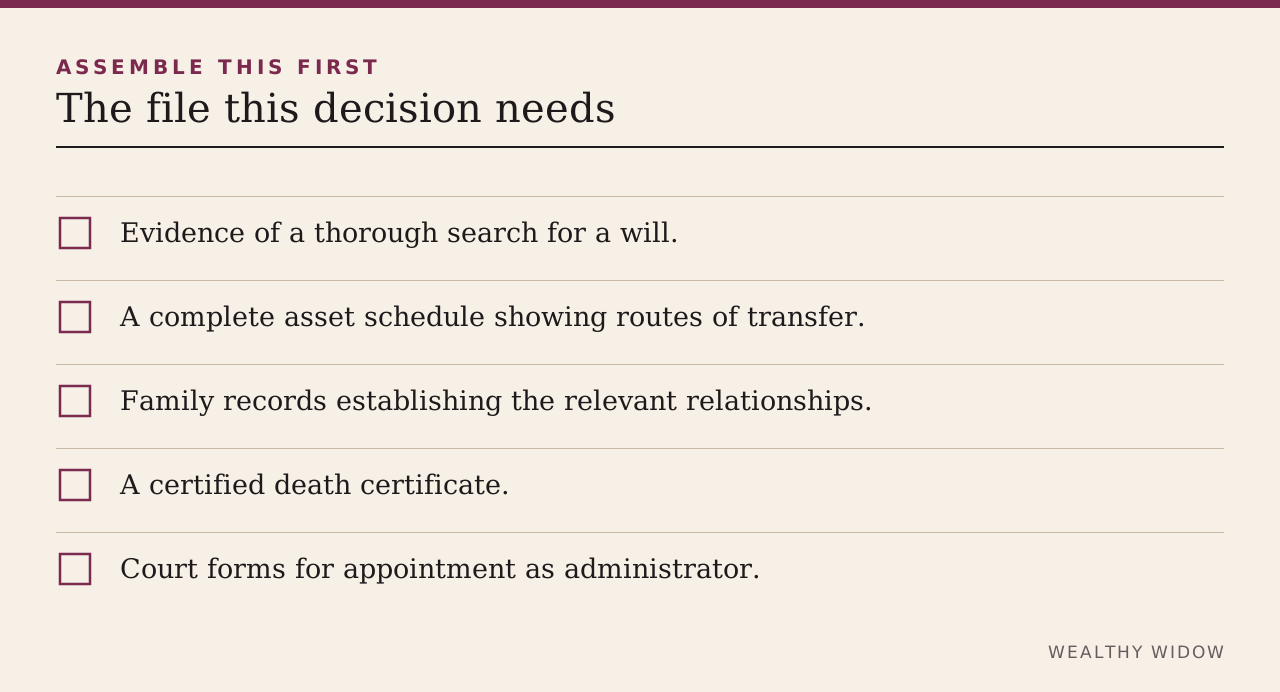
- Evidence of a thorough search for a will.
- A complete asset schedule showing routes of transfer.
- Family records establishing the relevant relationships.
- A certified death certificate.
- Court forms for appointment as administrator.
The written record you should hold
Hold written confirmation of each of these points before you rely on any of them to make a decision.
- That no will exists, after a documented search.
- Your state’s intestacy order as applied to this family.
- Which assets pass outside the estate.
- Who has priority to be appointed administrator.
What a good adviser will answer plainly
Whoever advises you should be able to answer each of these plainly and in writing.
- What does intestacy produce in this state for this family?
- Who has priority to be appointed as administrator?
- Which assets are unaffected by the intestacy rules?
- What happens if a will is found after the administration has started?
The primary sources for this guide
This guide summarises. The sources below govern, and they are updated when the rules are.
- Legal Services Corporation — I need legal help
- American Bar Association — Find legal help
- Internal Revenue Service — Information for executors
- USAGov — Dealing with the death of a loved one
What this leaves open
A guide can set out the structure of a decision. It cannot read your documents, and your documents govern. It cannot state your state’s intestacy order, which is statutory, varies substantially, and turns on the exact family structure.
The part worth remembering
Search properly for a will, then get advice on what your state actually directs. The gap between what a family assumes and what intestacy produces is frequently large, and it is better discovered early.
For the step that usually comes next, read Becoming Trustee: Duties That Are Higher Than You Expect.
Primary sources
- Legal Services Corporation — I need legal help
- American Bar Association — Find legal help
- Internal Revenue Service — Information for executors
- USAGov — Dealing with the death of a loved one
This article provides general education, not individualized legal, tax, investment, insurance, or benefits advice. Rules and deadlines change; verify the current requirement with the agency and a qualified professional.