Money
When Adult Children Disagree With How You Handle Money
Concern and control look similar from the outside, and telling them apart matters for both your finances and the relationship.

There is a version of this decision that takes ten minutes and a version that takes a season. Concern and control look similar from the outside, and telling them apart matters for both your finances and the relationship. The difference is whether the facts were assembled first.
Adult children frequently become more involved after a death, usually from genuine concern. The line between support and control is worth naming explicitly, in both directions.
Your money remains yours, and being widowed does not transfer decision-making to the next generation.
Getting the question right first
The position is narrower than it looks once it is stated plainly. Financial decisions remain yours regardless of family opinion or involvement. Financial exploitation of older people is most often committed by family members. A trusted contact designation provides oversight without transferring authority.
Adding a family member to an account has ownership and tax consequences. Disagreement about a decision is not evidence that either party is acting badly.
Where to start, and what follows
This is the working order most readers find keeps them in control.
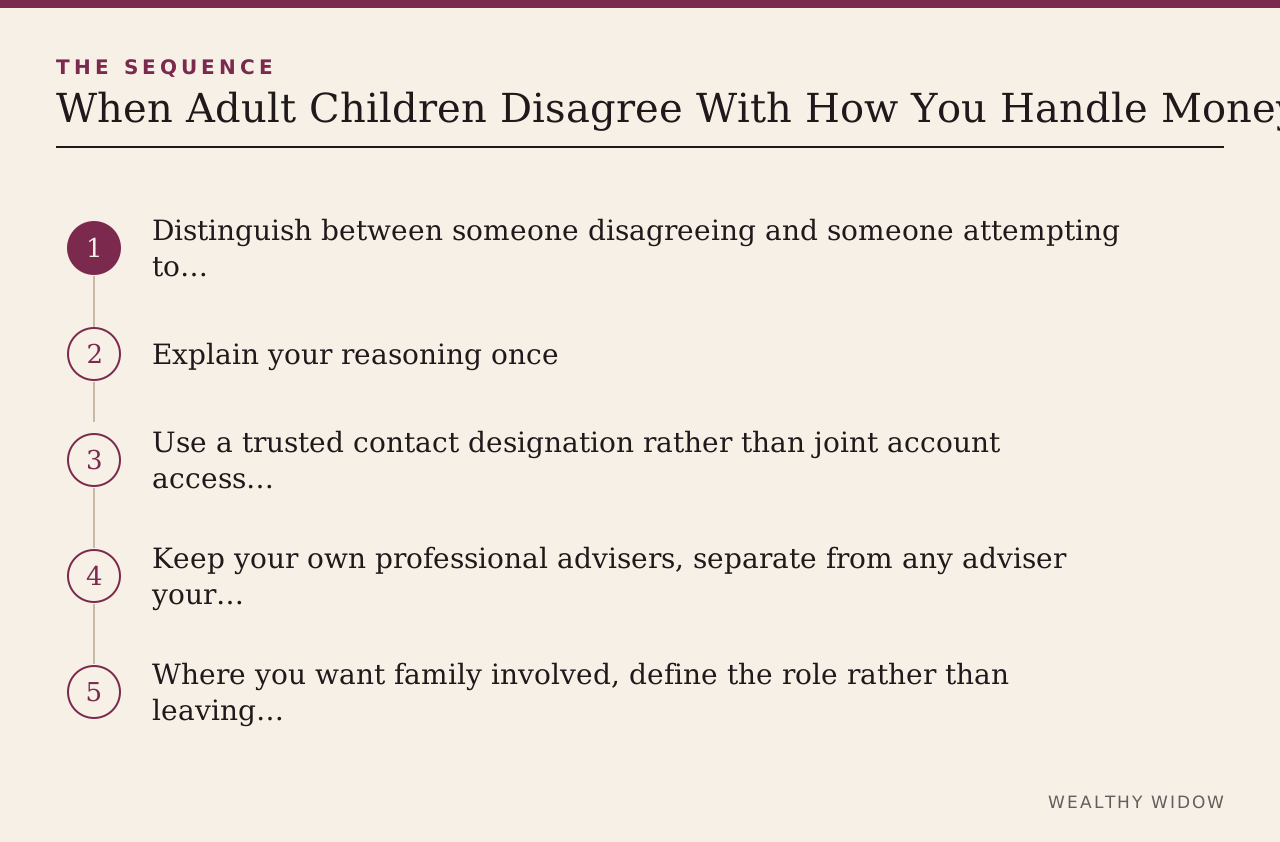
- Distinguish between someone disagreeing and someone attempting to decide.
- Explain your reasoning once, then stop justifying it.
- Use a trusted contact designation rather than joint account access where oversight is wanted.
- Keep your own professional advisers, separate from any adviser your children use.
- Where you want family involved, define the role rather than leaving it open.
Where this commonly goes wrong
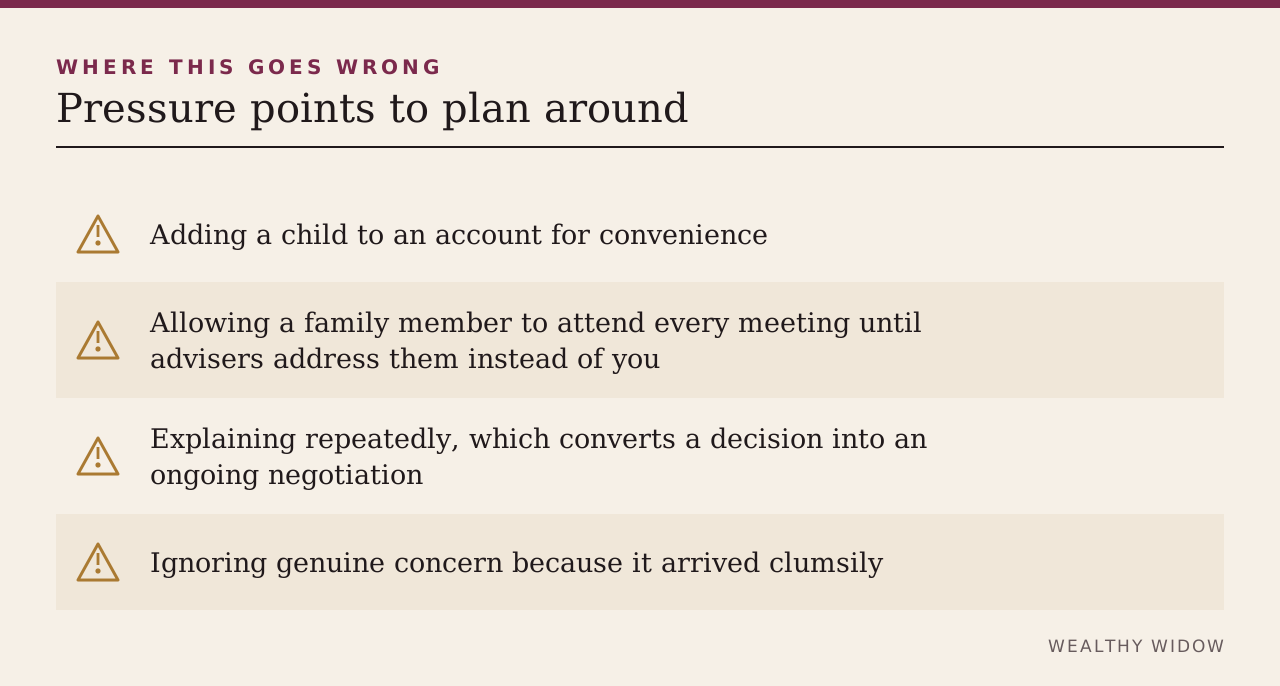
Knowing the failure modes in advance is most of the protection. Adding a child to an account for convenience, which changes ownership.
Allowing a family member to attend every meeting until advisers address them instead of you. Explaining repeatedly, which converts a decision into an ongoing negotiation. Ignoring genuine concern because it arrived clumsily.
The paperwork to collect first
Gather these first and the rest of the process moves considerably faster, because most delays are missing paperwork.
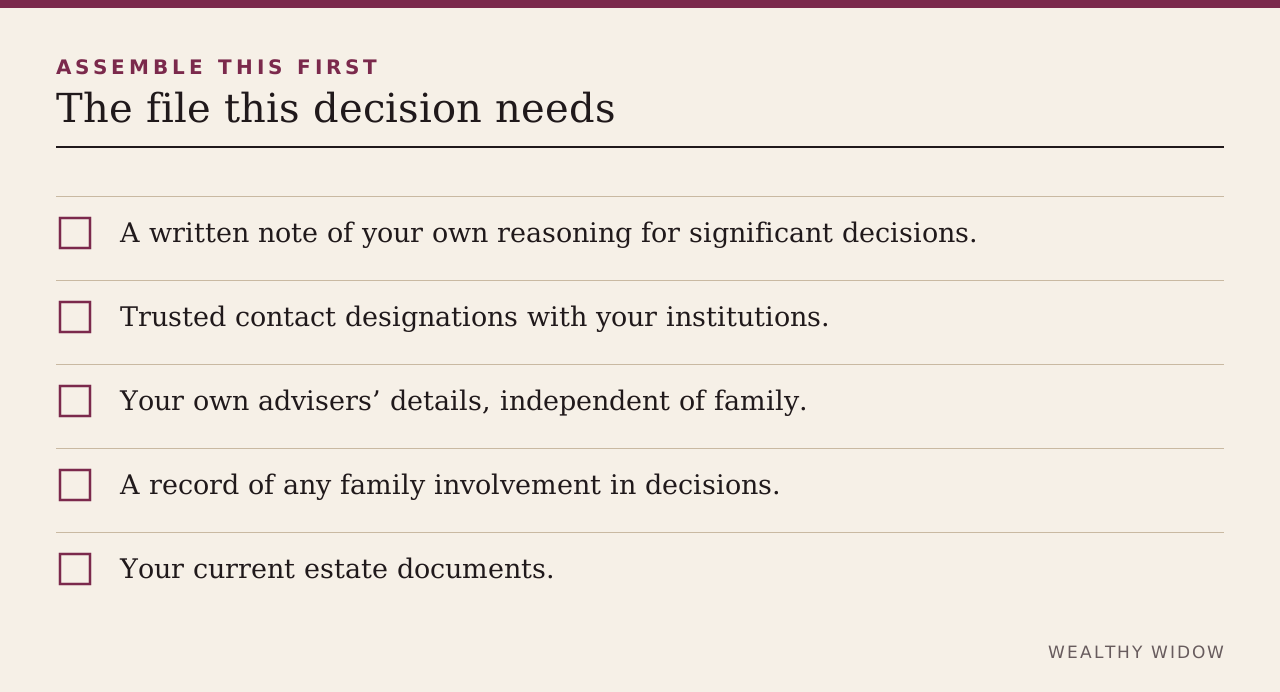
- A written note of your own reasoning for significant decisions.
- Trusted contact designations with your institutions.
- Your own advisers’ details, independent of family.
- A record of any family involvement in decisions.
- Your current estate documents.
The record to build as you go
A verbal answer is a starting point, not a record. Get each of these documented.
- What a trusted contact designation actually permits.
- The consequence of adding anyone to an account.
- That your advisers act for you alone.
- That your reasoning is recorded, whether or not it is shared.
Ask these before anyone is paid
Vagueness on any of these is itself an answer, and it is worth treating as one.
- What does a trusted contact designation allow and prevent?
- What changes if I add someone to this account?
- Whose instructions do you take on this account?
- What would you do if someone else contacted you about my affairs?
Where the current rule lives
Read the source directly for any figure, date, or threshold that will actually drive a decision you make.
- Consumer Financial Protection Bureau — Taking control of your finances, help for surviving spouses
- Consumer Financial Protection Bureau — Help for surviving spouses
- U.S. Securities and Exchange Commission — Ask and check
- Legal Services Corporation — I need legal help
What this cannot decide for you
General guidance sets out the shape of a decision. Your documents settle it. It cannot adjudicate a family disagreement, and where genuine capacity concerns exist those need professional rather than family assessment.
Before you move on
Explain once, use a trusted contact rather than joint access, and keep your own advisers. Concern deserves acknowledgement; it does not transfer the decision.
If this raised a further question, The Strongest Financial Move in Year One Is Usually Restraint takes it further.
Primary sources
- Consumer Financial Protection Bureau — Taking control of your finances, help for surviving spouses
- Consumer Financial Protection Bureau — Help for surviving spouses
- U.S. Securities and Exchange Commission — Ask and check
- Legal Services Corporation — I need legal help
This article provides general education, not individualized legal, tax, investment, insurance, or benefits advice. Rules and deadlines change; verify the current requirement with the agency and a qualified professional.