Estate
Something Turns Up After the Estate Is Closed
A forgotten account, an unclaimed policy, or a refund can surface years later, and there is a procedure for it.

The difficulty here is rarely the paperwork. It is knowing what is actually being asked. A forgotten account, an unclaimed policy, or a refund can surface years later, and there is a procedure for it.
Assets surfacing after closure are common, particularly where a policy was forgotten or property was reported to a state unclaimed office. The procedure differs by state and by the value involved.
A late asset is an administrative problem with a known procedure, not evidence that the administration was done badly.
What you are really being asked
Most of the confusion here clears once a few things are stated plainly. Assets discovered after closure generally still belong to the estate and must be distributed accordingly. A court procedure to reopen an estate exists in most states, sometimes simplified for small amounts. Unclaimed property offices hold assets indefinitely and can be claimed years later.
The original beneficiaries generally remain entitled to their shares of the late asset. Tax consequences may arise on the newly discovered asset.
The sequence that keeps options open
Work deliberately, one step at a time, and treat each as complete before the next one starts.
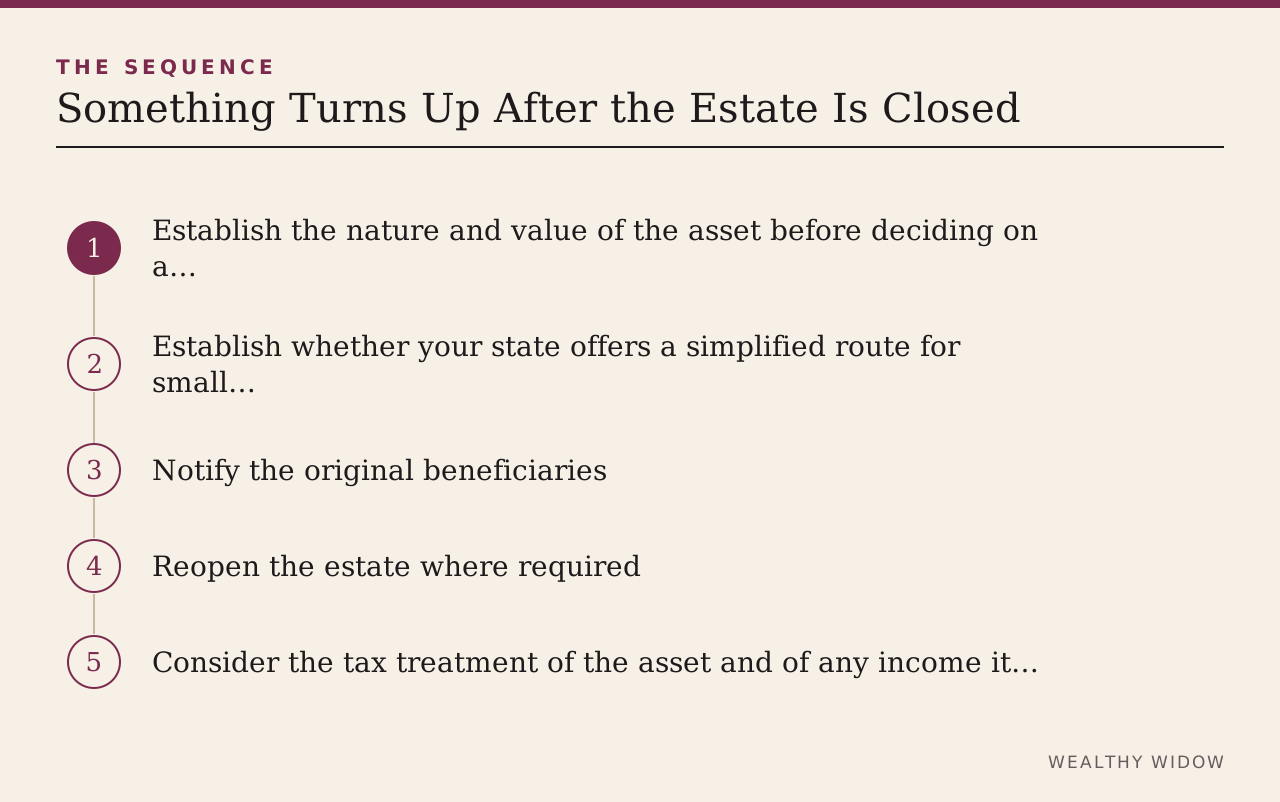
- Establish the nature and value of the asset before deciding on a procedure.
- Establish whether your state offers a simplified route for small amounts.
- Notify the original beneficiaries, since their entitlement generally continues.
- Reopen the estate where required, and distribute in the original proportions.
- Consider the tax treatment of the asset and of any income it produced.
The failure modes to plan around
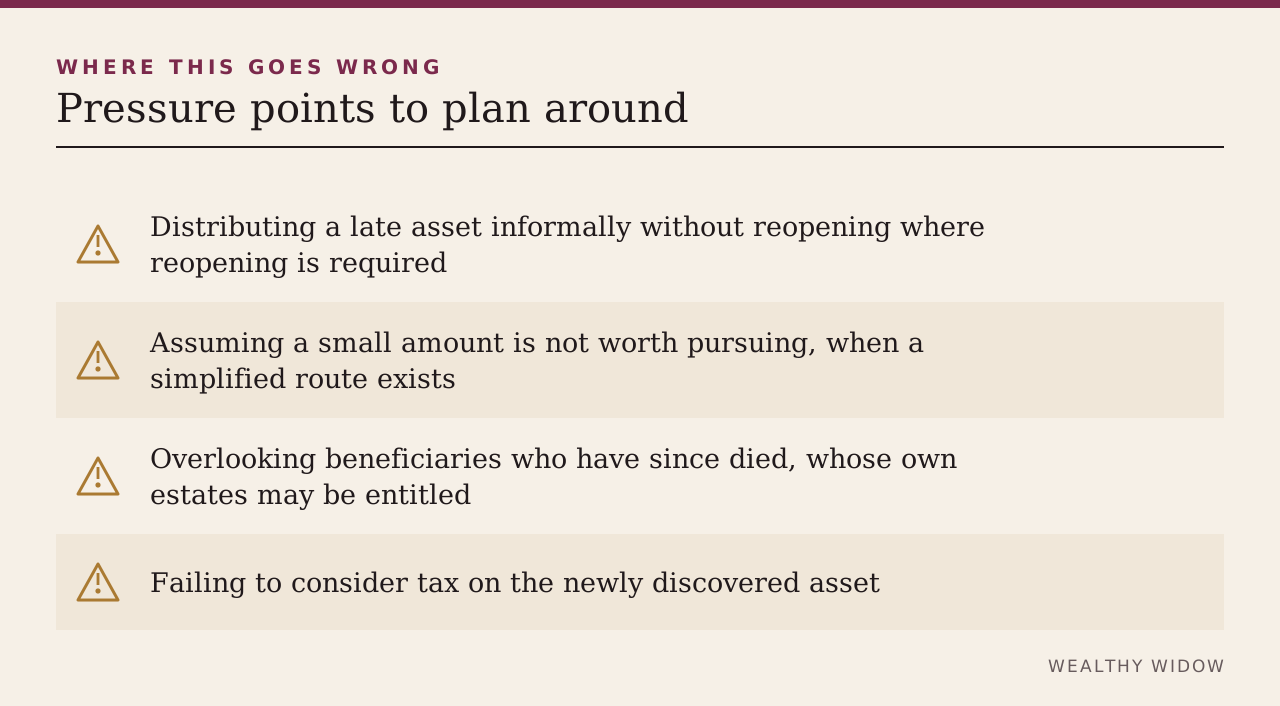
Knowing the failure modes is half of it; the following are the usual ways this goes wrong. Distributing a late asset informally without reopening where reopening is required.
Assuming a small amount is not worth pursuing, when a simplified route exists. Overlooking beneficiaries who have since died, whose own estates may be entitled. Failing to consider tax on the newly discovered asset.
Assemble this evidence before you start
A call made without these usually has to be made again.
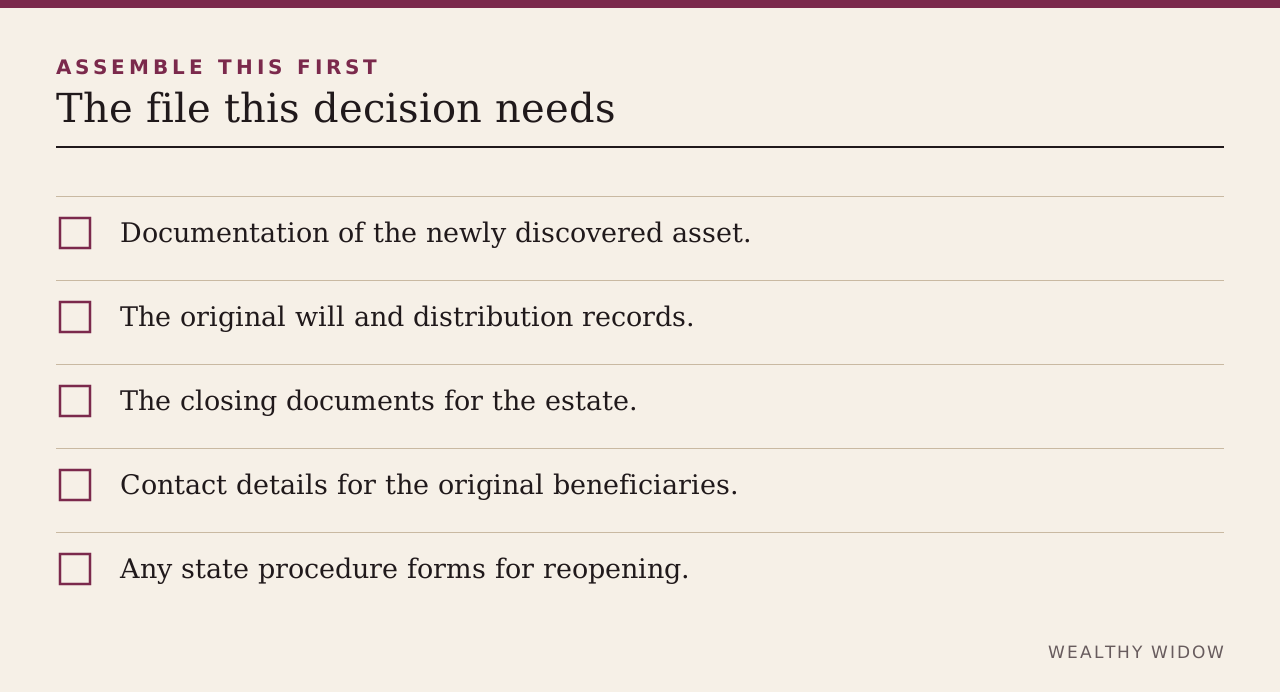
- Documentation of the newly discovered asset.
- The original will and distribution records.
- The closing documents for the estate.
- Contact details for the original beneficiaries.
- Any state procedure forms for reopening.
The record to build as you go
A verbal answer is a starting point, not a record. Get each of these documented.
- Whether reopening is required for an asset of this value.
- Who the entitled beneficiaries now are.
- The tax treatment of the asset.
- The procedure and its timescale.
Ask these before anyone is paid
Vagueness on any of these is itself an answer, and it is worth treating as one.
- Does an asset of this value require the estate to be reopened?
- Who is entitled now, given the time that has passed?
- What tax arises on this asset and on any income it earned?
- Is there a simplified procedure for small amounts?
The sources behind this
Anything that will drive a decision should be checked here rather than here-abouts.
- Internal Revenue Service — Information for executors
- National Association of Unclaimed Property Administrators — Search beyond your state
- Legal Services Corporation — I need legal help
- Pension Benefit Guaranty Corporation — Find unclaimed retirement benefits
Where this guide stops
The boundary matters, because the wrong assumption here is expensive. It cannot state your state’s procedure for reopening, which varies and may depend on the value involved.
In practice
Establish the value, check for a simplified route, and notify the original beneficiaries. It is a known situation with a known answer, and it reflects nothing about how the administration was handled.
Read The Review Schedule That Keeps a Plan From Going Stale next; the two decisions interact.
Primary sources
- Internal Revenue Service — Information for executors
- National Association of Unclaimed Property Administrators — Search beyond your state
- Legal Services Corporation — I need legal help
- Pension Benefit Guaranty Corporation — Find unclaimed retirement benefits
This article provides general education, not individualized legal, tax, investment, insurance, or benefits advice. Rules and deadlines change; verify the current requirement with the agency and a qualified professional.