Money
Knowing When to Change Adviser, and How to Do It Cleanly
An adviser inherited from a marriage may be excellent or may simply be incumbent. Reviewing the relationship is ordinary practice, not disloyalty.

The difficulty here is rarely the paperwork. It is knowing what is actually being asked. An adviser inherited from a marriage may be excellent or may simply be incumbent. Reviewing the relationship is ordinary practice, not disloyalty.
Many widows inherit an adviser relationship built around a spouse who may have been the primary contact. The relationship may be sound; the point is that it should be examined rather than assumed.
An adviser who was right for a couple is not automatically right for the survivor, and reviewing that is not a betrayal of anyone.
The question underneath the paperwork
A handful of accurate points does most of the work here, and the rest is noise generated by other people’s urgency. Advisers may be registered under different regimes, with different obligations to you. Registration and disciplinary history is publicly searchable at any time, including for an existing adviser. Transfer of accounts between firms is a standard process, though it can take weeks.
Exit charges may apply to particular products rather than to the relationship as a whole. A request for a written summary of holdings, costs, and strategy is entirely ordinary.
Sequence the work deliberately
The order below keeps your options open for as long as possible.
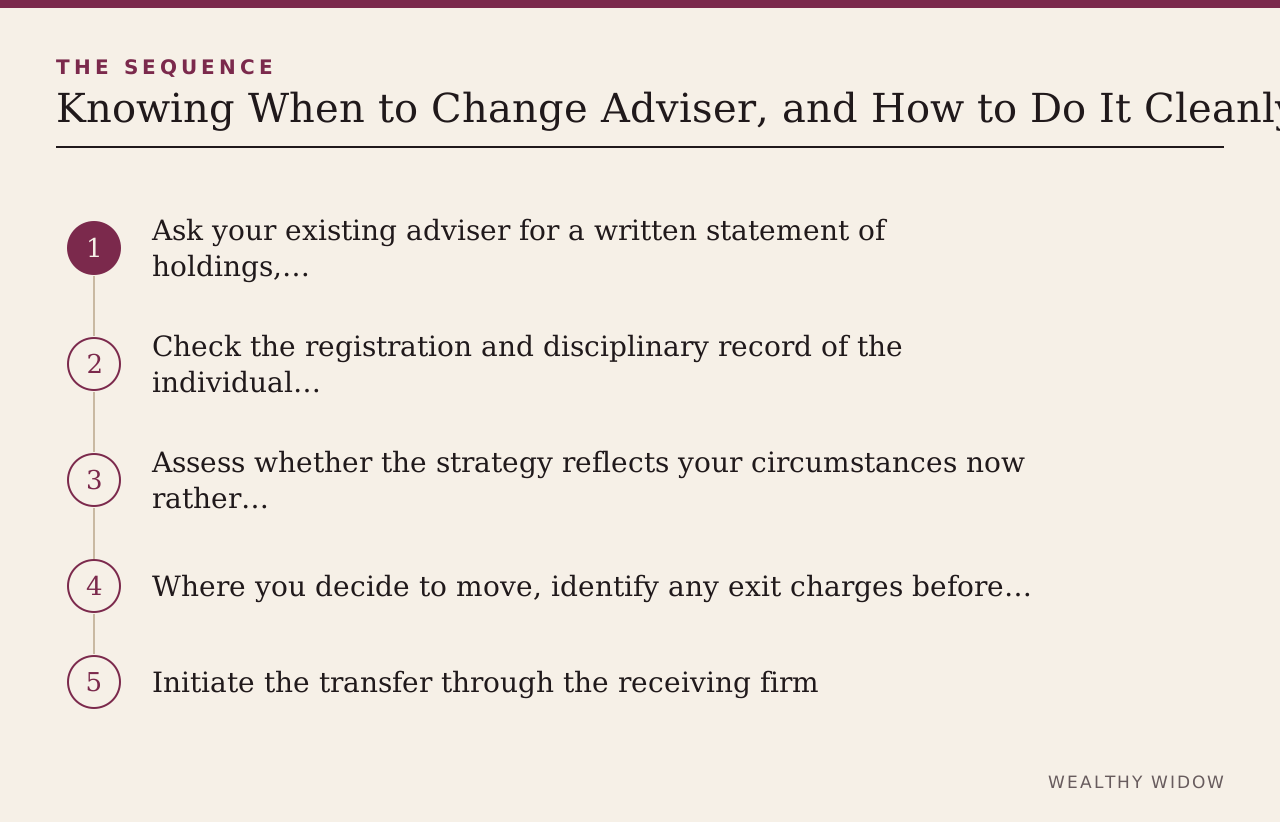
- Ask your existing adviser for a written statement of holdings, total costs, and the current strategy.
- Check the registration and disciplinary record of the individual and the firm.
- Assess whether the strategy reflects your circumstances now rather than the household’s previously.
- Where you decide to move, identify any exit charges before initiating a transfer.
- Initiate the transfer through the receiving firm, and keep written confirmation at each stage.
What to refuse, and why
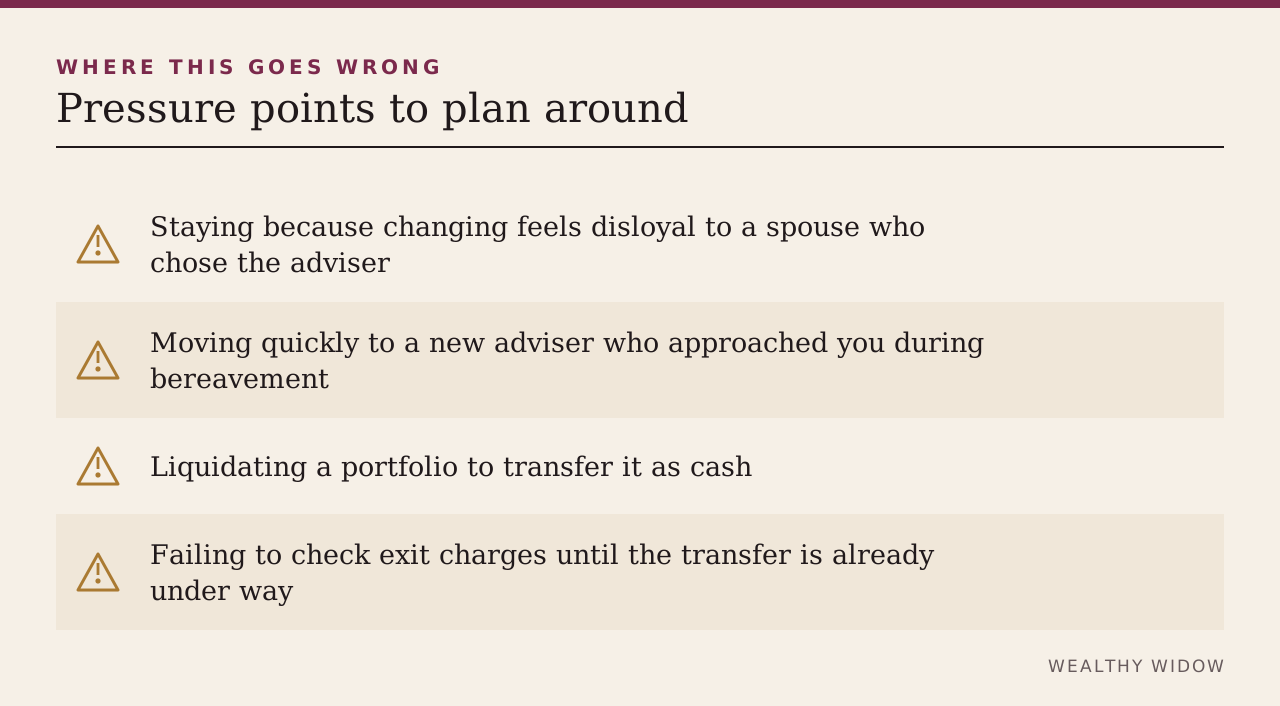
Treat each of the following as a reason to slow down. Staying because changing feels disloyal to a spouse who chose the adviser.
Moving quickly to a new adviser who approached you during bereavement, which reverses one risk for another. Liquidating a portfolio to transfer it as cash, which can create an avoidable tax bill. Failing to check exit charges until the transfer is already under way.
The file this decision needs
Keep these together in one place, and note where every copy goes and on what date it was sent.
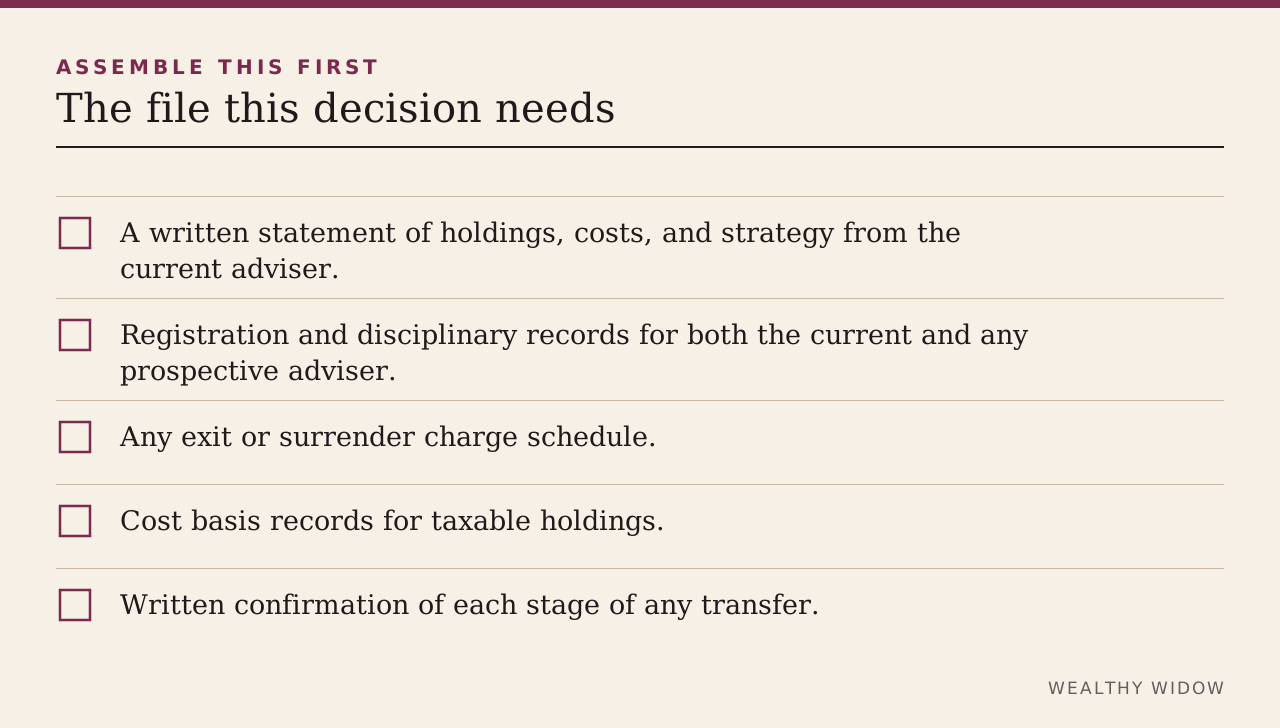
- A written statement of holdings, costs, and strategy from the current adviser.
- Registration and disciplinary records for both the current and any prospective adviser.
- Any exit or surrender charge schedule.
- Cost basis records for taxable holdings.
- Written confirmation of each stage of any transfer.
The written record you should hold
Hold written confirmation of each of these points before you rely on any of them to make a decision.
- Total annual cost under the current arrangement, in dollars.
- Any charge applying on exit.
- Whether holdings can transfer in kind rather than as cash.
- The registration status and record of any prospective adviser.
What a good adviser will answer plainly
Whoever advises you should be able to answer each of these plainly and in writing.
- Can these holdings transfer in kind, or would they have to be sold?
- What charges apply if I move, and to which holdings?
- How has the strategy changed to reflect my circumstances rather than the household’s?
- What is your obligation to me, and is it in writing?
Check this against the source
These are the primary sources behind this guide. They are the ones that change, and the ones worth checking before you act.
- U.S. Securities and Exchange Commission — Check out your investment professional
- U.S. Securities and Exchange Commission — Ask and check
- U.S. Securities and Exchange Commission — Understanding fees
- U.S. Securities and Exchange Commission — Investor.gov
The questions this cannot reach
No account written for a general readership can reach the following, and it should not pretend to. It cannot judge your adviser. It can ensure the review happens on evidence, and that if you move, the transfer does not create a tax bill you did not intend.
Taking it from here
Ask for the written summary first. Whether you stay or move, a documented statement of holdings, costs, and strategy is the basis on which the decision should be made rather than on loyalty or on a single uncomfortable meeting.
Read Clearing Debts With a Settlement: Not Always the Right Instinct next; the two decisions interact.
Primary sources
- U.S. Securities and Exchange Commission — Check out your investment professional
- U.S. Securities and Exchange Commission — Ask and check
- U.S. Securities and Exchange Commission — Understanding fees
- U.S. Securities and Exchange Commission — Investor.gov
This article provides general education, not individualized legal, tax, investment, insurance, or benefits advice. Rules and deadlines change; verify the current requirement with the agency and a qualified professional.