Estate
Signals That a Will May Be Challenged, and What to Do Early
Most will contests are predictable. The signals appear in the first weeks, and how the estate is administered in that period matters considerably.

Institutions will describe this as routine. For you it is not routine, and the stakes are not symmetrical. Most will contests are predictable. The signals appear in the first weeks, and how the estate is administered in that period matters considerably.
Not every unhappy beneficiary becomes a litigant, and the difference is often in how the administration was conducted. Recognising the signals early allows a representative to act carefully rather than defensively.
Contests are usually about being excluded from information as much as being excluded from a will.
Separate the label from the decision
A short set of facts governs this, and they are worth holding on to when the surrounding pressure is not. Grounds for challenge typically include capacity, undue influence, formal validity, and later documents. Time limits for bringing a challenge are set by state law and can be short. A no-contest clause may exist, and its effect varies considerably between states.
A representative’s duty is to the estate, which includes defending a valid will. Early, even-handed communication reduces the likelihood of a challenge materially.
A working sequence for this decision
This order is designed to keep your choices open for as long as possible.
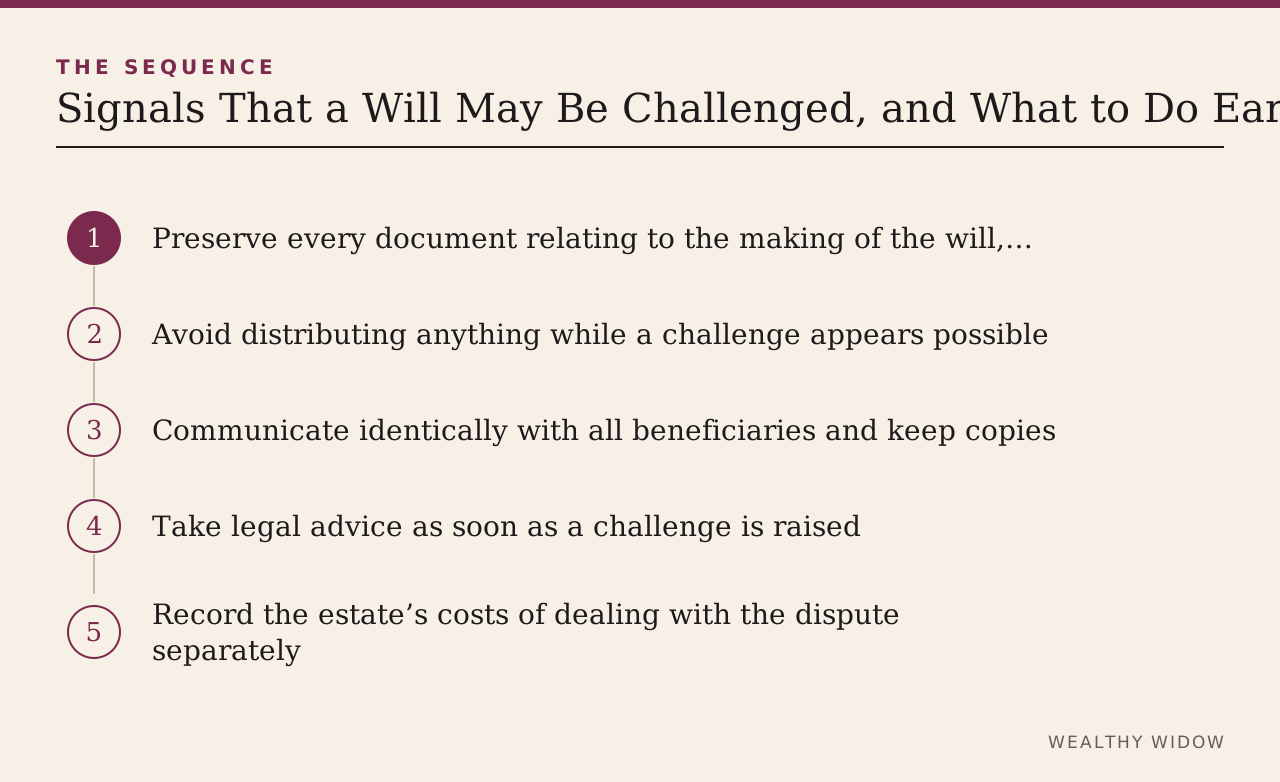
- Preserve every document relating to the making of the will, including drafts and correspondence.
- Avoid distributing anything while a challenge appears possible.
- Communicate identically with all beneficiaries and keep copies.
- Take legal advice as soon as a challenge is raised, rather than responding personally.
- Record the estate’s costs of dealing with the dispute separately.
The predictable errors
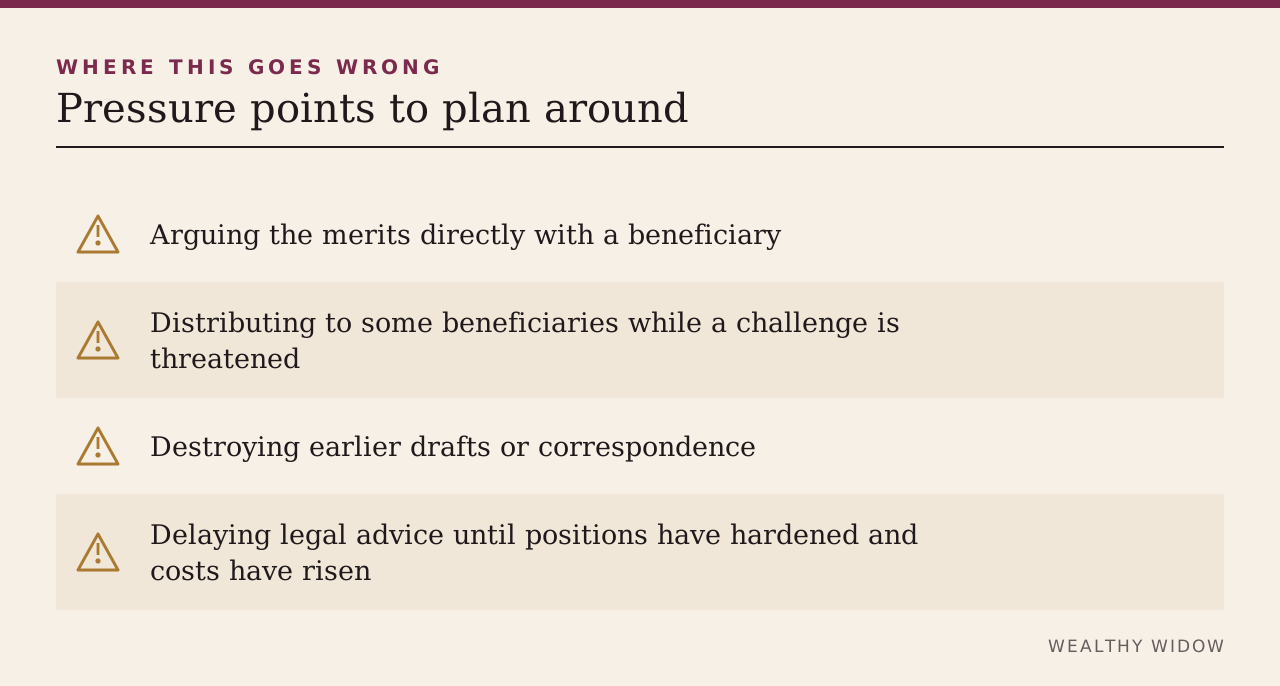
The problems below recur often enough to be planned for. Arguing the merits directly with a beneficiary, which entrenches positions and creates evidence.
Distributing to some beneficiaries while a challenge is threatened. Destroying earlier drafts or correspondence, which looks far worse than keeping them. Delaying legal advice until positions have hardened and costs have risen.
What every organisation will ask for
Each item below will be requested more than once. Collect them in one place and log where each copy goes.
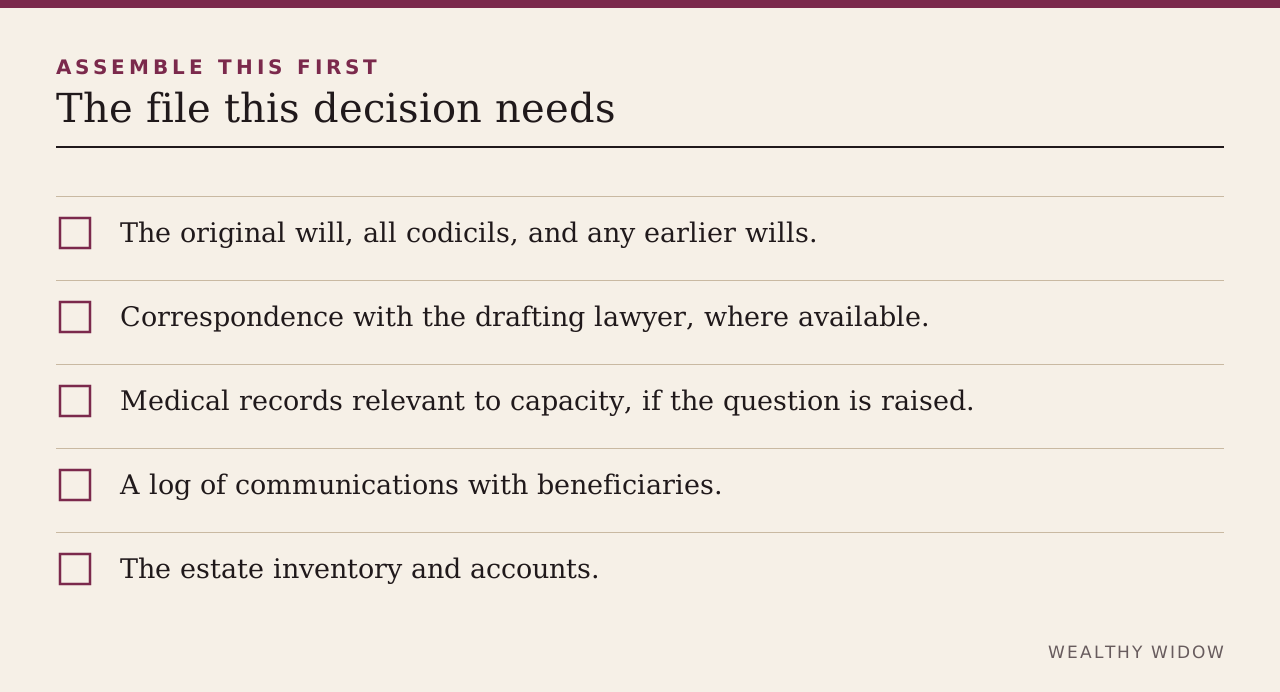
- The original will, all codicils, and any earlier wills.
- Correspondence with the drafting lawyer, where available.
- Medical records relevant to capacity, if the question is raised.
- A log of communications with beneficiaries.
- The estate inventory and accounts.
Ask for this in writing
Each item below should exist somewhere other than your memory, because memory is not evidence in a dispute.
- The time limit for a challenge in your state.
- Whether a no-contest clause exists and its effect.
- What you may safely do while a challenge is threatened.
- How the estate’s legal costs are to be borne.
The questions to bring to the meeting
Take these to the attorney, tax professional, or planner handling this work.
- What is the deadline for a challenge in this state?
- What should I stop doing while a challenge is threatened?
- Does the no-contest clause here have any practical effect?
- How are the estate’s costs of defending this treated?
Where to verify this
Every load-bearing point above traces to one of the following. Where a figure or deadline matters to you, read it there.
- Legal Services Corporation — I need legal help
- American Bar Association — Find legal help
- American Bar Association — Free Legal Answers
- Internal Revenue Service — Information for executors
What a professional still has to decide
The limits of a guide matter as much as its content, because acting past them is where the cost sits. It cannot assess the strength of a challenge. That requires a lawyer with the documents, the medical history, and the drafting file.
What good looks like here
Preserve everything, communicate evenly, distribute nothing, and take advice early. Most contests are lost or won on how the administration looked long before anyone reached a courtroom.
For the step that usually comes next, read Refusing an Inheritance on Purpose: What a Disclaimer Does.
Primary sources
- Legal Services Corporation — I need legal help
- American Bar Association — Find legal help
- American Bar Association — Free Legal Answers
- Internal Revenue Service — Information for executors
This article provides general education, not individualized legal, tax, investment, insurance, or benefits advice. Rules and deadlines change; verify the current requirement with the agency and a qualified professional.