Money
Returning to Work: The Interactions Nobody Mentions
Earned income after widowhood can affect benefits, tax, and health coverage at the same time, and the interactions are not intuitive.

This guide covers a decision that is easy to make quickly and expensive to make wrongly. Earned income after widowhood can affect benefits, tax, and health coverage at the same time, and the interactions are not intuitive.
Work after widowhood may be financial, or may be about structure and purpose, or both. Either way the financial interactions are worth understanding before the first payslip rather than after the tax return.
Earning more is good. Earning more without checking the interactions can cost more than it adds.
First, get the category right
What follows is what is actually true, stripped of the anxiety around it. Earnings can affect survivor benefits claimed before full retirement age, under rules that change with age. Additional income can change the proportion of Social Security benefits subject to tax. Income changes may need reporting to a health insurance marketplace, and failing to report can create a repayment.
Self-employment carries its own tax and estimated payment obligations that employment does not. Employer retirement plans may offer valuable matching contributions that change the calculation.
Take the steps in this order
Do these in sequence, and do not skip ahead to the signature.
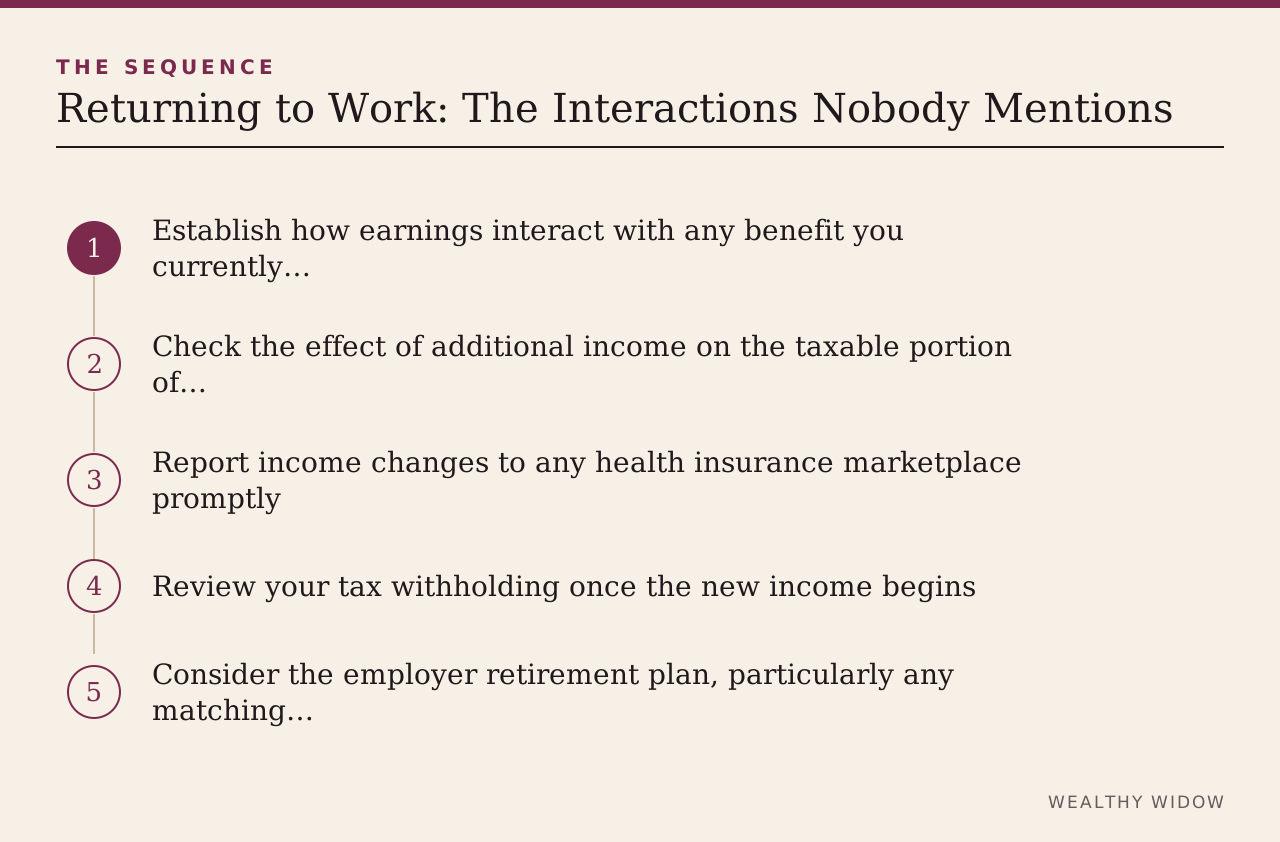
- Establish how earnings interact with any benefit you currently claim, at your specific age.
- Check the effect of additional income on the taxable portion of your benefits.
- Report income changes to any health insurance marketplace promptly.
- Review your tax withholding once the new income begins, rather than at year end.
- Consider the employer retirement plan, particularly any matching contribution.
What to watch for
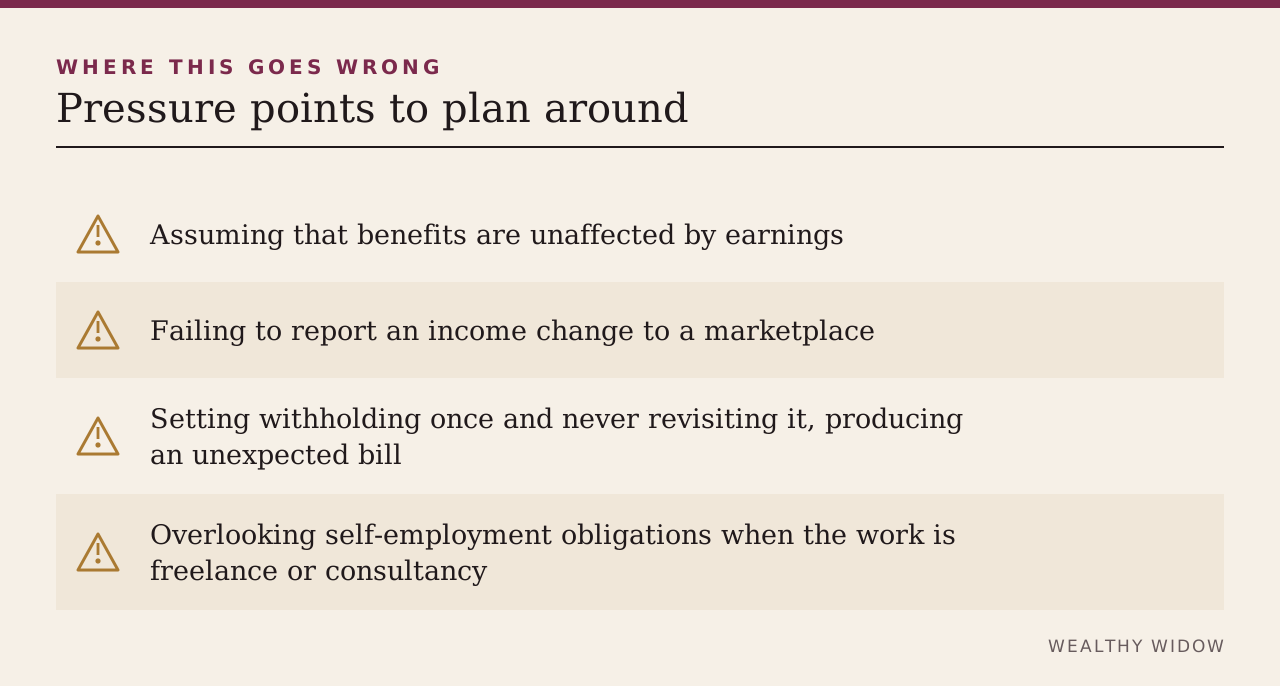
The failures here are predictable, which means they are avoidable. Assuming that benefits are unaffected by earnings, which depends heavily on your age.
Failing to report an income change to a marketplace, which can produce a substantial repayment later. Setting withholding once and never revisiting it, producing an unexpected bill. Overlooking self-employment obligations when the work is freelance or consultancy.
What to have to hand
The paperwork below is what turns a long process into a short one.
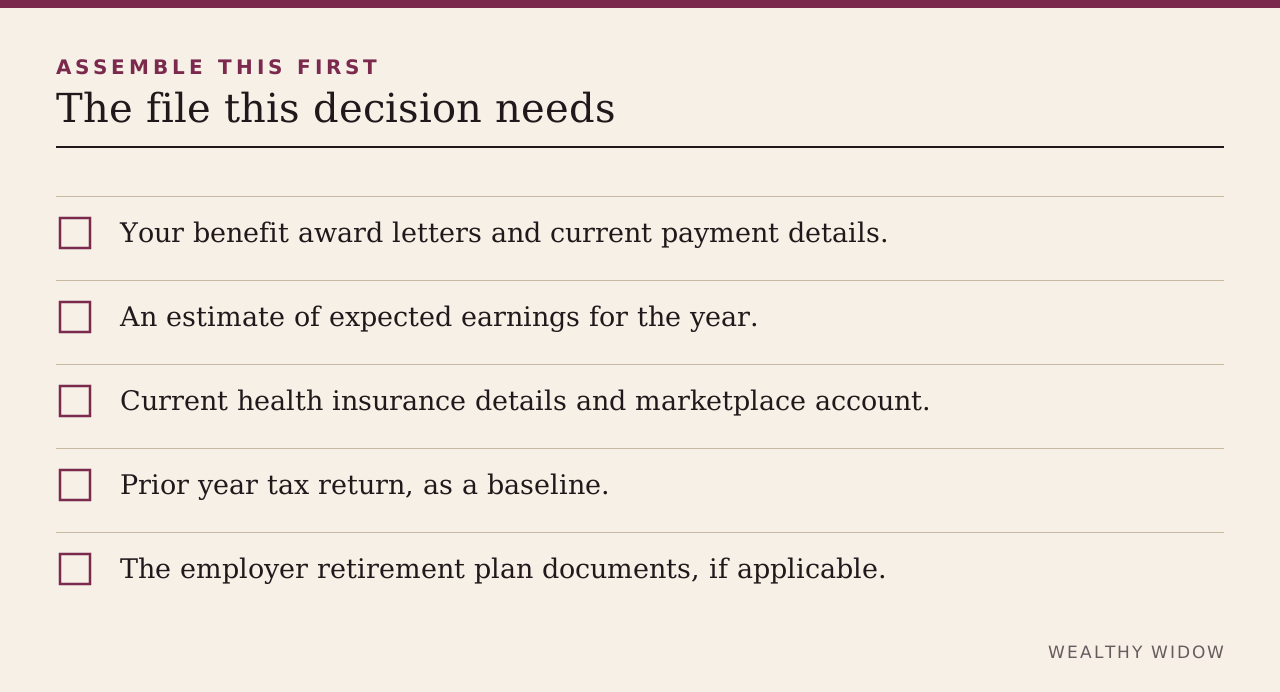
- Your benefit award letters and current payment details.
- An estimate of expected earnings for the year.
- Current health insurance details and marketplace account.
- Prior year tax return, as a baseline.
- The employer retirement plan documents, if applicable.
The written trail to keep
Written confirmation is ordinary practice, not suspicion.
- How earnings affect your specific benefit at your current age.
- Whether an income change must be reported, and by when.
- Your revised withholding position.
- Any employer contribution available to you.
Questions to take to a professional
If an answer to any of these is vague, that is your answer about the adviser.
- At my age, how do earnings affect the survivor benefit I claim?
- What proportion of my benefits becomes taxable at this income level?
- What must I report to the marketplace, and within what period?
- Should I be making estimated tax payments on this income?
Sources worth reading yourself
Where this guide and a source disagree, the source is right.
- Social Security Administration — Survivor benefits
- Social Security Administration — Manage Social Security benefits
- HealthCare.gov — Reporting income, household, and other changes
- Internal Revenue Service — Tax withholding estimator
The boundary of this guide
Be clear about the boundary; the wrong assumption here is expensive. It cannot model your position. Age, benefit type, income level, and state all change the answer, and the calculation needs your actual figures.
Where this leaves you
Check the interactions before the first payslip rather than at the tax return. The work is almost always worth doing; the surprise is what makes it feel otherwise.
A companion guide, Writing Down What the Money Is For, covers the decision that sits alongside this one.
Primary sources
- Social Security Administration — Survivor benefits
- Social Security Administration — Manage Social Security benefits
- HealthCare.gov — Reporting income, household, and other changes
- Internal Revenue Service — Tax withholding estimator
This article provides general education, not individualized legal, tax, investment, insurance, or benefits advice. Rules and deadlines change; verify the current requirement with the agency and a qualified professional.