Money
A Large Sum Has Arrived: The First Ninety Days
Insurance proceeds or an estate distribution can land as a single payment, and the first weeks are when the worst decisions get made.

Widowhood arrives with a queue of decisions that all look equally urgent. Insurance proceeds or an estate distribution can land as a single payment, and the first weeks are when the worst decisions get made. They are not the same task, and treating them as one is how good decisions get made badly.
A single large payment attracts attention and creates a feeling that something must be done with it. Almost nothing needs to be done with it for several months.
A large sum does not need a destination this month; it needs somewhere safe while you decide.
Name the decision before you make it
Most of the confusion here clears once a few things are stated plainly. Money held in cash while a decision is made is losing a little value and risking nothing. Deposit protection applies per institution, so a large balance may need spreading. Approaches from advisers frequently increase after a settlement, sometimes because the information is public.
Decisions made in the first weeks are the ones most often regretted and hardest to reverse. Setting a review date converts inaction into a decision.
How to work through it
Work deliberately, one step at a time, and treat each as complete before the next one starts.
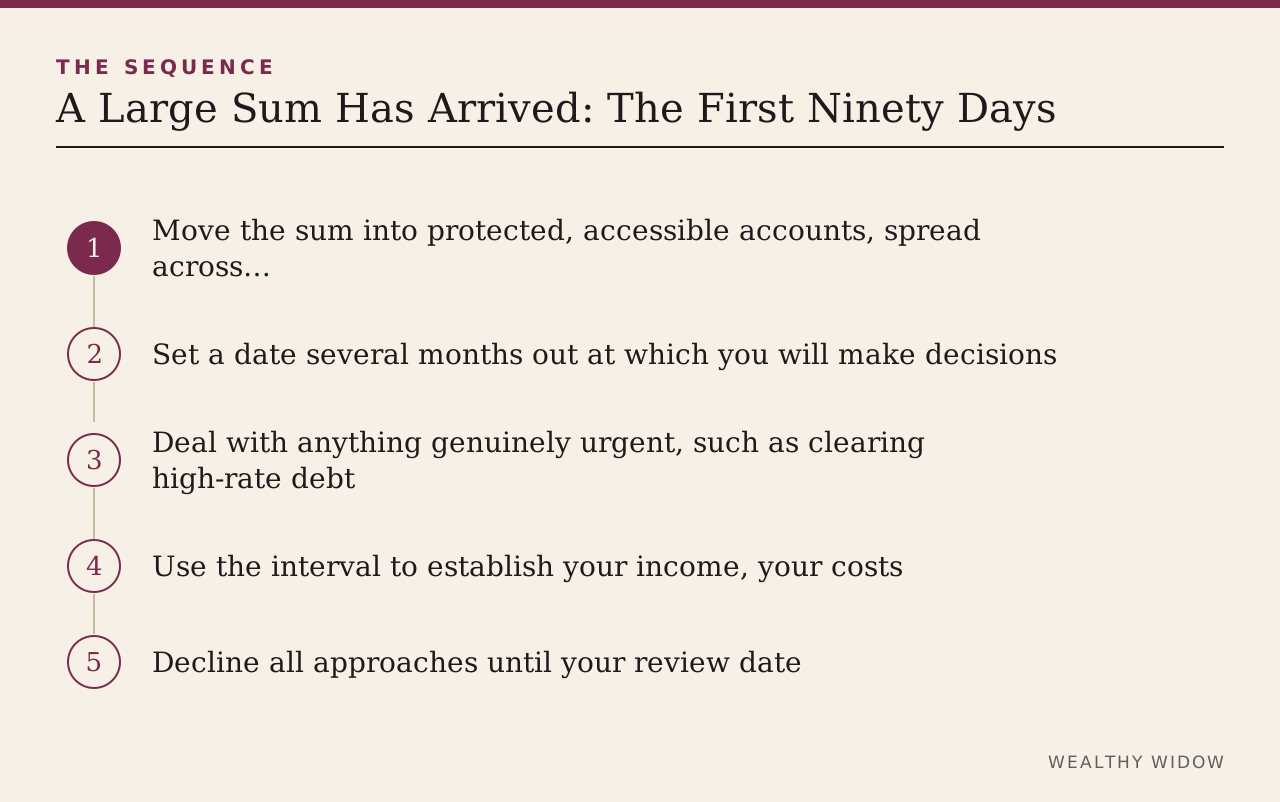
- Move the sum into protected, accessible accounts, spread across institutions if needed.
- Set a date several months out at which you will make decisions.
- Deal with anything genuinely urgent, such as clearing high-rate debt, and nothing else.
- Use the interval to establish your income, your costs, and what the money is for.
- Decline all approaches until your review date, and say so plainly.
Known hazards
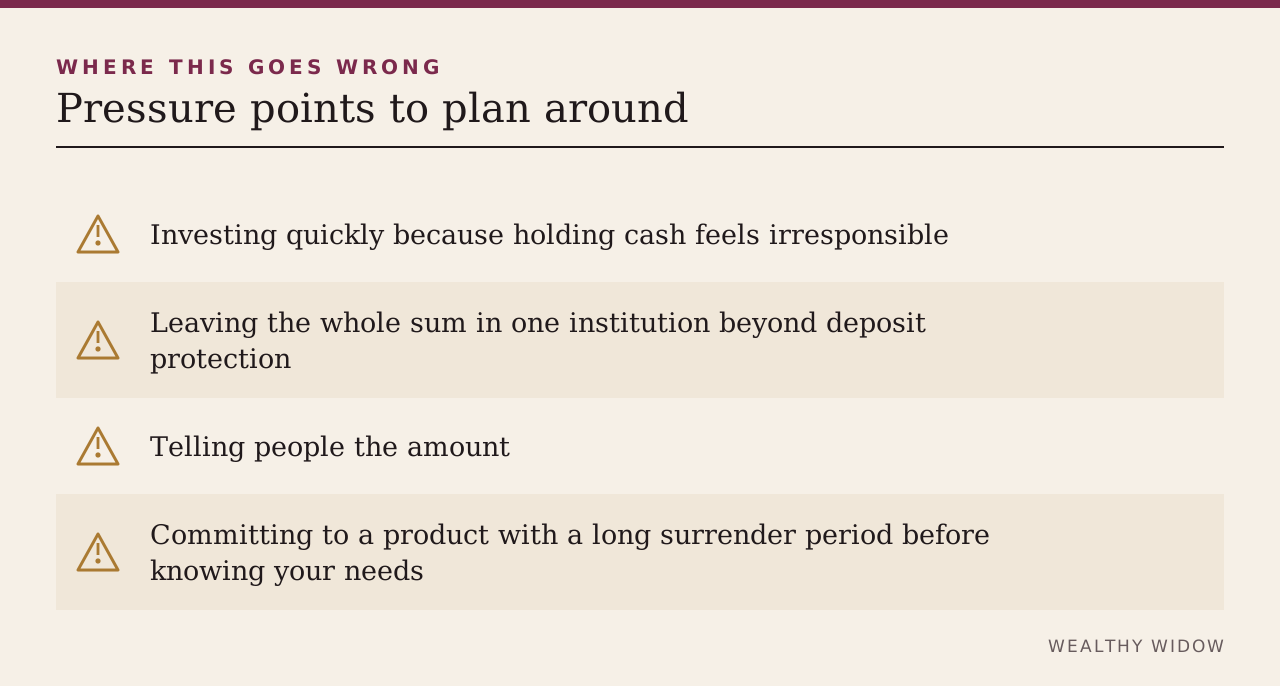
Knowing the failure modes is half of it; the following are the usual ways this goes wrong. Investing quickly because holding cash feels irresponsible.
Leaving the whole sum in one institution beyond deposit protection. Telling people the amount, which reliably generates requests and approaches. Committing to a product with a long surrender period before knowing your needs.
Assemble this evidence before you start
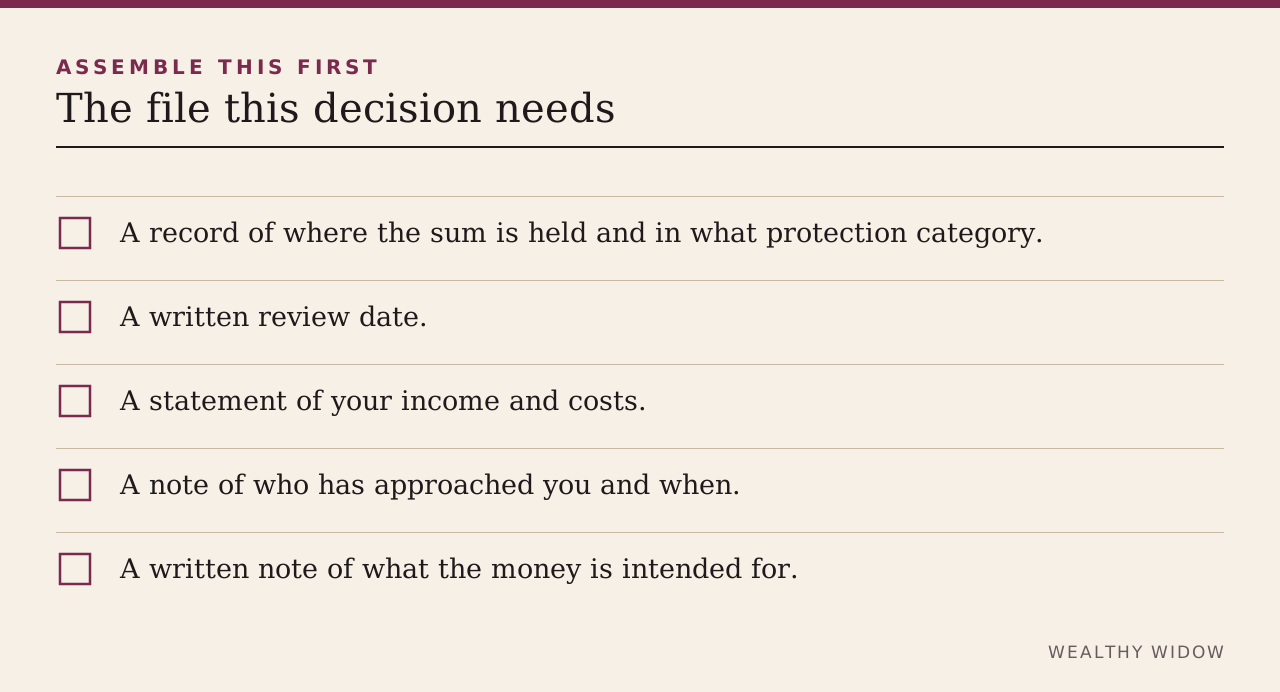
A call made without these usually has to be made again.
- A record of where the sum is held and in what protection category.
- A written review date.
- A statement of your income and costs.
- A note of who has approached you and when.
- A written note of what the money is intended for.
Nothing here on a verbal answer
None of the following should rest on a phone call alone, however clear the call felt at the time.
- That balances sit within deposit protection at each institution.
- That the funds are accessible without penalty.
- The date on which you will make decisions.
- That nothing has been committed in the meantime.
The questions that change the answer
A competent professional answers each of these without hesitation.
- What deposit protection applies to this balance here?
- What is the best available return on money I may need within a year?
- What would you not do with this money in the first six months?
- What decisions genuinely cannot wait?
Where the current rule lives
Read the source directly for any figure, date, or threshold that will actually drive a decision you make.
- Federal Deposit Insurance Corporation — Deposit insurance
- U.S. Securities and Exchange Commission — Investor.gov
- U.S. Securities and Exchange Commission — Ask and check
- U.S. Securities and Exchange Commission — Understanding fees
What this cannot decide for you
General guidance sets out the shape of a decision. Your documents settle it. It cannot tell you what to do with the money, and the argument here is that nobody can until your income and costs are settled.
Before you move on
Park it safely, spread it if necessary, set a date, and decline everything until then. The cost of waiting is small and precisely calculable; the cost of deciding early frequently is not.
Our related guide Building the Single Page That Shows Everything covers the adjacent problem.
Primary sources
- Federal Deposit Insurance Corporation — Deposit insurance
- U.S. Securities and Exchange Commission — Investor.gov
- U.S. Securities and Exchange Commission — Ask and check
- U.S. Securities and Exchange Commission — Understanding fees
This article provides general education, not individualized legal, tax, investment, insurance, or benefits advice. Rules and deadlines change; verify the current requirement with the agency and a qualified professional.