Life After Loss
Putting to Use What This Year Has Taught You
Widows frequently emerge with hard-won practical knowledge and no obvious outlet for it, and both of those are addressable.

Institutions will describe this as routine. For you it is not routine, and the stakes are not symmetrical. Widows frequently emerge with hard-won practical knowledge and no obvious outlet for it, and both of those are addressable.
Purposeful activity is consistently associated with wellbeing, and the specific competence acquired during a difficult year is genuinely valuable to organisations working with people at the same stage.
You now know how to do things that most people never learn until they have to, and that knowledge has obvious uses.
First, get the category right
Hold on to a small number of accurate points. National Institute on Aging guidance links meaningful social activity, including volunteering, with connection and wellbeing in later life. Volunteer roles range widely in commitment, so beginning with one limited, regular assignment provides a practical way to test fit. Peer-support work is one option, not an obligation.
Local aging and community services can match people to suitable roles. A role with a fixed regular time provides structure as well as purpose.
Take the steps in this order
This is the order that avoids closing doors you may still need.
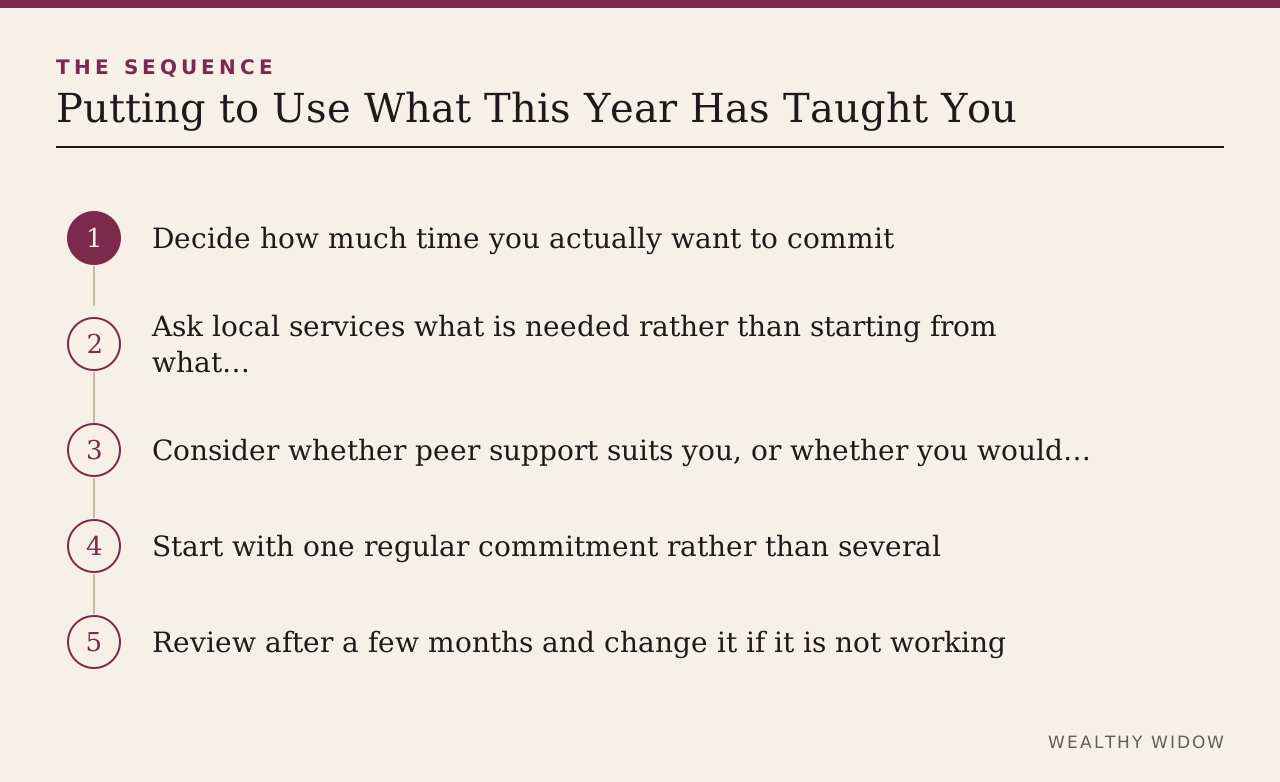
- Decide how much time you actually want to commit, and be conservative.
- Ask local services what is needed rather than starting from what you imagine.
- Consider whether peer support suits you, or whether you would rather do something unrelated.
- Start with one regular commitment rather than several.
- Review after a few months and change it if it is not working.
What to watch for
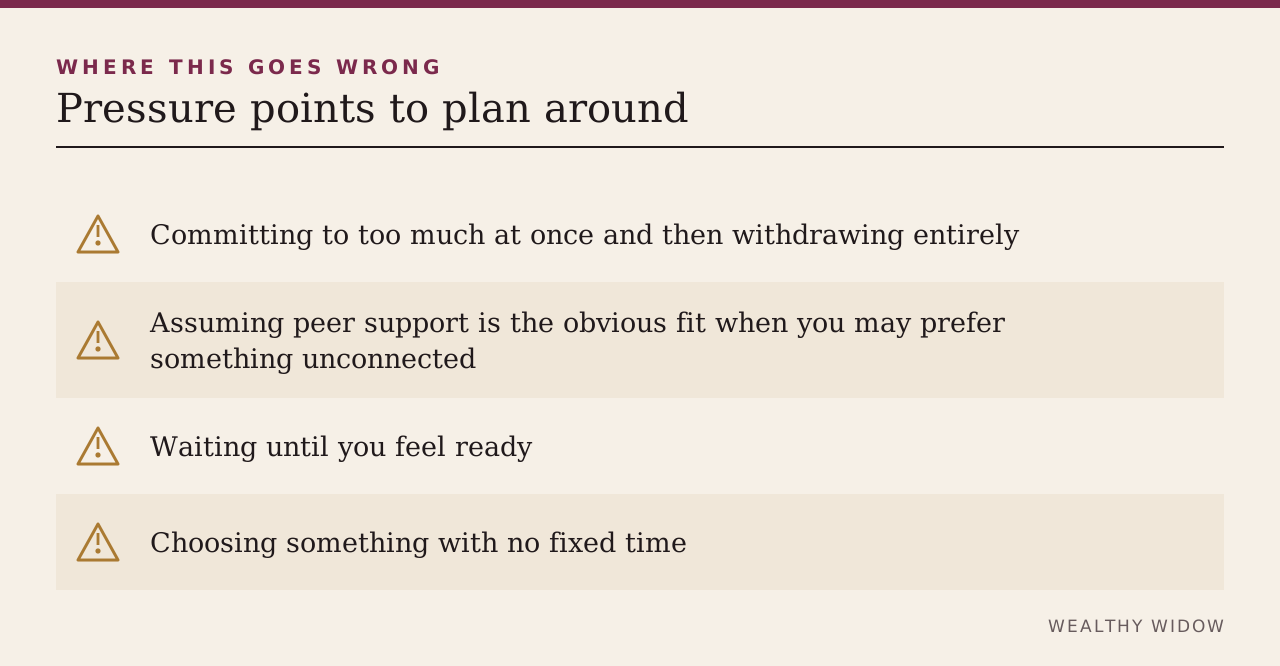
The errors here are well worn, which makes them avoidable. Committing to too much at once and then withdrawing entirely.
Assuming peer support is the obvious fit when you may prefer something unconnected. Waiting until you feel ready, which tends to postpone indefinitely. Choosing something with no fixed time, which supplies purpose but no structure.
What to have in front of you
Collect these once and keep them together, because you will be asked for them repeatedly over the coming months.
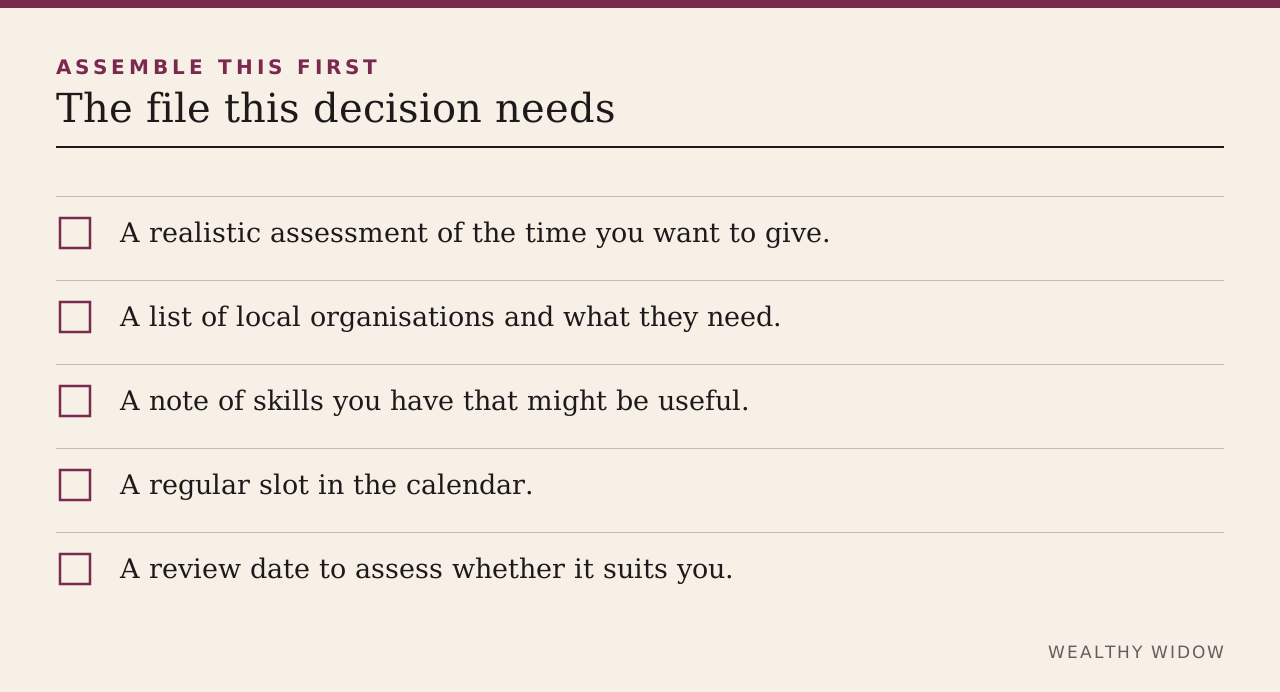
- A realistic assessment of the time you want to give.
- A list of local organisations and what they need.
- A note of skills you have that might be useful.
- A regular slot in the calendar.
- A review date to assess whether it suits you.
Put these in writing, then proceed
A conversation is a starting point. These belong on paper.
- What roles are available locally and what they require.
- The actual time commitment involved.
- That the role has a fixed regular time.
- That you can stop or change it without difficulty.
Before anyone is engaged, ask these
Ask them plainly; the response tells you as much as the answer.
- What do you most need help with?
- What is the realistic time commitment?
- Do you have roles for people who have been through bereavement themselves?
- What would you suggest for someone starting small?
Read the rule yourself
The sources below govern. This guide only summarises them.
- National Institute on Aging — Loneliness and social isolation
- National Institute on Aging — Cognitive health and older adults
- AmeriCorps Seniors — Volunteer opportunity finder
The limits of this guide
This is where general guidance ends and your own paperwork takes over. It cannot find a role for you, and local services are much better placed to match one than any general suggestion.
What to hold on to
Start small, choose something with a fixed time, and ask what is actually needed rather than guessing. The competence you acquired this year is real, and organisations working with bereaved people value it directly.
A companion guide, Assembling the People You Will Rely On, covers the decision that sits alongside this one.
Primary sources
- National Institute on Aging — Loneliness and social isolation
- National Institute on Aging — Cognitive health and older adults
- AmeriCorps Seniors — Volunteer opportunity finder
This article provides general education, not individualized legal, tax, investment, insurance, or benefits advice. Rules and deadlines change; verify the current requirement with the agency and a qualified professional.