Estate
Your Own Will Now Names Someone Who Has Died
Most married people leave everything to a spouse and name that spouse as executor. Both provisions have now failed, and the fallback may not suit you.

You may be told this is simply a form to sign. It is a decision with consequences. Most married people leave everything to a spouse and name that spouse as executor. Both provisions have now failed, and the fallback may not suit you.
This review is routinely postponed for years, partly because it requires confronting the loss directly. The practical consequence of postponing it is that your estate may be administered by a default nobody chose.
A will that names a deceased spouse as both beneficiary and executor has effectively lost its two most important provisions.
Name the decision before you make it
Most of the confusion here clears once a few things are stated plainly. Where a primary beneficiary has died, the will’s substitutional provisions take over, and they may be old. A named executor who has died means the court will appoint someone, possibly not your choice. A will made in one state may operate differently if you have since moved.
Guardianship provisions for minor or dependent children may need reconsidering entirely. Beneficiary designations sit outside the will and need reviewing at the same time.
How to work through it
Work deliberately, one step at a time, and treat each as complete before the next one starts.
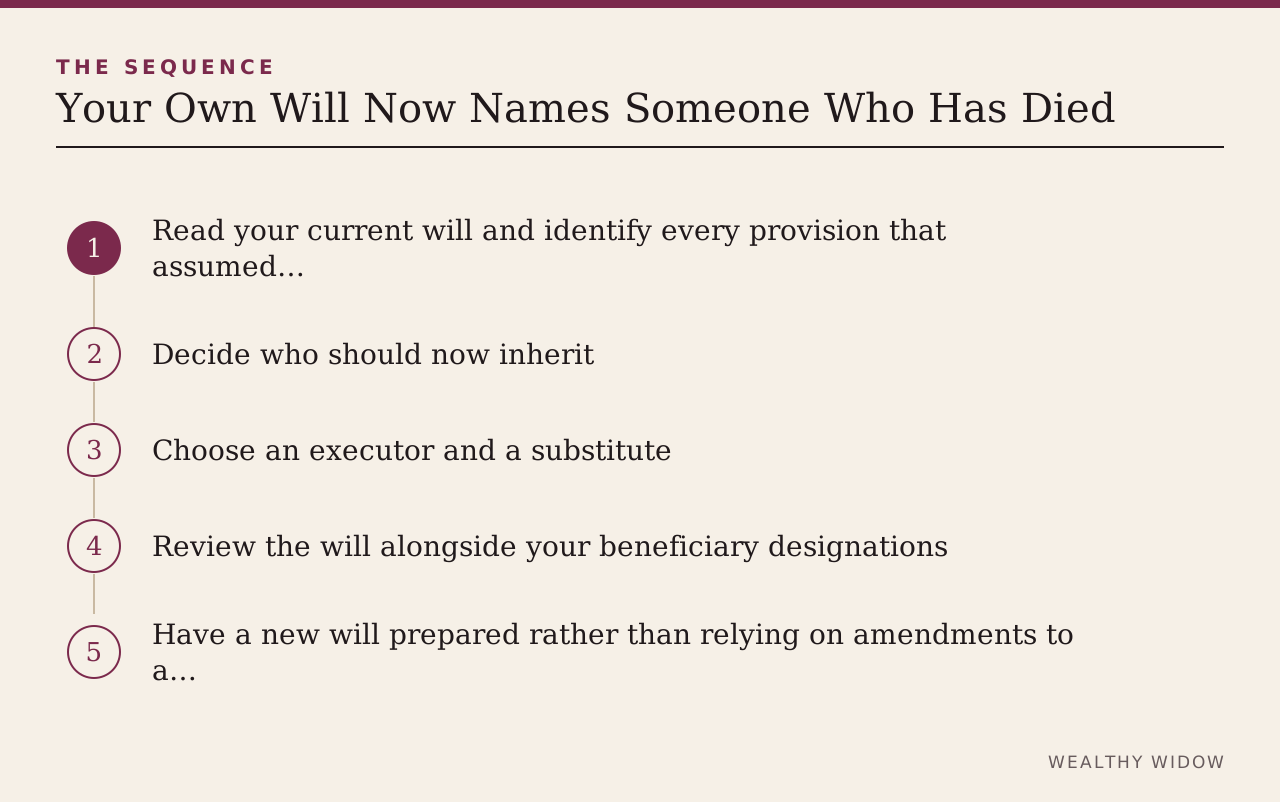
- Read your current will and identify every provision that assumed your spouse would survive you.
- Decide who should now inherit, and in what shares.
- Choose an executor and a substitute, and confirm both are willing.
- Review the will alongside your beneficiary designations, so the two are consistent.
- Have a new will prepared rather than relying on amendments to a document built on a different assumption.
Known hazards
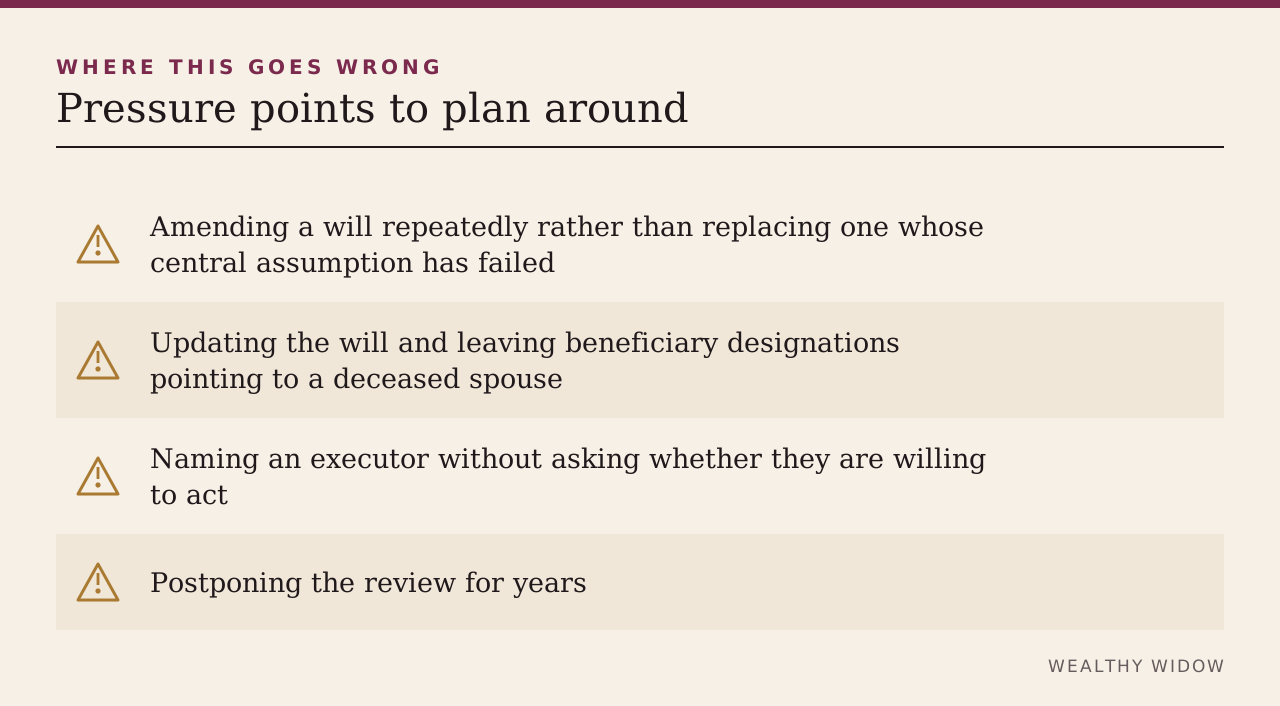
Knowing the failure modes is half of it; the following are the usual ways this goes wrong. Amending a will repeatedly rather than replacing one whose central assumption has failed.
Updating the will and leaving beneficiary designations pointing to a deceased spouse. Naming an executor without asking whether they are willing to act. Postponing the review for years, which is extremely common and entirely understandable.
Assemble this evidence before you start
A call made without these usually has to be made again.
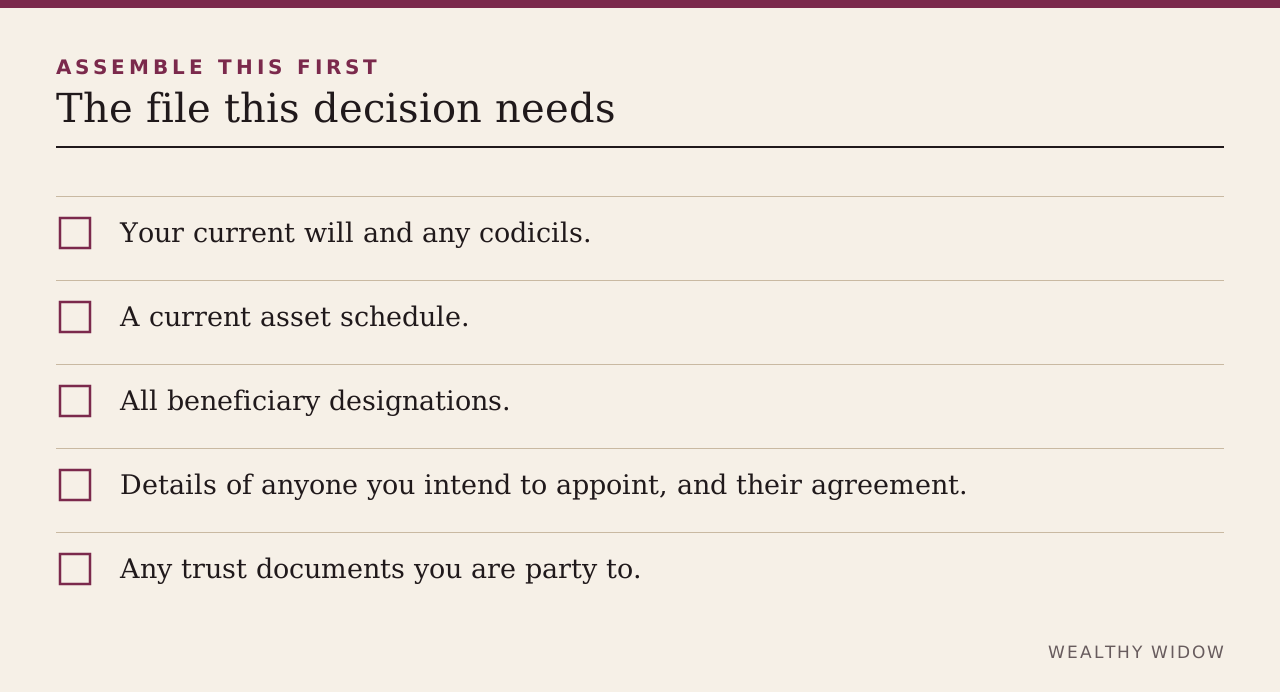
- Your current will and any codicils.
- A current asset schedule.
- All beneficiary designations.
- Details of anyone you intend to appoint, and their agreement.
- Any trust documents you are party to.
What to have documented
Put each of these in the file with a date against it.
- What your current will actually provides now that your spouse has died.
- That your chosen executor is willing to act.
- That designations and the will are consistent.
- That the will is valid in your current state of residence.
What to ask before you sign
Ask these before an engagement letter is signed or a product is recommended.
- What does my current will actually do now?
- Should this be amended or replaced entirely?
- Is this will valid in the state where I now live?
- Which of my assets pass outside the will, and where do they currently point?
Check this against the source
These are the primary sources behind this guide. They are the ones that change, and the ones worth checking before you act.
- National Institute on Aging — Advance care planning and advance directives
- Legal Services Corporation — I need legal help
- American Bar Association — Find legal help
- Internal Revenue Service — Information for executors
The questions this cannot reach
No account written for a general readership can reach the following, and it should not pretend to. It cannot draft or interpret your will, which must comply with the law of your state and reflect intentions only you can decide.
Taking it from here
Replace rather than patch. A will built on the assumption that your spouse would survive you has lost its foundation, and rebuilding it properly is a single appointment rather than an ordeal.
Our related guide Date of Death Values: The Numbers Everything Else Is Built On covers the adjacent problem.
Primary sources
- National Institute on Aging — Advance care planning and advance directives
- Legal Services Corporation — I need legal help
- American Bar Association — Find legal help
- Internal Revenue Service — Information for executors
This article provides general education, not individualized legal, tax, investment, insurance, or benefits advice. Rules and deadlines change; verify the current requirement with the agency and a qualified professional.